Valle d'Itria: where to eat and stay
In the Valle d'Itria you eat dinner standing in front of a butcher's counter: you pick the meat, they cook it in a wood-fired grill and you eat it at the table next door. It is the best thing in the area and it costs a third of any restaurant with a trulli view.
The Valle d'Itria is a karst plateau straddling three provinces (Bari, Brindisi and Taranto), dotted with trulli and divided by dry stone walls to the horizon. Five towns matter and they differ from each other: Alberobello, whose Rione Monti is a UNESCO site and which takes coaches from ten to four; Locorotondo, white and circular, the prettiest of the group; Cisternino, where the butchers with grills survive; Martina Franca, the largest and the only genuinely baroque one, with its capocollo and a summer opera festival; and Ostuni, on the edge of the plateau looking out over the olive plain towards the sea.
Two things should be said at once. First: Alberobello at eleven in the morning in July is a row of souvenir shops with a few thousand people inside a quarter of houses four metres square. At seven in the evening, once the coaches have left, it is another place and worth the visit. Second: sleeping in a trullo is an experience, not a comfort. They are dry stone buildings with no foundations and a single opening, cool in August and damp from November to March. Good conversions have solved that; mediocre ones have not, and the difference does not show in photographs.
Third, less touristic but important: going south beyond Ostuni the landscape changes, because Xylella has killed millions of centuries-old olive trees over the last decade. The Valle d'Itria was hit less hard than the Salento, but the plain towards Fasano and Ostuni has dead trees standing next to young replantings. An oil producer will talk about it willingly and precisely: it is the most serious thing to have happened here in a century.
How people eat here
Vegetables are the base, and that is not a health pose: until the 1960s meat was rare and fish only reached the coast. White broad beans cooked and puréed with wild chicory fried in a pan; turnip tops with orecchiette; pasta and potatoes; frise, rings of twice-baked bread dipped in water for a few seconds and dressed with tomato, oil and oregano. Over the tomato goes grated cacioricotta, a salted dry goat and cow's milk cheese, and that gesture is what separates a Puglian pasta from any other tomato pasta in Italy.
Then there is meat, and there is the fornello pronto. In the butchers of Cisternino, Martina Franca and Ceglie Messapica you choose at the counter: bombette (rolls of capocollo with cheese inside), gnumeredde or turcinieddi (lamb offal wrapped in gut), sausages, ribs. You pay by weight and the butcher cooks it all in a wood-fired oven at the back while you sit at a table with a beer. It costs 18 to 30 euro a head eating well, and it is the most direct, least mediated way to eat in Puglia. Serious butchers open for dinner around eight and close one day a week; in summer there is a queue.
Fresh cheese is the other pillar, and here only freshness counts: burrata, stracciatella, nodini, mozzarella and giuncata are to be eaten the same day, and a dairy selling you burrata at nine in the evening the day after is selling you something else. The capocollo of Martina Franca (a Slow Food Presidium, smoked over fragno oak and Mediterranean scrub) is the cured meat of the area and should be cut by hand and thick. To drink, the white of Locorotondo, verdeca and bianco d'Alessano: light, a little anonymous if you analyse it, exactly right over a tray of bombette. The serious Puglian reds, Primitivo and Negroamaro, come from Manduria and the Salento, which is somewhere else: you will find them on the list, but they are not local.
Working farms that take guests
Real places in this territory, checked one by one on their own site. What you read is what they state: the editorial visit has not happened yet, and when it does we will say so.
Masseria Il Frantoio
Ostuni (BR)An olive estate on the plain of thousand-year-old trees, with an underground mill and a range of organic extra virgin oils. Rooms in the nineteenth-century part of the masseria, a kitchen of its own and guided oil tastings.
masseriailfrantoio.itAgriturismo Masseria Catucci
Martina Franca (TA)A small manor with trulli and cummerse in contrada Capitolo, with a working farm, kitchen gardens and its own Locorotondo DOC white. Rooms and a restaurant open Tuesday to Sunday.
agriturismocatucci.comAgriturismo Masseria Torricella
Alberobello (BA)An estate on the Canale di Pirro with vineyards, orchards, olive groves and its own cellar. Guests stay in rooms, outbuildings, cottages and trulli, with a restaurant cooking the farm's own produce.
masseriatorricella.itAgriturismo Il Ciliegeto
Locorotondo (BA)Three hectares of olives and cherry trees in contrada Cerrosa, with cherry picking open to guests between May and June. Six self-contained units in two nineteenth-century stone clusters, among trulli and cummerse.
agriturismoilciliegetolocorotondo.itThe foods of this territory
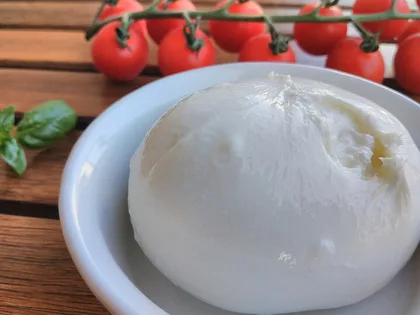 IGPBurrataIt began as a way of using offcuts: leftover shreds of pasta filata, drowned in cream and…
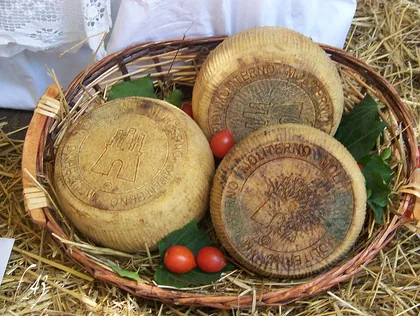 DOPCanestrato PuglieseCanestrato Pugliese DOP is a hard sheep's milk cheese from the Tavoliere plain of northern…
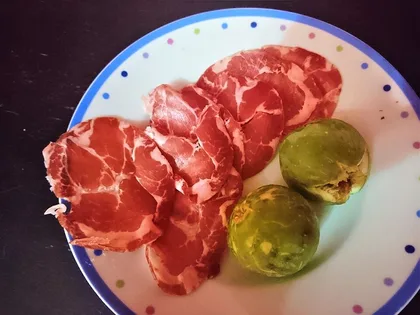 FoodCapocolloCapocollo is the pork neck muscle, salted whole and aged in casing.
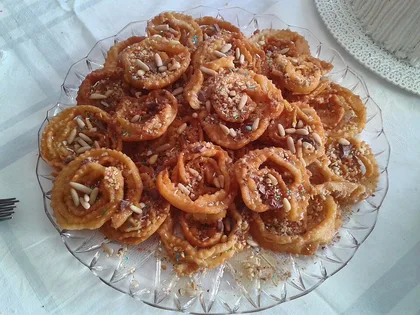 PATCartellatePaper-thin ribbons of dough, pinched into pockets and wound into roses, deep-fried and…
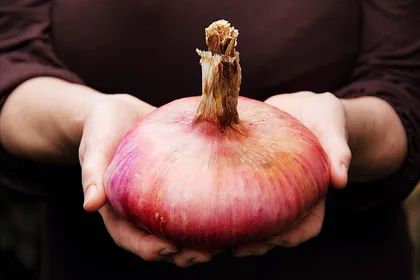 FoodAcquaviva Red OnionThe Acquaviva red onion is wide, flat as a discus and sweet enough to eat raw in thick…
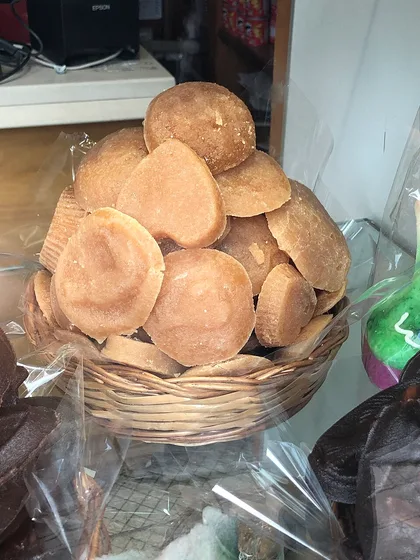 FoodCotognata (Quince Paste)Cotognata is quince pulp cooked with sugar and then air-dried for days in moulds until it…
What to do here
The most useful thing to arrange is the simplest: one evening at a butcher's grill in Cisternino or Ceglie, with no booking but turning up at eight, and another evening at a masseria with a set menu. Between them they cover the two extremes of the local kitchen.
Dairy visits happen early, between seven and nine, because that is when the milk is worked: many take visitors with a phone call the day before and ask 10 to 20 euro for the visit and a tasting. Watching mozzarella being pulled and a burrata closed by hand in five seconds explains the price better than any label.
The mills press from late October to December. In the Valle d'Itria the pressing is less spectacular than in Tuscany but more meaningful, because the conversation always comes round to the sick olive trees and the replanting: it is what the producers actually want to talk about.
In summer Martina Franca holds the Festival della Valle d'Itria, opera in the square in July and August, which fills the town and its restaurants. On a bike the plateau is gentle and ideal (little climbing, dry stone walls, almost empty back roads) but from June to September you ride only before ten in the morning. What to skip: the pony-trap rides among the trulli and the orecchiette workshops in central Alberobello, which are staged.
The year, month by month
From November to March the valley is cold, windy and half closed: the serious masserie that stay open are few and worth looking for, because it is the season of broad beans, chicory, pettole in December and cartellate at Christmas. In January and February Putignano holds the oldest carnival in Italy, with its floats and the pettole of Sant'Antonio.
April, May and the first half of June are the right window: twenty to twenty-eight degrees, countryside in flower, prices still reasonable, a sea that is cold but swimmable from late May. July and especially August are the opposite: thirty-eight degrees in the shade, masseria prices doubled or tripled, Alberobello and Ostuni unmanageable, beaches to be booked. If you can choose, do not come in August.
September is still summer with half the people; October is probably the best month of all, with a warm sea, the grape harvest and the start of the olive picking. November brings the pressing and the first winter cheeses, which differ from the summer ones because the animals are fed differently.
Getting there and getting around
The airports are Bari Palese (an hour from the valley) and Brindisi Papola Casale (forty minutes from Ostuni, fifty from Cisternino). Brindisi is closer and less served; Bari has more flights and a direct rail link from the airport to the central station.
By train you arrive at Bari or Brindisi on the fast services from Rome and Milan. From Bari, the Ferrovia Sud Est serves Putignano, Alberobello, Locorotondo and Martina Franca: it is slow, with a train every hour or two and a very reduced Sunday service, but it works and it lets you see the towns without a car. The Adriatic line also stops at Fasano and Ostuni, but those stations are six and two and a half kilometres from the old centres, with connecting buses only in high season.
For everything else you need a car. The masserie are out in the country at the end of white roads, often with no street number, and directions are given by contrada rather than address: asking for GPS coordinates when you book saves half an hour of circling. The roads between towns are short (Cisternino to Locorotondo is eight kilometres) but narrow, with dry stone walls flush to the carriageway, so you go slowly. If you plan to eat at a grill and drink beer, bear in mind taxis here are very few and need booking in the afternoon.
Frequently asked questions
Is it worth sleeping in a trullo?
From April to October yes, and it is cool and pleasant. From November to March it depends entirely on the conversion: dry stone without foundations takes up damp, and a badly restored trullo in winter is cold and humid. Before booking, ask explicitly how insulation and damp were dealt with, and be wary of vague answers.
What is a fornello pronto and how does it work?
It is a butcher's shop with a wood-fired grill and a few tables: you choose the raw meat at the counter (bombette, sausages, rolls, ribs), pay by weight and they cook it while you wait. You eat it with bread, beer and little else. They open for dinner around eight, take no bookings and close one day a week. Expect 18 to 30 euro a head.
What is the worst time to visit the Valle d'Itria?
August, without argument. It is close to forty degrees, accommodation prices double or triple, Alberobello and Ostuni are impassable in the middle of the day and beaches have to be booked. Anyone free to choose should take May, the first half of June, or October.
Can you take burrata home?
Only if the journey is short. Burrata is made to be eaten within twenty-four hours: after that the stracciatella inside turns acidic and the cream takes over. Many dairies pack it in a bag with whey and ice for a same-day return, but a connecting flight and a night in the fridge ruin it. Cacioricotta and capocollo, by contrast, travel very well.