Ogliastra: where to eat and stay
In Ogliastra the dish that matters is closed by hand, one fold at a time, and you can tell at a glance whether somebody made it or bought it. It is also where longevity is a real demographic fact and the longevity menu is a recent invention.
Ogliastra is the strip of Sardinia between the Gennargentu and the sea, on the eastern side: the province was abolished, the name was not. Down below are Tortolì and the port of Arbatax, up on the hills Lanusei and Jerzu, and above everything the limestone plateau of Baunei and Urzulei, which closes to the north with the cliffs of the Gulf of Orosei.
From the beach to a thousand metres of holm oak is forty minutes by car, and that is the thing to grasp before you set off. There are no motorways and distances on the map deceive: the SS125 is fast south of Tortolì and becomes a mountain road between Baunei and Dorgali, where forty kilometres take a good hour. The best coves have no road, and in August a hire car has to be booked months ahead.
How people eat here
Culurgiones d'Ogliastra IGP are parcels of potato, fresh sharp pecorino and mint, closed by hand with the spighitta: one fold after another along the edge, fifteen or twenty of them, making the pattern of an ear of wheat. They are served with plain tomato and grated pecorino, and nothing else: cream and a ricotta filling are outside the rulebook. Look at the edge: if it is rolled or pressed shut, those culurgiones came out of a machine.
The rest turns on the oven and the embers. Pane carasau is thin and baked twice, invented for shepherds who stayed out for weeks; guttiau is carasau brushed with oil and salt and put back in the oven; but the everyday bread here is pistoccu, which is thicker. Porceddu is a four or five kilo piglet turned on a spit for three or four hours over myrtle and juniper embers, and at farm restaurants it arrives inside the set menu: ten antipasti, two pastas, the piglet, seadas with strawberry-tree honey and myrtle liqueur, 35 to 50 euro. It is too much food and it is like that everywhere; what changes is whether the pork, cheese and wine come from the farm or from a wholesaler.
The wine is Cannonau, which at Jerzu grows on schist terraces and reaches fourteen and a half degrees. Here the other story begins: Ogliastra is one of the blue zones, and the data are documented. Demographic studies in the 2000s found, between Ogliastra and Barbagia, in villages such as Villagrande Strisaili and Talana, a concentration of male centenarians with no equal in Europe. What is not documented is the commercial trimming: the longevity menu, the Cannonau with its miraculous polyphenols. The historic diet was barley, pulses and cheese: porceddu was the feast-day dish.
Working farms that take guests
Real places in this territory, checked one by one on their own site. What you read is what they state: the editorial visit has not happened yet, and when it does we will say so.
Agriturismo Nuraghe Murtarba
Villagrande Strisaili (NU)A family farm at Sa Carruba, below Villagrande Strisaili: it keeps goats, sheep, cattle, pigs and farmyard animals and makes its own cured meats, cheese, fresh pasta and culurgiones. Four en-suite rooms and a restaurant using the farm's produce.
agriturismonuraghemurtarba.wordpress.comAgriturismo Turudhis
Tortolì (NU)A family farm of about twenty hectares between the plain and the hills, at Marina di Cea. Double rooms in Sardinian style with breakfast, and a restaurant working seasonal ingredients of its own; the Turudhis nuraghe stands on the land.
turudhis.comAgriturismo Domus de Goene
Loceri (NU)A farm with vineyards and farmyard animals at Goene, on the road to Monte Tare. It makes wine and offers self-contained cottages and apartments with kitchens; the restaurant cooks the farm's produce.
agriturismodomusdegoene.itAgriturismo S'Omu Eccia
Cardedu (NU)A farm at Pelau, between the beaches of Cardedu and the countryside of Jerzu: the harvest is cooked to Ogliastran recipes, bread included. It serves meals but does not offer accommodation.
agriturismosomueccia.comThe foods of this territory
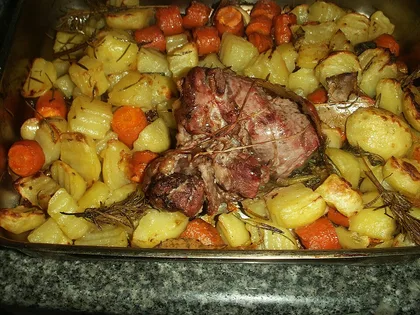 IGPSardinian LambAgnello di Sardegna IGP is milk-fed lamb from the Sarda dairy sheep, slaughtered young and…
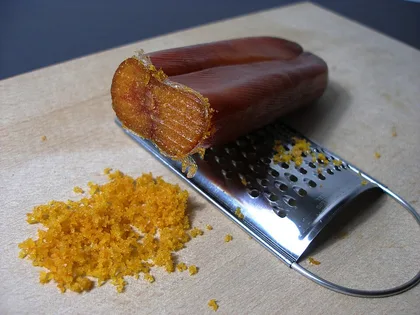 PATBottargaFifteen grams a head is enough, and that is not meanness: bottarga is the salted, pressed…
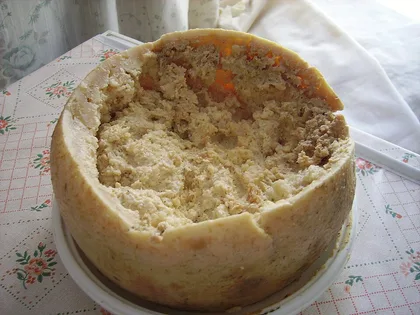 FoodCasu MarzuCasu marzu is a Sardinian sheep's cheese whose ripening is carried on by the larvae of the…
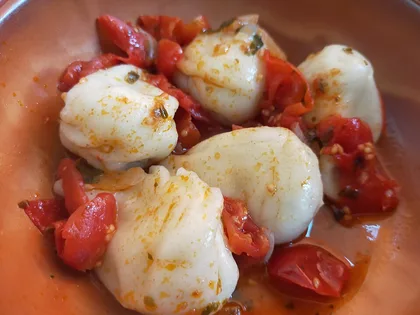 IGPCulurgionesCulurgiones are Sardinian filled pasta: potato, pecorino and mint sealed inside a semolina…
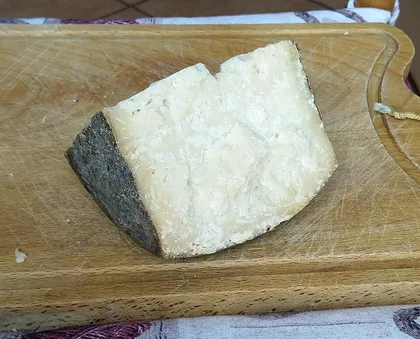 DOPFiore SardoFiore Sardo DOP is the shepherd's pecorino of Sardinia: raw sheep's milk, lamb rennet…
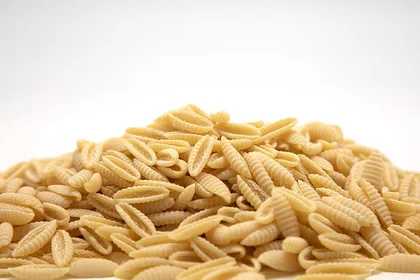 FoodMalloreddusThe ridges are not decoration: they hold sauce on a shape that would otherwise be smooth…
What to do here
The coves of the Gulf of Orosei (Goloritzé, Mariolu, Biriala, Luna) are reached by boat from Santa Maria Navarrese or Arbatax: you leave in the morning and come back in the afternoon, and in August they are full. Cala Goloritzé can also be walked from the Baunei plateau: the path drops in three quarters of an hour, access is capped and ticketed, and the climb back is the serious part, with no shade and no water.
Inland there is the Su Marmuri cave at Ulassai, and above the village the works of Maria Lai, who in 1981 had every house tied to the mountain with a blue ribbon. The Trenino Verde leaves Arbatax for Gairo and Seui: five hours to do what the car does in one.
The year, month by month
May and June are the best months: everything open, normal prices, a sea you can swim in from mid-June and an interior still green. July and especially August are the peak: crowded coves, doubled prices, fully booked boats and no hire cars at all unless you booked in winter.
September is the month to recommend to anyone who can choose: warm sea, empty beaches from the second week, the Cannonau harvest at Jerzu. From late September to December the inland villages begin the cortes apertas, weekends when courtyards, cellars and workshops open: you eat in people's houses for a few euro a dish, provided you do not arrive looking for restaurants, which on those days are closed or full.
In winter the coast almost entirely closes, the pig is worked and several farm stays shut for two months: before travelling between January and March, phone ahead.
Getting there and getting around
The reference airport is Cagliari Elmas: from there to Tortolì is about two hours on the SS125, with no motorway; from Olbia two and a quarter. Tortolì-Arbatax airport exists but has virtually no scheduled flights, so leave it out of your plans. Ferries reach Arbatax from Civitavecchia and Genoa, crossings of ten to sixteen hours.
Once here a car is compulsory: buses link the villages on school timetables and nearly stop on Sundays. Fill up at Tortolì or Lanusei, because in the inland villages the pumps close at lunchtime and on Sundays.
Frequently asked questions
How do you recognise a hand-made culurgione?
By the edge. The traditional closure is the spighitta, alternating folds that draw an ear of wheat along the whole side: it is irregular, and every parcel differs from the next. Industrial ones have a rounded or pressed edge, all identical.
When is the best time to visit Ogliastra?
Between late May and late June, or in September: a swimmable sea, villages open, normal prices. August has the best beach weather and the worst of everything else. In October and November the interior is excellent, but you will find much of the coast closed.
The blue zone of longevity: what is true?
The demographic fact is solid: between Ogliastra and Barbagia a concentration of male centenarians with no parallel in Europe has been measured. The causes are still argued over: genetic isolation, physical work into old age, a historic diet of barley and pulses. What has no basis is the marketing built on top of it.
How do you reach the coves of the Gulf of Orosei?
By boat or on foot, not by car: there are no roads. Group trips leave from Santa Maria Navarrese and Arbatax and in high season need booking a few days ahead. On foot you descend to Cala Goloritzé from the Baunei plateau, with a ticket and a daily cap.