Montalcino: where to eat and stay
In Montalcino the wine stays in the cellar five years before it can be sold, and that explains a good part of the price. It also explains why Rosso di Montalcino, from the same vines in a fifth of the time, is what the producers pour themselves at dinner.
Montalcino is a town of five thousand people on an isolated hill at 560 metres, with Monte Amiata to the south taking a good deal of the rain. The territory is not uniform: the north side, towards Torrenieri, is cool and clayey and gives nervy wines; the south, around Sant'Angelo in Colle, Camigliano and Castelnuovo dell'Abate, is warm and dry and gives broader ones.
Over two hundred estates work here, many of them of a few hectares. On the main street there are wine bars designed for people with three hours and a coach outside; five kilometres away you walk by appointment into family cellars, taste with the person who pruned the vines and spend less. Since 2017 the municipality has also included San Giovanni d'Asso: the Crete, the clay gullies, the white truffle.
How people eat here
The rules of the wine matter more than the cooking. Brunello is pure Sangiovese, spends at least two years in wood and cannot be sold before 1 January of the fifth year after the harvest. Rosso di Montalcino comes from the same vines, ages one year and costs a third to a half as much: it is not a failed Brunello, it is the wine that carries a whole dinner. Anything that is not pure Sangiovese goes into the Sant'Antimo denomination, named after the Romanesque abbey down in the valley.
The cooking is Siena hill cooking, poor and built on bread: chicken liver crostini, pici with garlic sauce or wild boar ragù, ribollita in winter with black kale that has been through a frost. The pork is Cinta Senese DOP, free or semi-free range, which grows for twice as long as an industrial pig and has fat that melts at room temperature: a board straight out of the fridge needs ten minutes. Then pecorino, oil and honey, which the town devotes a week to in early September.
Where people go wrong most often is the wine list: the mark-up on a Brunello in the restaurants in the centre reaches three times the cellar price. The sensible strategy is the opposite of the menu: Rosso at the table, Brunello bought at the estate the next day. And be wary of dishes built on the label, such as steak cooked in Brunello: where the basic bottle costs twenty-five euro they are arithmetically impossible.
Working farms that take guests
Real places in this territory, checked one by one on their own site. What you read is what they state: the editorial visit has not happened yet, and when it does we will say so.
Azienda Agricola Verbena
Montalcino (SI)Vineyards and olive groves at Verbena: Brunello di Montalcino, Rosso di Montalcino DOC, Vin Santo Toscano and extra virgin oil. Three apartments (La Torretta, La Loggia, Rimessa) and three rooms in the farmhouse.
aziendaverbena.itLa Palazzetta di Luca e Flavio Fanti
Montalcino (SI)Twenty hectares of vineyard at Castelnuovo dell'Abate, facing the abbey of Sant'Antimo: Brunello di Montalcino and extra virgin oil. Self-contained apartments, a pool and tastings with local produce.
palazzettafanti.comAzienda Agraria Poggiarellino
Montalcino (SI)Thirty hectares of arable land, olives and woodland, five under vine of which three registered for Brunello: Brunello, Rosso di Montalcino and extra virgin oil. Four apartments sleeping twelve.
poggiarellino.itPodere La Casella
Montalcino (SI)An organically and sustainably run estate on via Traversa dei Monti, with Brunello vineyards and a saffron crop. Accommodation in apartments and rooms.
lacasellamontalcino.comThe foods of this territory
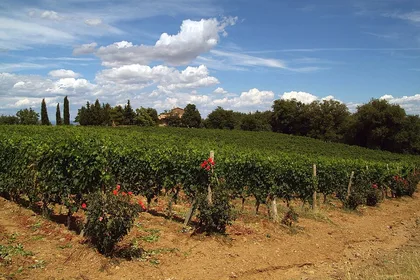 DOPBrunello di MontalcinoBrunello di Montalcino is pure Sangiovese aged five years, at least two of them in oak…
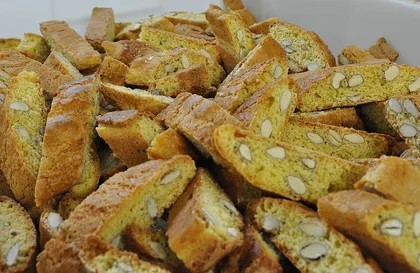 IGPCantucciCantucci are hard, twice-baked Tuscan almond biscuits. A log of dough is baked, sliced on…
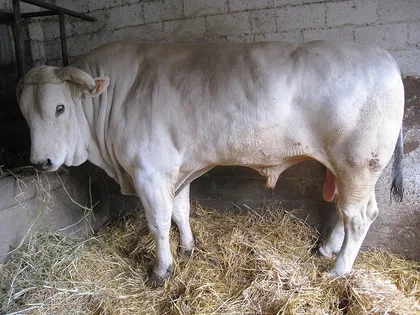 IGPChianina BeefChianina is the largest cattle breed in the world: porcelain-white, bulls over 1,700 kg…
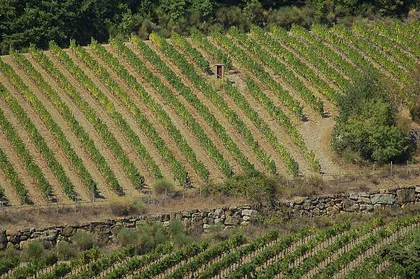 DOPChianti ClassicoChianti Classico is the Black Rooster wine: at least 80 per cent Sangiovese from nine…
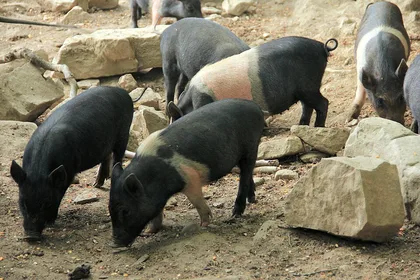 DOPCinta Senese PorkCinta Senese is the black pig with a white belt across its shoulders, raised semi-wild in…
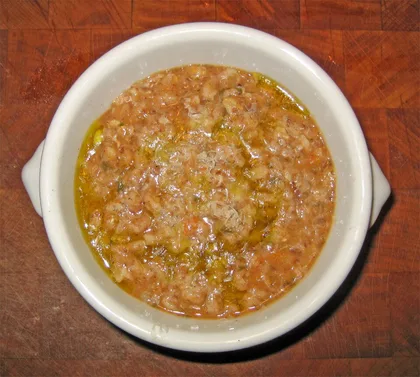 IGPGarfagnana FarroFarro della Garfagnana IGP is emmer wheat, Triticum dicoccum: the grain the Romans called…
What to do here
Tastings cost 20 to 45 euro at small estates, a good deal more where an architect designed the room. You book by email and five days ahead is enough; the visit worth having starts in the vineyard and goes through the barrel cellar.
Sant'Antimo, at Castelnuovo dell'Abate, is a Romanesque abbey in alabaster that justifies the afternoon on its own: from Montalcino you can even walk there in a couple of hours. The white roads are a cycling classic, but they should be taken seriously: gravel, short nasty gradients, almost no shade in summer.
The year, month by month
January and February: cold, half the restaurants closed for holidays, rooms at half price and cellars with time for you. From April to June the territory is at its best; August is hot, full and expensive; in early September the honey week brings the beekeepers into the square.
From mid-September to early October comes the harvest. On the last Sunday of October the Sagra del Tordo is run, with the archery tournament between the quarters and the neighbourhood kitchens open: it is a town festival and mostly the locals go. In November Benvenuto Brunello presents the new vintage and walls in the tile with its rating, while San Giovanni d'Asso holds its white truffle market. Then the new oil is pressed.
Getting there and getting around
By car: forty minutes from Siena, an hour and three quarters from Florence, two and a half hours from Rome. The useful airports are Florence, Pisa and Perugia.
By train you reach Torrenieri-Montalcino on the Siena to Grosseto line, but services are few and the station is eight kilometres from the town, uphill. The alternative is the bus from Siena, a little over an hour, on school timetables and almost nothing on Sundays: without a car you will see two cellars instead of six.
Frequently asked questions
Brunello or Rosso di Montalcino: what should I drink at dinner?
Rosso, in the great majority of cases: the same vines, one year of ageing instead of five, half the price, and better with pici and wild boar than a young Brunello just opened.
What does a tasting cost and do you need to book?
From 20 to 45 euro at family estates for three or four wines with a look at the barrel cellar; at the large estates it rises to 60 to 100 euro. Booking is the rule: almost every cellar has two or three people in total.
Is it worth buying Brunello at the cellar?
Not for the price, which is rarely far below a good shop's, but for what you find: older vintages still at the estate and three-thousand-bottle producers whose wine never leaves here.
Montalcino or Montepulciano?
They are forty minutes apart and you can do both. Montepulciano has a more lived-in old centre, with Nobile at roughly half the price of Brunello; Montalcino is smaller, with more cellars and higher prices on everything.