Madonie: where to eat and stay
A massif of almost two thousand metres half an hour from the sea at Cefalù, with beech woods, emptied villages and the only manna production left in Europe. It is the Sicily nobody photographs, and for that reason people still eat here the way they used to.
The Madonie are Sicily's second mountain after Etna: Pizzo Carbonara reaches just under two thousand metres, and above fifteen hundred there are beech woods, centuries-old hollies and snow for weeks. They sit in the province of Palermo, right behind the Tyrrhenian coast, so close that from Castelbuono you can see the sea and reach Cefalù in forty minutes. That proximity is what surprises arrivals most: you go from a crowded beach to a beech wood at fifteen hundred metres in the time it takes to drink a coffee.
The regional park dates from 1989 and since 2015 the territory has been part of the UNESCO geopark network, because of a rock sequence covering two hundred million years in a few square kilometres. Inside are fifteen municipalities, and they should be seen for what they are: Castelbuono with the Ventimiglia castle and real vitality; Petralia Soprana, above a thousand metres, with a square looking into the void; Petralia Sottana, seat of the park; Polizzi Generosa clinging to a spur; Gangi, visible from far off as a cone of houses; Geraci Siculo, Isnello, Collesano, Pollina, San Mauro Castelverde. Many have lost half their population in fifty years, and you read it in the empty houses and the closed schools.
Two practical warnings. The first is that you do not come here for the sea: anyone who wants the beach should sleep in Cefalù and come up for the day, anyone who wants the Madonie should sleep up high and go down to the sea when they feel like it, but demanding both from the same base means two hours of bends a day. The second is that in winter it is genuinely cold, it snows, and the ridge roads can close: the postcard of warm Sicily does not apply above a thousand metres. In exchange, winter is when you eat best.
How people eat here
Madonie cooking is mountain cooking, so it is not the Sicily of cannoli and swordfish. It is made of bread, cheese, pulses, pork, mushrooms and wild greens, with good oil from the hills below and tomato used sparingly. The everyday dish is pasta with ricotta or with pulses, maccu of broad beans, frascatula, a durum wheat polenta with vegetables, and soups of chickpeas and wild fennel. The meat is kid and lamb, roasted or stewed, and pork.
On cheese, the provola delle Madonie rules: a pulled-curd cow's milk cheese, often from the cinisara or modicana breeds, worked by hand and tied with a cord that gives it a pear shape with a little head on top. It is a Slow Food Presidium and should not be confused with the provola of the Nebrodi, which is another mountain and another product. Fresh it is mild and elastic; aged it turns sharp and is grated. At the local dairies you can watch the curd being pulled early in the morning, and anyone who wants to understand what separates an artisan provola from an industrial one needs to see that gesture once. Beside it are tuma, primo sale and the day's ricotta, and at Polizzi you can still find sfoglio, a pastry filled with fresh tuma, chocolate and cinnamon, a crossing of sweet and savoury of a kind few places still make.
Of the pulses, the best known is the fasola badda of Polizzi Generosa: a large round bean in two ecotypes, the white one with a red mark around the hilum and the dark one, grown on a handful of hectares around the village and picked by hand. It is a Presidium, it costs a good deal and it runs out early: it is eaten boiled with oil, in soup, or with pasta. On pork, the native breed is the black pig, raised semi-wild in the woods between the Madonie and the Nebrodi, giving sausages, capocolli and hams with yellow fat and a very marked taste; this too is a Presidium, and this too has to be sought from the producer, because a lot of generic sausage circulates in tourist shops under the same name.
Then there is manna, the thing that makes this territory unique in Europe. It is the sap that comes out of ash trees when the bark is cut with a curved knife, between July and September, on dry days: it runs, sets in the air and becomes a white stalactite that is broken off and sold. It is still produced only at Castelbuono and Pollina, on a few hectares, by hand work that means climbing tree after tree and that almost nobody wants to do any more. Manna in cannolo, the whole stalactites, is the best grade; the rest is collected from the ground. It tastes lightly sweet, faintly of honey and wood, and it is a natural sweetener with a low glycaemic index also used in pharmacy as a mild laxative. It should be said without romance: it costs a lot, production is tiny, and the market carries products presented as manna that have nothing to do with the Madonie. Buying it from the producers at Castelbuono, where there is also a small museum devoted to it, is the only sensible way. Castelbuono is also where you eat testa di turco, layered fried pastry filled with milk cream and cinnamon, the village's own sweet.
Working farms that take guests
Real places in this territory, checked one by one on their own site. What you read is what they state: the editorial visit has not happened yet, and when it does we will say so.
Bergi
Castelbuono (PA)An organic estate of about a hundred hectares on the road to Geraci Siculo, with orchards, olive groves, manna ash trees and kitchen gardens: extra virgin oil, honey, jams, preserves and liqueurs. Rooms of several kinds, a separate villa, a restaurant using the estate's produce and a pool.
agriturismobergi.comAntico Feudo San Giorgio
Polizzi Generosa (PA)A family-run farm stay in contrada San Giorgio, on the SS120 inside the Madonie park: fourteen rooms and apartments around a courtyard, a restaurant and farming activities for school groups.
anticofeudosangiorgio.comMasseria Sciaritelle
Petralia Sottana (PA)An 1859 farmstead in contrada Casale, inside the park: six en-suite rooms, a pool and a steam room, and Sicilian cooking made with organic produce from the estate's garden.
masseriasciaritelle.comCasale Drinzi
Collesano (PA)A farm restaurant in contrada Drinzi working mountain vegetables, meat and game, with Slow Food Presidium products and local raw materials. A restaurant with a wood oven and a few rooms.
casaledrinzi.itThe foods of this territory
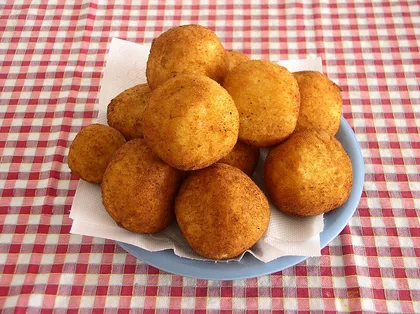 PATAranciniArancini are deep-fried Sicilian rice balls: saffron rice moulded around a filling of meat…
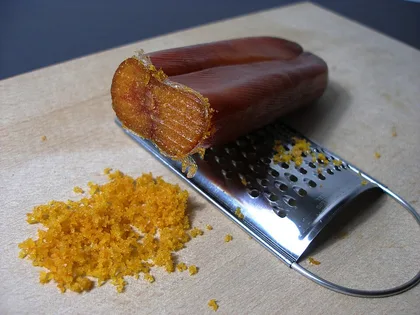 PATBottargaFifteen grams a head is enough, and that is not meanness: bottarga is the salted, pressed…
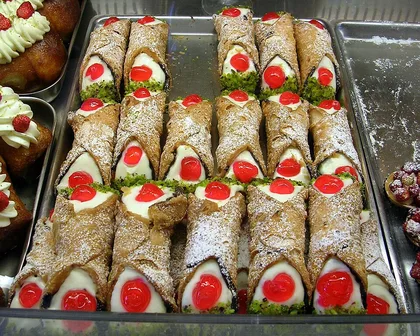 PATCannoliIt has to be filled when you order it, and anywhere that fills them in advance has already…
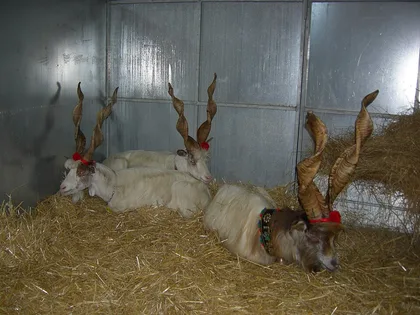 FoodGirgentana Goat CheeseThe Girgentana is the corkscrew-horned goat of Agrigento, in south-western Sicily: white…
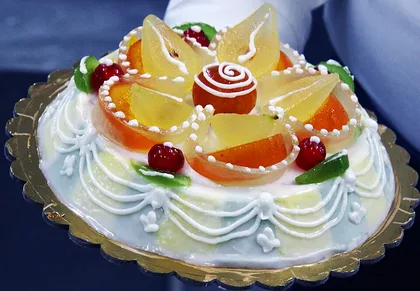 FoodCassata SicilianaCassata siciliana is a layered Palermo cake: sponge soaked in liqueur, sweetened…
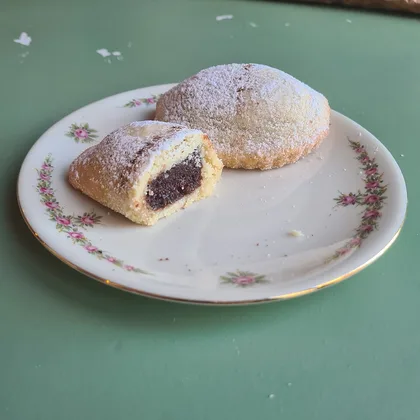 FoodCassatellaA cassatella is a fried Sicilian turnover: thin wine-based pastry folded around sweetened…
What to do here
The park is the main reason to come up. The path network starts from the refuges and the villages and covers every difficulty: Piano Battaglia is the central hub, from which Pizzo Carbonara is a couple of hours up over karst ground where it is easy to lose the path in fog; the Madonna degli Angeli valley above Polizzi holds the last wild specimens of the Nebrodi fir left in the world, a few dozen trees that escaped the clearances; the beech wood of Piano Sempria above Castelbuono is the easiest walk and the best one with children. The park has licensed guides and it is worth using them, because the waymarking is patchy.
On food, there are three concrete activities. The dairy visit, which has to be at dawn if you want to see the curd pulled, and which in most cases is arranged by telephone the day before. The cutting of the manna ash trees, between July and September, which some farms at Castelbuono and Pollina show on request: it is slow work, uphill, in the sun, and watching it explains why manna costs what it costs. Mushroom picking in autumn, which is regulated with permits and daily limits: the Madonie porcino is abundant, but there is also the fungo di ferla, an oyster mushroom that grows on umbellifers and is rare and protected.
The villages are each walked in half a day. Castelbuono has the Ventimiglia castle with a chapel decorated by the Serpotta family and is the liveliest centre, with shops open all year; at the end of summer it hosts a music festival that fills the village for three days, and in those days there is no room anywhere. Petralia Soprana and Gangi are the two most photographed and the least served. Polizzi has a natural history museum and an intact old centre.
Two things off-topic but close by. The first is Cefalù, forty minutes downhill: the Norman cathedral with its Christ Pantocrator mosaic is among the most important things in Sicily, but the rest of the town in August is a tourist machine with prices double the mountain's. The second is the Targa Florio circuit, the motor race that from 1906 ran on these roads through Collesano and Cerda: there is a museum at Collesano, and the corners are still the same.
The year, month by month
From December to March it snows on the Madonie, and the lifts at Piano Battaglia open when the snow holds: this is not Alpine skiing, it is short and uncertain, and it should be treated as an extra rather than a reason to travel. In exchange it is the season of soups, pork, aged cheese and the oranges that come up from the plain below. Many mountain places close, so check everything first.
April and May are superb for walking: the flowering at altitude is spectacular, temperatures sit between fifteen and twenty degrees, and the remaining snow holds only on north faces. On the table come Easter kid, fresh broad beans and the first abundant ricottas.
June, July and August are the manna season: the ash trees are cut in the driest weeks and the work runs into September. It is also when the Madonie become the refuge of anyone who cannot stand the heat on the coast, with twenty degrees of difference from Palermo in the middle of the day. In August the villages fill with emigrants coming home, patronal feasts follow one another and life in the villages doubles. The downside is that in that month the whole of Sicily is expensive and booked.
September and October are probably the best moment. The manna ends, the mushrooms start, the few local vineyards are harvested, the beech woods turn and the paths are free. November brings new oil from the mills on the hills below (Collesano, Caltavuturo, Sciara), chestnuts and the first cold, and the villages go back to being what they are for nine months of the year: small, quiet places with very few restaurants open.
Getting there and getting around
The natural access is the A19 Palermo to Catania motorway, with the Scillato, Tremonzelli and Irosa exits climbing towards the inland side, or the A20 Palermo to Messina along the coast with the Castelbuono exit for the northern side. Palermo to Castelbuono takes a little over an hour, to Petralia an hour and twenty. The inland roads are narrow, winding provincial ones, often with uneven surfaces and no lighting: distances in kilometres deceive, and two villages visible from each other can be forty minutes apart.
By train the Palermo to Messina coastal line has a station at Castelbuono, but it is down on the plain, several kilometres from the village, and has to be connected by bus or taxi; the same goes for Cefalù, which is instead in the centre and is by far the most convenient station. No useful railway crosses the interior: the old line to Petralia is not an option.
Local buses link Palermo to the main Madonie towns with one or two services a day, designed for commuters rather than visitors. Without a car the territory is effectively inaccessible: the farms, the dairies, the paths and the ash groves are all outside the villages. Anyone arriving by air should hire a car in Palermo.
The reference airport is Palermo Punta Raisi, about an hour and a half from the Madonie villages, linked to Palermo central by a frequent train. Catania is two and a half hours and is a real alternative if the flight is cheaper. The port of Palermo takes ferries from Naples, Genoa and Tunis, and for anyone travelling with their own car it is the most practical solution.
A note on winter conditions: above a thousand metres, between December and March, snow can close the ridge sections, particularly the climb to Piano Battaglia. Chains in the car are a legal requirement in that period on several provincial roads, and it is not a formality.
Frequently asked questions
What exactly is manna and where do you buy it?
It is the sap that seeps from ash trees when the bark is cut with a knife on dry days in July, August and September; it runs down the trunk, sets in the air and forms white stalactites broken off by hand. It is the only production left in Europe and is concentrated on a few hectares in the territories of Castelbuono and Pollina. The best grade is manna in cannolo, the whole stalactites; the rest is collected from the ground or from sheets. It tastes lightly sweet, between honey and wood, and is used as a sweetener or in pastry. Buy it from local producers or from shops that can say which grove it came from: generic products circulate under the same name.
Can you visit the Madonie from Cefalù?
Yes, and that is what most visitors do, but with limits. Cefalù to Castelbuono is forty minutes, to Petralia a little over an hour, all on winding roads. Going and coming back in a day works for one village and one path, not for more. Anyone who wants to see the dairies at dawn, the manna cutting or to walk at altitude has to sleep in the mountains at least one night. The reverse works better: base in the Madonie, where you spend far less, and go down to the sea when you want. In August the price gap between a room in Cefalù and one in Petralia is sharp.
When are the mushrooms?
From September to November, with the peak depending on the late summer rain: if it rains in early September, the porcini arrive within three weeks. The beech and oak woods of the park are productive areas and picking is regulated by the park authority with permits, daily maximums and closed days, so anyone intending to pick should find out first. Besides the porcino, these mountains grow the fungo di ferla, an oyster mushroom tied to umbellifer plants that is rare and specifically protected. In the village restaurants, in autumn, mushrooms are the most reliable thing on the menu.
Is provola delle Madonie the same as caciocavallo?
They belong to the same family, the aged pulled-curd cheeses, but they are not the same product. Provola delle Madonie is cow's milk, often from local breeds, pear-shaped with the little head tied by a cord, and aged from a few weeks to several months; it is a Presidium tied to a restricted area and to hand work. Caciocavallo is a generic name used across the South for similar cheeses, with different rulebooks and denominations by region. In the Madonie it should also be distinguished from the provola of the Nebrodi, which comes from the neighbouring massif and has its own character: two close products that their makers keep firmly separate.