Collio goriziano: where to eat and stay
A strip of hills twenty kilometres wide leaning on the Slovenian border, where some of Italy's most serious whites are made and where one grape had to change its name because of a European ruling. Border cooking, prices still reasonable, cellars that open only if you wrote first.
The Collio is the arc of hills running from the outskirts of Gorizia north-west to Dolegna, leaning along its whole length against the border with Slovenia. There are nine municipalities in all (Cormons, Capriva del Friuli, San Floriano del Collio, Dolegna del Collio, Mossa, Moraro, San Lorenzo Isontino, Farra d'Isonzo and part of Gorizia) across an area you can tour in half a day. On the other side of the border the landscape does not change by a metre and is called Brda: same hill, same soil, same grapes, different number plates. Anyone who comes here and does not cross at least once misses half the story.
The soil is called ponca and it is the technical reason this place exists as a wine zone. It is Eocene sandy marl, layered, which flakes apart in the rain and knits back together: it holds little water, drains fast and forces roots downwards. The whites that come out of it have a salinity and a tension that the plain below cannot give. Add that the sea is thirty kilometres away and the Julian Alps barely further, and you have the day-night swings that hold the acidity up. This is not consortium rhetoric: it is why in the 1970s, when Italian white wine was still a desert, people here began fermenting whites at controlled temperatures and built the reputation that still stands.
Two warnings before setting off. The first is that the Collio is not a mass tourism destination and has no equipment for being one: the cellars are small, the visiting calendar is decided by one person who may be out in the vineyard that day, and turning up without an appointment almost always means a closed gate. You write a few days ahead, and in September and October more than a few. The second is that this is a border zone with a hard history: the Isonzo front passed through, the villages were flattened and rebuilt, and Gorizia was split in two in 1947 by a line that cut through cemeteries and courtyards. That is not local colour, you can see it in the landscape and in the way people tell their stories.
How people eat here
The food is Austro-Slav with Venetian grafts, and in that mixture the typical Italian dish is the exception. Goulash is native and is not a quotation: it has been Gorizia cooking for two centuries, cooked long with paprika and onion, served with potato dumplings or polenta. Brovada (white turnips macerated in grape marc, grated and stewed) goes with muset, the Friulian cotechino, and is one of the few dishes in the world in which a vegetable is fermented with the waste of wine. Frico exists in two versions worth not confusing: the soft one, with potato and onion, a substantial dish eaten with a fork, and the crisp one, which is only cheese melted and dried in a pan and which half of Italy serves as a snack. The cheese in question is almost always Montasio, the protected name of Friuli, which changes character sharply between fresh, medium and long-aged.
On cured meats, the prosciutto of Cormons needs an honest note. It is not a protected name and it is not even a continuous historic product: it is a small artisan production revived in recent times, legs worked without preservatives and aged here in the hills. It is good, and people look for it precisely because it is different from San Daniele. San Daniele, the big Friulian protected name, is made exactly an hour's drive from here, on the Tagliamento, in a town where the air currents do the work: another zone and another industrial scale, and anyone with time should see both to understand the difference. On the table here you will also find the smoked cooked ham of Central European tradition, which in the buffets of Gorizia and Trieste is carved hot and eaten with kren, grated horseradish.
Two products to chase, if the calendar helps. The first is the rosa di Gorizia, a winter radicchio grown in Gorizia and the villages around it that has nothing to do with the Veneto radicchios: the leaves close into a tight bud, it is picked by hand plant by plant in winter, the yield is tiny and the price per kilo is startling. It is eaten raw, barely dressed, at most with hard-boiled egg or with a bread strudel. The second is gubana, a rolled sweet filled with walnuts, raisins, pine nuts and grappa, which belongs to the Natisone valleys but is found all over the province: the leavened-dough version and the puff-pastry version are two different cakes with the same name, and it is worth asking which one you are being sold. Fish, meanwhile, is dealt with at Grado, half an hour south: boreto alla graisana (fish cooked with vinegar, garlic and pepper, no tomato, served with white polenta) is one of the few Italian seafood dishes that does not try to be likeable.
Working farms that take guests
Real places in this territory, checked one by one on their own site. What you read is what they state: the editorial visit has not happened yet, and when it does we will say so.
Azienda Agricola Zorzon
Cormons (GO)Eight hectares of vineyard on via Sottomonte at Brazzano, at the foot of the Collio hills: Friulano, Malvasia, Ribolla Gialla, Pinot Grigio, Sauvignon, Chardonnay, Merlot and Cabernet Franc under Collio DOC and IGT. The Domus Rustica farm stay, in a nineteenth-century rural house, has an 80-square-metre apartment and two double rooms; tastings in the cellar or in the garden.
zorzon.itVenica & Venica
Dolegna del Collio (GO)A family estate since 1930 at Cerò, with some thirty hectares of vineyard: Sauvignon, Friulano, Pinot Grigio, Malvasia, Chardonnay, Ribolla Gialla and Cabernet Franc. The guest side occupies the late nineteenth-century farmhouse that holds part of the historic cellar: six rooms and two apartments.
venica.itGradis'ciutta
San Floriano del Collio (GO)Thirty-five hectares of vineyard at Giasbana, certified organic from the 2018 vintage: Ribolla Gialla, Malvasia, Friulano, Pinot Grigio, Chardonnay, Sauvignon, Merlot and Cabernet Franc. Borgo Gradis'ciutta, converted from sixteenth-century buildings, has nine rooms and three apartments.
gradisciutta.euAgriturismo Al Benandant
Cormons (GO)A farm stay among the vineyards at the foot of Monte Quarin, on the corner of viale Roma and via Colombar: the wine, Pinot included, is made by the owners. Double rooms, a triple and a small apartment; the house takes adults only.
albenandant.comThe foods of this territory
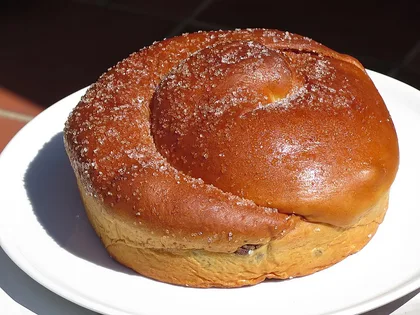 PATGubanaA long strip of enriched leavened dough rolled around walnuts, raisins, pine nuts and…
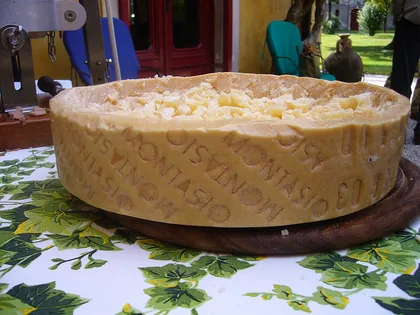 DOPMontasioMontasio DOP is Friuli's cheese: cow's milk, semi-cooked curd, wheels of 6 to 8 kilos and…
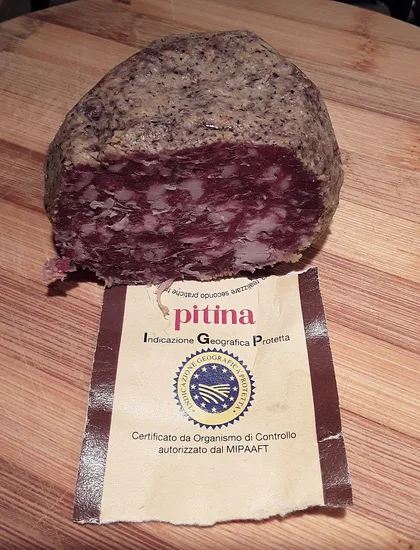 Presidio Slow FoodPitinaPitina is a smoked, cured meatball from the Friulian Dolomites: minced game or mutton bound…
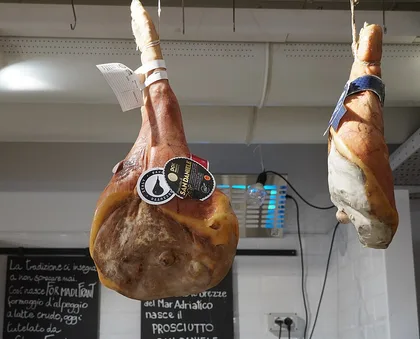 DOPProsciutto di San DanieleProsciutto di San Daniele DOP is made in one town in Friuli from two ingredients: pork leg…
 DOPProseccoProsecco is made from Glera grapes by the Martinotti tank method, not the traditional…
 FoodTiramisuNothing here goes near an oven. Savoiardi dipped in cold espresso, raw egg yolk whipped…
What to do here
The cellar visit is the central activity and should be built properly. The Collio has around a hundred bottling estates, almost all family-run, and none has a permanent reception structure with dedicated staff: you write, you agree a time, you are often received by the producer. Three visits in a day is the sensible maximum, two is better. A circuit that works: a morning at Cormons or Capriva for the classic whites (Friulano, Ribolla gialla, Istrian Malvasia, the blends that here are called Collio Bianco) and an afternoon at Oslavia, where whites are fermented with long macerations on the skins, in vats or in buried terracotta amphorae. It is a way of making wine recovered in the 1990s by a very small group of producers in that hamlet, and from there it spread around the world under the commercial name orange wine. Anyone who has never drunk them should taste them here, where someone will explain them, and bear in mind one uncomfortable thing: the category has attracted many imitators, and a wine oxidised by mistake does not become good because you call it macerated.
The border is a resource and crossing it costs nothing. From the San Floriano or the Vencò crossing you are in Brda in two minutes: same hills, same grapes, cellars often with relatives on this side, prices on average lower. In Gorizia the thing to see is not a monument but piazza Transalpina, divided in two by a fence from 1947 to 2004 and now with a line of stone in the paving where the border was. Nearby, the Great War museum tells the story of the Isonzo front with first-hand material.
On foot there are short routes among the vineyards: the loop around Ruttars, the climb up Monte Quarin above Cormons, the path linking San Floriano to the border crossing, all under three hours and all without shade in July. Monte Sabotino, just above Gorizia, is a former military height with visitable trenches and a view over the whole Isonzo plain. By bike the ridge roads are a pleasure but narrow and without a verge, so better on weekdays.
One last note on osmize, because the confusion is common: they are the temporary direct sales a farm may open for a few days a year, marked by a leafy branch, and they are an institution of the Trieste Carso more than of the Collio. Something similar exists around here and in Slovenia, where they are called osmice, but anyone arriving expecting one at every bend will be disappointed.
The year, month by month
From January to March the Collio is empty and cold, with the bora that, when it comes through the Gorizia gap, removes any desire to walk. It is, though, the season of the rosa di Gorizia, picked in deep winter and going almost entirely to the province's restaurants: if that is the reason for the trip, it is the only possible period. In the cellars wine is racked and tasted from the barrel, and producers have time.
April and May are probably the best moment. The hills are green, the white asparagus of the Friulian lowland reaches the menus, the walking is good and the cellars are not yet caught up in the season. In May Cormons has for decades held an event devoted to the area's wines that fills the town for a weekend.
June, July and August are hot and muggy: the Collio is not high, and the forty degrees of the Friulian plain reach up here. In exchange it is the season when the sea at Grado is half an hour away and the village festivals serve real food at low prices. Many producers close for holidays in August, so plan ahead.
September and October are the harvest, and that has two faces. The landscape is at its best and the smell of must carries for kilometres, but producers work twelve-hour days and visits thin out: anyone who agrees to receive you does it quickly and in the middle of work, which has its own interest but is not a calm tasting. November and December bring San Martino, chestnuts, the first new cured meats and the first roses of Gorizia, and goulash, brovada and frico return to the table: it is when this province's cooking is at its best.
Getting there and getting around
By car you come off the A4 Venice to Trieste at Villesse or Gradisca d'Isonzo, and from there it is twenty minutes to Cormons or Gorizia. From Austria you come down over the Tarvisio pass on the A23 in a little over an hour and a half. From Ljubljana it is fifty minutes of motorway to the Vrtojba crossing on the edge of Gorizia. Internal distances are tiny: from one end of the Collio to the other is twenty-five minutes of narrow winding hill roads, which in the evening are dark and without crash barriers.
By train the reference station is Gorizia Centrale, on the Venice to Udine to Trieste line changing at Udine or Monfalcone; Cormons has its own station on the same line, and it is the best base for anyone without a car because the town has restaurants, hotels and some cellars within walking distance. There is also Nova Gorica station on the other side of the border, served by the Slovenian network and linked on foot to Gorizia through piazza Transalpina: a useful detail for anyone coming from Ljubljana or Bled.
The airports are Trieste-Ronchi dei Legionari, thirty kilometres away, with its own railway station connected to the terminal; Ljubljana an hour and a quarter; Venice and Treviso about two hours. Ronchi is by far the most convenient but has few flights, so it is always worth comparing.
Without a car the Collio is hard work but not impossible: the local buses link Gorizia to Cormons and the main villages, with sparse services and almost none on Sundays. The solution used by people who come for the wine is to sleep in Cormons and hire a bike, bearing in mind that the climbs are short but continuous and that getting back in the evening after three tastings is a real problem: several places organise transfers, and it is worth asking when you book.
Frequently asked questions
Why is Tocai friulano now called Friulano?
Because of a question of names rather than of grapes. Hungary obtained European protection for the exclusive use of the reference to Tokaj, which is one of its wine regions, and since 31 March 2007 the grape can no longer be labelled Tocai friulano within Italian denominations. The variety is unchanged (the same one that in France is called Sauvignonasse) and Friuli chose to call it simply Friulano. In the Colli Euganei the same grape kept yet another name. If someone in a cellar says Tocai out of habit they are not deceiving you: it is the word they used for fifty years.
What is the difference between Collio wines and those of the Colli Orientali?
They are two neighbouring and similar denominations, both on ponca hills, but with different accents. The Collio is smaller, further south, closer to the sea and more oriented to whites, with Friulano, Ribolla gialla, Istrian Malvasia and the white blends at the heart of production. The Colli Orientali del Friuli, now Friuli Colli Orientali, are larger, climb northwards and express the native reds more strongly (Schioppettino, Pignolo, Refosco) along with sweet wines such as Picolit and Verduzzo di Ramandolo. Many estates have vines in both, and in a tasting the distinction is less sharp than the map suggests.
Can you visit San Daniele ham from the Collio?
Yes, and it makes a sensible day trip. San Daniele del Friuli is about an hour's drive north-west of Cormons, in a zone of moraine hills on the Tagliamento where the air currents do the curing. Several producers take visits by appointment and the town has shops where the ham is carved and eaten on the spot. Bear in mind, though, that it is another scale entirely: San Daniele is a protected name producing millions of legs a year, while the artisan ham found at Cormons is a very small local production without a denomination. They are two different products, not two versions of the same one.
Is it worth crossing the border to visit Slovenian cellars?
Yes, and it is not a fallback. The zone that in Slovenia is called Brda is the exact geological continuation of the Collio: the same ponca, the same grapes, often families related to the Italian ones, and in many cases lower prices for the same quality. The San Floriano and Vencò crossings take minutes and involve no checks. The cellars work the same way, by appointment, and Italian is widely understood. Anyone who wants to understand how wine is made on these hills should give at least half a day to the Slovenian side.