Eleven things from Umbria, the region without a sea
Castelluccio lentils, Norcia ham, lonzino, liver sausage, cicerchia, black celery of Trevi, black truffle, strangozzi, torta al testo, torcolo, panpepato.
Umbria is the only region of peninsular Italy with no coast, and its cooking is exactly that of an interior: pork, pulses, black truffle, bread baked on stone. Norcia gave its name to the trade, because the norcini were the pork butchers who travelled central Italy for the winter slaughter, and Prosciutto di Norcia IGP is the only major Italian raw ham cured in the mountains.
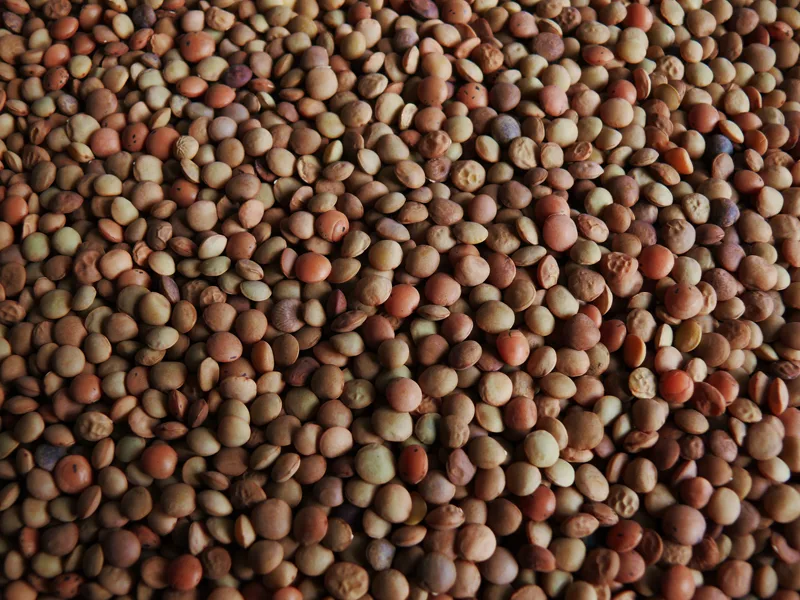
Pulses are the other column, and the best known case is the lentils of Castelluccio, grown at thirteen hundred metres on the Pian Grande inside the Sibillini park. They are very small and their skin is so thin they must not be soaked: it is the only Italian lentil for which soaking is a mistake, because they collapse. Cicerchia is the opposite, an ancient pulse that wants a long soak with changes of water.
The prized black truffle of Norcia and Spoleto is the third entry, and it behaves in the opposite way to the Piedmontese white: it is cooked, warmed in oil with an anchovy, dissolved into a dressing. Strangozzi al tartufo are made for exactly that, a pasta of water and flour alone rolled thick, because the dressing is fatty and thin.
 Zyance · CC BY-SA 2.5
umbria · 18-25 €/kg
They grow at thirteen hundred metres on the Pian Grande, inside the Sibillini park. Very small, with a skin so thin they must not be soaked: soaking makes them collapse, and it is the commonest error.
umbria · marche
The oldest and most awkward pulse in Italy: it feeds where nothing else grows and requires a long soak with changes of water, as its own page explains. Today it is found in a few Apennine strongholds.
 Peter Forster from Centobuchi, Italy · CC BY-SA 2.0
umbria · 20-28 €/kg
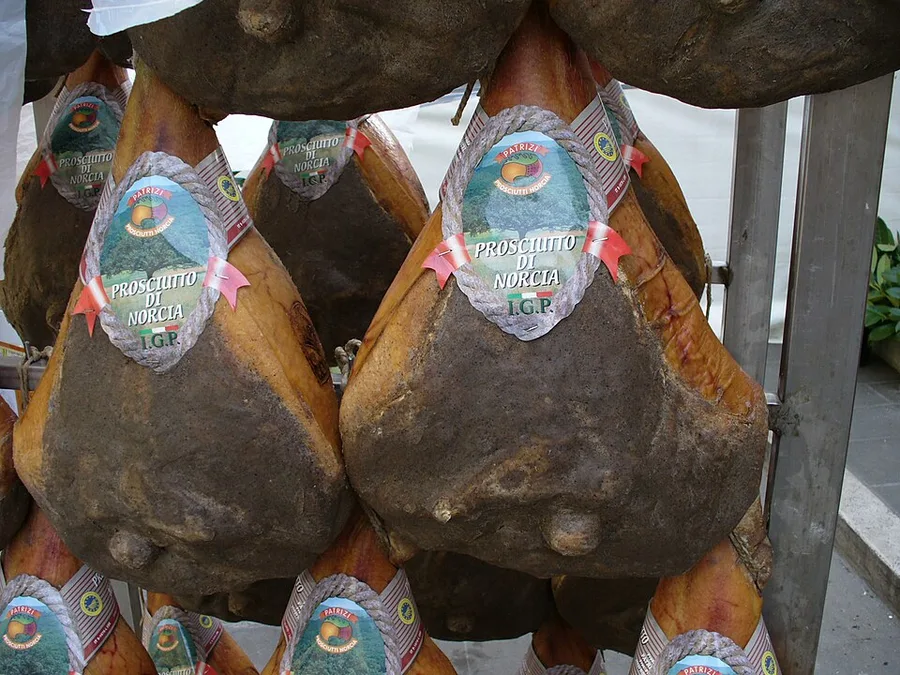
The only major Italian raw ham cured in the mountains, between four hundred and nine hundred metres in the Valnerina. Dry air, long winters, a pear shape, pepper on the surface, twelve months minimum.
 Gabriel Bucataru · CC BY-SA 2.004
Lonzino
marche · umbria · 22-32 €/kg
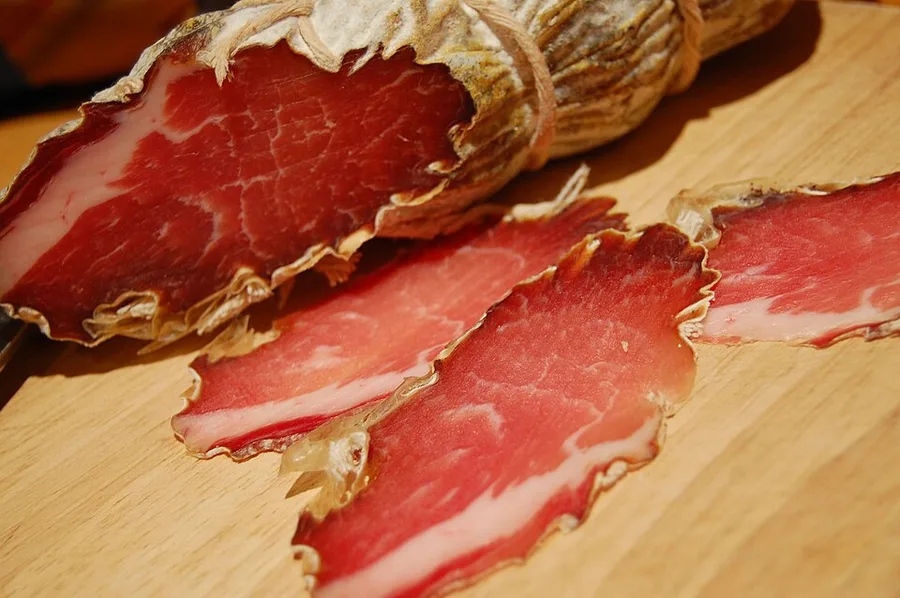
The loin dry-salted and cured whole: the leanest cut of the pig turned into something to slice. The Marche and Umbria have always made it, and it dries fast if left uncovered in the fridge.
basilicata · umbria · 12-18 €/kg
The sausage of the slaughter day: coarsely chopped liver, fat, salt and spices in natural casing. Two opposite versions, sweet with honey or raisins and hot with chilli, and a short cooking.
 Popo le Chien · CC BY-SA 4.0
lazio · umbria · abruzzo · 16-24 €/kg
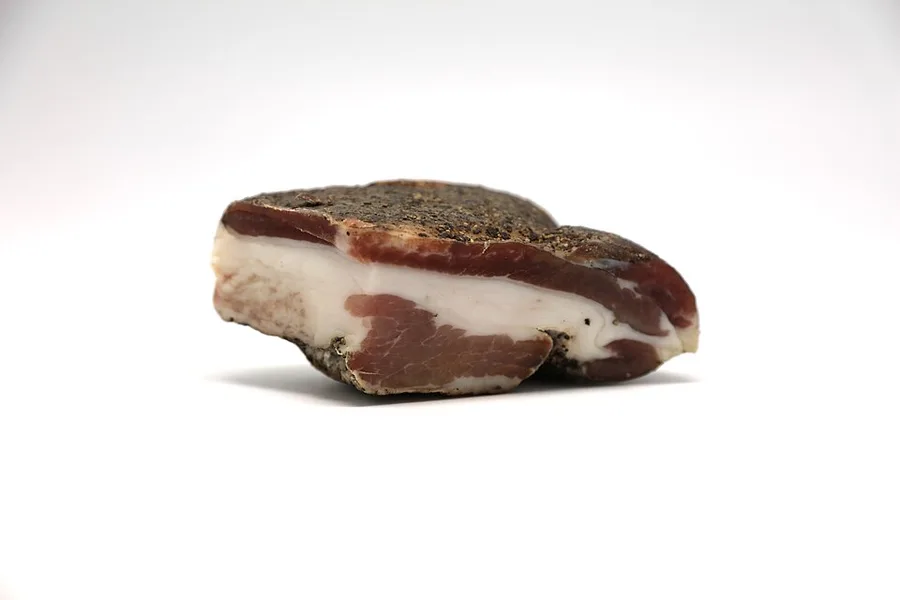
The cheek, salted and cured without smoke: in Umbria as in Lazio it is the starting fat of half the cooking. Cut it into thick strips and start from a cold pan, with no added oil.
umbria
It is not black but a very dark green. Stringless, it reaches a metre tall and grows on a valley floor of a few dozen hectares, from seed the growers keep themselves. It is eaten raw or stuffed.
umbria · 12-20 €/kg
The ring cake of Perugia: leavened dough with candied citron, raisins, pine nuts and aniseed, and five cuts on the surface standing for the city's five districts.
 Marco Varisco · CC BY-SA 2.0
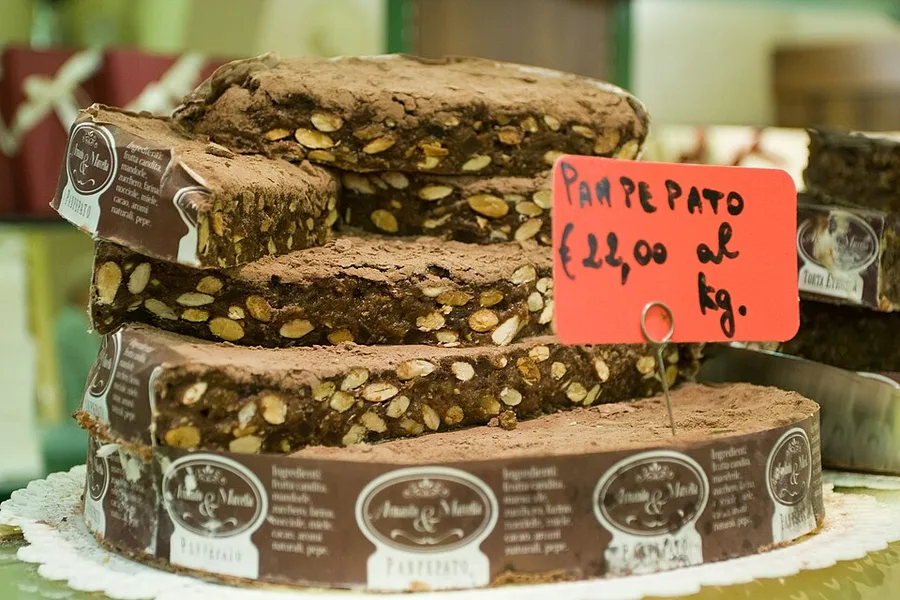
toscana · umbria · 20-35 €/kg
Honey, nuts, candied peel, cocoa and black pepper pressed into a dense disc cut into thin wedges. It is the medieval Christmas sweet from which Sienese panforte descends.
umbria · 1 h 2′
An hour and two minutes: pasta of water and flour alone, rolled thick and cut square in section, with black truffle, oil and an anchovy melted at very low heat. Black truffle is warmed, unlike white.
umbria · 1 h 5′
A flatbread cooked without fat on a red-hot cast iron disc, turned several times and split while hot to be filled. An hour and five minutes, and the testo must reach 220 to 230 degrees and stay there.
One last thing
Two rules about pulses that in Umbria are worth money and time. Castelluccio lentils are not soaked: the skin is so thin that water opens them before cooking, and in the pot they turn to cream instead of staying whole. Every other dried pulse in the region, cicerchia included, wants the opposite, hours of soaking with the water changed. And in every case the salt goes in at the end, because added at the start it toughens the skin and lengthens the cooking: which is why beans sometimes never soften at all.
The questions this list answers
These are real questions put to an AI assistant, in the period when Bing cited this site among its sources to answer them. The number is how many times we were cited. We read them in Bing Webmaster Tools, under AI performance, and they decide what goes on this page rather than the other way round.
- what are castelluccio lentils1,017 citations
- was sind castelluccio linsen?757 citations
- prosciutto di norcia52 citations
- strangozzi al tartufo nero20 citations
- strangozzi al tartufo20 citations
- umbrian lentils15 citations
- cicerchie legumi10 citations
Frequently asked questions
What are Castelluccio lentils?
IGP lentils grown at around thirteen hundred metres on the Pian Grande of Castelluccio di Norcia, inside the Monti Sibillini national park. They are very small, with an extremely thin skin, and must not be soaked: they cook in twenty or thirty minutes from cold water.
Why is Norcia ham different from the others?
Because it cures in the mountains, between four hundred and nine hundred metres in the Valnerina, where the air is dry and the winter long. It is the only major Italian raw ham cured at altitude. It has a pear shape, pepper on the surface and at least twelve months, and it comes out more savoury and more aromatic than hill-cured hams.
Is black truffle cooked?
Yes, unlike white. The prized black truffle stands up to moderate heat and is at its best warmed in oil, where it releases its aroma: in strangozzi it dissolves with an anchovy at very low heat. White truffle, by contrast, is shaved raw, because heat destroys its volatile compounds.
What is torta al testo?
An Umbrian flatbread cooked without fat on a red-hot cast iron or stone disc called a testo. It is turned several times during cooking and split while hot to be filled, traditionally with cured meats, pan-dressed wild greens or sausage.