Ten of the most imitated Italian products, and how to check them
San Marzano, parmesan, buffalo mozzarella, balsamic vinegar, Parma ham, Pecorino Romano, Chianti Classico, lardo di Colonnata, Bronte pistachio, culatello: ten names and ten checks.
Imitation in food rarely works through declared fakes: it works through an evocative name, a flag on the packet and a missing word. Without the seal, San Marzano is just a long tomato; without the word tradizionale, balsamic vinegar is another category of product, legitimate and twenty times cheaper.
The parmesan case is the only one settled in court: in Europe a Court of Justice ruling established that parmesan is the protected translation of Parmigiano Reggiano, and only that cheese may use it. Outside the Union the name is free, and it denotes products with no relation to the Italian rules.
For all the others the check is concrete and takes seconds: a seal with a number, a crown branded into the rind, a black cockerel on the neck of a bottle, drained weight against net weight. This list puts each product's check beside it, because that is the only piece of information that is genuinely useful at the moment of buying.
 Assianir · CC BY-SA 3.0
campania
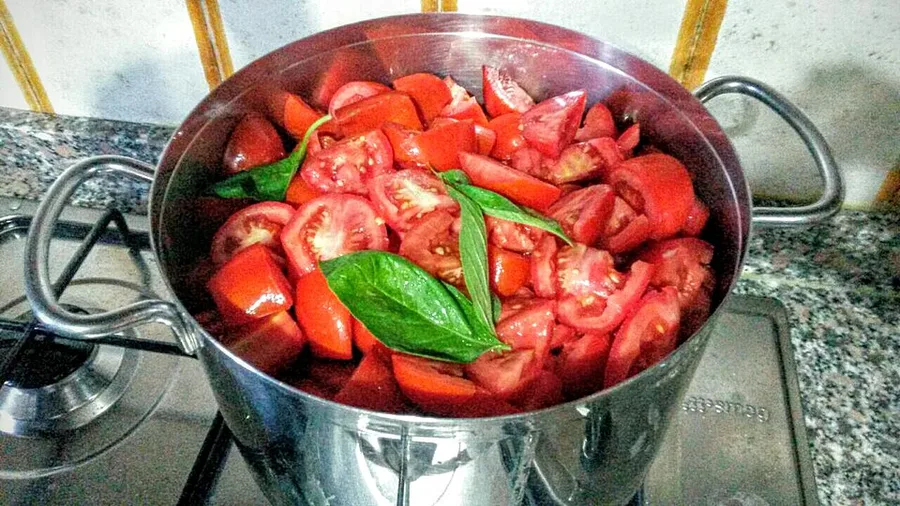
The check is the DOP seal on the tin, with the consortium and the number. Without it, it is just a long peeled tomato: the name is among the most counterfeited in the world, and the real fruit peels with the fingers.
 Nerodiseppia · CC BY-SA 3.0
emilia romagna · 14-18 €/kg
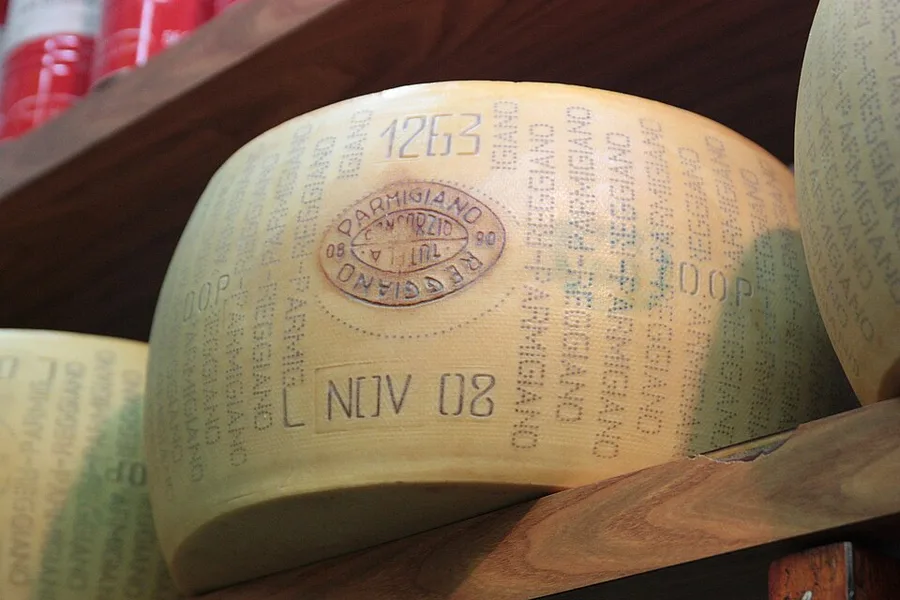
In Europe parmesan is the protected translation of Parmigiano Reggiano by court ruling, and only this cheese may use it. The check is the dotted rind and the months stamped on it.
 10Rosso · CC BY 2.0
campania · 11-15 €/kg
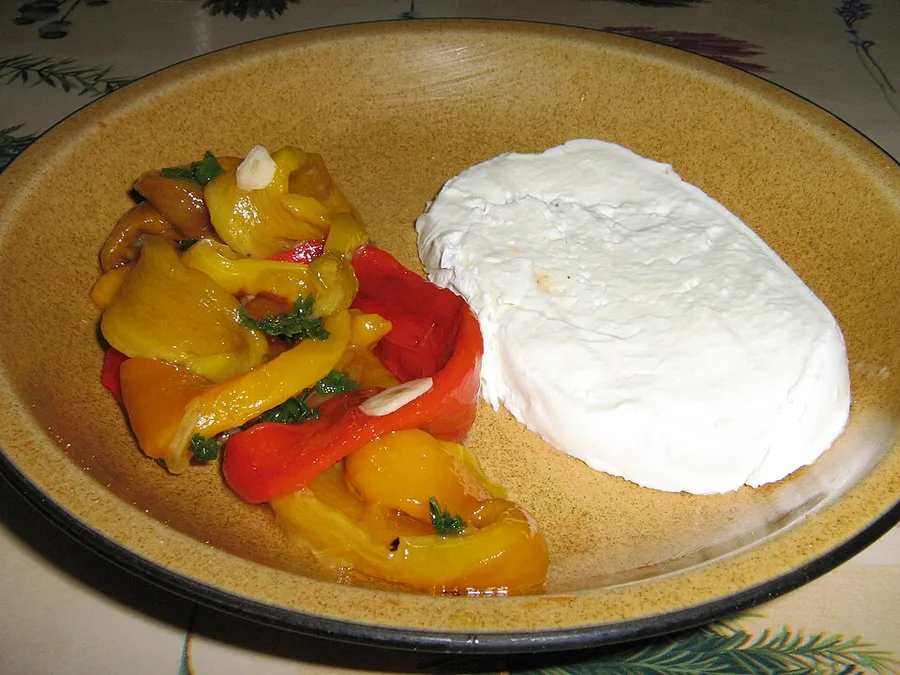
The check is the Mozzarella di Bufala Campana DOP mark: without it, mozzarella can mean cow's milk fiordilatte, which is legitimate, costs less and comes from another animal.
 Kikiteppi · CC BY-SA 4.0
emilia romagna
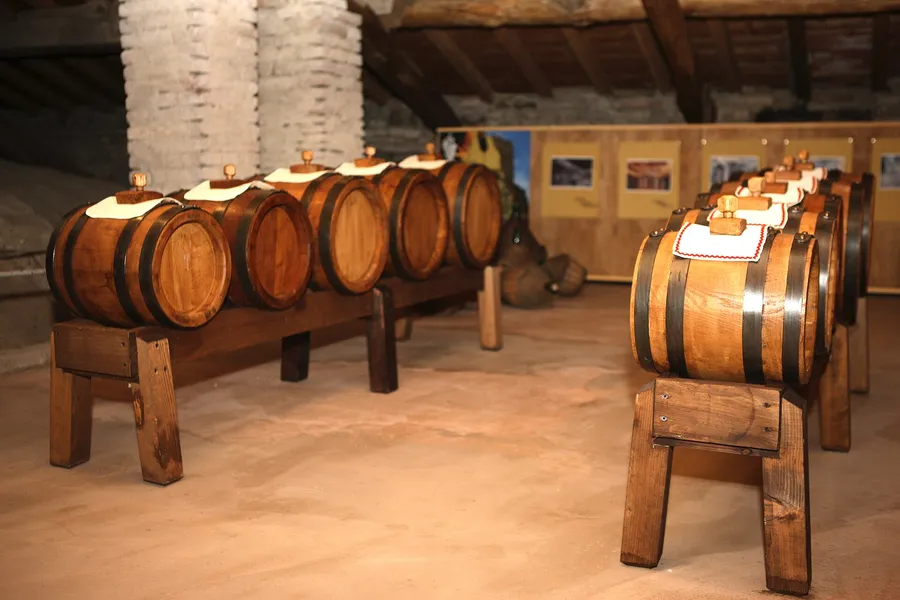
The check is one word: tradizionale. Aceto Balsamico Tradizionale di Modena DOP is cooked must aged for years; Aceto Balsamico di Modena IGP is a blend with wine vinegar and permitted caramel.
 Scott Brenner · CC BY 2.0
emilia romagna · 26-34 €/kg
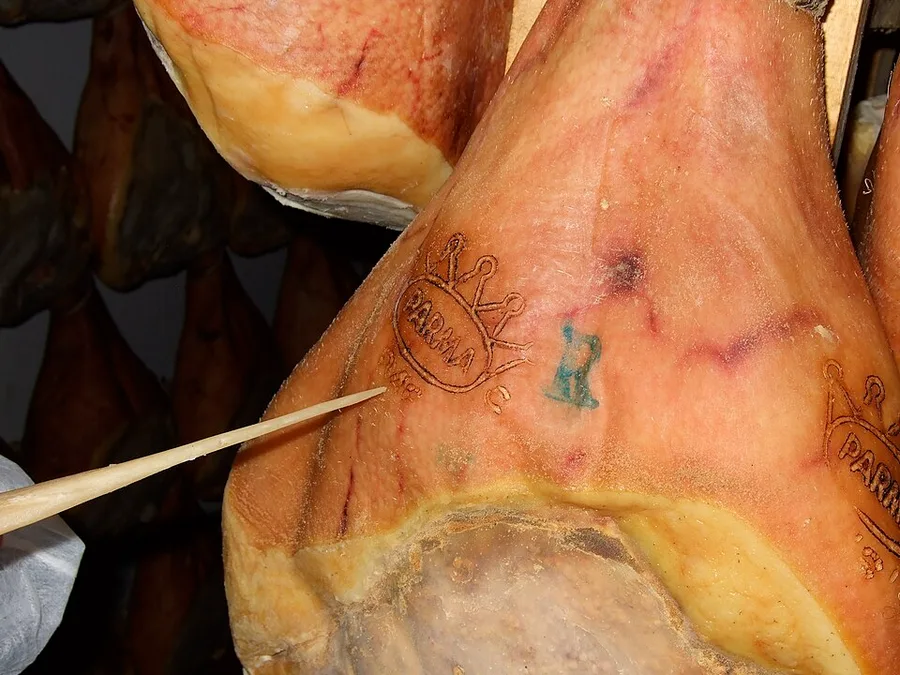
The check is the ducal crown branded on the rind. Without that crown it is not Prosciutto di Parma, whatever the label says about Parma: two ingredients, leg and sea salt.
 Jon Sullivan · Public domain
lazio · sardegna · 13-18 €/kg
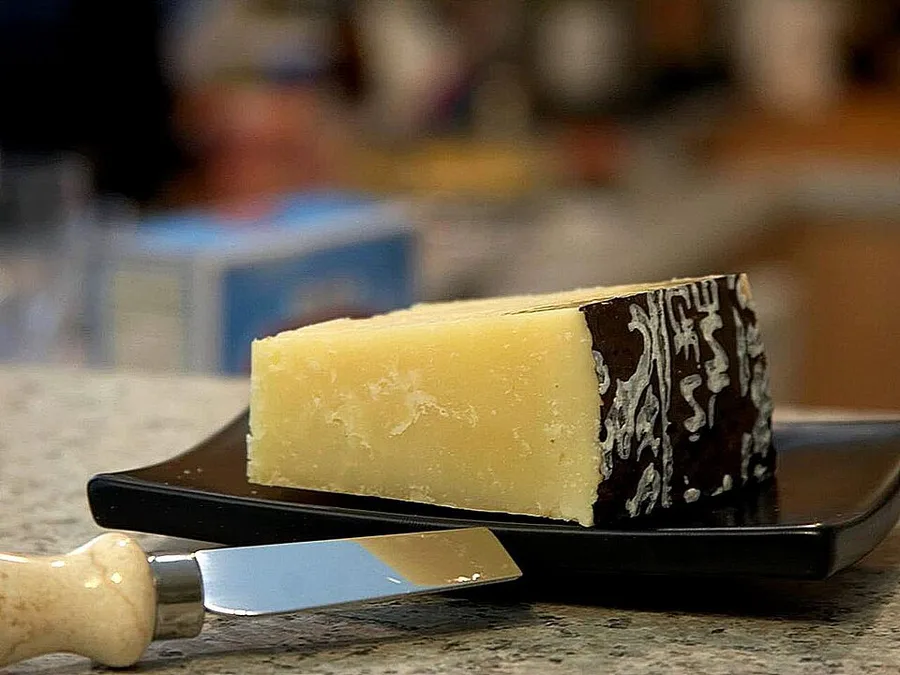
The check is the consortium's stylised sheep's head on the rind. It is a sheep's milk cheese dry-salted for months, and products imitating the name often use cow's milk.
 Tom Chance · CC BY-SA 2.0
toscana
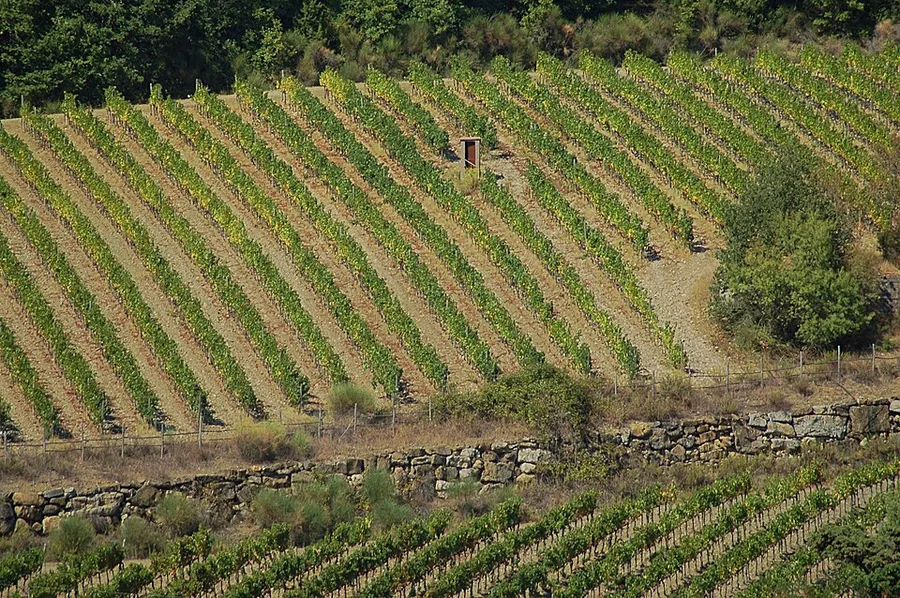
The check is the black cockerel on the neck of the bottle, the mark of the consortium of the historic zone between Florence and Siena. Chianti without Classico is another, wider denomination.
 OneArmedMan · Public domain
toscana · 28-40 €/kg
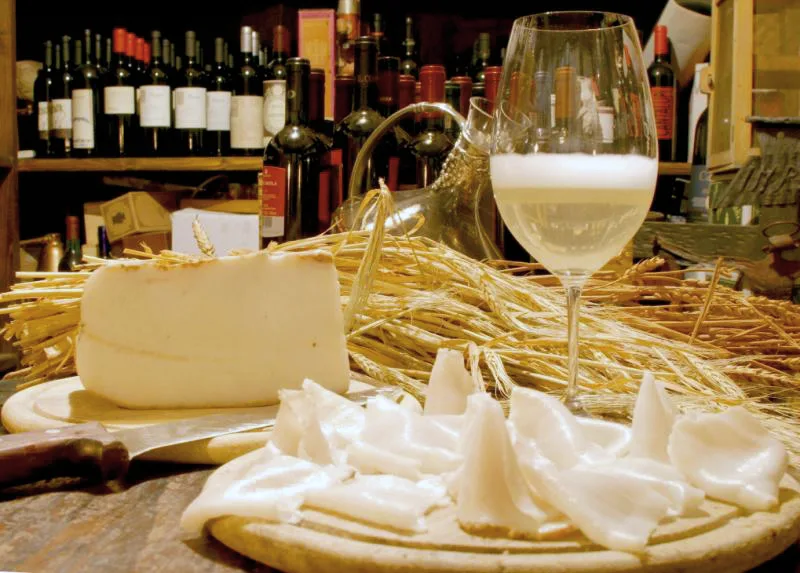
The check is the IGP and the producer: Colonnata is a hamlet of Carrara with a few dozen inhabitants, and the curing happens in the marble troughs in the village. The quantity is limited by necessity.
 Paolo Galli · CC BY-SA 3.0
sicilia · 25-40 €/kg
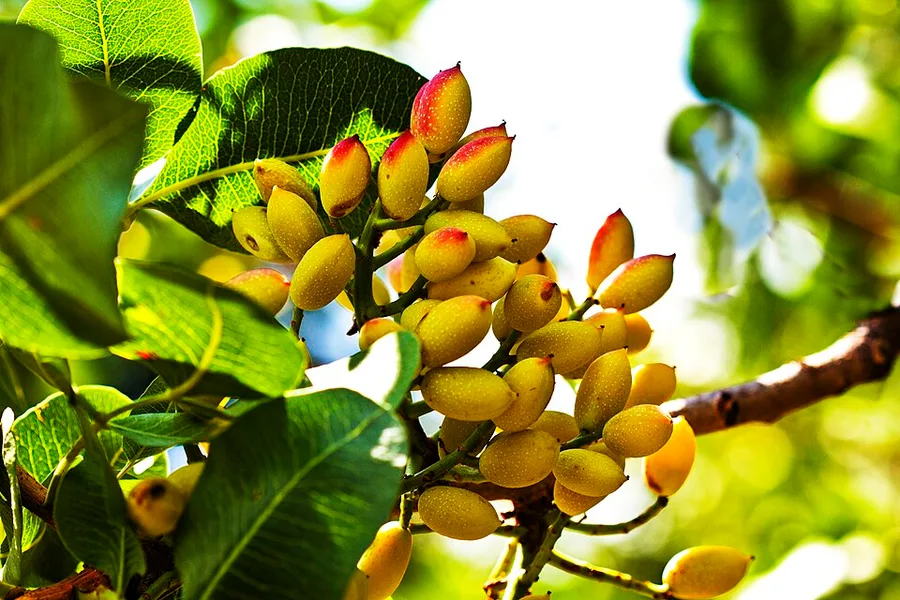
The check is the colour: emerald green right through, under a violet skin. Middle Eastern pistachios are paler and larger, and in shelled products colour is the most honest indicator.
 Francesco P · CC BY-SA 2.0
emilia romagna · 60-90 €/kg
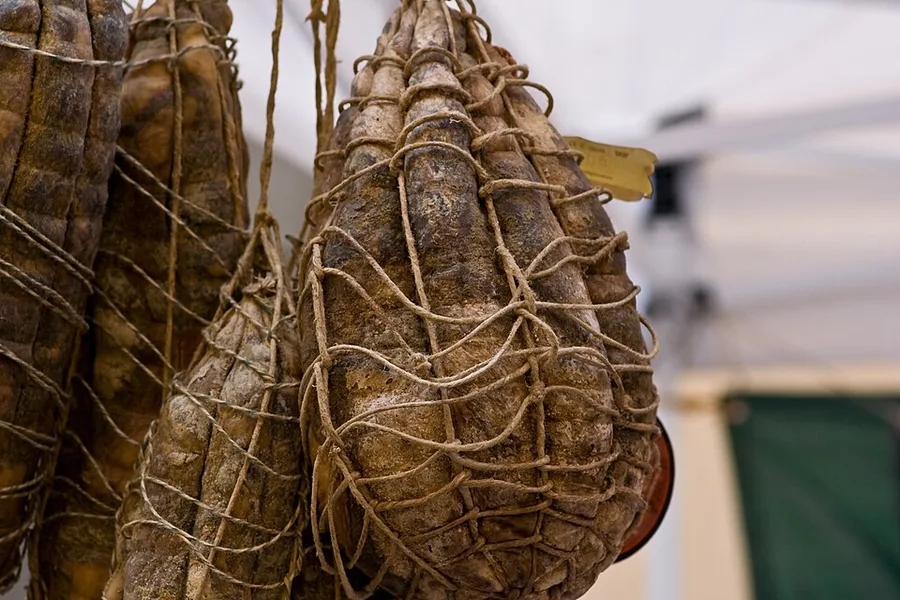
The check is the price: sixty to a hundred and twenty euro a kilo, because one whole leg yields a single culatello. Anyone selling it at thirty is selling a fiocchetto or a shoulder.
One last thing
The commonest form of imitation is not illegal and is not defeated by a seal: it is italian sounding, that is a name, a flag or a landscape that suggests Italy on a product made elsewhere under other rules. In those cases the product declares nothing false, it lets the buyer draw the conclusion. The only remedy is to read two lines of the label, the origin of the raw material and the place of processing, which are required by law: two pieces of information, in small type, that answer the question better than any picture on the front of the pack.
The questions this list answers
These are real questions put to an AI assistant, in the period when Bing cited this site among its sources to answer them. The number is how many times we were cited. We read them in Bing Webmaster Tools, under AI performance, and they decide what goes on this page rather than the other way round.
- dop significato286 citations
- san marzano tomatoes dop20 citations
- dop san marzano tomatoes12 citations
- italian sounding6 citations
- differenza grana padano parmigiano reggiano81 citations
- igp cosa significa25 citations
- what does dop mean in italy14 citations
- mozzarella di bufala291 citations
- aceto balsamico220 citations
- aceto balsamico tradizionale40 citations
- prosciutto di parma46 citations
- culatello172 citations
Frequently asked questions
What is italian sounding?
The practice of using names, flags, colours or images evoking Italy on products made elsewhere under different rules. It is not necessarily illegal: often the product declares nothing false but lets the consumer infer it from the packaging.
Is parmesan Parmigiano Reggiano?
In Europe, yes: a Court of Justice ruling established that parmesan is the protected translation of Parmigiano Reggiano. Outside the Union the name is used freely for products that do not follow those rules.
How do you recognise real Parma ham?
By the five-pointed ducal crown branded on the rind, with the word Parma. It is the only sign that counts: a label naming Parma without that mark does not indicate the DOP product, which contains only leg and sea salt.
Why does balsamic vinegar have two categories?
Because they are two distinct registered products: the Tradizionale of Modena and Reggio Emilia, DOP, is cooked must aged for years in casks; Aceto Balsamico di Modena IGP is a blend of must and wine vinegar, caramel permitted. Twenty times the price lies between them.