Nine things from the Italian New Year, and why the lentils
Cotechino and zampone with Castelluccio lentils, mostarda, panpepato, struffoli, cartellate, and a Prosecco made in a pressure tank rather than by the traditional method.
The Italian New Year table has one obligatory dish and a reason that has nothing to do with taste: cotechino with lentils, because lentils look like coins and promise abundance. It is a wish, and like all wishes a convention: it works identically with zampone, the same mixture in a different casing.
The technical part, though, matters. Cotechino is simmered long in barely moving water, never at a boil, because the rind splits and the fat ends up in the pot instead of in the slice; it is pricked with a pin and wrapped, and the cooking takes two or three hours. Castelluccio lentils, by contrast, are not soaked and cook in twenty or thirty minutes: putting them in water the night before is the commonest mistake of the evening.
The rest are sweets that keep. Panpepato, struffoli and cartellate are made before the holidays and last for weeks, which is how they reach the first of January. The toast, in Italy, is largely Prosecco, made by the Martinotti method in a pressure tank: the bubble is born in the tank rather than the bottle, and that explains the fruity profile and the price.
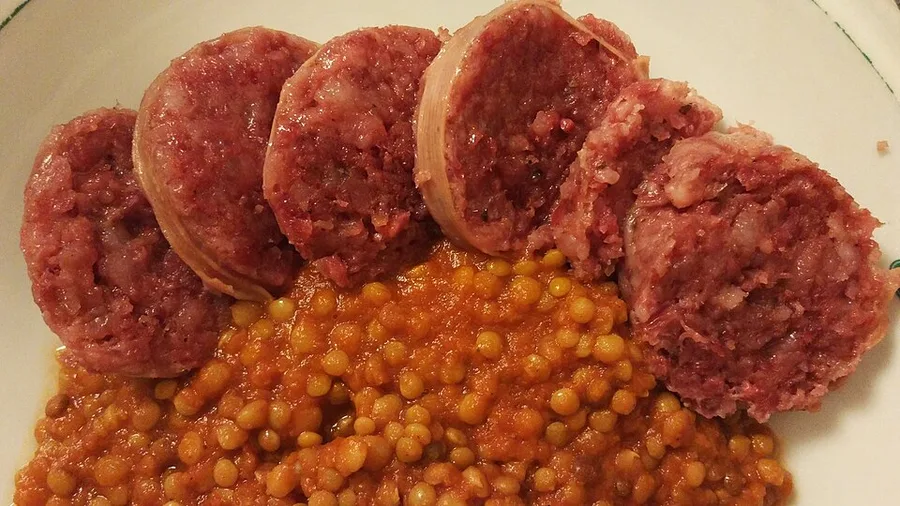 Popo le Chien · CC BY-SA 3.0
emilia romagna · 12-20 €/kg
Meat, fat and rind, the rind in the proportion that gives it both its name and its gelatinous texture. Simmer it in barely moving water for two or three hours: at a boil the rind splits and the fat ends up in the pot.
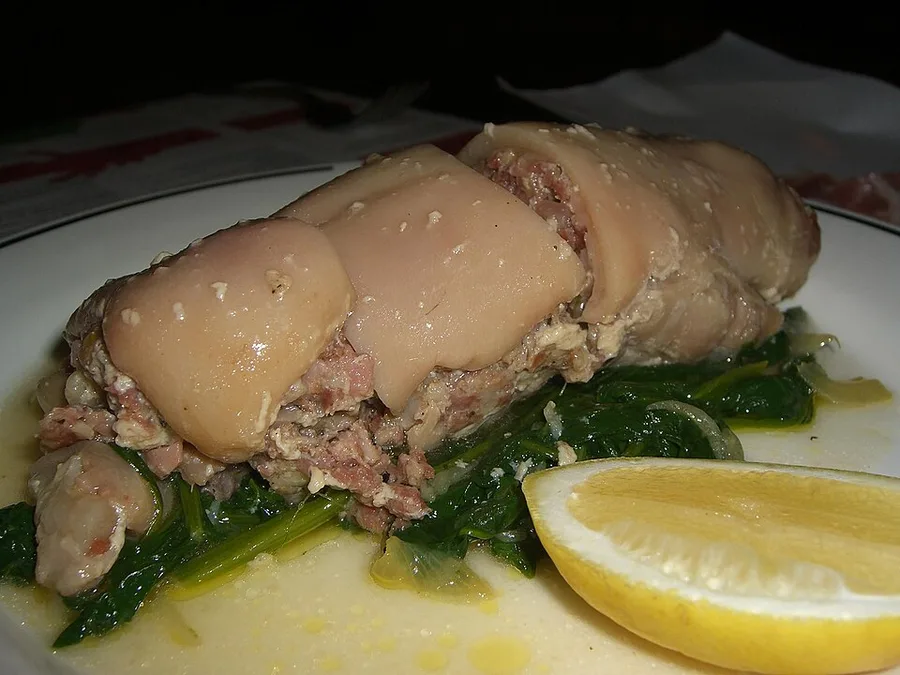 avlxyz · CC BY-SA 2.0
emilia romagna · 9-16 €/kg
The same mixture as cotechino inside the hollowed front trotter. The skin is tighter and gives a firm slice with a gelatinous rim, and it wants slightly longer cooking because that skin is thicker.
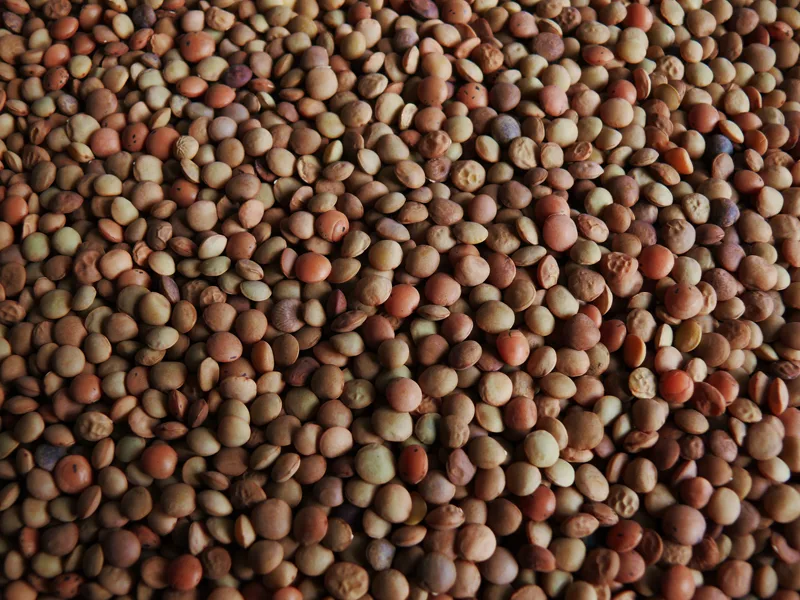 Zyance · CC BY-SA 2.5
umbria · 18-25 €/kg
They are not soaked: the skin is so thin that water opens them and in the pot they turn to cream. Twenty or thirty minutes from cold water, salt at the end, and they grow at thirteen hundred metres on the Pian Grande.
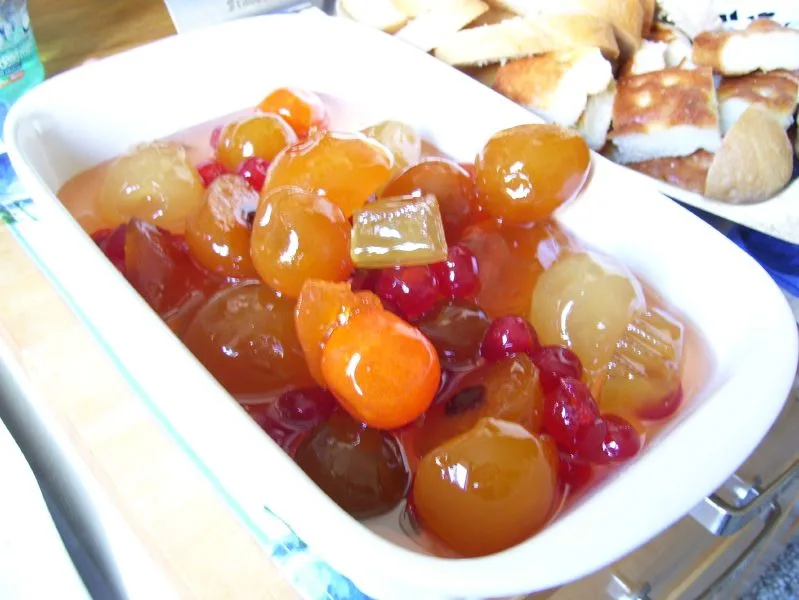 Silvio from Rome, Italy · CC BY 2.0
lombardia · 18-30 €/kg
Whole fruit candied in mustard: sweet, hot and pungent at once. With a cotechino or a boiled dinner it does the work a salsa verde does elsewhere, cutting the fat with acidity and sugar.
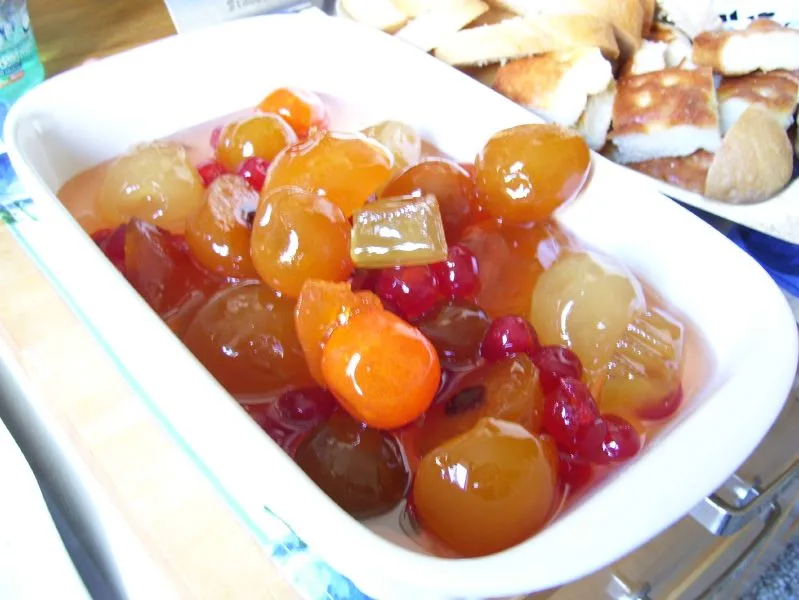 Silvio from Rome, Italy · CC BY 2.005
Mostarda
lombardia · 18-30 €/kg
The broader family of Italian mostarde, between Lombardy and Piedmont: fruit and mustard in proportions that change from village to village. Served with boiled meats and aged cheeses, not with fresh ones.
 Marco Varisco · CC BY-SA 2.0
toscana · umbria · 20-35 €/kg
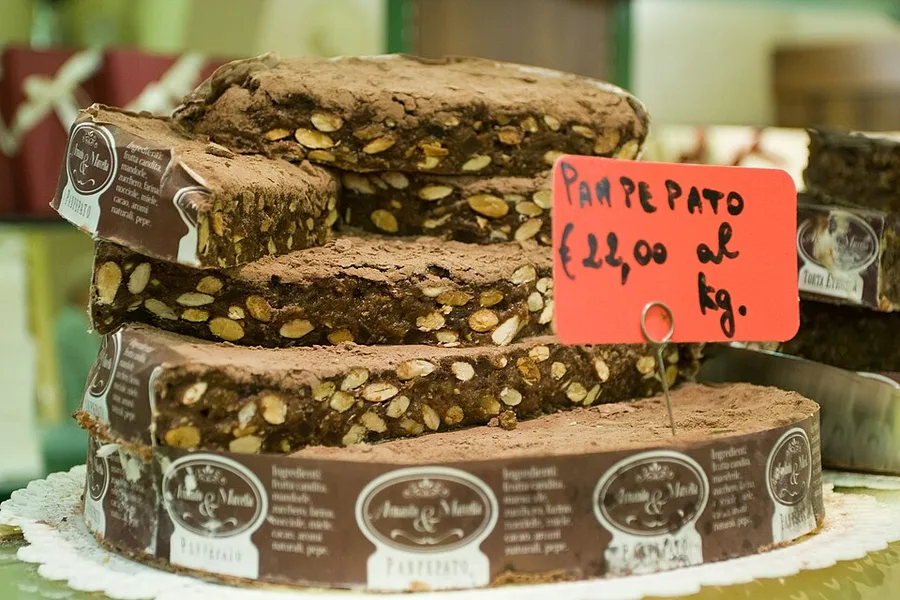
Honey, nuts, candied peel, cocoa and black pepper pressed into a dense disc, cut into thin wedges. It is the medieval Christmas sweet from which panforte descends, and it keeps for weeks.
 Steve-081 · Public domain
campania · 18-28 €/kg
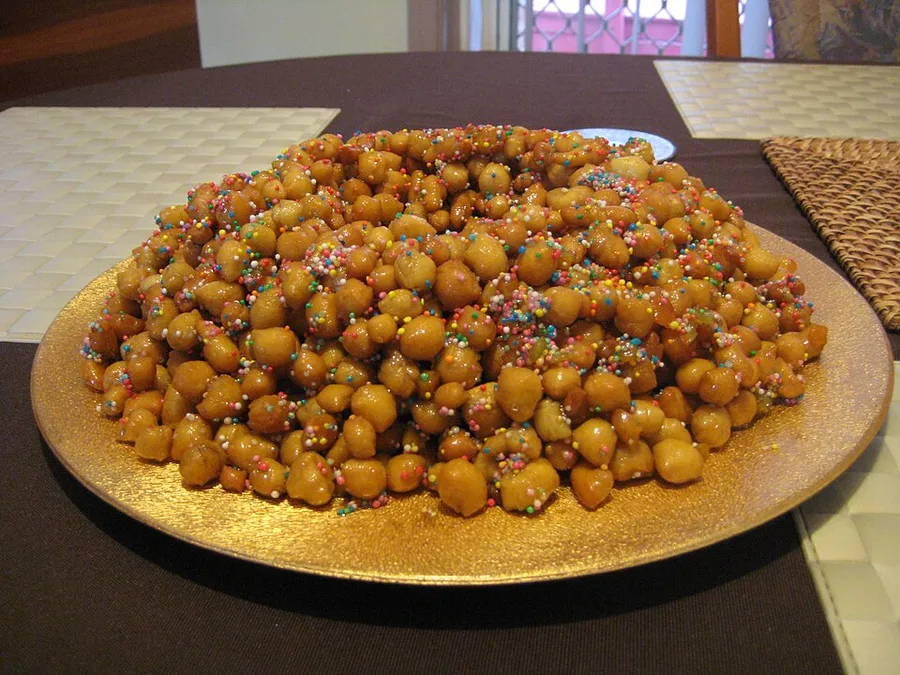
Little balls of fried dough bound with honey: made in quantity before the holidays and left on the table for days, because the honey preserves them and they are served at room temperature.
 Florixc · CC0
puglia · 20-32 €/kg
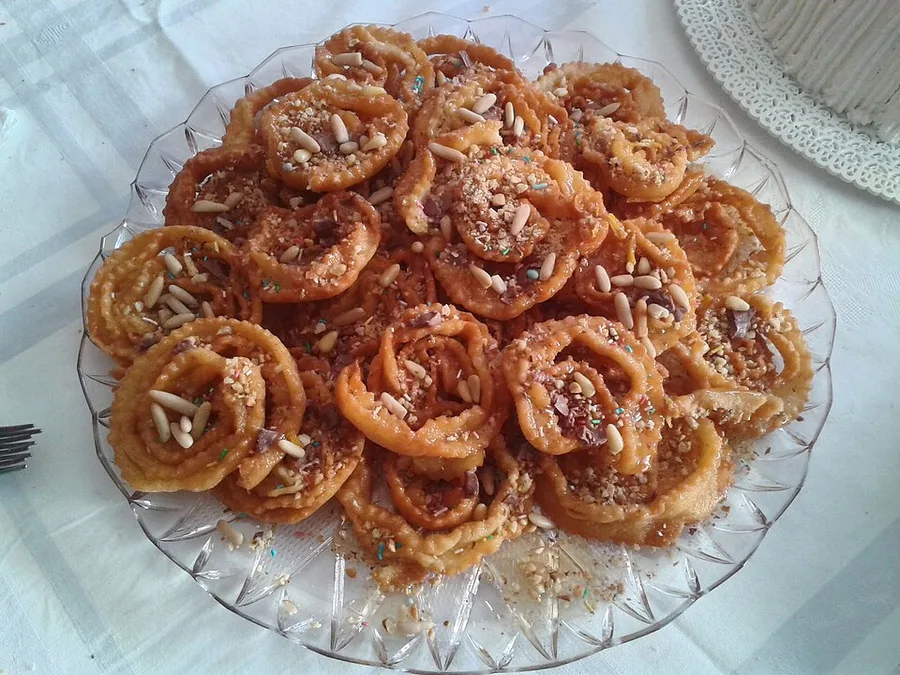
Very thin dough coiled into roses, fried and dipped in vincotto or honey. They are started from the Immaculate Conception and keep for weeks in a tin: the Apulian sweet that crosses all the holidays.
 Tiesse · CC0
veneto · friuli venezia giulia
Glera grapes and the Martinotti method in a pressure tank: the bubble forms in the tank rather than the bottle. That is the substantive difference from Champagne and Franciacorta, and it explains both the fruity profile and the price.
One last thing
Cotechino is the dish where haste shows at once. Prick it with a pin in a few places, wrap it in a cloth or leave it in its net, and put it into cold water brought to just below the boil: two or three hours without a single large bubble. If the water boils, the rind opens, the fat escapes and the slice is dry meat inside an empty rim. The lentils follow the opposite rule, no soaking and salt only at the end, and they are cooked separately: in the same pot they soak up the fat and lose their part in this dish, which is the only fresh thing on the table that night.
The questions this list answers
These are real questions put to an AI assistant, in the period when Bing cited this site among its sources to answer them. The number is how many times we were cited. We read them in Bing Webmaster Tools, under AI performance, and they decide what goes on this page rather than the other way round.
- cotechino13 citations
- what are castelluccio lentils1,017 citations
- was sind castelluccio linsen?757 citations
- umbrian lentils15 citations
- mostarda di cremona215 citations
- panforte99 citations
Frequently asked questions
Why are lentils and cotechino eaten at New Year?
As a wish for abundance: lentils look like coins. Cotechino is the rich meat of the year's end, and it works equally with zampone, the same mixture in another casing. It is not a pairing built on flavour.
Do Castelluccio lentils need soaking?
No, and that is the commonest mistake. The skin is so thin that water opens them before cooking, and in the pot they turn to cream. They cook in twenty or thirty minutes from cold water, with the salt added only at the end.
How do you cook a cotechino?
Pricked with a pin, wrapped, in cold water brought to just below the boil, for two or three hours. The water must never boil: the rind would split and the fat would end up in the pot instead of staying in the slice.
Is Prosecco a traditional-method sparkling wine?
No: it is made by the Martinotti method, with the second fermentation in a pressure tank rather than in the bottle. That is the substantive difference from Champagne and Franciacorta, and it shows in the profile, fruitier and with fewer yeast notes, and in the price.