Ten Italian almond sweets, and the bitter note that holds them together
Amaretti with apricot kernels, twice-baked cantucci, Sienese ricciarelli, panforte, panpepato, torrone, Bagnara torrone IGP, Sulmona sugared almonds, parrozzo, mostaccioli.
The almond is the base of Italian pastry before butter and before chocolate, and the reason is practical: it keeps, it grinds, and it brings fat and structure without refrigeration. In nearly every sweet on this list there is no butter, and in half of them flour is not even the main ingredient.
The second element is bitterness, and it is not a fault of taste. In amaretti it comes from armelline, apricot kernels, which give the bitter note the name declares; in ricciarelli from bitter almond added to sweet; in panforte from the spices, pepper included, because it began as an apothecary's preparation when spices were medicine.
The third thing they share is keeping. Panforte, panpepato, torrone, cantucci and sugared almonds last weeks or months, and not by chance: they are larder sweets, made for feasts and for gifts, in an age when a fresh cake could not travel. The Abruzzese parrozzo is the modern exception, invented in Pescara in 1920, with a date and an author's name.
 Photograph by Greg O'Beirne · CC BY-SA 3.001
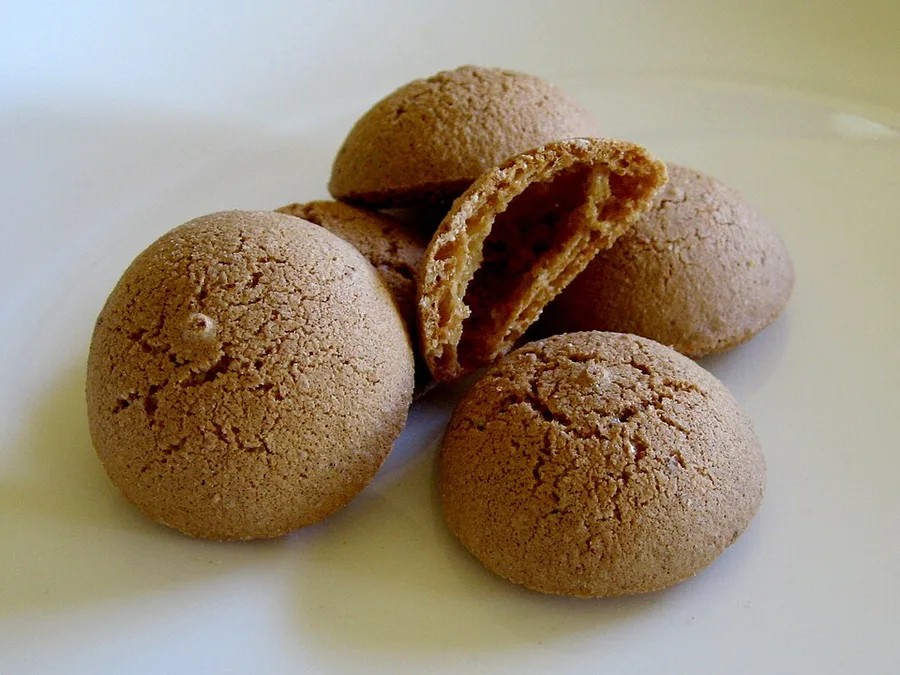
Amaretti
piemonte · lombardia · 12-18 €/kg
Almonds, sugar and egg white, with the bitter note of armelline, apricot kernels. Two families that are nothing alike: the dry ones, for dipping, and the soft ones, also used in savoury fillings.
 Matteo Bertini · CC BY-SA 2.0
toscana · 14-24 €/kg
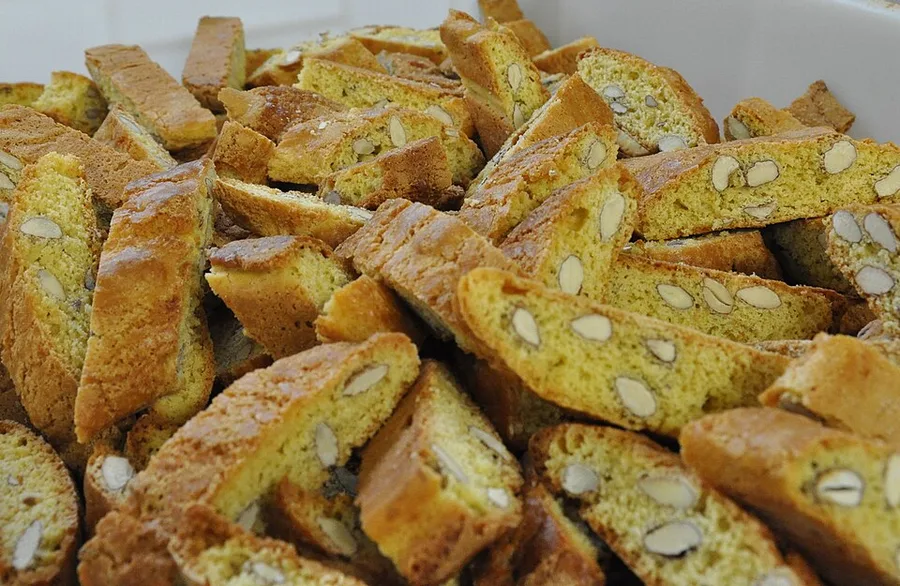
Dry almond biscuits baked twice: a log is baked, cut on the diagonal while still warm, and the slices go back into the oven to dry. The hardness is functional, because they are for dipping in Vin Santo.
 Ricciarally · CC0
toscana · 28-42 €/kg
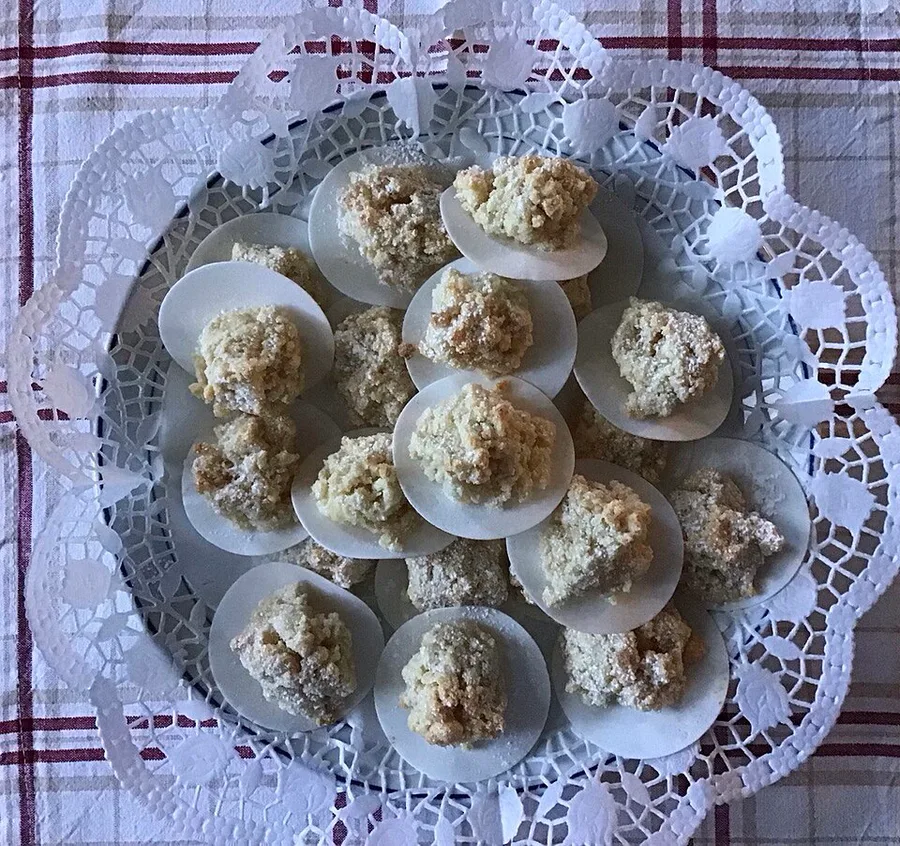
The almond biscuits of Siena: sweet almond paste, sugar and egg white, an oval rhomboid shape, a cracked surface and icing sugar. Crisp outside and soft inside, and the contrast is the recipe.
 Lucarelli · Public domain
toscana · 32-48 €/kg
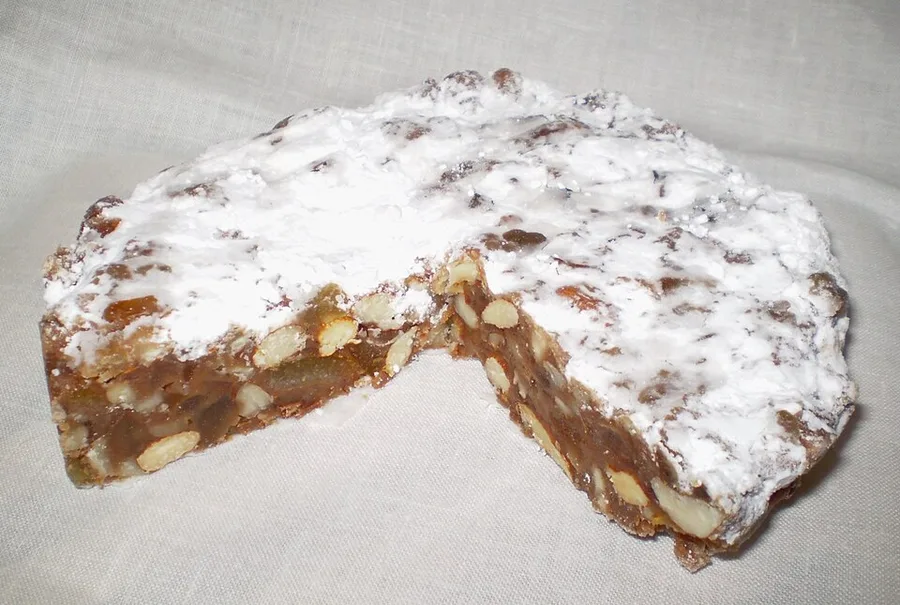
Honey, sugar, almonds, candied peel and spices, almost no flour, baked low and cut into thin wedges. It began as an apothecary's preparation, with pepper that was then medicine.
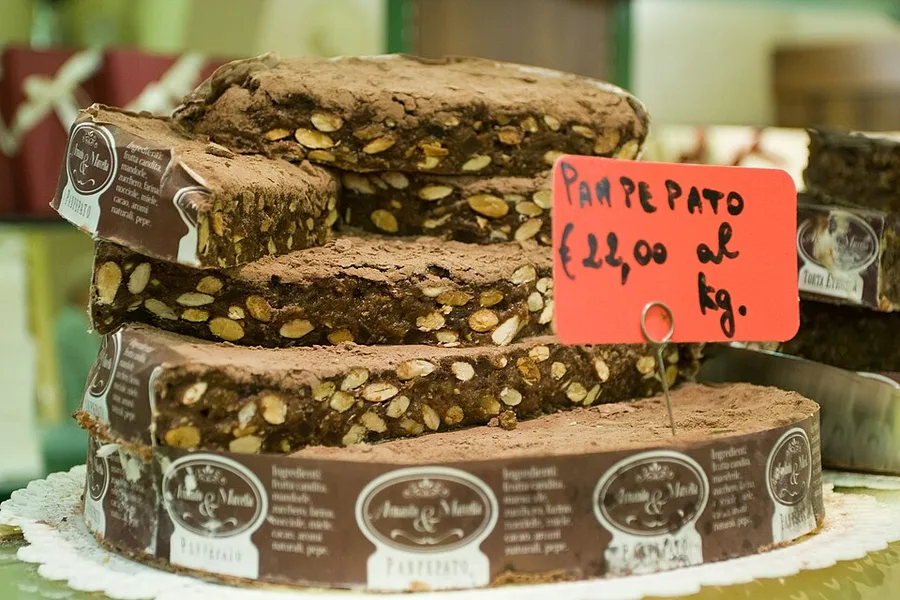 Marco Varisco · CC BY-SA 2.0
toscana · umbria · 20-35 €/kg
Honey, nuts, candied peel, cocoa and black pepper pressed into a dense disc. It is the medieval Christmas sweet from which Sienese panforte descends, and the pepper in the name is not an ornament.
- 06
Torrone
lombardia · campania · 13-23 €/kg
Honey, sugar, whipped egg white and toasted almonds or hazelnuts, cooked very slowly in a bain-marie and closed between two wafers. Hard and compact in Cremona, crumbly elsewhere: the cooking decides which.
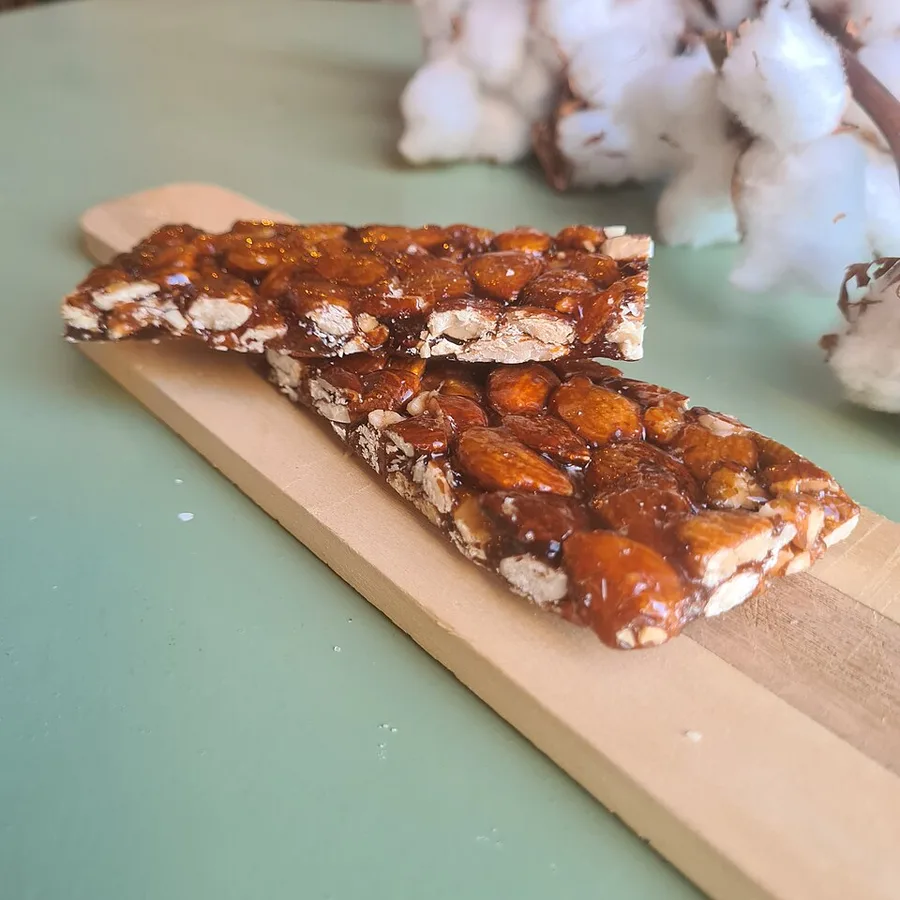 8w9d · CC0
calabria · 10-18 €/kg
The only Italian torrone with a European denomination, IGP since 2014: honey, unpeeled almonds and spices, at Bagnara Calabra. The skin left on the almond is what sets it apart.
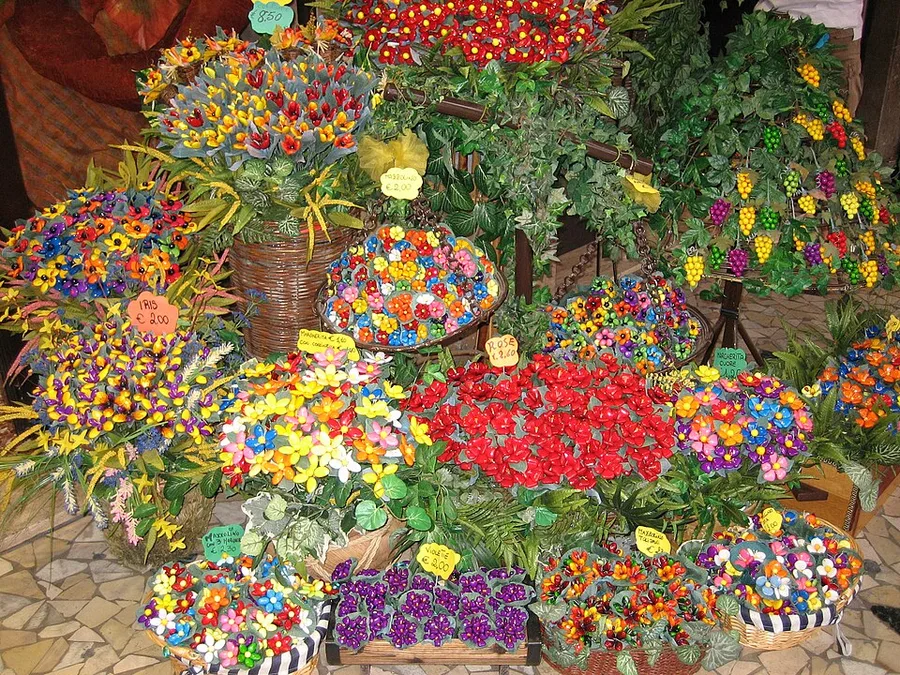 Claro48 at Italian Wikipedia · Public domain
abruzzo · 18-30 €/kg
A Pizzuta d'Avola almond coated in sugar and water alone: no starch, no flour, no gelatine. That is what sets them apart, and the process takes days of turning in the pans.
abruzzo · 18-30 €/kg
A dome of almonds and semolina covered in dark chocolate, invented in Pescara in 1920 to imitate the coarse bread of farm workers. An authored cake with a date, not an ancient tradition.
campania · 18-30 €/kg
Spiced rhombi covered in dark chocolate, one of the four sweets of the Neapolitan Christmas. The name comes from must, which in the old version replaced sugar in the dough.
One last thing
Bitter almond, apricot kernels and pepper all do the same job: they hold up a very sweet thing. Without a bitter or hot note, a paste of honey, sugar and nuts saturates the palate in two bites, which is why panforte has its pepper and amaretti their armelline. It is the same principle by which dark chocolate covers the parrozzo and the mostaccioli, and by which these sweets are cut into thin wedges rather than slices: the dose is part of the recipe.
The questions this list answers
These are real questions put to an AI assistant, in the period when Bing cited this site among its sources to answer them. The number is how many times we were cited. We read them in Bing Webmaster Tools, under AI performance, and they decide what goes on this page rather than the other way round.
- cantuccini556 citations
- what is panforte123 citations
- panforte99 citations
- mostaccioli260 citations
- cotognata590 citations
Frequently asked questions
What are armelline?
The kernels inside apricot stones, used in small quantity in amaretti to give the bitter note the name declares. They are a traditional ingredient of north-western pastry and are used in tiny doses, like a flavouring.
Why are cantucci baked twice?
Because the second baking dries them: a log is baked, cut on the diagonal while still warm, and the slices go back into the oven. Without that step they are soft almond biscuits, and they will not survive dipping in Vin Santo.
What is the difference between panforte and panpepato?
Panpepato is the older medieval sweet, with cocoa and black pepper to the fore; Sienese panforte, now IGP, descends from it, with honey, almonds, candied peel and spices and almost no flour. Both are cut into thin wedges and keep for weeks.
Are the sugared almonds of Sulmona different from others?
Yes, in their coating: sugar and water alone, with no starch, flour or gelatine, applied over days of turning in the pans. Inside is a Pizzuta d'Avola almond. That is what separates a Sulmona confetto from industrial ones.