Eleven things from Abruzzo, between the Maiella and the sea
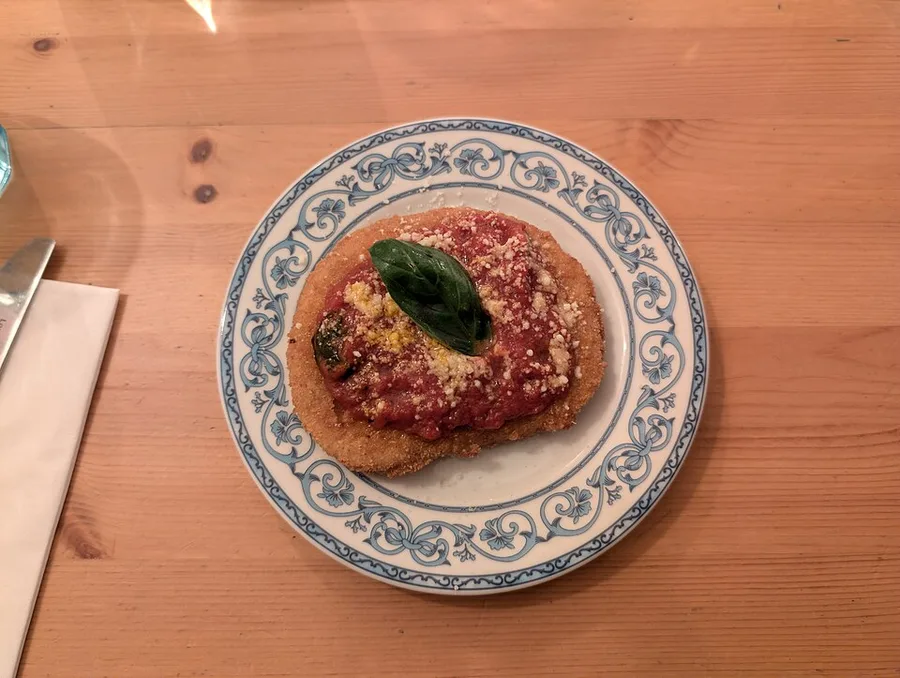
L'Aquila saffron, Sulmona red garlic, sugared almonds, parrozzo, ferratelle, scamorza, mortadella di Campotosto, maccheroni alla chitarra, arrosticini.
Abruzzo has the highest massif in the Apennines and the sea seventy kilometres away, and its cooking is almost entirely of the mountains. It is a shepherds' region: the transhumance took the flocks from Abruzzo down to the Tavoliere along the drovers' tracks, and arrosticini are what remains of it, cubes of mutton on wooden skewers, with no marinade and no spices.
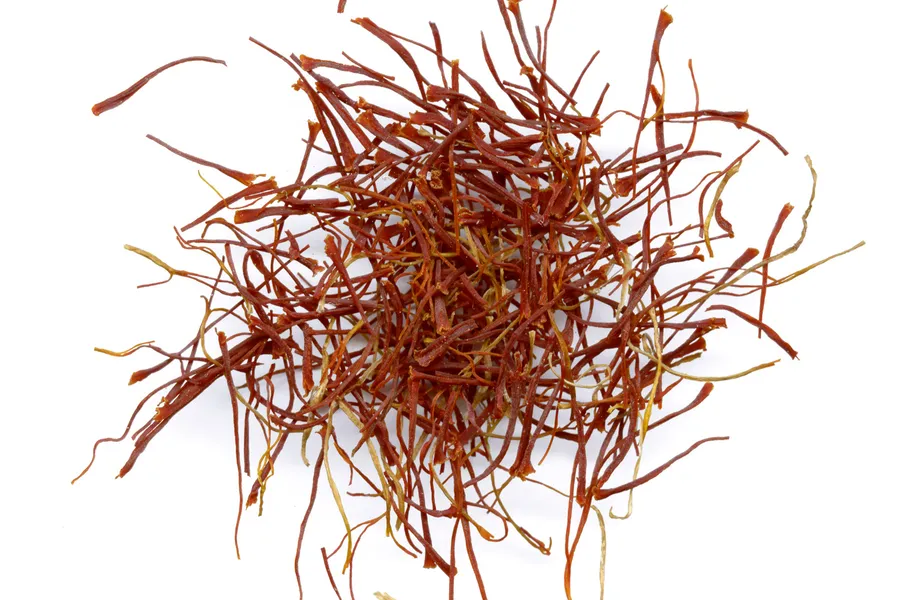
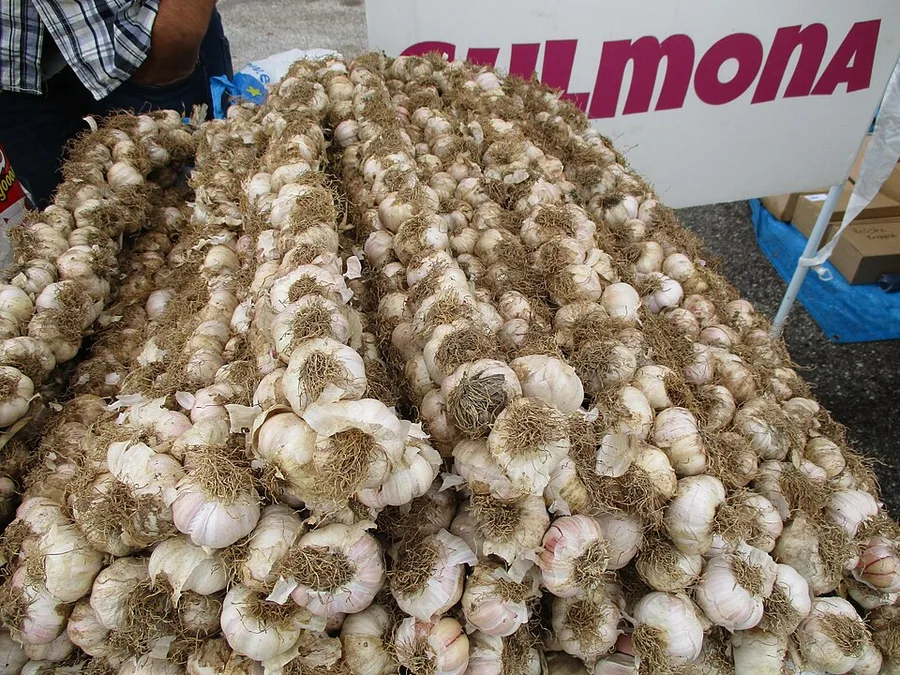
The most expensive product is the saffron of L'Aquila, grown at Navelli: a kilo takes between a hundred and fifty and two hundred thousand flowers, and each flower gives three stigmas to be picked by hand. Beside it stands the red garlic of Sulmona, white-skinned with red cloves underneath, sold in plaits and high in essential oils, so less of it is needed.
Abruzzese pasta has a tool that exists nowhere else: the chitarra, a frame strung with steel wires onto which the sheet is pressed to cut it square in section. The result is not a different shape for its own sake: pasta with sharp edges holds a ragù of tiny meatballs better than a smooth ribbon.
 Rainer Zenz · Public domain01
Saffron
abruzzo · sardegna · 15000-40000 €/kg
A hundred and fifty to two hundred thousand flowers per kilo, three stigmas per flower picked by hand: the most expensive agricultural product in the world by weight. Navelli has grown it for centuries, and it is steeped rather than thrown into the pot.
 Marica Massaro · CC BY-SA 4.0
abruzzo · 20-30 €/kg
A white outer skin with red cloves underneath, in the Valle Peligna. Harvested between late June and mid-July and sold in plaits, it is high in essential oils: a dish needs less of it.
 Andy Li · CC003
Scamorza
abruzzo · molise · 9-13 €/kg
Stretched curd pinched in the middle and hung to dry for a week or two: the pear shape with its tied head is the signature. White or smoked, it holds on a hot plate instead of melting into a puddle.
 Infinitispazi · Public domain
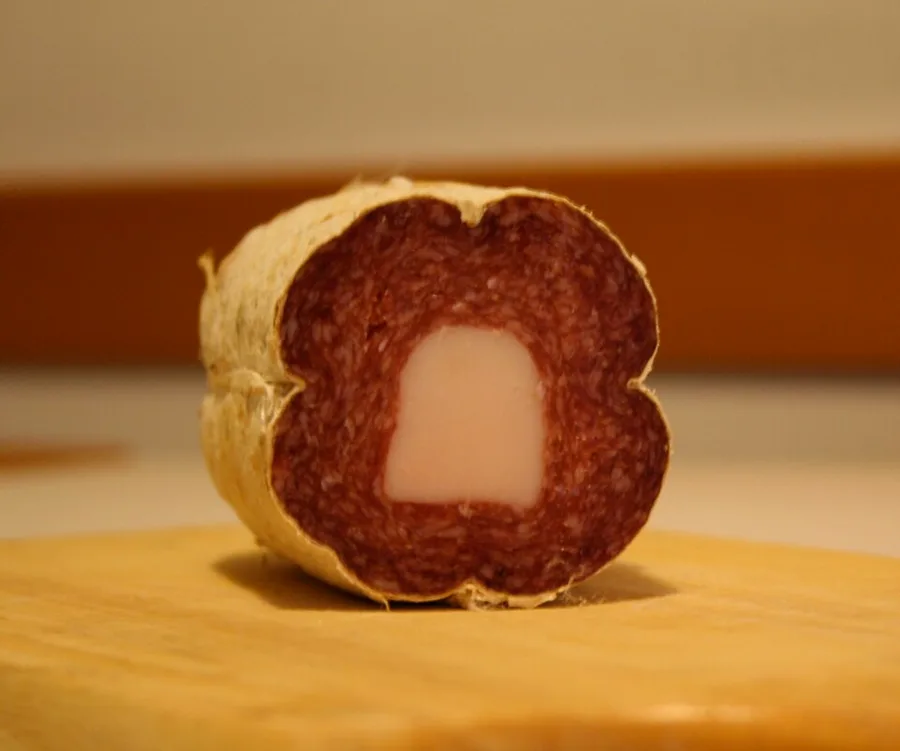
abruzzo · 45-65 €/kg
A small raw, smoked cure from the Monti della Laga, with a whole strip of lardo pushed through the middle. Sold in hanging pairs, it has nothing in common with mortadella di Bologna except the word.
 Popo le Chien · CC BY-SA 4.0
lazio · umbria · abruzzo · 16-24 €/kg
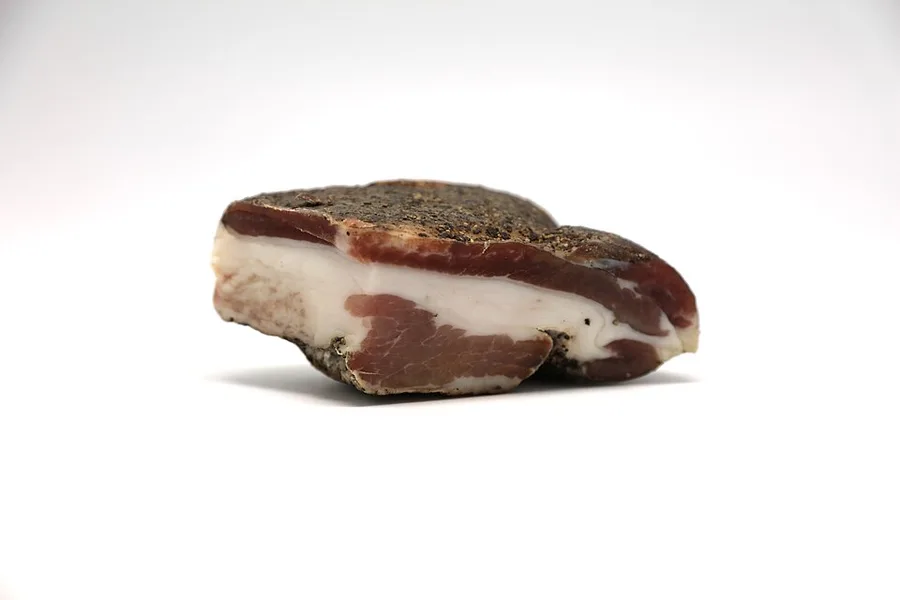
The cheek, salted and cured without smoke: in Abruzzo as in Lazio it is the starting fat of the pasta dishes. Cut it thick and start from a cold pan, because the fat has to render slowly.
 Holapaco77 · CC BY-SA 4.0
campania · abruzzo · 1.1-2.2 €/kg
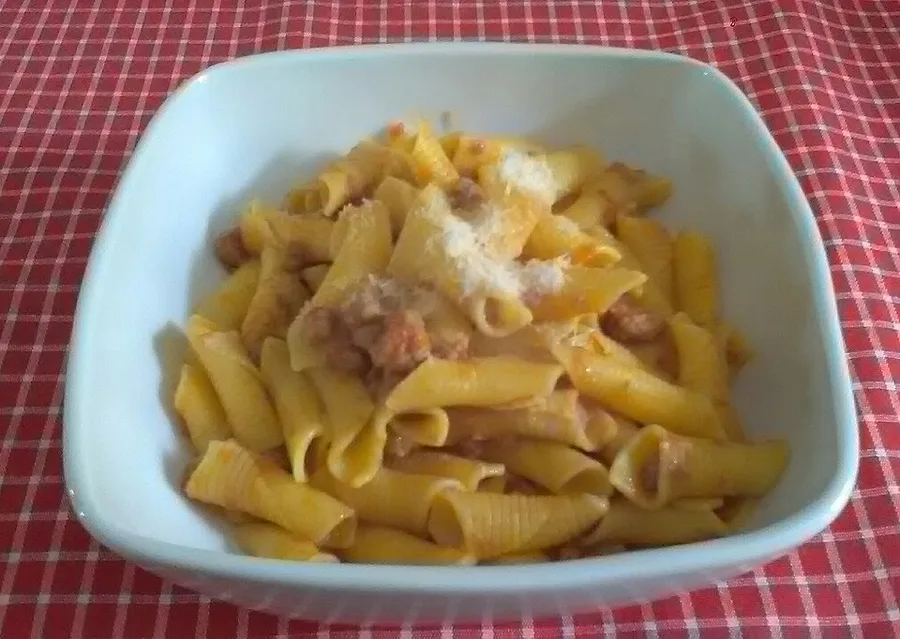
The most misunderstood word in Italian pasta: in Abruzzo it means a square egg shape cut on the chitarra, in Naples semolina pasta in general, in the inland south a tube rolled on a ferretto.
abruzzo · 18-30 €/kg
A dome of almonds and semolina covered in dark chocolate, invented in Pescara in 1920 to imitate the coarse bread of farm workers. It is an authored cake with a date and a name, not an ancient tradition.
 Controllore Fiscale · Public domain08
Pizzelle
abruzzo · 18-28 €/kg
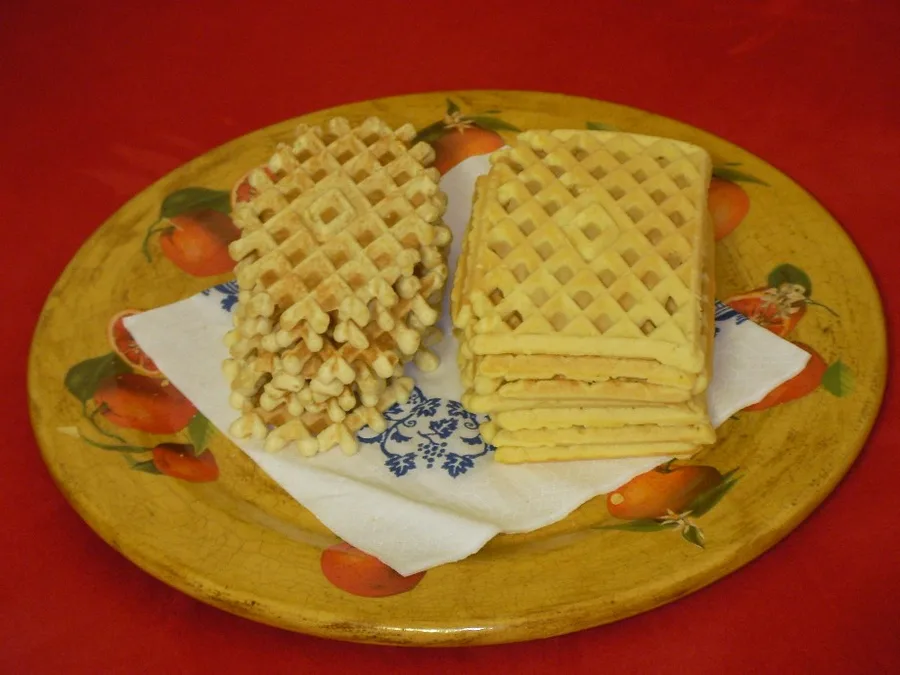
Thin aniseed wafers cooked between two engraved iron plates, in Abruzzo more often called ferratelle. They come from the tool: each family had its own iron, often with initials engraved on it.
 Claro48 at Italian Wikipedia · Public domain
abruzzo · 18-30 €/kg
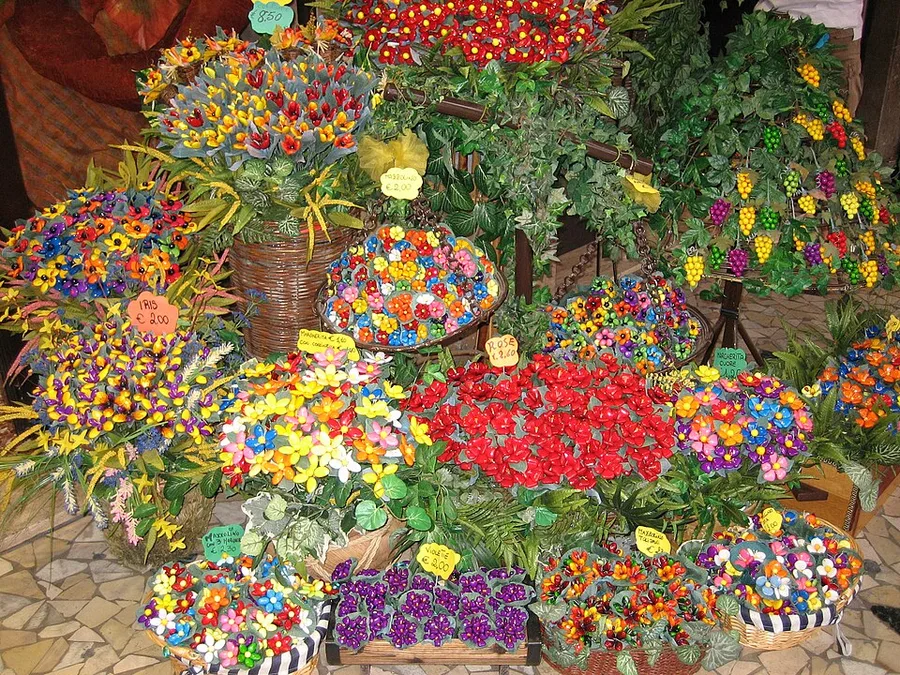
A Pizzuta d'Avola almond coated in sugar and water alone: no starch, no flour, no gelatine. That is what sets them apart, and the process takes days of turning in the pans.
abruzzo · 52′
Fifty-two minutes: cubes of mutton on wooden skewers over the coals of a narrow trough grill, with no marinade and no spices. The trough concentrates the heat, and the salt goes on only at the end.
abruzzo · 2 h
Two hours: a semolina egg sheet pressed onto the steel wires of the chitarra, with a ragù of tiny meatballs. The thickness of the sheet has to match the spacing of the wires, or the pasta will not come out square.
One last thing
Saffron is the product most easily wasted, and the mistake is always the same: throwing it into the pot. The stigmas should be steeped in a little hot, not boiling, liquid for ten or fifteen minutes, and the coloured liquid added at the end of cooking. Dropped straight into a sauce or a risotto, the stigmas stay whole, release a fraction of their colour and almost no aroma. The same holds for powdered sachets, though those have another yield and another origin: the L'Aquila saffron is sold as whole stigmas, and that is part of the guarantee.
The questions this list answers
These are real questions put to an AI assistant, in the period when Bing cited this site among its sources to answer them. The number is how many times we were cited. We read them in Bing Webmaster Tools, under AI performance, and they decide what goes on this page rather than the other way round.
- scamorza189 citations
- maccheroni alla chitarra50 citations
- scamorza cheese14 citations
- aglio rosso di sulmona12 citations
- scamorza cheese taste description6 citations
Frequently asked questions
Why is saffron so expensive?
Hand labour. A kilo of dried saffron takes between a hundred and fifty and two hundred thousand flowers, picked at dawn and stripped by hand one by one, three stigmas each, then dried. There is no mechanisation, which is why its price per gram remains the highest of any agricultural product.
What are arrosticini?
Skewers of mutton cut into cubes, cooked over the coals of a canala, a long narrow grill that concentrates the heat. They are not marinated and not spiced: salt goes on at the end. They are eaten in bunches, pulling the meat off the skewer with the teeth.
What is the difference between scamorza and mozzarella?
The drying. Scamorza is stretched curd pinched in the middle and hung to dry for a week or two, so it loses water and becomes firm: on a hot plate it holds its shape. Mozzarella stays fresh and full of water, and releases liquid when cooked.
What is a pasta chitarra?
A wooden frame strung with parallel taut steel wires, onto which the egg sheet is pressed with a rolling pin: the wires cut it into strips square in section. It is an Abruzzese tool, and the pasta it makes has sharp edges that hold a ragù better than a smooth ribbon.