Tuscia viterbese: where to eat and stay
The Lazio that looks nothing like Rome: volcanic lakes, sheep, hazelnut groves and a cuisine of stale bread and pulses built by people who had nothing. It is an hour from the ring road, which is why it gets driven through rather than visited.
The Tuscia is more or less the province of Viterbo, with some spill into the Grosseto and Orvieto areas. The name is ancient and means the country of the Etruscans, who left the necropolises of Tarquinia and Norchia here and a network of vie cave cut into the tufa that look like open-air corridors. The geology is entirely volcanic: two large extinct calderas filled with water (Lake Bolsena, the largest volcanic lake in Europe, and Lake Vico wedged into the Cimini hills) and between them tufa plateaus where the villages perch on spurs with sheer walls.
It is a territory poor in history and rich in monuments, which is a strange combination. There are the Farnese palaces of Caprarola and Gradoli, the park of monsters at Bomarzo, the medieval centre of Viterbo with the San Pellegrino quarter, the largest in Italy, Civita di Bagnoregio perched on a crumbling clay cliff, Tuscania with its two Romanesque churches outside the walls. But there was never industry and never widespread wealth: the countryside lived on transhumant shepherding, woodland and sharecropped farms, and the cooking that came out of it says so in every dish.
One thing to make clear at once, because it shapes the trip. The Tuscia is barely an hour from Rome's ring road, which makes it a Sunday outing area more than a holiday one. At weekends the villages fill, the good trattoria is full and the prices in Civita di Bagnoregio are those of a theme park, with an entry ticket to the village and souvenir shops where the houses were. On weekdays, by contrast, large parts of the territory are genuinely empty, and there are villages where the bakery is the only business left. The right way to come is midweek, with a car, and without too tight an itinerary.
How people eat here
Tuscia cooking is built on stale bread, pulses, offal and field greens, which is what people ate when they bought almost nothing. The signature dish is acquacotta viterbese, which in its original version contained nothing but water, oil, onion, tomato if there was any, chicory or other gathered greens, pennyroyal, and stale bread in the bottom of the bowl; the poached egg arrived when there was a hen. It was the meal of the cattlemen and the charcoal burners, who stayed out for days with a pot and whatever they found. Today it is found almost everywhere in enriched versions, and the test of whether a kitchen respects it is how much has gone in: the more ingredients appear, the further it is from the dish.
The pasta is sagne made with water and flour, no egg, and the names change within a few kilometres: lombrichelli in Viterbo, bighi elsewhere, thick irregular strands rolled by hand and dressed with tomato sauce, with aglione, or with mutton ragù. Then there is pignattaccia, the most characteristic thing and the hardest to find: offcuts of meat and vegetables packed into an earthenware pot and left to cook for hours in the baker's oven as it cooled, brought in the morning and collected at midday. Among main courses, lamb and mutton rule (roast, as cutlets, stewed) along with offal: susianella viterbese, a Slow Food Presidium, is a cured sausage of heart, liver, jowl and pig's offal, spiced, and it is exactly the product of people who threw nothing away.
On cheese there is a point that surprises many. Pecorino Romano DOP, despite the name, is today made overwhelmingly in Sardinia, where Lazio's cheesemakers moved at the end of the nineteenth century; of the share that stays in Lazio, the largest part is worked right here in the Tuscia rather than in the countryside around Rome. So pecorino romano is more Viterbese than Roman, and at the local dairies you buy it at a price that does not exist in Rome. Beside it is the local pecorino without a denomination, milder, and the ricottas, salted or smoked.
Two products are worth a journey on their own. The fagiolo del Purgatorio of Gradoli is a very small white bean with a skin so thin you do not feel it, grown around Lake Bolsena; the name comes from the Purgatory Lunch that the local confraternity has offered on Ash Wednesday for centuries, a lean meal of those beans, salt cod and vegetables. It is a Presidium, production is small and in spring it runs out. The hazelnut of the Cimini hills (the Tonda Gentile Romana, now inside the Nocciola Romana DOP) covers whole hillsides around Caprarola, Ronciglione, Vignanello and Soriano: here the hazelnut is not folklore but genuine monoculture, with all the problems monoculture brings, from water use to pressure on the lakes. It ends up in tozzetti, in ring biscuits and in much of the national confectionery industry.
From Lake Bolsena, finally, comes the most fragile part. The eels of this lake are mentioned by Dante in Purgatorio, where a pope dies of indigestion from them, and they are still the identity product: they are grilled or stewed. With them are whitefish, perch, pike, tench and the small lattarini, and there is sbroscia, the soup fishermen made in the boat with unsellable fish, potatoes, tomato and the lake water itself. The honest truth is that professional fishing on Bolsena has shrunk a great deal and that several lakeside restaurants serve farmed fish or even sea fish: asking where it comes from is fair, and anyone working well answers willingly.
Working farms that take guests
Real places in this territory, checked one by one on their own site. What you read is what they state: the editorial visit has not happened yet, and when it does we will say so.
Fattoria Capobianco
Montefiascone (VT)A certified organic estate above Lake Bolsena: Est! Est!! Est!!! di Montefiascone, extra virgin oil and vegetables. Accommodation in a farmhouse sleeping ten, two apartments and a suite, all with kitchens.
fattoriacapobianco.itAzienda Agricola Sensi
Tuscania (VT)Eleven hectares of caninese olives a kilometre from the centre of Tuscania, for Tuscia DOP extra virgin oil. Four apartments converted from the farm buildings: Il Granaio, L'Officina, Il Frantoio, La Dispensa.
doppisensi.itPodere la Branda
Vetralla (VT)An olive grove of Leccino, Canino and Moraiolo with BioAgriCert organic certification, on strada Forocassio. Six self-contained cottages with private gardens and one double room, plus an organic restaurant and a pool.
poderelabranda.itAzienda Agricola Le Moline
Vetralla (VT)Organic extra virgin oil, honey and artisan jams, with its own livestock. Rooms, a teaching farm with animal visits and a restaurant open on Friday evenings and for weekend lunches.
lemolinevetralla.comThe foods of this territory
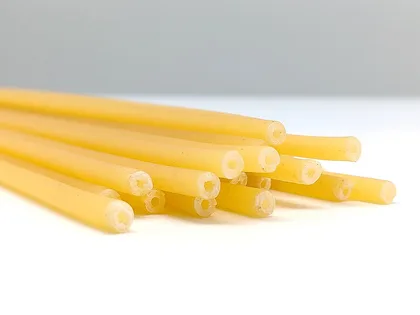 FoodBucatiniBucatini are thick spaghetti with a hole running through the middle.
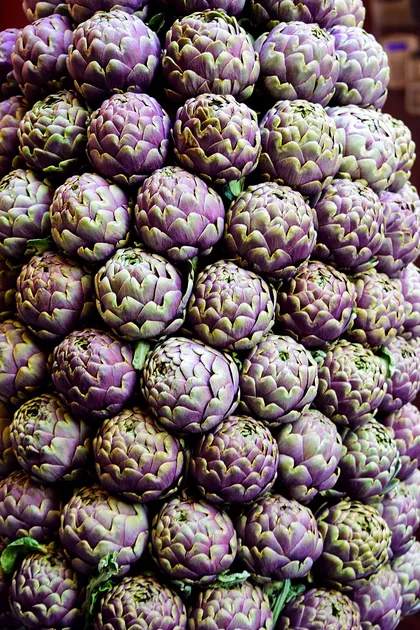 IGPRomanesco ArtichokeThe Romanesco is Rome's artichoke: round, large and completely spineless.
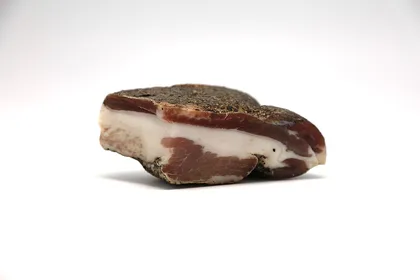 PATGuancialeGuanciale is cured pork jowl: unsmoked, rubbed with salt and pepper, aged for one to three…
 PATMaritozzoIn Rome this is breakfast at seven in the morning and nobody finds it odd: a soft, lightly…
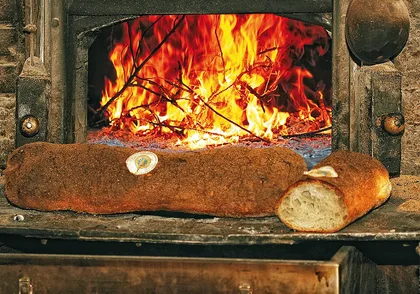 IGPPane di Genzano (Genzano Bread)Pane di Genzano is a sourdough loaf from the Alban Hills south of Rome, baked in a wood…
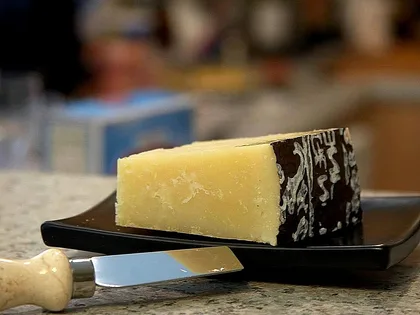 DOPPecorino RomanoPecorino Romano DOP is a hard, dry-salted sheep's milk cheese aged at least five months…
What to do here
The Tuscia is toured by car and it is worth building the trip around three cores. The first is Lake Bolsena: the full circuit of the shores is about sixty kilometres, with Bolsena and Montefiascone on the east side, Marta and Capodimonte to the south, Gradoli and Grotte di Castro to the west. There are two islands, the Bisentina and the Martana, and the first can be visited by boat from Capodimonte in season, after years of closure. The lake is swimmable and has beaches of black volcanic sand.
The second is the system of palaces and gardens. Palazzo Farnese at Caprarola is a sixteenth-century pentagon with a frescoed spiral staircase and the finest civil building in the area; above it are the upper gardens with Vignola's pavilions, visited at separate times that should be checked. The park of monsters at Bomarzo, with its sixteenth-century peperino sculptures scattered through the wood, is private, ticketed and crowded with families at weekends: it is unique all the same. Villa Lante at Bagnaia, just outside Viterbo, has the best preserved Renaissance water garden in Italy and is less visited than the other two.
The third is Etruscan. The necropolises of Tarquinia have painted tombs visited one at a time, and they are the most important surviving pre-Roman painting; the national museum in Palazzo Vitelleschi, in town, completes the visit. Norchia and Castel d'Asso are rock-cut necropolises out in the countryside, with no services and no crowds, and they need proper shoes.
On food, the concrete activities are few but real: the dairies around Viterbo and Vetralla take visits on request and sell pecorino at dairy prices; the mills around Canino work in November and sell new oil directly; the hazelnut farms of the Cimini show harvesting and roasting between late August and September. For thermal water, the Tuscia has free sulphur springs around Viterbo (the Bagnaccio pools and those along the old Cassia) which are a genuine asset and work very well in winter; they are, though, spartan places with no services, and at certain times very busy.
A note on Civita di Bagnoregio. The village on its crumbling cliff is striking and should be seen, but it is now a ticketed site with a few dozen residents and a very high density of tourist shops. You reach it on foot across a three-hundred-metre bridge, and the real visit takes half an hour. Going at dawn or at sunset on a weekday changes everything.
The year, month by month
Winter is this area's cooking season. From December to February come mutton, soups, pulses, broccoli and cabbage, and the free thermal pools of Viterbo make a sense they do not make in July. At the end of winter, on Ash Wednesday, Gradoli holds the Purgatory Lunch with the beans, which is a confraternity rite more than a tourist event and has to be booked well ahead.
Spring is the best moment for the landscape: the vie cave and the necropolises walk well, the countryside is green, the lakes are not yet crowded. On the table come field greens, wild asparagus and the first broad beans with pecorino. In April and May you can still find the previous year's beans, and then they end.
Summer is hot and dry, with temperatures in Viterbo regularly over thirty-five degrees. The lakes become the destination, with Bolsena and Vico swimmable and less crowded than the sea, and the village festivals take over every weekend from June to August: they are the cheapest and most direct way to eat lombrichelli and acquacotta, with the variability festivals bring. Mid-August in the Tuscia is quiet because the Romans go to the coast.
September is the hazelnut month, with mechanical harvesting in the Cimini actually starting in late August, and the return of liveable temperatures. On 3 September in Viterbo the Macchina di Santa Rosa is carried through the streets, a lit tower thirty metres high borne by a hundred men: it is UNESCO intangible heritage, the city fills and finding a bed that day without booking months ahead is impossible. October and November bring chestnuts at Soriano nel Cimino, mushrooms, new oil at Canino and new wine: these are the two months when the ratio of table quality to tourist presence is at its best.
Getting there and getting around
From Rome you come up the Cassia, a two-lane trunk road, scenic and slow, or on the A1 motorway to Orte and then the Orte to Viterbo expressway. The second is half an hour quicker and less tiring. From Florence you come down the A1 to Orvieto or Attigliano. Fiumicino airport to Viterbo takes about an hour and forty minutes.
By train there are two lines. The Rome to Viterbo railway, leaving Rome Ostiense and Trastevere via Bracciano, takes around two hours and is the most useful for reaching the main town directly; the line from Rome Flaminio, a former concessionary railway, is slower and serves the south of the province. Anyone coming from the north gets off at Orte, on the main line, and continues by regional train or bus.
The awkward point is that without a car the Tuscia is close to impractical. The villages are far apart, the provincial buses link Viterbo to the main centres with scarce services and almost none at weekends, and the places worth the trip (Caprarola, Bomarzo, the rock-cut necropolises, the dairies, the lake circuit) are outside the built-up areas. Anyone arriving by train should hire a car at Viterbo or Orte.
The airports are Fiumicino and Ciampino, both within two hours, and Perugia about an hour and a half away for anyone coming from Umbria. The port of Civitavecchia is forty minutes from Tarquinia, which makes the coastal part of the province a possible stop for anyone off a cruise ship or a Sardinian ferry.
Inside the territory distances deceive: Viterbo to Bolsena is thirty kilometres but on winding roads, Viterbo to Tarquinia forty with the same problem. Counting forty minutes for every move is more realistic than the satnav, especially in summer with farm machinery on the road.
Frequently asked questions
Is it true that pecorino romano is made in the Tuscia rather than in Rome?
Largely yes, with one qualification. Pecorino Romano DOP originated in the countryside around Rome but from the late nineteenth century production moved en masse to Sardinia, which today accounts for the overwhelming majority of the protected cheese. Of the share that stays in Lazio, the largest part is worked in the province of Viterbo, where flocks and dairies still exist in significant numbers, while around Rome production is marginal. So Lazio-made romano is more often Viterbese than Roman. At the local dairies you buy it directly, at prices appreciably lower than in shops in the capital.
Is the Purgatory bean available all year?
No. It is a small white bean with a very thin skin, grown in limited quantities around Gradoli and on the western shore of Lake Bolsena, and it is a Slow Food Presidium. The harvest is in summer and the stock normally runs out during the following spring. The defining moment is the Purgatory Lunch on Ash Wednesday, when the Gradoli confraternity serves a lean meal built on these beans. Out of season, anyone offering it either has a declared dried stock or is using another bean: it is worth asking, because the price gap with an ordinary cannellino is considerable.
Is Civita di Bagnoregio worth visiting?
Yes, knowing what you are going to see. The village stands on a tufa cliff resting on continuously eroding clay, is reached only on foot across a pedestrian bridge, and entry is ticketed, the charge introduced to fund the maintenance. Permanent residents are very few and almost every building houses a business for visitors, which makes the experience closer to a museum site than to a living village. The view from the road and from the Bagnoregio belvedere is remarkable anyway. Anyone going on a weekday early in the morning or towards sunset finds very few people and a completely different place from the weekend.
Is Est! Est!! Est!!! di Montefiascone a good wine?
It is a wine with an excellent commercial story and a modest reputation for quality, and it is worth knowing that. The legend of the German bishop's servant who in the twelfth century marked the inns with good wine with the word Est made the denomination famous long before there was an oenological reason. In practice it is a white from Trebbiano toscano, Trebbiano giallo and Malvasia, made for decades in high volumes with low ambitions. A few producers work seriously on reduced yields and get correct, saline whites, but they have to be sought out: buying the first bottle you see because of the name is almost always a disappointment.