Riviera del Conero: where to eat and stay
The only headland interrupting six hundred kilometres of straight beach between Trieste and the Gargano: white cliffs, a Montepulciano red that ages well and a wild mussel free-dived for by hand. In August it is unmanageable; in the other months it is one of the best preserved coasts in Italy.
The Conero is a mountain that ends in the sea. Five hundred and seventy-two metres of limestone rising immediately south of Ancona and dropping sheer into the Adriatic, in the middle of a coast that for hundreds of kilometres above and below is flat and sandy. That geological anomaly does everything: coves reachable only on foot or by sea, clear water because the bottom is stone rather than sand, Mediterranean scrub at its most northerly Adriatic latitude, and a microclimate that lets Montepulciano ripen as it does not forty kilometres inland.
Administratively the Riviera is a few municipalities: Ancona, with the hamlets of Portonovo, Poggio and Massignano up on the mountain; Sirolo and Numana, the two resort towns facing the southern beaches; and then the first inland ring, Camerano with its caves cut into the sandstone, Offagna with its fortress, Castelfidardo which has lived on accordions since 1863, Osimo and Loreto with its sanctuary. The regional park dates from 1987 and stopped the headland going the way of the Romagna coast. The result is that building stopped and the beaches are reached on foot: good, but it also means there is not much room.
Put usefully: from mid-July to the end of August the Conero is a funnel. Portonovo is reached down a narrow road ending in capped paid car parks, with shuttles from the car parks up the hill and days when access by car is closed; the Due Sorelle, the postcard beach below Sirolo, cannot be reached by land and you get there only on the small boats from Numana, with places gone by nine in the morning. Anyone who can choose should come in May, June or September: the same water, half the people, and the moscioli are there anyway.
How people eat here
The cooking of the Riviera rests on a product that exists nowhere else in the same form: the wild mosciolo of Portonovo. It is a mussel that grows spontaneously on the submerged rocks between Pietralacroce and Sirolo, with no ropes and no farming, pulled off by hand by fishermen who free-dive for it. It is not a farmed mussel: it is smaller, with an irregular encrusted shell, firmer flesh and a far more marked, almost mineral taste. It is a Slow Food Presidium, the harvest is regulated and limited, and, this is the point, it is seasonal. Real moscioli are available roughly from May to September and no longer. If in November a Portonovo restaurant offers you moscioli, it is serving farmed mussels under a dialect name, which is legal but is not the same thing and does not justify the price. The classic way to cook them is in porchetta: garlic, wild fennel, pepper, a little breadcrumb, and into the pan. The other two ways are raw, just opened, and in a tomato soup.
The second pillar is stoccafisso all'anconetana, a mountain dish that ended up at the sea. Cod wind-dried in Norway, soaked for days, then cooked very slowly in a pan with sliced potatoes, tomato, anchovies, garlic, parsley, rosemary, marjoram, plenty of oil and Verdicchio, never stirred so the pieces stay whole. It has to sit on a low flame for hours. Two clarifications that matter at the table: stockfish is dried, baccalà is salted, they are two different treatments of the same fish, and in Ancona the dish is stockfish; and the recipe is codified by a local academy that fixed the version, so anyone who changes it does so knowingly. The rest of the seafood repertoire starts with brodetto all'anconetana, which wants at least thirteen kinds of fish, white vinegar and tomato conserve, and admits neither tomato paste nor farmed shellfish; and continues with garagoli, small sea snails, also cooked in porchetta with wild fennel.
Five kilometres uphill the cooking changes completely and becomes inland food: rabbit in porchetta, roast goose, vincisgrassi, the Marche lasagne with a white ragù of giblets and a thicker sheet of pasta, and hand-rolled tagliatelle. To drink there is Rosso Conero, pure or nearly pure Montepulciano, made in a tiny area around the mountain: in its basic version it is juicy and direct, and in the Riserva, which since 2004 has had its own guaranteed denomination, it is a structured wine that holds ten years in bottle and costs a fraction of what it would cost elsewhere with the same record. It is perhaps the best value among Italian reds, and the reason is banal: nobody knows it. The local white is not made here but slightly to the west, and it is Verdicchio dei Castelli di Jesi, half an hour away. On sweets things stay simple: must cake in autumn, and lonzino di fico, which despite the name is not a cured meat but a paste of dried figs, almonds and cooked must, wrapped in leaves and aged.
Working farms that take guests
Real places in this territory, checked one by one on their own site. What you read is what they state: the editorial visit has not happened yet, and when it does we will say so.
Azienda Agricola Alessandro Moroder
Ancona (Montacuto) (AN)Vineyards inside the Conero park with Conero DOCG and Rosso Conero, plus oil, flour and vegetables from the estate's garden. Rooms, with a restaurant and pizzeria on site.
moroder.wineAgriturismo Casa Rossi
Numana (AN)A stone farmhouse on the hills above Numana, with ten rooms and a restaurant working home-made pasta, cured meats and Conero wines.
agriturismocasarossi.itAgriturismo Rossococomero
Sirolo (AN)A farmhouse with six rooms and a kitchen garden of courgettes, artichokes and seasonal vegetables, a couple of kilometres from the beaches.
rossococomerosirolo.itAgriturismo La Sorgente
Camerano (AN)The Niccolini family's farm inside the Conero park, with organic crops and a breakfast made from its own produce. Five rooms.
lasorgenteagriturismo.comThe foods of this territory
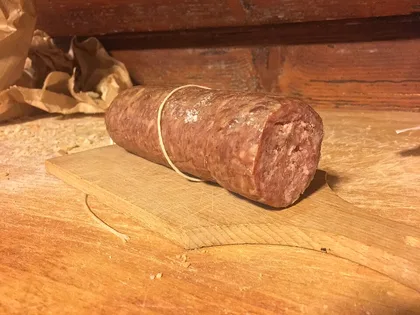 IGPCiauscoloCiauscolo is the Italian salami you spread with a knife. From Le Marche, IGP since 2009…
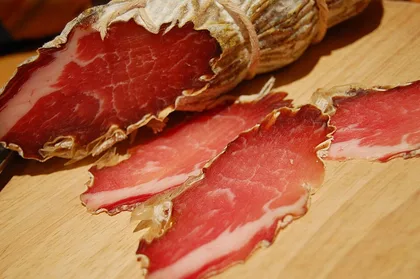 FoodLonzinoLonzino is whole pork loin, dry-salted and air-cured for two to four months: the leanest…
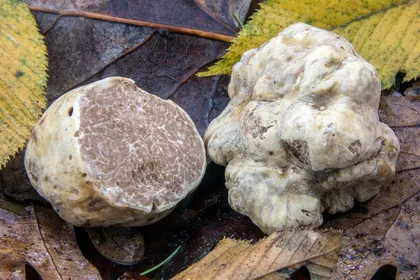 FoodWhite truffleThe Italian white truffle, Tuber magnatum Pico, is the most expensive of Italy's truffles…
What to do here
The beaches need a plan. Portonovo is a bay with four or five beach clubs and free stretches, reachable by car out of season and by shuttle or pre-booked parking at the height of summer: on site there are also the Romanesque church of Santa Maria and an eighteenth-century watchtower, both visitable. Mezzavalle is reached only down a steep twenty-minute path, and climbing back up at six in the evening with the sun still high is less fun than it looks on the way down. The Due Sorelle have no land access: you go on the small boats from Numana and Numana Alta, running from the morning, and it is the one beach here worth getting up early for. San Michele and Sassi Neri, below Sirolo, are reached on foot down long staircases.
The mosciolo harvest is not a tourist activity and will not become one: it is regulated work, done free-diving. What you can do is eat them in the right season and, in late spring, be in Portonovo when the Presidium's festival fills the bay. Anyone who wants to see the real fish should go to the Ancona fish market early in the morning, or to the quay when the boats come in.
The Rosso Conero cellars all sit within ten kilometres, between Camerano, southern Ancona, Offagna and Osimo, and there are not many: they receive by appointment and most also make oil. In a day you can see two without rushing. Pair that, if you have another half day, with Verdicchio dei Castelli di Jesi: a completely different register, thirty minutes away.
On foot the park has a network of marked paths starting at Sirolo, Poggio and Pian Grande. The best known climbs to the Belvedere Nord and continues towards the Passo del Lupo, with a view of the Due Sorelle from above; the ridge circuit of the mountain takes four or five hours and in August is a bad idea for the heat and the lack of water. Inland there are three things that justify a visit: the Camerano caves, a maze of chambers cut into sandstone beneath the town, visitable with a guide; the sanctuary of Loreto, a pilgrimage site for centuries and one of the most important Renaissance building sites in the Marche; and Castelfidardo, where the accordion museum tells the story of an industry that exported worldwide.
The year, month by month
From November to March the Riviera is almost closed. Sirolo and Numana live on tourism and in winter have very few places open; Portonovo is practically deserted, with two or three signs lit at weekends. Ancona, on the other hand, works all year, and it is in these months that stockfish is eaten in its natural season, along with brodetto and inland cooking. It is also when the park's paths are at their most pleasant.
April and May reopen the coast. The water is still cold but the beaches are empty, the scrub flowers and the moscioli begin to arrive: their season normally opens in late spring and is celebrated with an event at Portonovo that is one of the rare local food events done well. Room prices are still reasonable.
June is the best month for anyone who wants the sea: water warm enough, long days, everything open and not yet saturated. July and especially August are the problem: capped car parks, crowded paths, restaurants on two booked sittings, prices rising sharply and part of the offering adjusting downwards because the customer passes once anyway. Anyone coming in August should do two things: book everything in advance and dine inland, where five kilometres away you eat better and spend less.
September is the best choice of all. The sea is at its warmest, the moscioli are still in season, the crowds have gone and the restaurants have gone back to working calmly. October closes with the Montepulciano harvest, new oil and the first sirocco days, and at the end of the month the emptying begins.
Getting there and getting around
By car you leave the A14 at Ancona sud, and from there it is twenty minutes to Sirolo or Portonovo. The road down to Portonovo is narrow and twisting and in summer subject to closures and capped parking: the arrangements change from year to year and it is worth checking on the day rather than trusting a guidebook. Numana and Sirolo have feeder car parks up the hill with shuttles in high season.
By train Ancona is a major station on the Adriatic line, with direct services from Milan, Bologna, Rome via Falconara, Bari and Lecce. From Ancona you continue to the Riviera on the local buses to Sirolo and Numana, frequent in summer and sparser in winter; for Portonovo there is a seasonal service. Without a car you can move about, but the cellars and farms inland stay out of reach.
The airport is Ancona-Falconara, about twenty-five kilometres away, small and with few connections; Bologna is two and a half hours by motorway or two hours by train plus a change, and for many remains the more realistic gateway. Ferries to Croatia, Greece and Albania leave from the port of Ancona, which makes the area a natural stop for anyone embarking: eating stockfish the evening before a night crossing is a local tradition with some practical basis.
A note on bikes: the headland is hard. The climbs towards Poggio and Massignano have serious gradients and the roads are busy in summer. The coastal cycle path linking Ancona northwards is another thing and does not lead to the Riviera. Anyone who wants to ride should do it inland, between Camerano, Osimo and Offagna, where the hills are gentle and the traffic almost nil.
Frequently asked questions
What is the difference between a Portonovo mosciolo and an ordinary mussel?
The wild mosciolo of Portonovo is not farmed: it grows spontaneously on the submerged rocks of the headland and is pulled off by hand by free-diving fishermen, in limited quantities under a regulated harvest. Against a farmed mussel it has a more irregular, encrusted shell, a smaller average size, firmer flesh and a far more intense taste. It is a Slow Food Presidium. The most important practical difference is the season: wild moscioli are available roughly from May to September and in the other months they do not exist. A place offering them in winter is serving farmed mussels under the dialect name.
Are stockfish and baccalà the same thing?
No, and it is the commonest confusion about Ancona cooking. You start from the same fish, northern cod, but stockfish is dried in cold wind on racks without salt, while baccalà is preserved in salt. The soaking time, the texture and the taste all differ. Stoccafisso all'anconetana is made with stockfish, and the recipe calls for very long, very slow cooking with potatoes, tomato, anchovies, herbs and Verdicchio, never stirred. Elsewhere in Italy the two names are used loosely and interchangeably, but here the distinction is sharp and you taste it.
When can you go to the Due Sorelle beach?
Only by sea, and only in the season when the boats run. There is no legal path down: the cliff above is unstable and the routes described online are closed or dangerous. The small boats leave Numana and the little harbour at Numana Alta from late spring to September, with several morning departures and afternoon returns. In August places go early and it is worth turning up as the ticket offices open or booking the day before. There are no services on the beach: water, food and shade have to come with you.
Is Rosso Conero a wine to drink now or to age?
Both, depending on the type. Rosso Conero DOC in its basic version is a direct Montepulciano, with dark fruit and soft tannin, meant to be drunk within a few years and very good with meat and inland dishes. Conero Riserva, which since 2004 has had its own guaranteed denomination, requires lower yields and longer ageing: it is a structured wine that comfortably holds ten years and in many cases gains from them. The value for money is among the best in Italy, especially bought at the cellar, simply because the denomination is small and little known outside the Marche.