Eleven things from the Marche, the region nobody searches for by name
Casciotta d'Urbino, ciauscolo, lonzino, crescia sfogliata, Conero wild mussels, Acqualagna white truffle, cicerchia, Ancona brodetto, vincisgrassi, stuffed Ascoli olives.
The Marche has the most lopsided ratio in Italy between what it holds and how often it is looked for. It has a two-milk DOP cheese, Casciotta d'Urbino, seventy to eighty per cent sheep and the rest cow; a salame you spread, ciauscolo; Italy's second white truffle market, at Acqualagna; and two dishes that elsewhere would be flags, vincisgrassi and stuffed Ascoli olives.
The geography is Abruzzo's in miniature: Apennines, hills, coast, all within fifty kilometres. From the mountains come the cured meats and the sheep cheeses, from the hills the baked pastas, from the coast the brodetto of Ancona, which tradition makes with thirteen kinds of fish, fresh tomatoes and vinegar, no concentrate.
A case apart are the moscioli of Portonovo, wild mussels that grow by themselves on the rocks of the Conero: nobody seeds them and nobody hangs them on ropes, they are gathered by divers from May to October. They are a Slow Food presidium and are not available out of season, because no farm produces them.
marche · 14-19 €/kg
A two-milk cheese, seventy to eighty per cent sheep and the rest cow: a rare balance that gives it both the sweetness of cow's milk and the depth of sheep's. Twenty to thirty days, eaten young.
 Egijd · CC BY-SA 4.0
marche · 18-28 €/kg
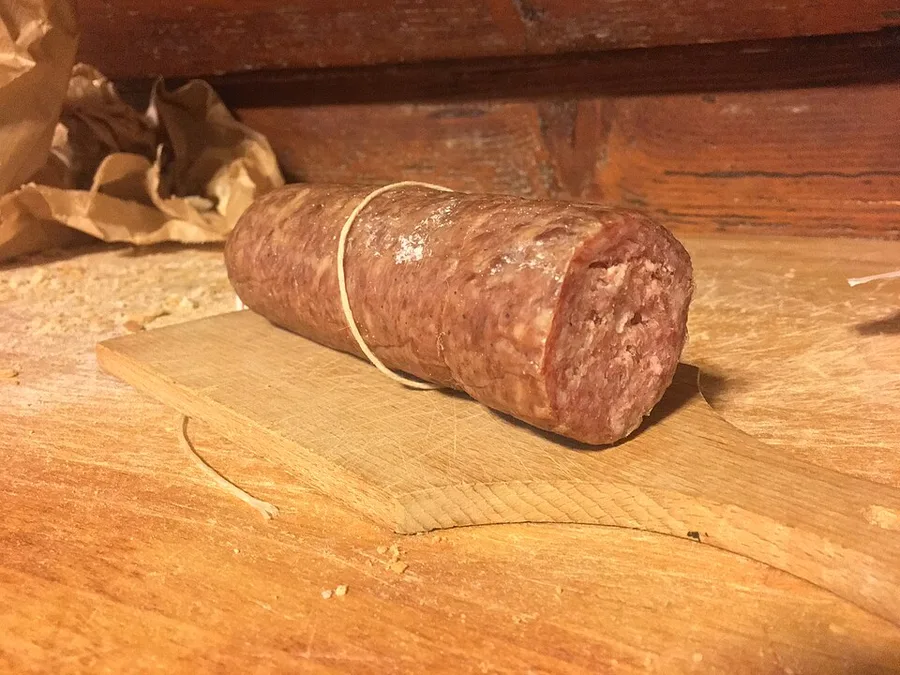
The salame you spread: ground very fine, IGP since 2009, fat enough that it is not sliced at all. You open the casing and spread it on bread with a knife, and it needs the fridge, because that soft paste dislikes warmth.
 Gabriel Bucataru · CC BY-SA 2.003
Lonzino
marche · umbria · 22-32 €/kg
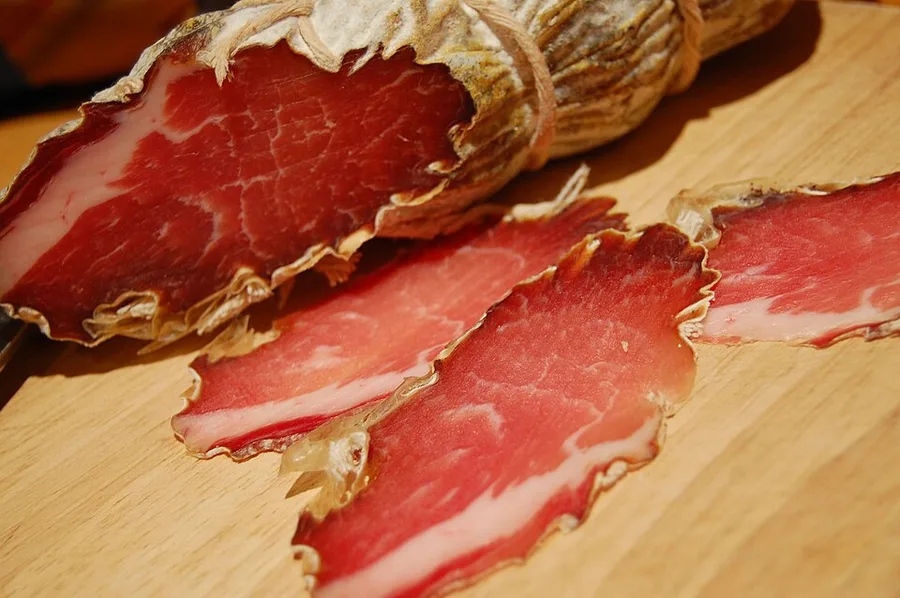
The loin dry-salted and cured whole, the leanest cut of the pig turned into something to slice. The Marche and Umbria have always made it, and in the fridge it needs covering, because it dries fast.
marche · 8-12 €/kg
A thin flatbread cooked on a griddle, with lard spread between the layers and pepper in the dough. It is not a piadina under another name: the layers of lard make it flake, and that is the point.
marche · 10-18 €/kg
Wild mussels that grow by themselves on the rocks of the Conero: nobody seeds them, they are gathered by divers. A Slow Food presidium, in season from May to October, and out of season they simply do not exist.
 Nicolò Oppicelli (Mushroom Observer) · CC BY-SA 3.0
piemonte · marche · 4000-5000 €/kg
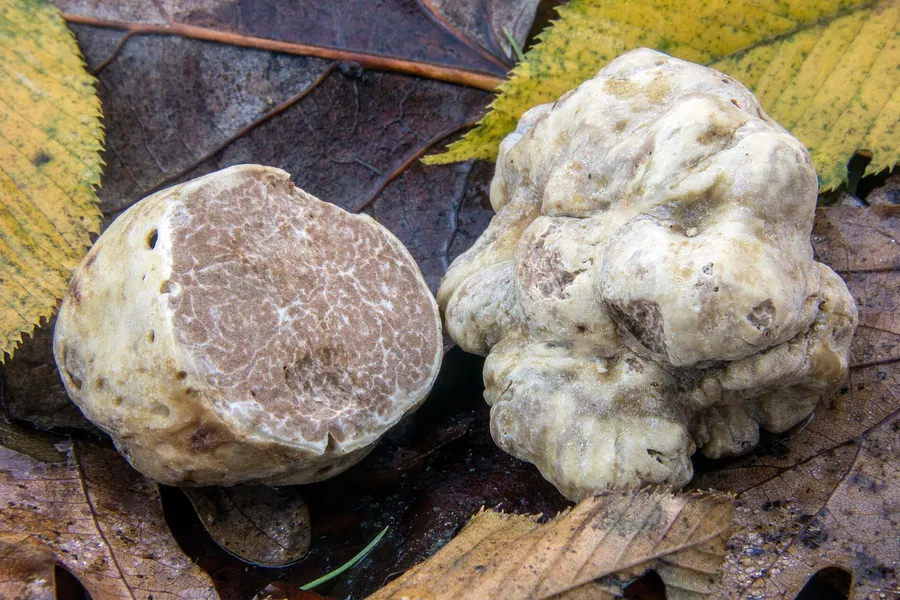
Acqualagna is Italy's second market for Tuber magnatum Pico after Alba, and the season runs from October to December. It is not cooked: it is shaved raw over a hot, fatty dish at the last moment.
umbria · marche
The oldest and most awkward pulse in Italy: it feeds where nothing else grows and requires a long soak with changes of water, as its own page explains. In the Marche it survives in a few inland villages.
marche · 1 h 20′
An hour and twenty: eggs and pepper in the dough, lard spread over, rolled up and rolled out again so the layers form. It is the rolling step that makes the difference, not the dough recipe.
marche · 1 h 50′
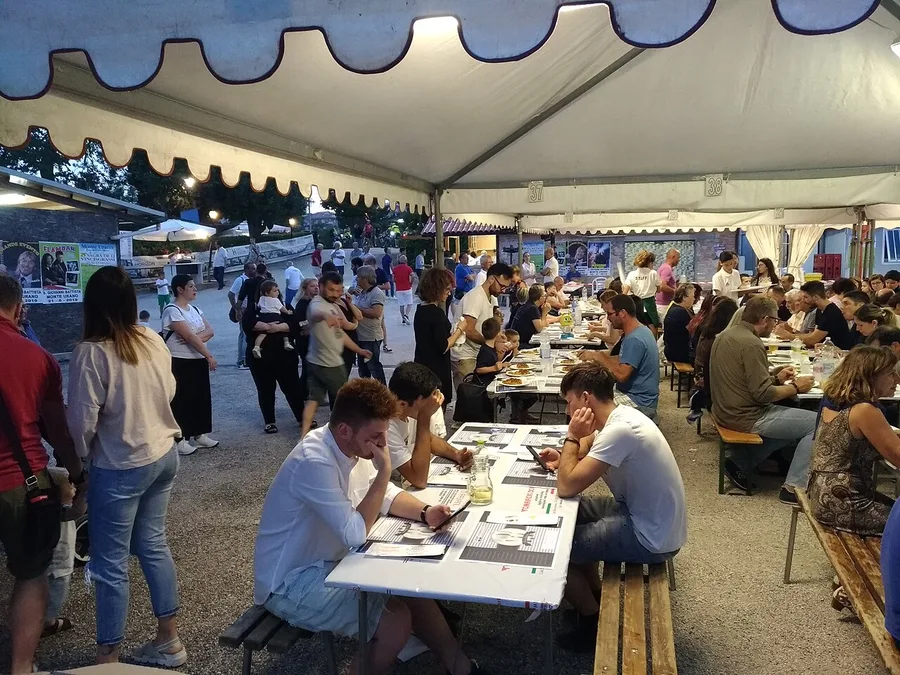
An hour and fifty: thirteen kinds of fish by tradition, fresh tomatoes and vinegar, no concentrate. From the moment the fish go in there is no stirring: you shake the pan, or they all break up.
 MEP Production · CC BY-SA 2.0
marche · 5 h 10′
Five hours: a thick pasta sheet, a long ragù with chicken giblets, béchamel. They are far richer and more layered than Bolognese lasagne, and the thick sheet is there to carry a heavy ragù.
 Manuela Zangara · CC BY-SA 2.0
marche · 3 h
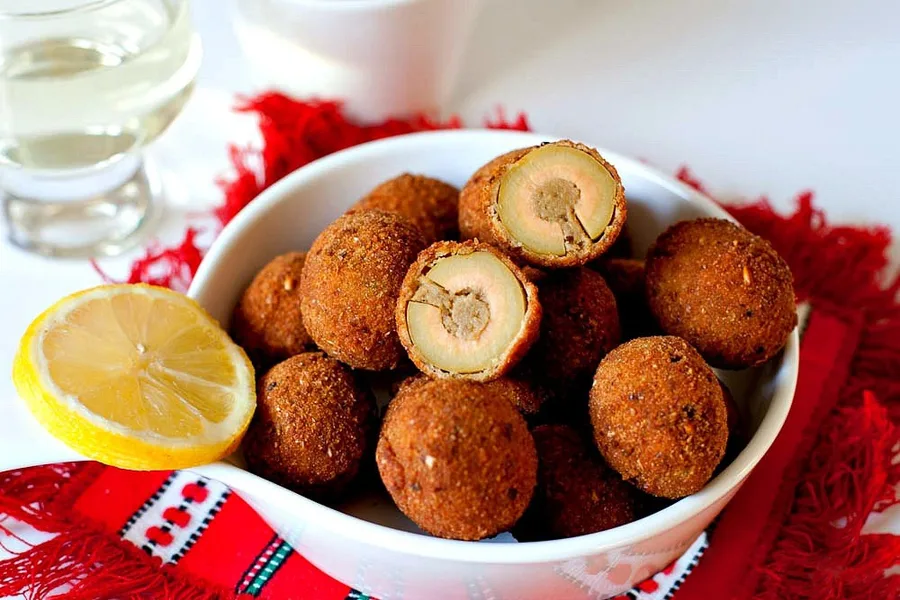
Three hours: tender Ascoli olives stoned in a spiral with a small knife, a filling of three meats, crumbs, frying. They are made in quantity and frozen already crumbed, because the work is all in the stoning.
One last thing
Stuffed Ascoli olives explain why some recipes are leaving people's kitchens. The spiral stoning is done with a small knife, olive by olive, turning around the stone without detaching the flesh: three hours' work gives an antipasto for six. That is why they are made once and frozen already crumbed, before frying, and why industrial versions use olives reconstructed from minced pulp. They are not the same thing, and the cut shows it: inside a real ascolana you can see the spiral.
Frequently asked questions
What is Casciotta d'Urbino?
A DOP cheese made from two milks: seventy to eighty per cent sheep's milk and the rest cow's. It ages twenty or thirty days and is eaten young. That balance between the two milks is rare in Italy and gives it both the sweetness of cow's milk and the depth of sheep's.
What is the difference between crescia sfogliata and piadina?
The crescia sfogliata of Urbino has eggs and pepper in the dough and, above all, lard spread between its layers: the dough is rolled up and rolled out again so that it flakes. The Romagna piadina is a single homogeneous disc with no layers. The result differs in the mouth, flaky for the first, elastic for the second.
What are moscioli?
Wild mussels of the Conero, between Ancona and Sirolo, which grow spontaneously on the rocks: they are neither farmed nor seeded, and are gathered by divers from May to October. They are a Slow Food presidium, and out of season they do not exist commercially.
Are vincisgrassi lasagne?
They are a baked pasta of the Marche, with a thicker sheet, a long ragù that includes chicken giblets and a richer layering than Bolognese lasagne. The name has a nineteenth-century story involving an Austrian general, and the recipe already appears in a late eighteenth-century text.