Seven smoked Italian products, and how much smoke they want
Speck, scamorza, Nebrodi provola, Fiore Sardo, pitina, mortadella di Campotosto, salame Napoli. In Italy smoking is a measure rather than a flavour: where it shows too much, something has gone wrong.
Italy smokes little, and where it does, it smokes cold. The difference is technical: hot smoking cooks, cold smoking dries the surface and leaves a deposit of smoke compounds without altering the meat. The South Tyrolean saying about speck puts it better than any manual: a little salt, a little smoke, plenty of air.
In nearly every case on this list the smoke solves a problem rather than adding a taste. In the provola of the Nebrodi the smoking is brief and done with straw, to dry the surface. In pitina, which has no casing, it is the maize flour plus the hearth smoke that seal the outside. In Fiore Sardo it is the fire of the pinnetta, the shepherds' hut, where the wheels aged.
The two cases where the smoke really shows are salame Napoli, where a pass of cold smoke is part of the identity and no northern salame has it, and mortadella di Campotosto. In both, though, the smoke comes after the salting and does not replace it: it is not an alternative preservative but a second layer.
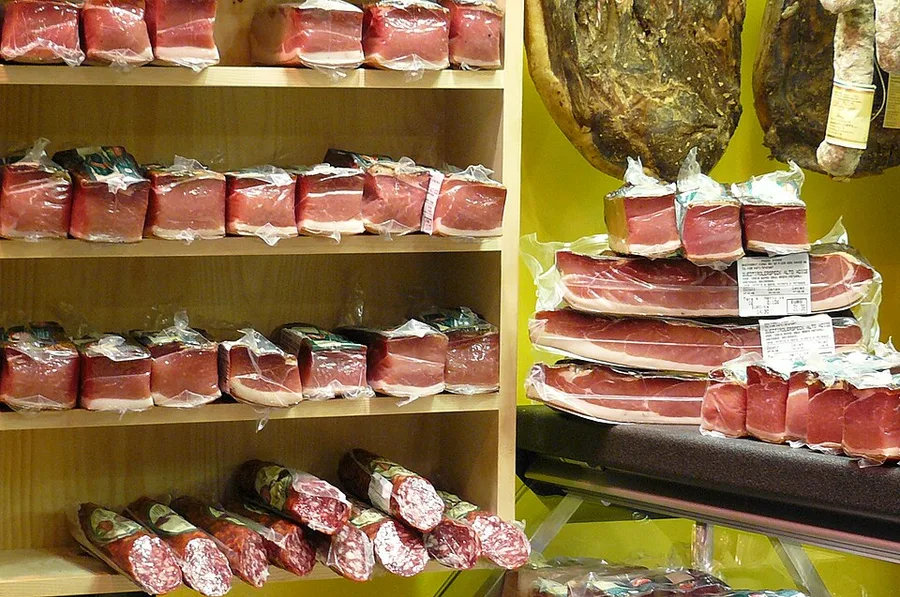 MOs810 · CC BY-SA 4.0
trentino alto adige · 18-26 €/kg
A boned leg, salted with spices, cold-smoked over beech below twenty degrees, then air-dried for months. IGP. The temperature of the smoke is in the rules, and it is the constraint that defines it.
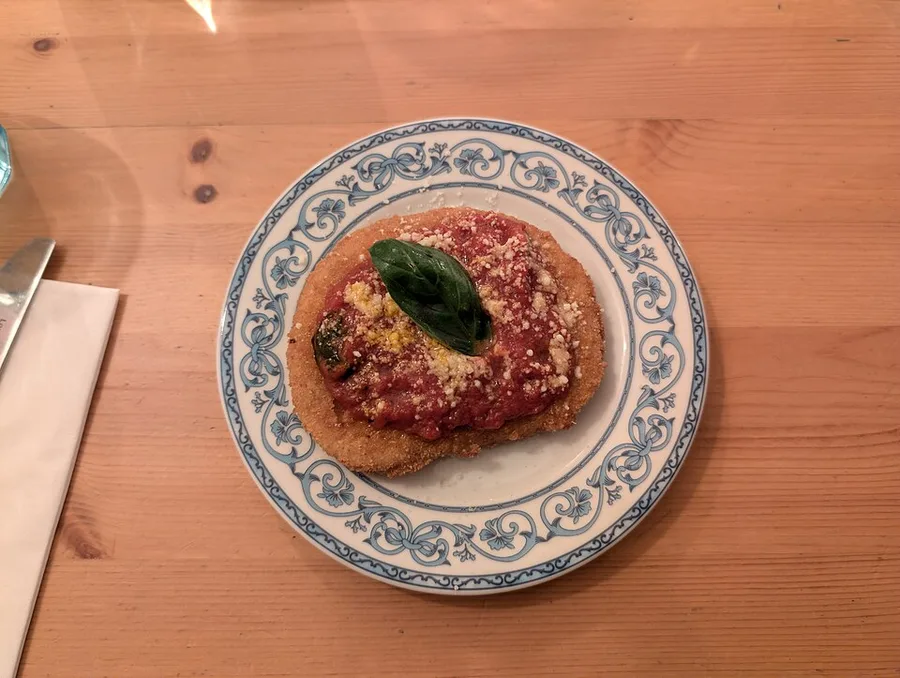 Andy Li · CC002
Scamorza
abruzzo · molise · 9-13 €/kg
Stretched curd pinched in the middle and hung for a week or two, white or smoked. The smoking is superficial and the cheese holds on a hot plate instead of melting: that is its trade, more than the smoke.
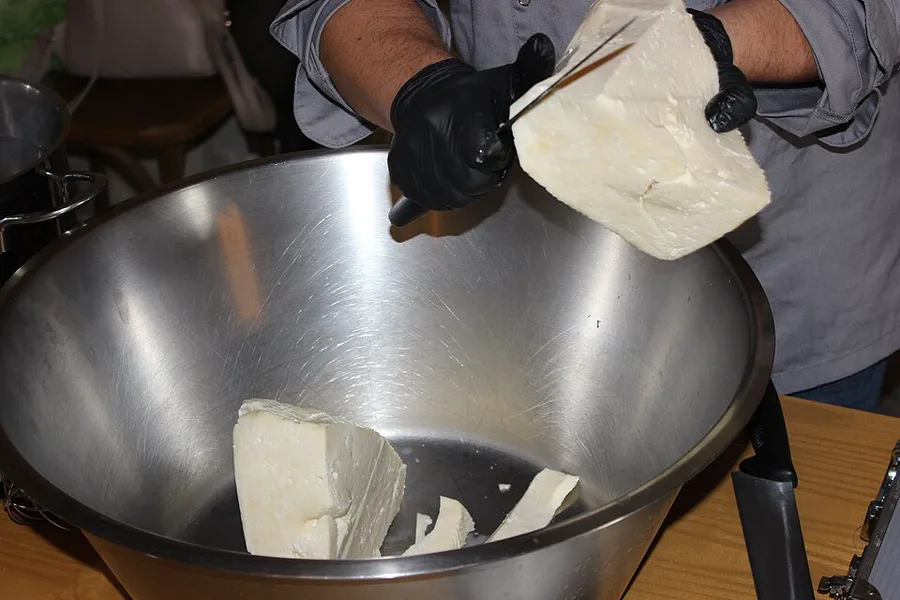 8w9d · CC0
sicilia · 12-16 €/kg
A stretched-curd cheese of raw milk, spun by hand and tied in pairs. The smoking, where it happens, is brief and done with straw: it dries the surface rather than flavouring the cheese.
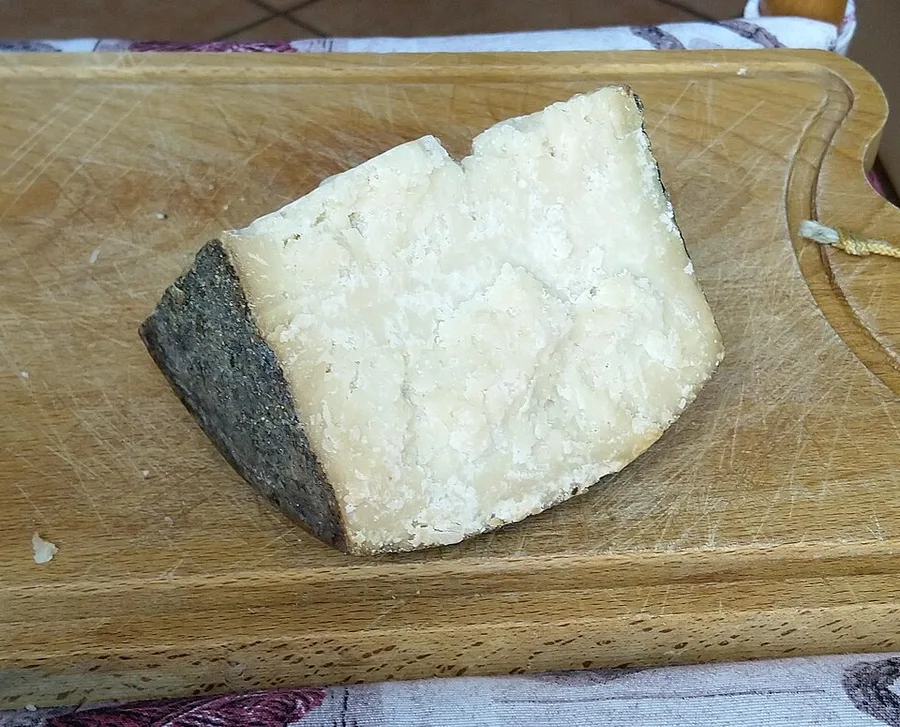 Yozh · CC BY-SA 4.0
sardegna · 18-26 €/kg
Raw sheep's milk, lamb paste rennet, a double-cone shape and smoking over the fire of the pinnetta, the shepherds' hut. The smoke is part of the process rather than a flavour added at the end.
 Holapaco77 · CC BY-SA 4.0
friuli venezia giulia
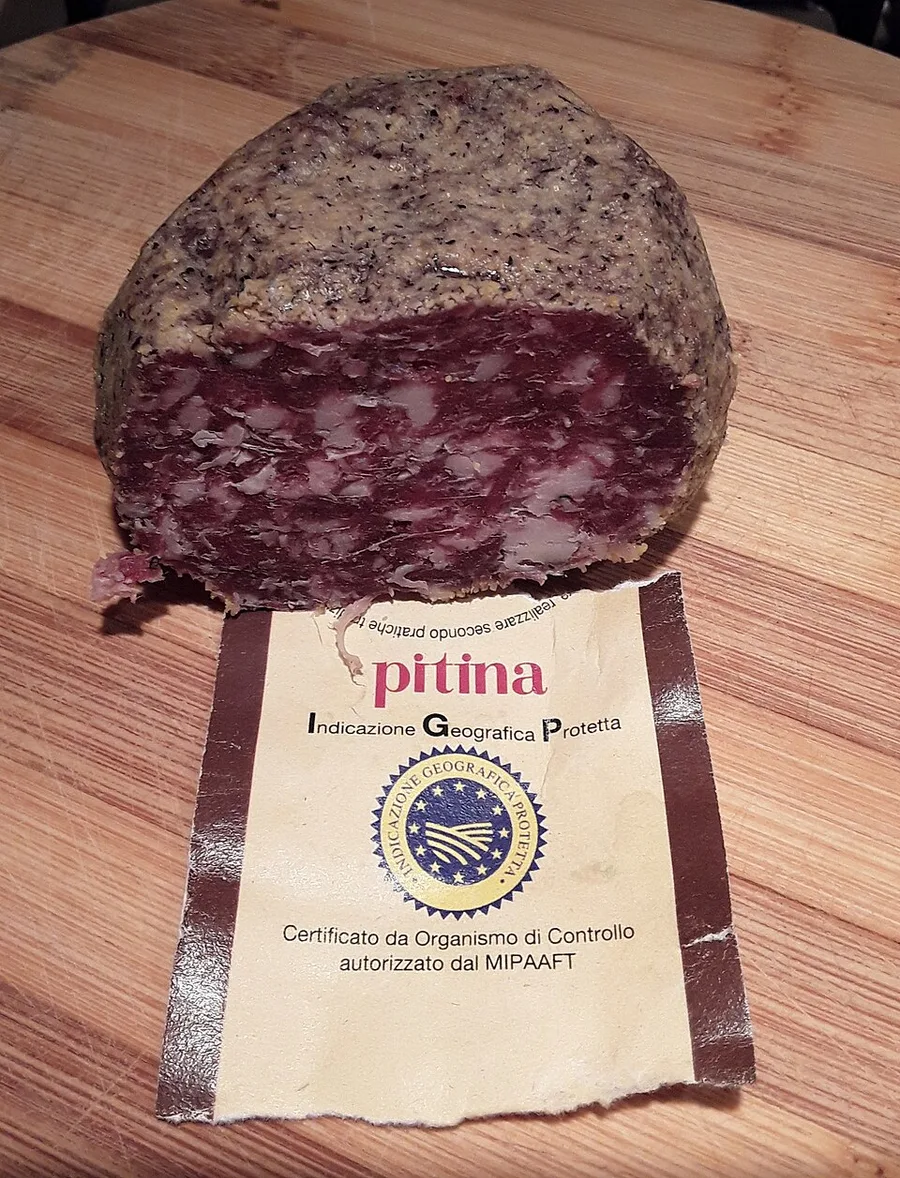
A patty of game or mutton rolled in maize flour and smoked above the hearth: with no casing, the flour crust plus the smoke are what seal the surface and protect the mixture.
 Infinitispazi · Public domain
abruzzo · 45-65 €/kg
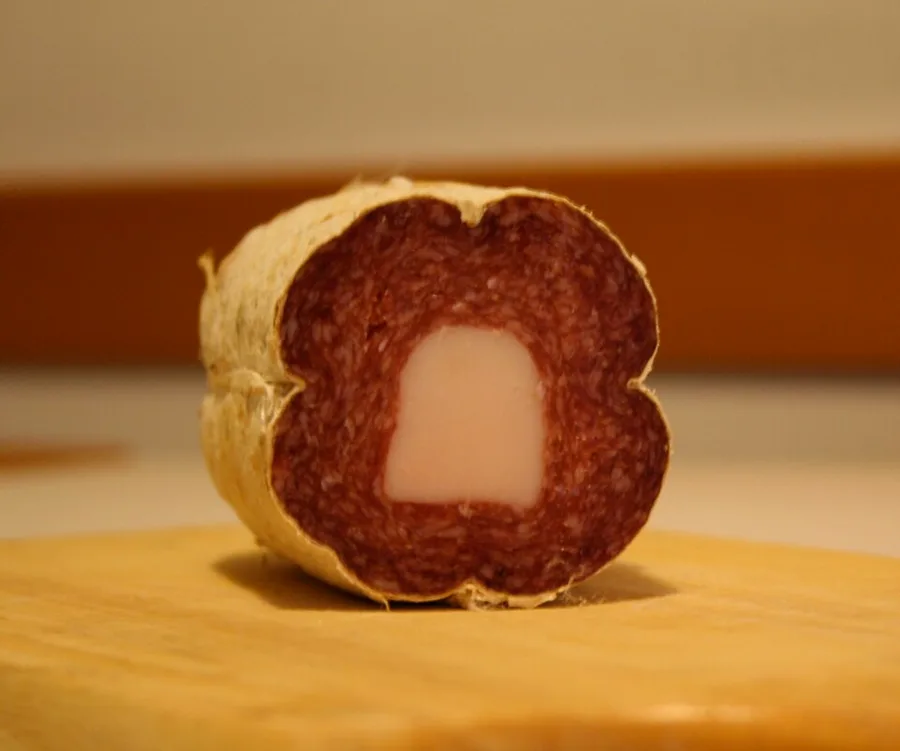
A small raw smoked cure from the Monti della Laga, with a whole strip of lardo through the middle. Here the smoke is noticeable, and it comes after the salting: it does not replace it, it adds a layer.
campania · 14-20 €/kg
Half a metre long and thin, with chilli in the mix and a pass of cold smoke no northern salame has ever met. The smoke shows on the first bite, and it is part of the product's identity.
One last thing
Smoke, in the kitchen, should be treated like salt: once it is in, it does not come out. That is why a speck or a smoked scamorza does not pair with dishes that are already smoked or heavily spiced, and why in a carbonara or an amatriciana smoked bacon does not replace guanciale: the smoke buries the egg and the pecorino, which are the two flavours those dishes exist to show. Where smoke is wanted and the dish is delicate, put it in one entry only and leave all the others neutral.
The questions this list answers
These are real questions put to an AI assistant, in the period when Bing cited this site among its sources to answer them. The number is how many times we were cited. We read them in Bing Webmaster Tools, under AI performance, and they decide what goes on this page rather than the other way round.
- scamorza189 citations
- speck italian meat9 citations
- napoli salami96 citations
- salami napoli72 citations
- scamorza cheese14 citations
- fiore sardo8 citations
- scamorza cheese taste description6 citations
Frequently asked questions
What is cold smoking?
Smoking carried out at low temperatures, below twenty degrees in the case of speck, which does not cook the product: it deposits smoke compounds on the surface and helps dry it. Hot smoking, by contrast, cooks, and is far less used in Italy.
Is smoked scamorza a different product?
It is the same stretched curd, pinched and hung to dry, with a superficial smoking added. The difference shows on the rind more than in the paste, and in cooking the smoke fades: on a hot plate both hold their shape instead of melting.
Is Fiore Sardo traditionally smoked?
Yes: the wheels aged in the pinnetta, the shepherds' hut, above the fire, and the smoke is part of the traditional process. It is also what sets it apart from the other Sardinian pecorini at first taste.
Can smoked bacon replace guanciale?
Technically yes, but the dish changes noticeably. Smoke is a dominant flavour and covers the egg and the pecorino, which in carbonara and gricia are the centre of the dish. If a substitute is needed, an unsmoked pancetta is the better one.