Nine Italian products of sea, lagoon and rock
Mussels from the Mar Piccolo where fresh water rises, wild mussels of the Conero, Comacchio eel, red prawns from five hundred metres down, Cabras bottarga, menaica anchovies.
Italy has eight thousand kilometres of coast and very few sea products with a denomination, and the reason is that fish move: defining a fishing zone is difficult, and nearly all protected products are processed rather than caught. The exceptions on this list are all tied to a physical place that does not move: a lagoon, a rock, a sea floor.
The mussels of Taranto grow in the Mar Piccolo, where freshwater springs called citri rise from the bottom: less salt and more nourishment give a sweeter, fatter mussel than open-sea ones. The moscioli of Portonovo are wild mussels that grow by themselves on the rocks of the Conero: nobody seeds them, they are gathered free-diving from May to September, and out of season they do not exist.
The rest are processes. The mullet bottarga of Cabras is made from roe salted, pressed and cured; colatura di alici drips from the barrels of Cetara; menaica anchovies are caught with a wide-mesh net that lets the fish bleed in the water, so the flesh stays white. In all three the product is born ashore, from a fish that comes from a few miles out.
 Andy Li · CC0
puglia · 3-6 €/kg
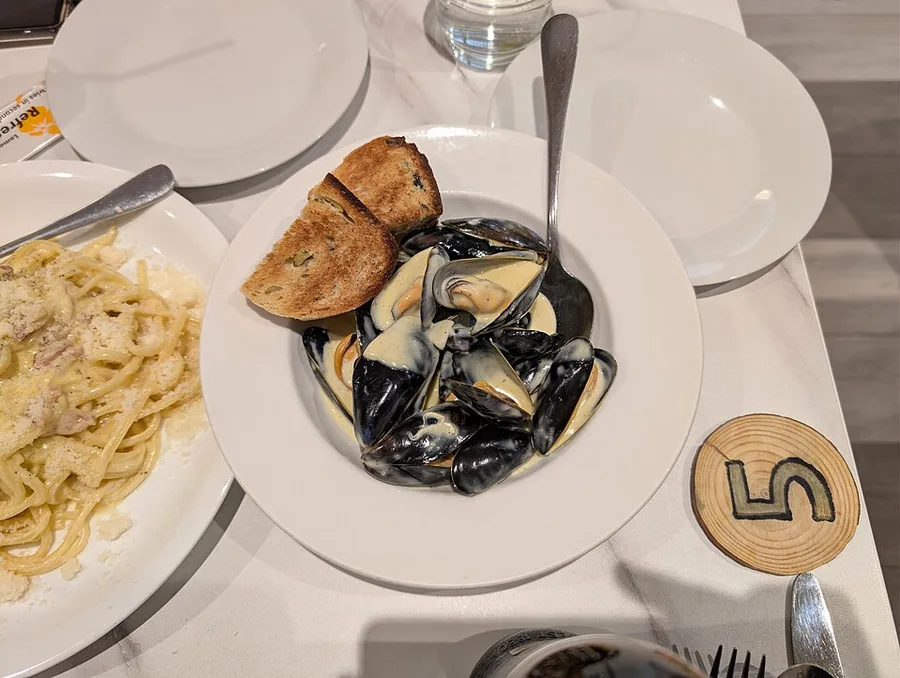
They grow in the Mar Piccolo, a lagoon where the citri, freshwater springs, rise from the bottom: lower salinity and more nourishment give a sweeter, fatter mussel than open-sea ones.
marche · 10-18 €/kg
Wild mussels that grow by themselves on the rocks of the Conero: nobody seeds them and nobody hangs them on ropes, they are gathered free-diving from May to September. A Slow Food presidium.
emilia romagna · 12-22 €/kg
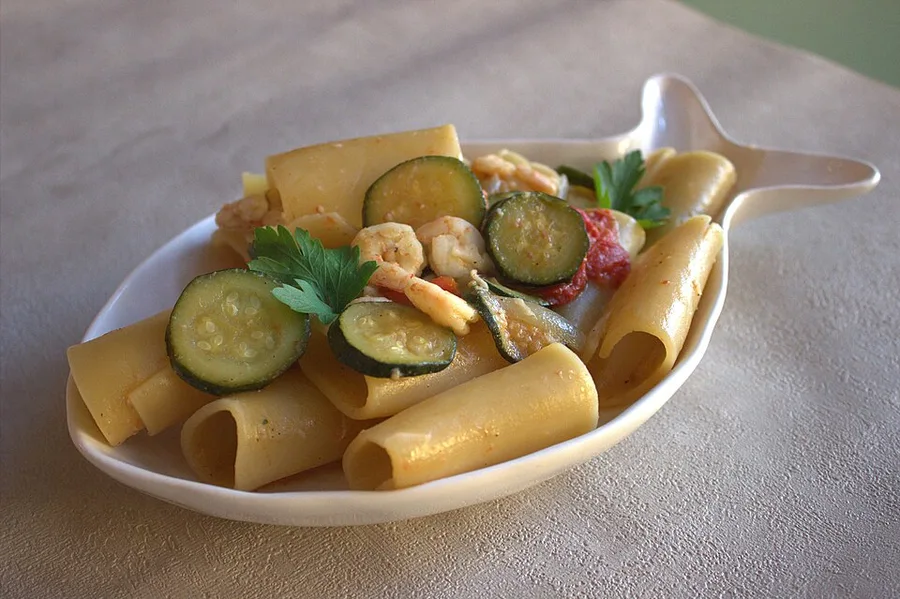
The eels of the Comacchio lagoons, taken with lavorieri, the lagoon's fixed traps, and traditionally marinated or spit-cooked. A Slow Food presidium, and a production tied to a hydraulic system.
 8w9d · CC0
sicilia · 40-90 €/kg
Fished at five hundred metres in the Sicilian Channel, and the best are frozen on board: on land they would be another product. Forty to ninety euro a kilo.
 Civa61 · CC BY-SA 4.0
sicilia · sardegna · 35-60 €/kg
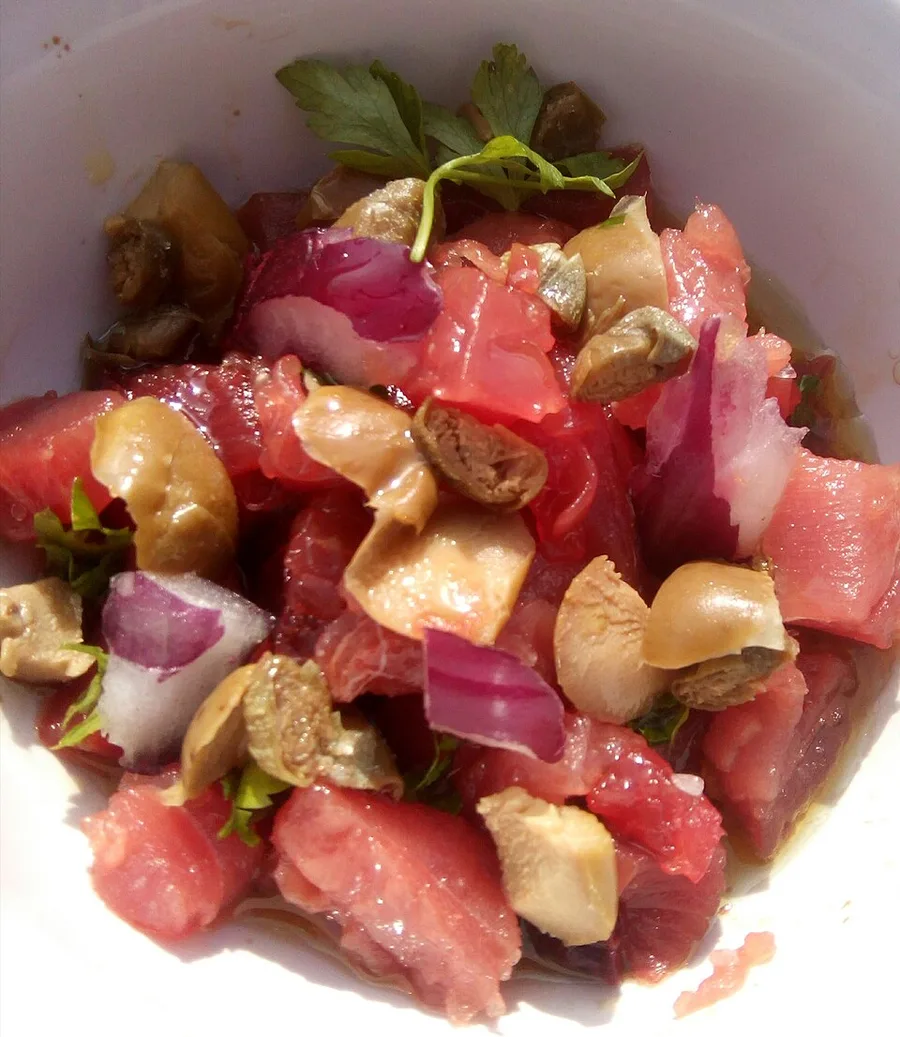
A species under quota, with a capped fishery, and cuts worth very different prices within the same animal: the loin fillet runs thirty-five to sixty euro a kilo, the belly higher.
 Radobera · CC BY-SA 3.0
sardegna · sicilia · 200-320 €/kg
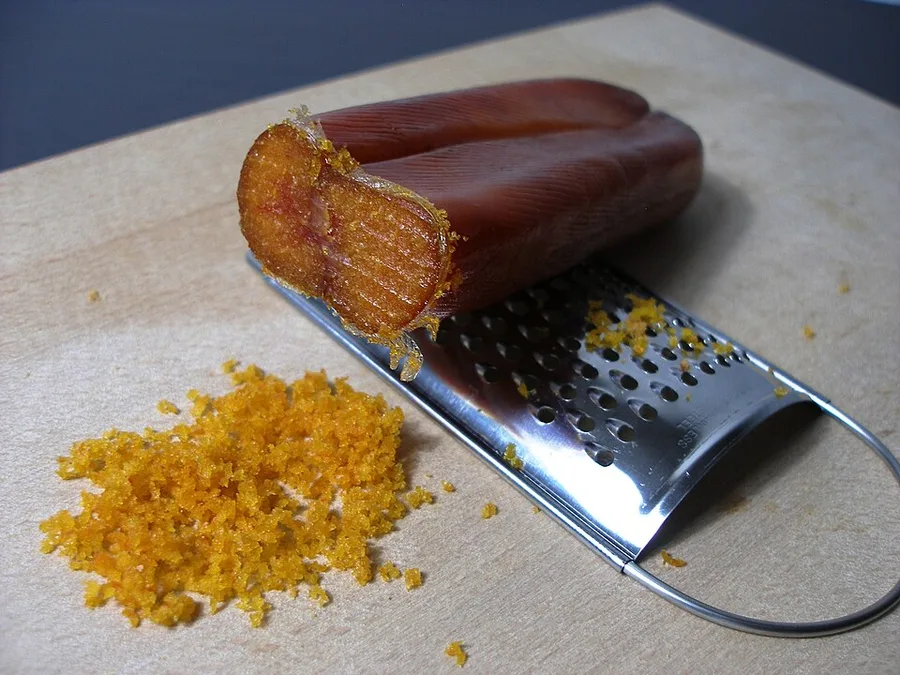
Roe of Cabras mullet or of tuna, salted, pressed and cured: the salt removes water and the weight compacts. It is never cooked, because above sixty degrees it turns bitter.
 Derbrauni · CC BY-SA 4.0
campania
The liquid that drips from the terzigni of Cetara, where the anchovies sit under salt and weight for months: it is drawn off between late October and December. The direct descendant of Roman garum.
campania · 55-90 €/kg
Caught in the Cilento with the menaica, a wide-mesh net that takes only the large anchovies and lets them bleed in the water: the flesh stays white instead of red. A handful of boats, a handful of nights.
- 09
Sardines
sicilia · liguria · 4-9 €/kg
The oily fish Italy cooks in the most ways: fried, in saor, a beccafico, in Palermo's pasta. They cost little and go off fast, so they are bought the same day.
One last thing
Fresh fish is bought with two checks and no label. The eye must be bright and convex, not sunken or cloudy; the gills red and moist, not brown. In oily fish, which goes off fast because of its fats, smell matters most, and it should be of the sea rather than of fish. For shellfish the rule is different: the shells must be closed, or close under pressure, and unusually heavy ones are generally full of sand. For the red prawns of Mazara, frozen on board is often better than fresh, because a black head means the enzyme has already started working.
The questions this list answers
These are real questions put to an AI assistant, in the period when Bing cited this site among its sources to answer them. The number is how many times we were cited. We read them in Bing Webmaster Tools, under AI performance, and they decide what goes on this page rather than the other way round.
- cantabrian anchovies19 citations
- alici di menaica18 citations
- colatura di alici195 citations
- bottarga cos'è47 citations
- Bottarga15 citations
- frittura di paranza179 citations
- spaghetti bottarga51 citations
- tonno rosso5 citations
- paranza pesce20 citations
Frequently asked questions
Why are Taranto mussels different?
Because of the water of the Mar Piccolo: freshwater springs called citri rise from the floor of the lagoon, lowering salinity and bringing nourishment. The result is a sweeter, fatter mussel than those farmed in open sea.
What are moscioli?
Wild mussels that grow spontaneously on the rocks of the Conero, between Ancona and Sirolo: they are neither farmed nor seeded, and are gathered free-diving from May to September. They are a Slow Food presidium and out of season they do not exist commercially.
How do you recognise fresh fish?
A bright, convex eye, red moist gills, flesh springy to the touch, a smell of the sea rather than of fish. In shellfish the shells must be closed or close under pressure, and abnormally heavy ones are often full of sand.
Is fish frozen on board worse than fresh?
Not always. In the red prawns of Mazara, fished at five hundred metres, freezing on board stops the enzyme that blackens the head: a prawn landed fresh after days at sea is often in worse condition than one frozen immediately.