Ten Italian products no machine can make
Saffron flower by flower, anchovies boned with tweezers, Ascoli olives stoned in a spiral, culurgiones sealed in a wheat ear, orecchiette made with a thumb, truffles hunted, pistachios on lava terraces.
The price of ten Italian products is explained in one sentence: no machine exists that can make them. This is not a stylistic choice or a claim about craft, it is a technical limit, and it shows in the number of gestures per unit of product.
Saffron is the extreme case: a kilo of dried stigmas takes between a hundred and fifty and two hundred thousand flowers, picked at dawn and stripped by hand one at a time, three stigmas each. Cantabrian anchovies come next: a fifty-gram tin holds twenty or twenty-five fillets, each of which has passed between two fingers twenty or twenty-five times, boned with tweezers.
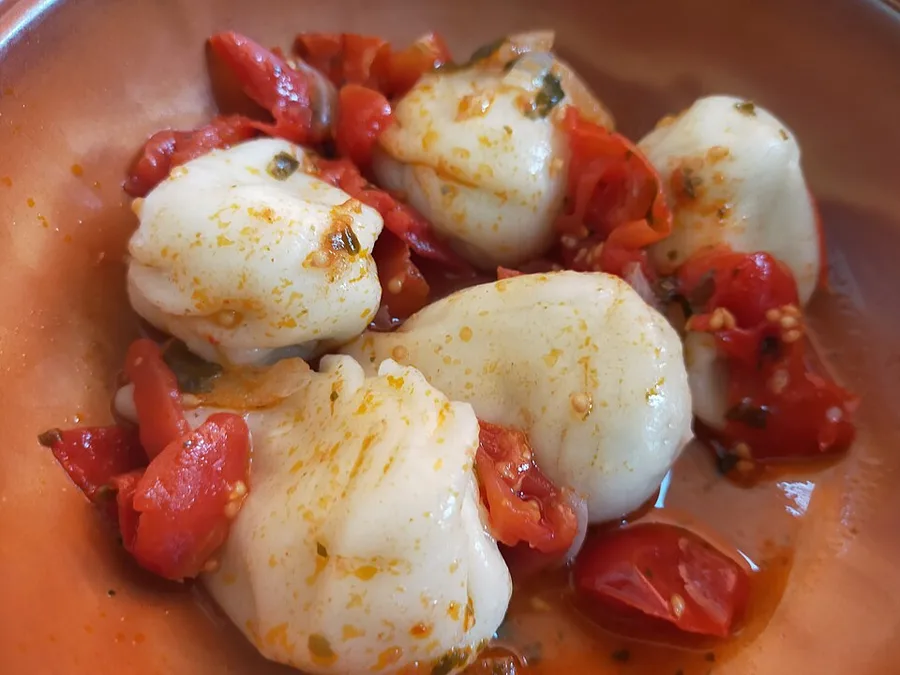
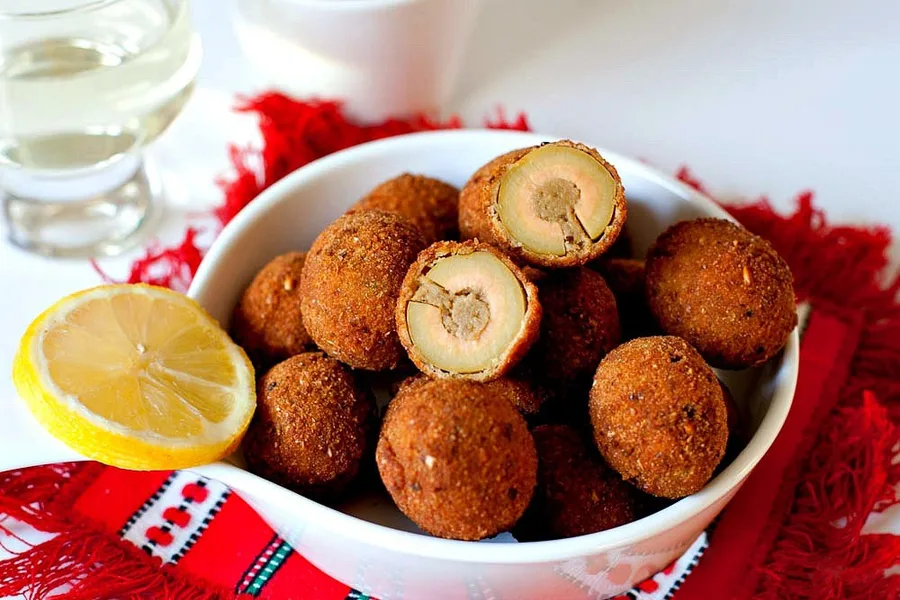
In other cases the machine exists but produces something else, and the eye can tell. Culurgiones sealed by hand in a wheat-ear seam differ from machine-sealed ones along the edge; industrial Ascoli olives use olives reconstructed from minced pulp, while a real ascolana shows the spiral of the knife; white truffle is not farmed at all but hunted, and no technology has replaced the dog.
 Rainer Zenz · Public domain01
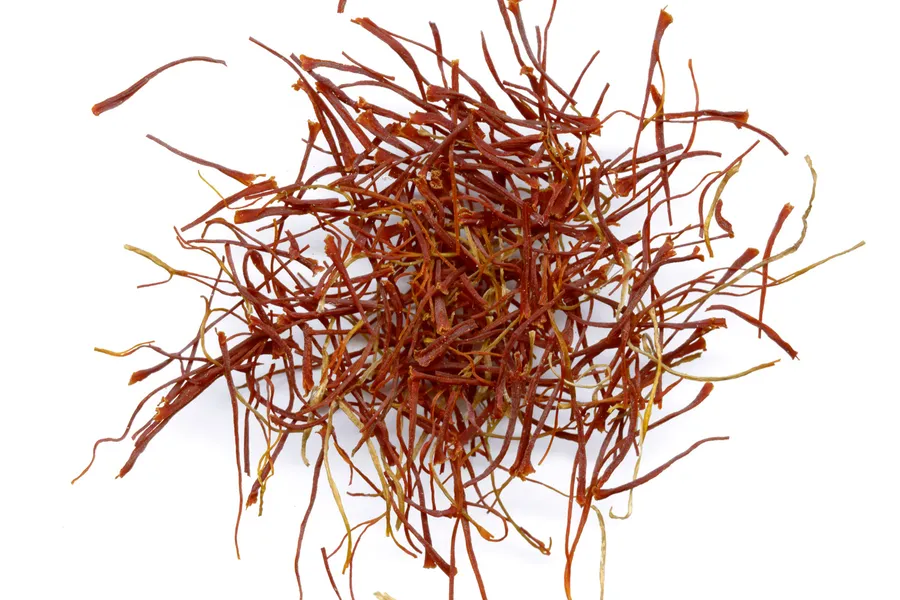
Saffron
abruzzo · sardegna · 15000-40000 €/kg
A hundred and fifty to two hundred thousand flowers per kilo, picked at dawn and stripped by hand one at a time, three stigmas each, for twenty consecutive days. No mechanisation exists, and the price says so.
liguria · campania · 90-160 €/kg
Matured fish washed, skinned with a cloth, opened, boned with tweezers and trimmed with scissors: twenty or twenty-five fillets in a fifty-gram tin, each handled individually.
campania · 55-90 €/kg
Headed and gutted by hand in a single movement, then salted in terracotta jars. The wide-mesh net selects the fish at sea, and a handful of boats go out a handful of nights a year.
 Nicolò Oppicelli (Mushroom Observer) · CC BY-SA 3.0
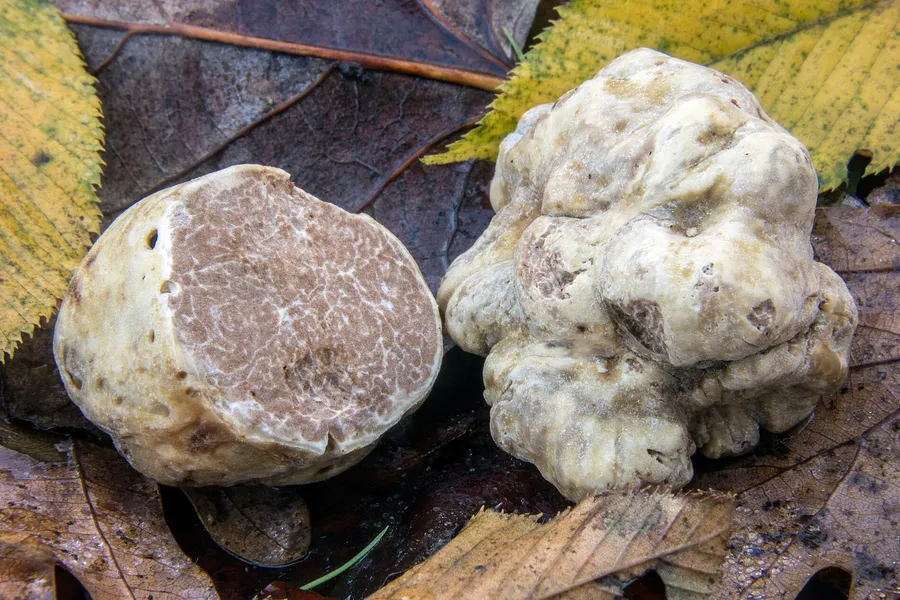
piemonte · marche · 4000-5000 €/kg
It is not farmed: it is hunted, with a dog, in the months when the season is open. No technology has replaced that work, and the price per kilo rises with the size of the piece found.
 Paolo Galli · CC BY-SA 3.0
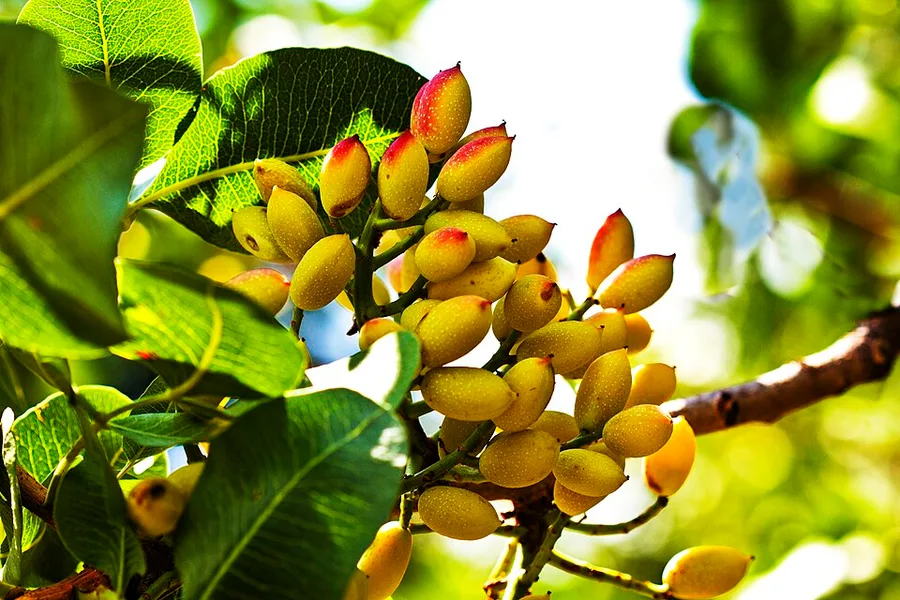
sicilia · 25-40 €/kg
Lava terraces no machine can enter: picked by hand every other year, because the tree is rested. Real production is half the theoretical figure.
sicilia · 1.2-2.5 €/kg
Picked by hand, bunch by bunch, as late as December, thanks to the sheets covering the pergolas and protecting the grapes: the late harvest is precisely what the IGP protects.
 Andrea Martinello · CC BY-SA 2.0
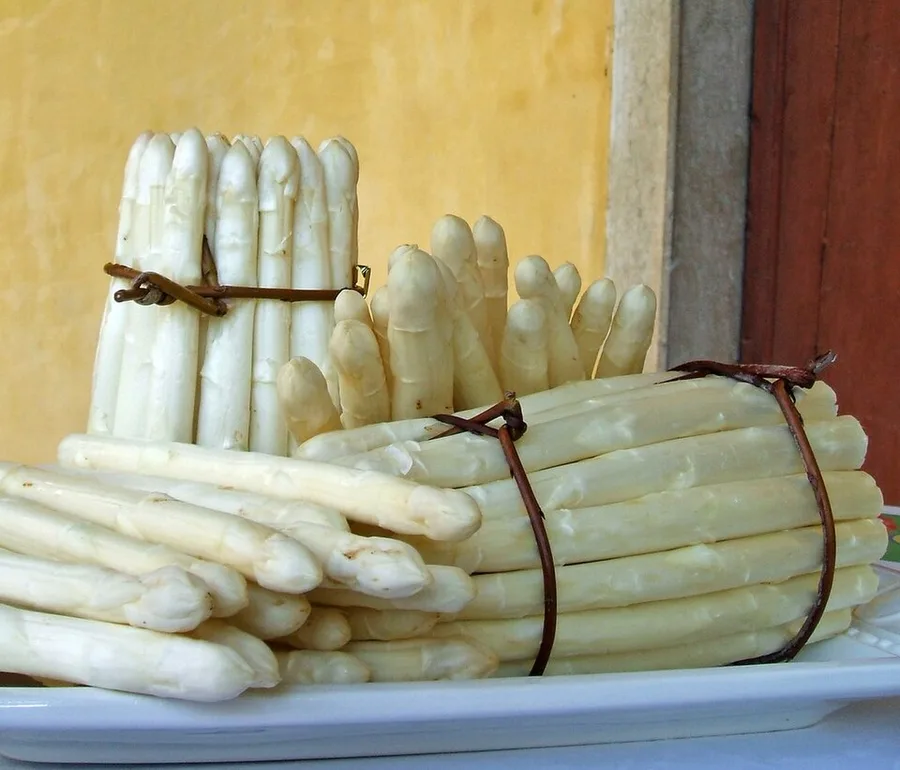
veneto · 18-25 €/kg
Cut by hand, one at a time, under the mound of earth and before the tip emerges: that is the condition for a white spear, and no machine knows where to sink the knife.
 Marica Massaro · CC BY-SA 4.0
sardegna · 12-18 €/kg
The wheat-ear seam is made with thumb and forefinger, raviolo by raviolo, and it is the real mark of recognition: a machine-made closure is visible at a glance along the edge.
 Original uploader was Signorealex at it.wikipedia · Public domain
puglia · 5-9 €/kg
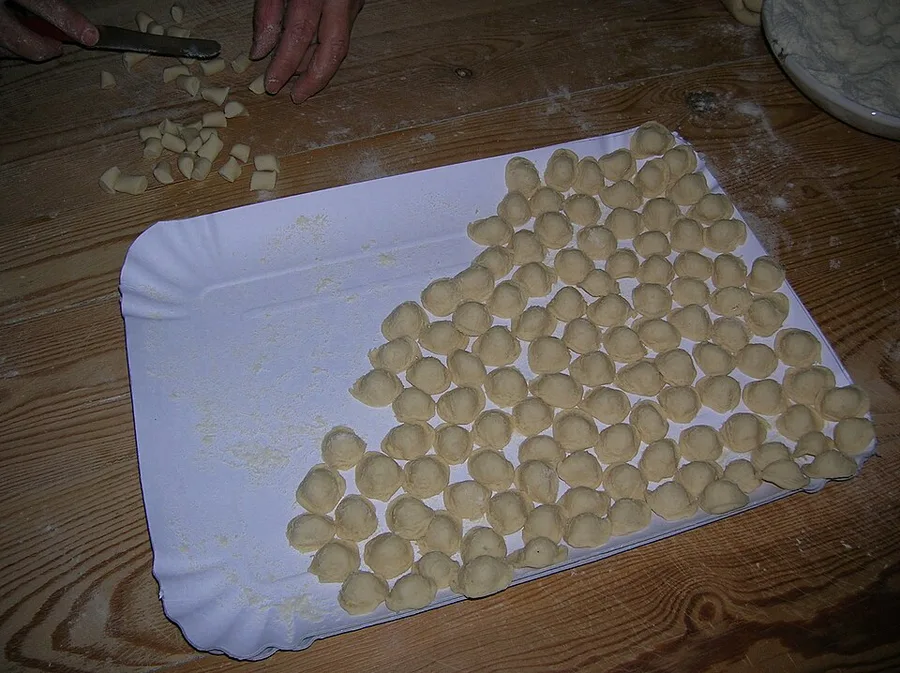
A cube of dough is dragged with a knife and flipped over the thumb, one at a time: the centre stays thin and the rim thick, and that difference in thickness is the reason for the shape.
 Manuela Zangara · CC BY-SA 2.0
marche · 3 h
Stoned in a spiral with a small knife, olive by olive, turning around the stone without detaching the flesh: three hours for a starter for six. In industrial versions the olive is reconstructed.
One last thing
There is a way to verify nearly all these products, and it does not go through the label. With anchovies you look for bones: tweezers leave none, machines do. With Ascoli olives you look at the cut, because a real one shows the spiral of the knife and a reconstructed one has uniform pulp. With culurgiones you look at the seam. With saffron you check that they are whole stigmas and not powder. In every case the check is visual, takes ten seconds, and is more reliable than any declaration.
The questions this list answers
These are real questions put to an AI assistant, in the period when Bing cited this site among its sources to answer them. The number is how many times we were cited. We read them in Bing Webmaster Tools, under AI performance, and they decide what goes on this page rather than the other way round.
- cantabrian anchovies19 citations
- bronte pistachio40 citations
- alici di menaica18 citations
- colatura di alici195 citations
- ricetta tradizionale orecchiette cime di rapa5 citations
- nocciola piemonte igp36 citations
Frequently asked questions
Why is saffron not harvested by machine?
Because the flower has to be picked closed, at dawn, and the three stigmas separated from the rest without breaking them: operations that need a delicate grip and a visual judgement no farm machine makes. A kilo takes between a hundred and fifty and two hundred thousand flowers.
How do you recognise a hand-filleted anchovy?
By the complete absence of bones and by the width of the fillet: tweezers remove every bone, and the fillet stays whole, more than a centimetre wide, brown-pink. Industrial processing leaves bones and produces narrow, irregular fillets.
Are industrial Ascoli olives different?
Often yes: they use olives reconstructed from minced pulp pressed around the filling, instead of olives stoned in a spiral with a knife. The difference shows in the cut, because in a real ascolana the spiral of the flesh is visible.
Can truffles be farmed?
Black truffle partly can, in cultivated truffle grounds; the prized white truffle cannot, it is hunted with a dog in the woods, and that is the main reason for its price and its variability from one year to the next.