Nine things considered thoroughly Italian that came from abroad
Stockfish from the Lofoten islands, anchovies from the Bay of Biscay, the tomato from South America, the red aubergine from Africa, the maize of polenta, salt cod from the Atlantic.
Many things we take to be Italian by definition arrived from elsewhere, and in some cases the raw material is still foreign. This is not a polemical discovery: it is how trade works, and in almost every one of these cases Italy added a technique that did not exist elsewhere.
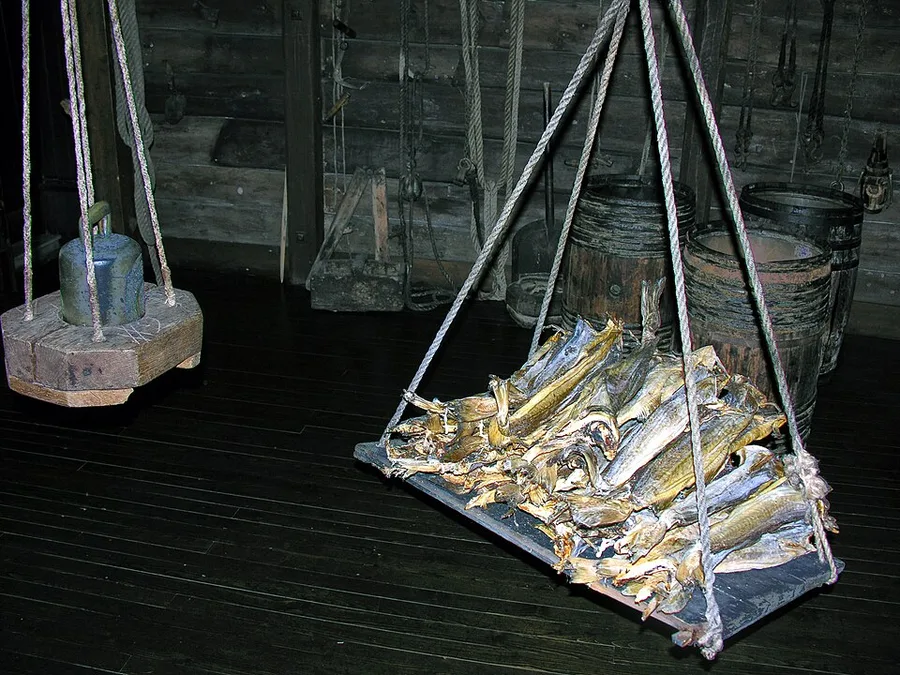
Stockfish is the clearest example. It is cod air-dried on the racks of the Lofoten islands in Norway, and Italy has bought it since the fifteenth century: baccalà alla vicentina, the stocco of Mammola and the meatless dishes of half the peninsula are made with a fish that never swam in the Mediterranean.
Cantabrian anchovies tell the story in reverse. The fish is Spanish, caught in the Bay of Biscay, but barrel salting under pressure and filleting in oil are techniques Ligurian and Sicilian salters took to the Cantabrian coast in the late nineteenth century. Today many Italian houses buy that fish already salted and fillet it here.
 Paolo Tonon from Italy · CC BY-SA 2.0
veneto · calabria · 40-70 €/kg
Cod air-dried without salt on the racks of the Lofoten islands, bought by Italy since the fifteenth century. In the Veneto it is called bacalà, and that name is the source of half of Italy's confusion about preserved fish.
 MoDs92 · Public domain02
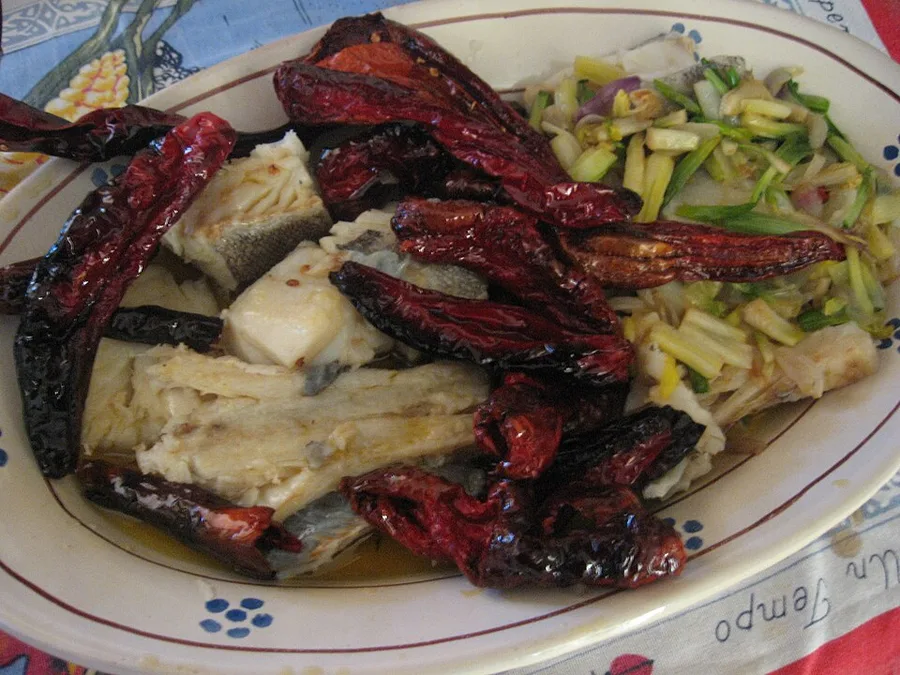
Baccalà
veneto · 14-22 €/kg
Salted North Atlantic cod: a fish that does not live in the Mediterranean and that fed inland Italy for centuries, because it reached places fresh fish never did.
liguria · campania · 90-160 €/kg
Spanish fish and Italian technique: in the late nineteenth century Ligurian and Sicilian salters brought barrel salting to the Cantabrian coast, and with it the idea of filleting the matured fish and putting it in oil.
 Assianir · CC BY-SA 3.0
campania
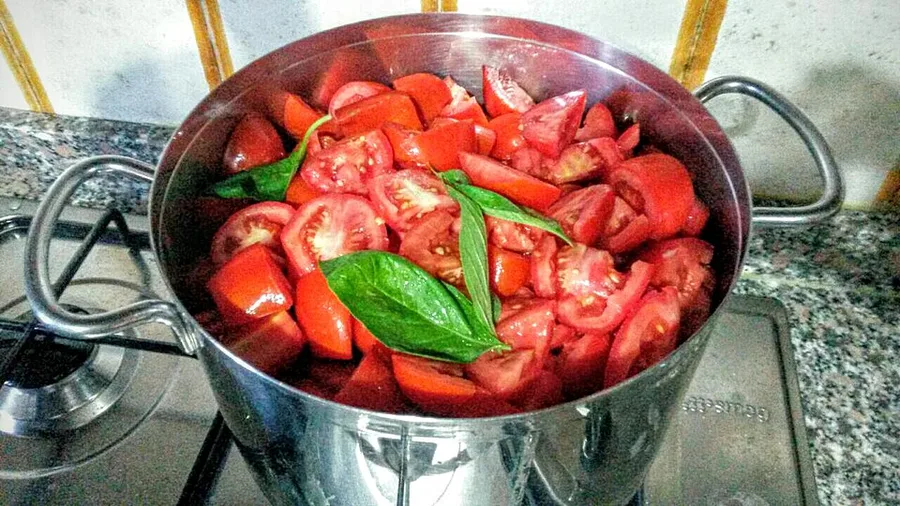
The tomato came from South America and rewrote Neapolitan cooking in the eighteenth century. The San Marzano, long and low in water, is the result of that meeting between an American plant and a volcanic soil.
 Generale Lee · CC BY-SA 4.0
basilicata
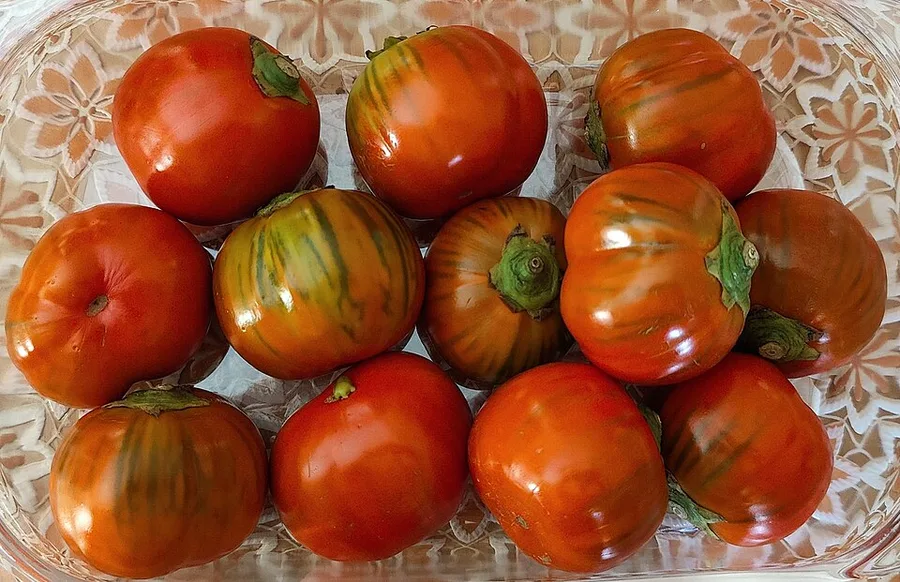
It comes from Africa and reached the Pollino with people returning from the colonies. Round, ribbed, orange-red, hot and faintly bitter: today it is DOP, and an African aubergine has become a Lucanian product.
lombardia · 3.5-7 €/kg
Maize is American and reached Europe in the sixteenth century: the polenta that now seems the most alpine thing imaginable is made with a grain the Alps did not have, mixed with buckwheat.
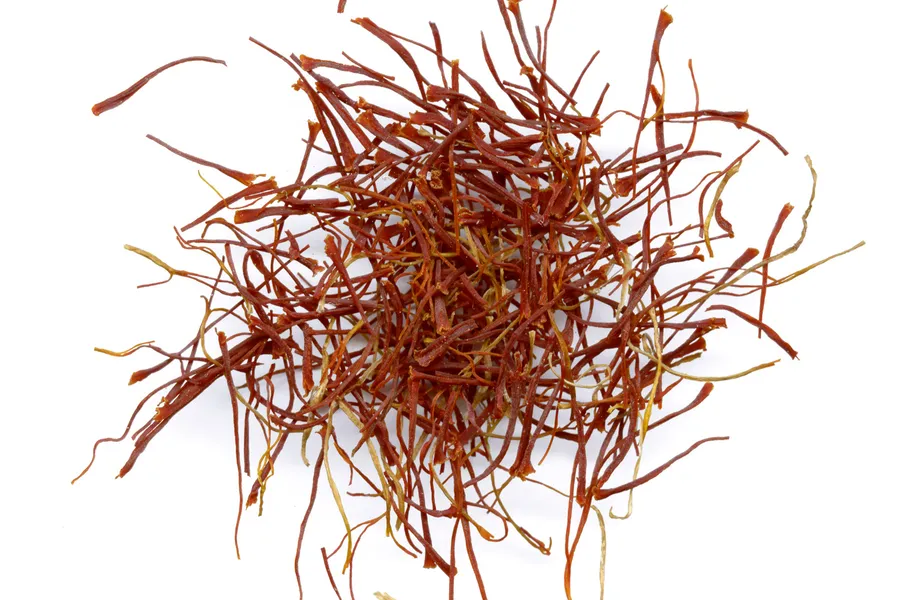 Rainer Zenz · Public domain07
Saffron
abruzzo · sardegna · 15000-40000 €/kg
Crocus sativus comes from Asia Minor and reached Italy with the Arabs and later with the Dominicans in Abruzzo. Today the saffron of L'Aquila is an Italian product in every respect, and it is picked flower by flower.
lombardia · 26-38 €/kg
It was born in the Lomellina, in the Jewish communities of Mortara, so that there would be a cured sausage without pork: an Italian technique applied to a religious need. The modern version mixes goose with pork and is cooked.
calabria
The oldest citrus to reach Europe, from Asia, and every summer rabbis come to the Calabrian coast to select fruit for Sukkot: an Italian product serving a calendar that is not Italian.
One last thing
There is a practical lesson in this list, and it concerns labels. Many anchovy tins carry both 'processed in Italy' and 'caught in the north-east Atlantic', and both statements are true: the fish comes from there, the filleting happens here. It is not a deception but a complete description, and reading it properly keeps you from paying Italian prices for a product Italy only finished, and from rejecting as foreign a product to which Italy gave the technique that makes it what it is.
The questions this list answers
These are real questions put to an AI assistant, in the period when Bing cited this site among its sources to answer them. The number is how many times we were cited. We read them in Bing Webmaster Tools, under AI performance, and they decide what goes on this page rather than the other way round.
- cantabrian anchovies19 citations
- baccalà alla vicentina ricetta originale88 citations
- san marzano tomatoes dop20 citations
- colatura di alici195 citations
- what is pancetta1,326 citations
Frequently asked questions
Is stockfish Italian?
No, it is cod dried in Norway, on the racks of the Lofoten islands, and Italy has imported it since the fifteenth century. What is Italian are the recipes it produced: baccalà alla vicentina, the stocco of Mammola in Calabria, the meatless dishes of the interior.
Are Cantabrian anchovies Spanish or Italian?
The fish is caught in the Bay of Biscay, so Spanish; the technique of barrel salting and filleting in oil was taken there by Ligurian and Sicilian salters in the late nineteenth century. Many Italian houses buy the fish already salted and fillet it in Italy.
Where does the tomato come from?
South America. It reached Europe in the sixteenth century and entered Neapolitan cooking in the eighteenth, finding the volcanic soils of the Agro Sarnese-Nocerino and Vesuvius. The San Marzano and the piennolo are the result of that meeting, not of an ancient tradition.
Is polenta an ancient alpine dish?
Maize polenta is not: maize is American and reached Europe in the sixteenth century, spreading through the alpine valleys and the Po plain over the following two hundred years. Earlier polentas were made from other grains, millet, barley and buckwheat, which survives in the taragna.