Eight Italian products named after the weight that squeezes them
Soppressata and soppressa, culatello in its bladder, bottarga under weight, colatura dripping from barrels, head cheese, pressed salted ricotta, canestrato in its basket.
Pressure is the least visible preserving method and the one most present in the names: soppressata, soppressa, pressato. It does two things at once. It pushes out water and air: without water microorganisms do not work, and without air pockets the internal faults that ruin a cured meat or a cheese do not form.
The result shows in the shape. Calabrian soppressata is flat because it dries between two wooden boards; soppressa vicentina is large and firm; head cheese takes its name from the box it is pressed in until the gelatine binds it. In culatello the bladder is the container and the tying is the pressure: the meat compacts and the curing works from the outside towards the centre.
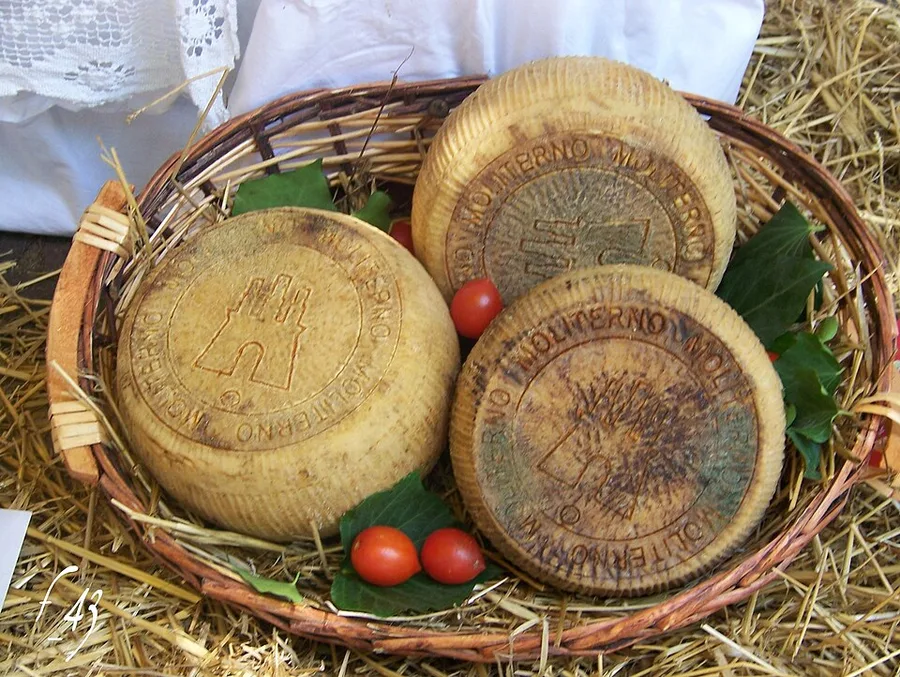
In cheeses the pressure leaves a signature. Canestrato Pugliese ages inside rush baskets that print the weave on the rind, and that is not decoration: the basket was the mould. Salted ricotta is ricotta pressed and aged three months, and the pressing is what turns it from a fresh whey product into something for the grater.
 Florixc · CC0
calabria · basilicata · 26-38 €/kg
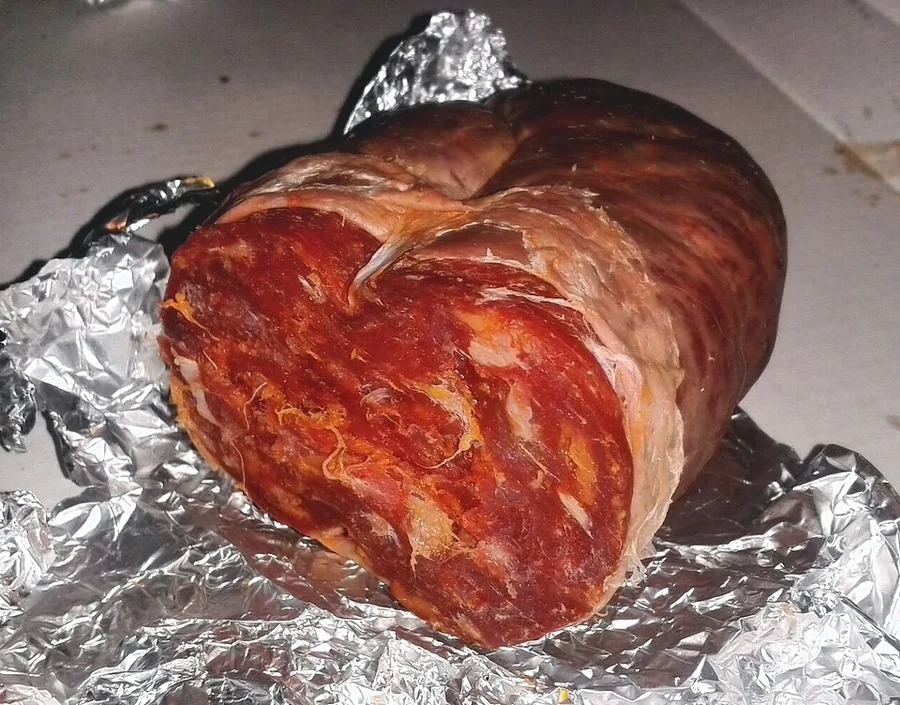
A coarse grind pressed between two wooden boards as it dries: hence the name and the flattened shape. Soppressata di Calabria has been DOP since 1998, in three versions, mild, hot and white.
veneto · 17-25 €/kg
The same verb and another product: a large DOP salame from heavy Vicenza pigs, not hot, to be cut in thick slices because thin it crumbles.
 Francesco P · CC BY-SA 2.0
emilia romagna · 60-90 €/kg
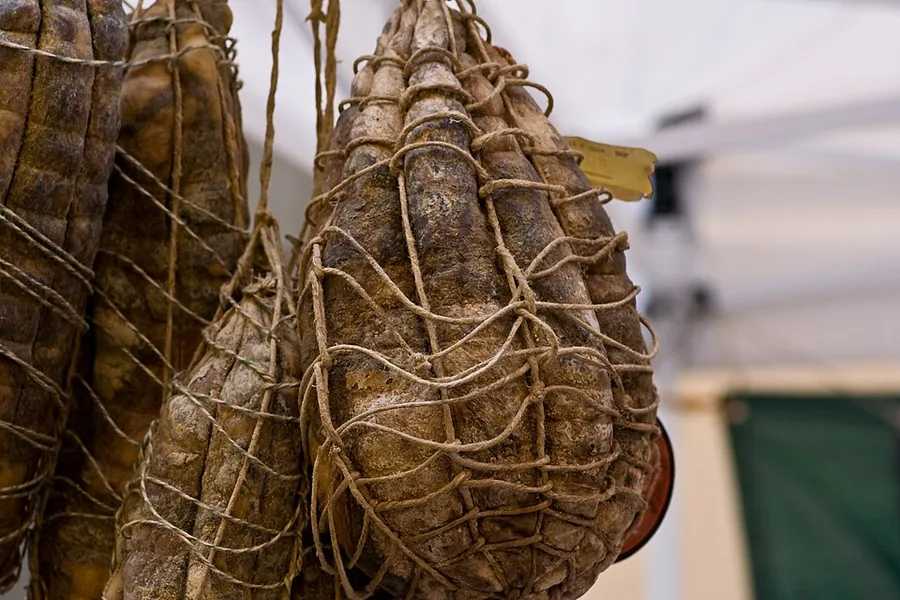
The muscular heart of the leg closed in a bladder and tied by hand: the tying is the pressure, and the ten months or more of curing work from the outside towards the centre.
piemonte · liguria · 12-20 €/kg
The head boiled, boned while hot, seasoned and pressed in a wooden box until the gelatine binds it. The name is the container, and the mosaic slice is the result of that pressure.
 Radobera · CC BY-SA 3.0
sardegna · sicilia · 200-320 €/kg
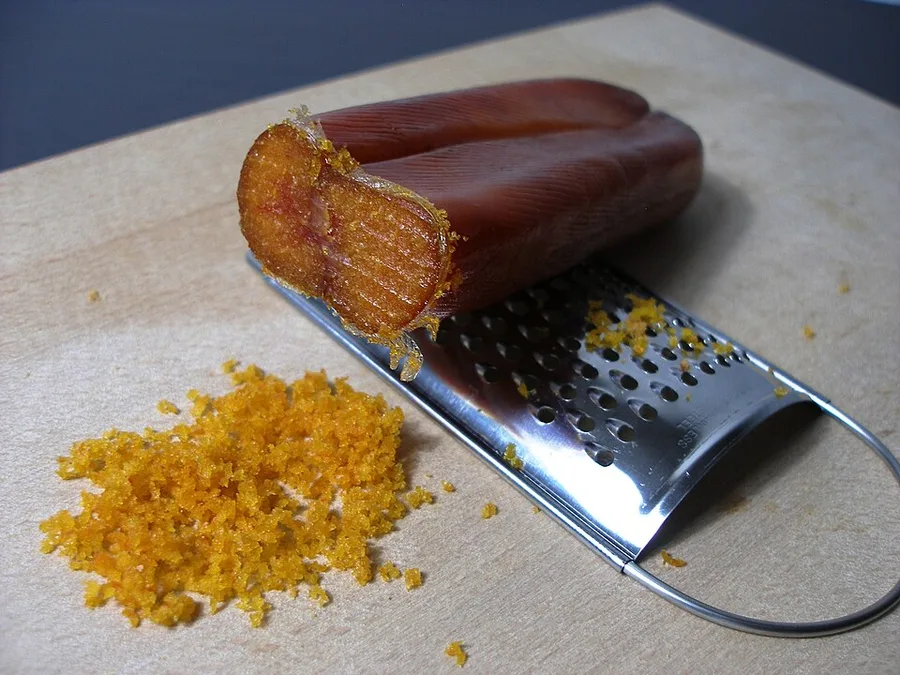
Roe salted and pressed: the weight compacts while the salt removes water, and the sac becomes a waxy block that can be grated. Without pressing it would stay soft and uneven.
 Derbrauni · CC BY-SA 4.0
campania
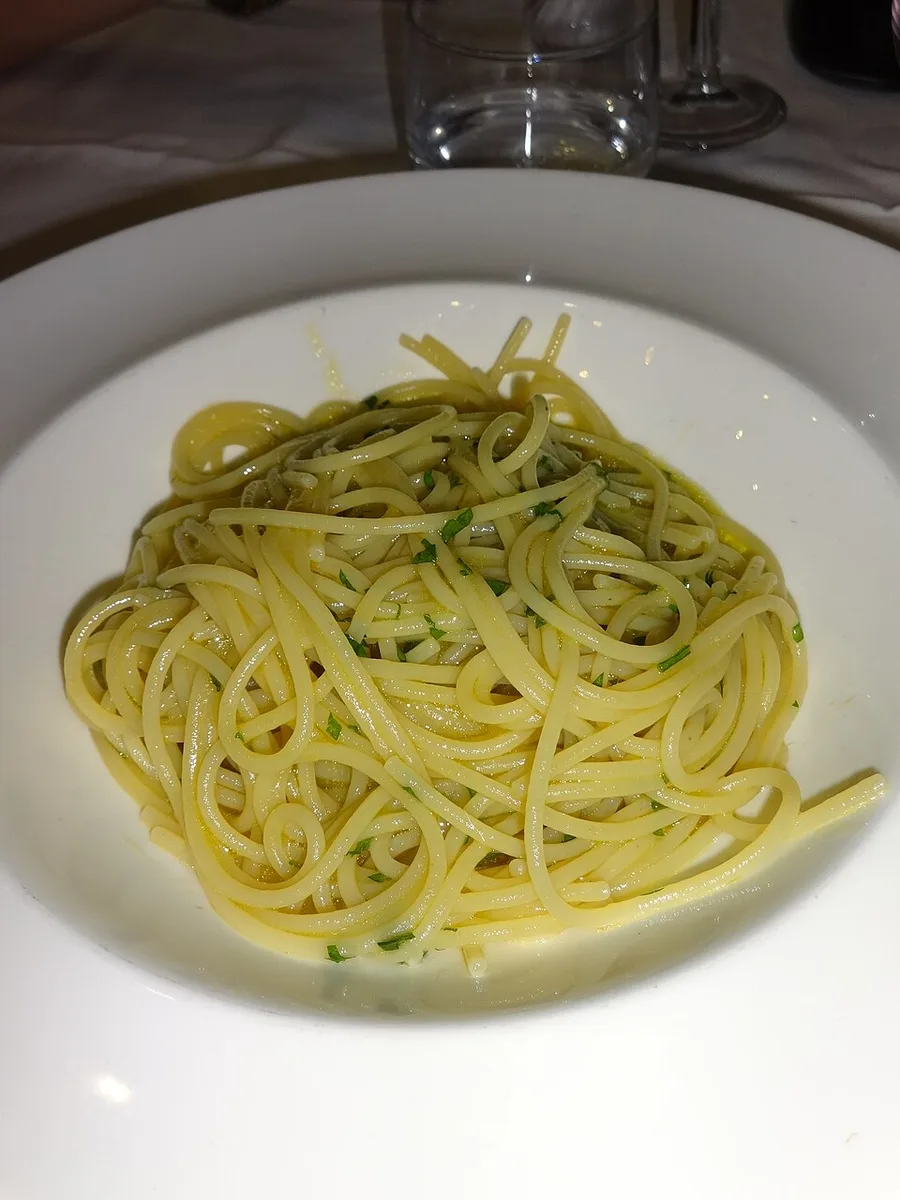
Here the product is the liquid the pressure pushes out: the anchovies sit in the terzigni under salt and weight for months, and what drips is drawn off between late October and December.
 Paoletta S. · CC BY 2.0
sicilia · 12-18 €/kg
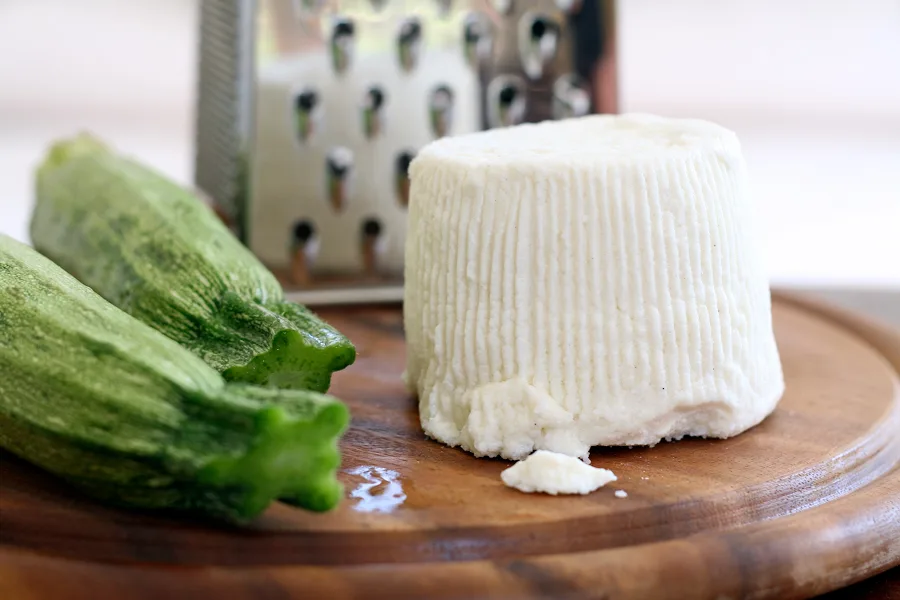
Sheep's ricotta salted, pressed and aged at least three months: the pressing is what turns it from a fresh whey product into a firm grating one, and it explains why it does not melt when cooked.
 Vini & Sapori · CC BY-SA 2.0
puglia · 14-22 €/kg
It ages inside rush baskets that leave the weave printed on the rind: the basket was the mould, and the pressure it applies is part of the process rather than a decorative detail.
One last thing
There is a practical consequence, and it concerns cutting. Pressed products have a fibre oriented by the weight that squeezed them, and they are sliced with the grain or they crumble: soppressa vicentina wants half-centimetre slices, Calabrian soppressata the same, culatello as thin as possible but always by hand and never by machine, because a machine compresses an already compact meat further. Salted ricotta, pressed and dry, is not sliced at all: it is grated coarse, almost into flakes, just before serving.
The questions this list answers
These are real questions put to an AI assistant, in the period when Bing cited this site among its sources to answer them. The number is how many times we were cited. We read them in Bing Webmaster Tools, under AI performance, and they decide what goes on this page rather than the other way round.
- sopressata1,226 citations
- soppressata salami398 citations
- what is soppressata284 citations
- culatello172 citations
- sopressa veneta89 citations
- ricotta salata cheese469 citations
- soppressata59 citations
- what is ricotta salata30 citations
- bottarga cos'è47 citations
- colatura di alici195 citations
Frequently asked questions
Why is soppressata called that?
From the verb to press: as it dries the salame is squeezed between two wooden boards, and from that pressure come both the flattened shape and the name. The same verb is at the root of soppressa vicentina, which is nevertheless another product.
What is the point of pressing a cured meat?
Removing water and air. Without water microorganisms do not work, and without air pockets the internal faults that ruin curing do not form. In culatello the same function is performed by the bladder and the hand tying.
Why does salted ricotta not melt?
Because it has been pressed and aged at least three months: it has lost most of its water and its structure is firm. On pasta alla Norma it stays as white flakes on the surface instead of dissolving into the sauce, which is exactly its job.
Do the baskets of Canestrato Pugliese do anything?
Yes: they were the mould the wheel was pressed in, and the pressure they apply is part of the process. The weave printed on the rind is the signature of that work, not a pattern added afterwards.