Seven Italian grating cheeses, and when to use which
Parmigiano Reggiano, Grana Padano, Pecorino Romano, Fiore Sardo, Ragusano, sharp provolone, salted ricotta. They are not interchangeable: the salt changes, the melting changes, and in some dishes the dish changes.
The question that reaches assistants most often about these cheeses is always the same: what is the difference between Grana Padano and Parmigiano Reggiano. The short answer is the rules, the territory and the time. The useful answer is that one is for dishes that need balance and the other for dishes that need savour, and that there are also four euro a kilo between them.
The technical criterion is simple: a grating cheese is a hard-paste cheese with little water, plenty of salt and proteins already broken down by ageing. Little water means the grater reduces it to powder instead of smearing it; broken-down proteins mean it dissolves in heat without stringing or splitting.
Two entries at the end break the rule and are here for their use rather than their category. Salted ricotta is not an aged cheese but a dried whey product, and sharp provolone strings instead of dissolving. They are grated all the same, over particular dishes, and swapping Parmigiano in changes the result.
 Nerodiseppia · CC BY-SA 3.0
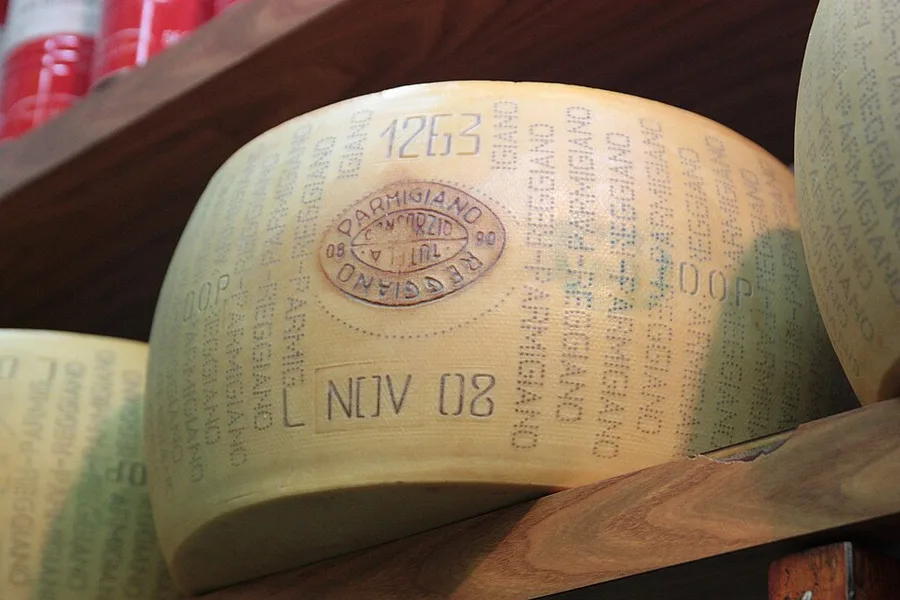
emilia romagna · 14-18 €/kg
Raw milk, salt, rennet, no additive permitted, and in Europe the only cheese that may be called parmesan. From twelve months it is a table cheese, from twenty-four a grating cheese, past thirty-six it turns crumbly and salty: the months stamped on the wheel are the information that matters.
 Tamorlan · CC BY 3.0
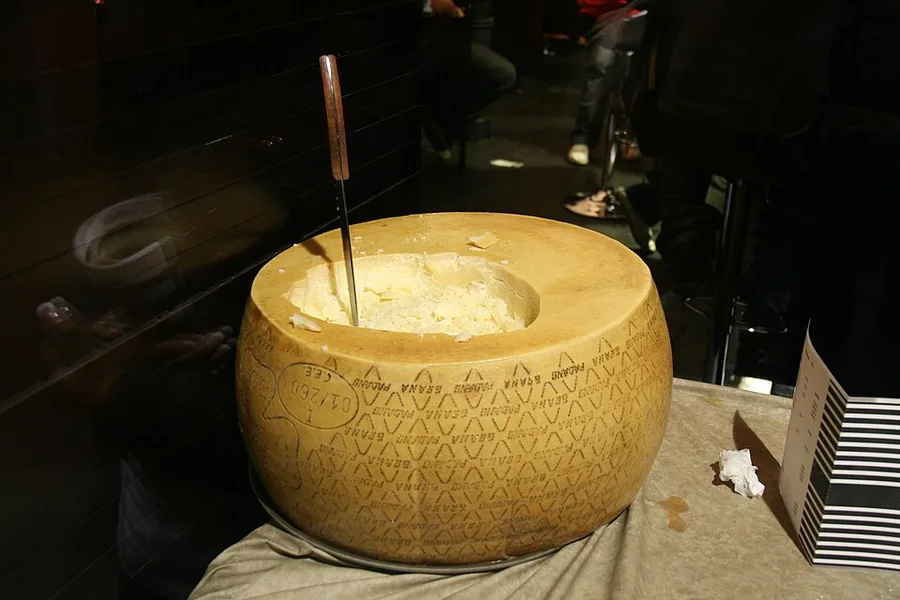
lombardia · emilia romagna · veneto · piemonte · 10-15 €/kg
Raw milk partly skimmed, nine months minimum, made across the whole Po valley: the most produced DOP cheese in the world. Milder and less savoury than Parmigiano at the same age, and cheaper. Where a dish is delicate, less savoury is an advantage.
 Jon Sullivan · Public domain
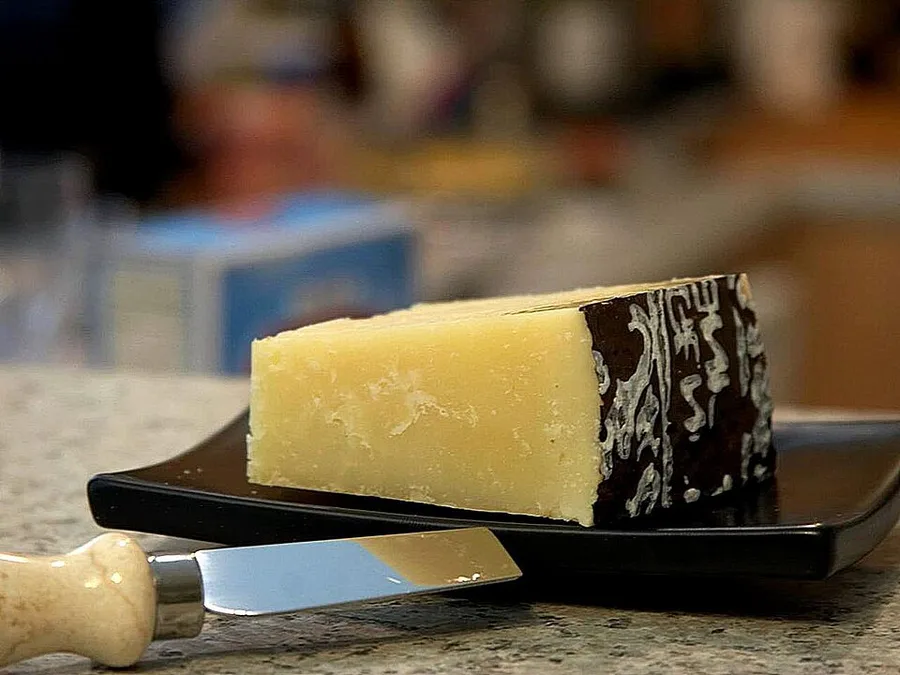
lazio · sardegna · 13-18 €/kg
A hard cooked paste of sheep's milk, dry-salted for months, five minimum. It salts a dish on its own: in a cacio e pepe or a gricia you do not salt the water, and anyone who does ends up with something inedible. Grate it to order, fine.
 Yozh · CC BY-SA 4.0
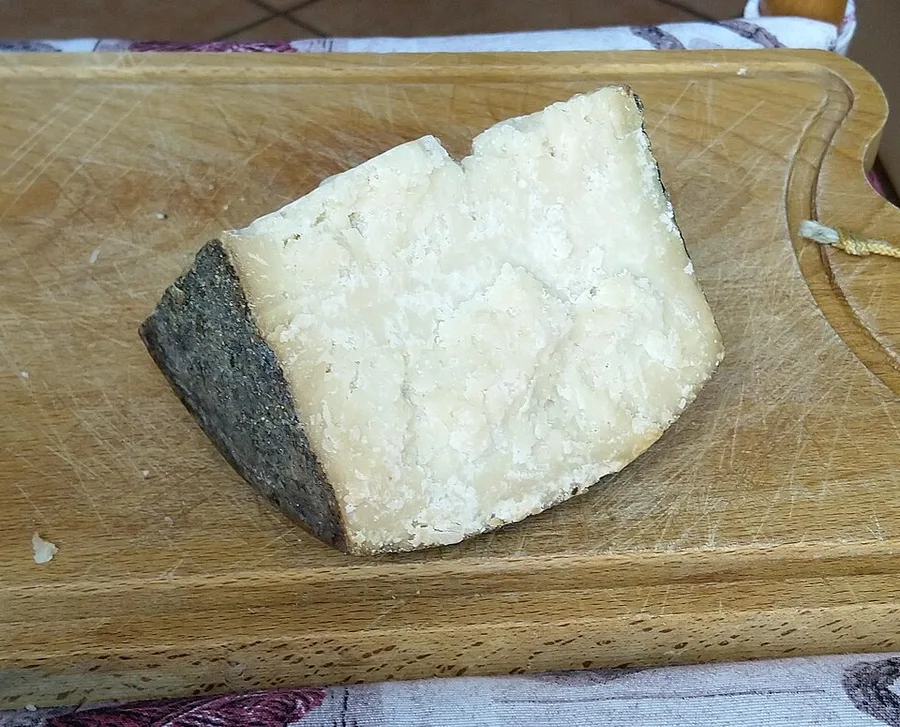
sardegna · 18-26 €/kg
Smoked over the fire of the pinnetta, and in long ageings it turns very hard and grateable. Over pasta it brings smoke along with salt, which is exactly what Sardinian mutton dishes and a winter pulse soup want.
sicilia · 13-18 €/kg
A stretched-curd cheese of raw Modicana milk, in blocks of ten to sixteen kilos. Young it is sliced, aged it is grated, and it has a grassy taste no grana has: over a Sicilian tomato pasta it makes a different dish from Parmigiano.
 Thomon · CC BY-SA 4.0
lombardia · veneto · 10-14 €/kg
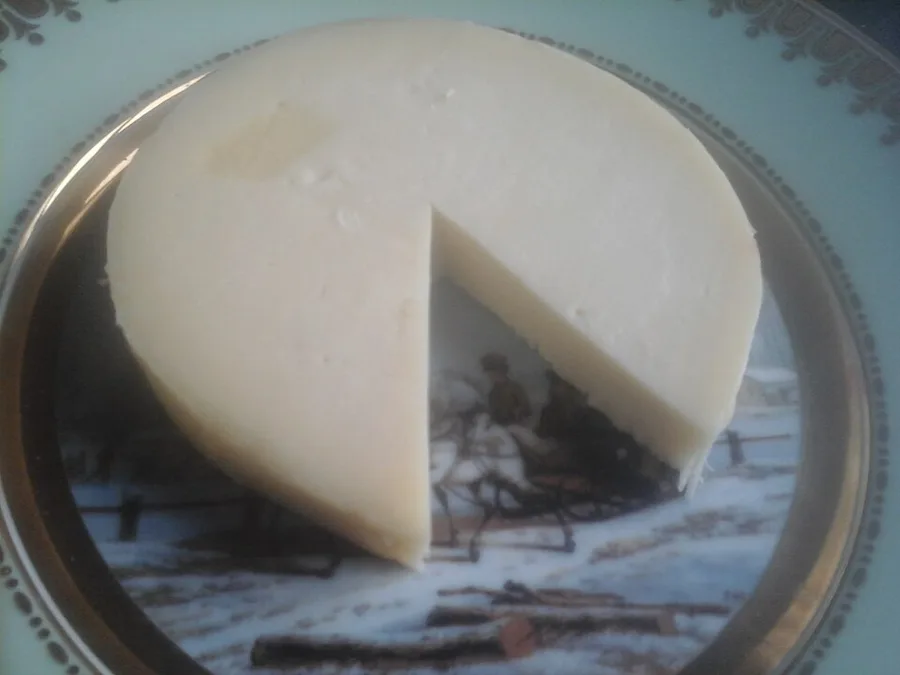
Two versions that are not degrees of one thing: the mild, with calf rennet, and the sharp, with kid or lamb rennet, which after months turns pungent. The sharp one grated over a baked pasta holds its own against pecorino.
 Paoletta S. · CC BY 2.0
sicilia · 12-18 €/kg
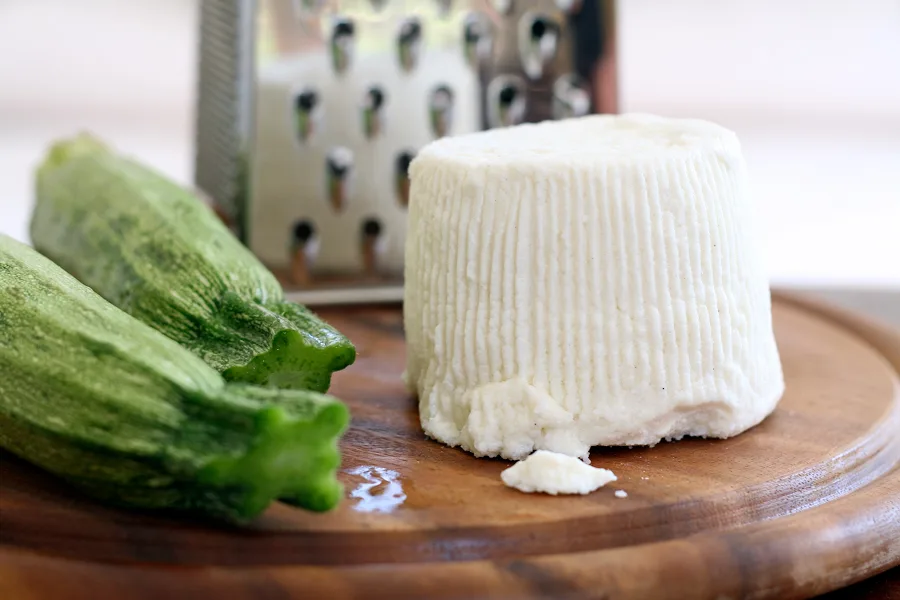
It does not melt and does not bind: it stays as white, saline flakes on top. That is why it belongs on pasta alla Norma and Parmigiano does not, since Parmigiano would melt into the sauce. Grate it coarse, almost into flakes, just before serving.
One last thing
Three practical things. First: the rind of Parmigiano and Grana is not waste, it goes into broth and pulse soups, where it gives up savour and a little fat. Second: a fine grater makes powder that smears in sauces, a coarse one makes flakes that stay; dry pasta wants the first, a salad the second. Third: cheese grated in advance loses its scent within hours and takes up moisture, and the bagged kind often contains ground rind. Ten seconds with a grater is the best return on time in all of Italian cooking.
The questions this list answers
These are real questions put to an AI assistant, in the period when Bing cited this site among its sources to answer them. The number is how many times we were cited. We read them in Bing Webmaster Tools, under AI performance, and they decide what goes on this page rather than the other way round.
- differenza grana padano parmigiano reggiano81 citations
- differenza parmigiano reggiano grana padano29 citations
- skillnad parmesan grana padano17 citations
- grana padano vs parmesan difference9 citations
- różnice grana padano parmigiano reggiano9 citations
- difference between grana padano and parmesan7 citations
- skillnad mellan parmesan och grana padano6 citations
- grana padano vs parmesan differences4 citations
- grana padano vs parmigiano reggiano differences3 citations
- pecorino romano198 citations
- ricotta salata cheese469 citations
Frequently asked questions
What is the difference between Grana Padano and Parmigiano Reggiano?
Territory, milk and time. Parmigiano is made in five provinces across Emilia and Lombardy from raw milk of two milkings and runs twelve months minimum; Grana is made across the whole Po valley from raw partly skimmed milk and starts at nine months. Parmigiano is more savoury and grainier, Grana milder and cheaper.
Is parmesan the same as Parmigiano Reggiano?
In Europe, yes: a Court of Justice ruling established that parmesan is the protected translation of Parmigiano Reggiano, and only that cheese may use it. Outside the Union the name is used freely, for products with no relation to the Italian rules.
Which cheese goes on pasta alla Norma?
Salted ricotta, grated coarse. It does not melt and stays on the surface, saline and dry, whereas Parmigiano would dissolve into the tomato and aubergine sauce and change the dish. It is one of the few Italian recipes where the substitution shows immediately.
Can you grate pecorino on carbonara and amatriciana?
That is what tradition calls for: both dishes begin with Pecorino Romano, which brings salt and fat together. Many people use part Parmigiano to soften the savour, a choice common even in Roman trattorie. The real error is salting the cooking water as though the pecorino were not there.