Eleven Italian fruits, from citrus to manna
Blood orange, Sorrento lemon, bergamot, citron, white Cilento fig, Val di Non apple, Canicattì grapes, chestnuts, Bronte pistachio, Langhe hazelnut, manna from the Madonie.
Italian fruit with a protected name almost always has it for a measurable reason of climate. The red of the Sicilian orange comes from anthocyanins, and anthocyanins form only where nights are cold: which is why blood oranges grow on the slopes of Etna and not in Spain. The Val di Non apple is distinguished by altitude, between six hundred and a thousand metres.
Citrus opens the list, and two of them are not eaten for their flesh. What counts in the citron is the albedo, the thick white layer under the skin; what counts in bergamot is the oil of the peel, which served perfumery for three centuries before it reached the kitchen. The Sorrento lemon has a skin so loaded with essential oils that limoncello is made from it, and the juice does not enter the recipe.
Three products close the list that are fruit only in a loose sense. Chestnuts, which for centuries made bread in the Apennines rather than dessert. The Bronte pistachio, which grows on lava and is picked every other year. And manna, the dried sap of the ash tree, now made by only a handful of mannaroli in the Madonie.
sicilia · 1.2-2.5 €/kg
Three varieties, Tarocco, Moro and Sanguinello, plus a phenomenon that cannot be copied: the red comes from anthocyanins, and anthocyanins form only where the nights are cold. On the flanks of Etna the temperature swing does the work; elsewhere it does not.
 Brad Coy · CC BY 2.0
campania · 2.5-4 €/kg
A femminello grown under the chestnut-wood pergolas of the Sorrento peninsula. A thick skin loaded with essential oils and a white albedo sweet enough to eat: it is the lemon of the peel, which is why it is the lemon of limoncello.
calabria · 1.5-3 €/kg
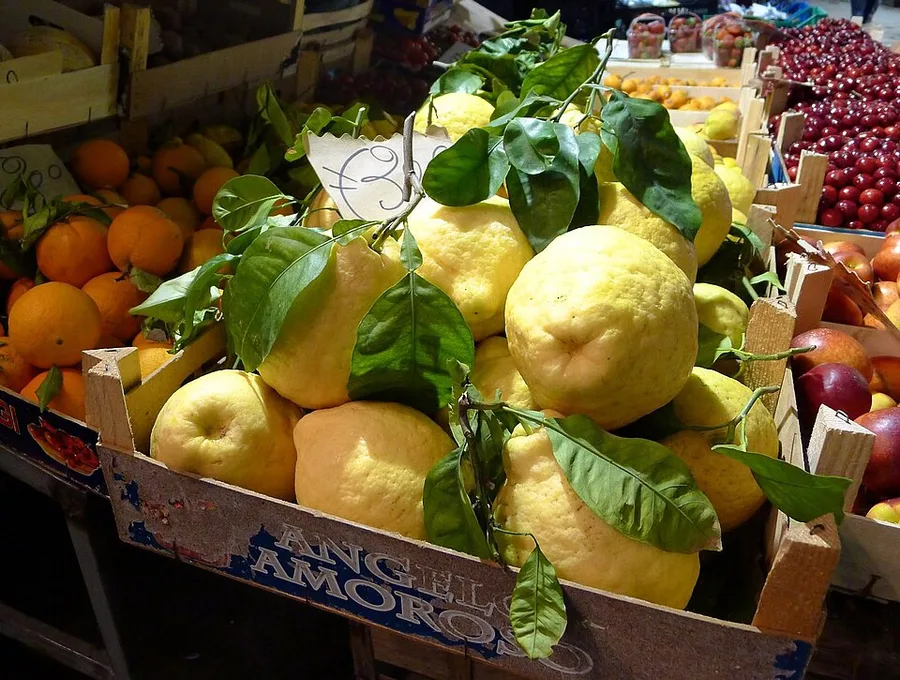
The most geographically concentrated citrus in the world: around ninety per cent of world production comes from a hundred kilometres of coast in the province of Reggio Calabria. For three centuries it served perfumery, and only recently has it entered the kitchen.
calabria
The flesh is not eaten, being scarce and very sour; what is eaten is the albedo, the thick white layer under the skin. A single variety is grown on the Calabrian Tyrrhenian coast, and every summer rabbis come to select fruit for the feast of Sukkot.
sicilia · 1.2-2.5 €/kg
Italia grapes: large berries, crisp, thick skinned, with a muscat scent. In the hinterland of Agrigento they are picked as late as December thanks to the sheets covering the pergolas, and that late harvest is the reason for the IGP.
 Bodulinek · CC BY-SA 2.0
campania · 18-28 €/kg
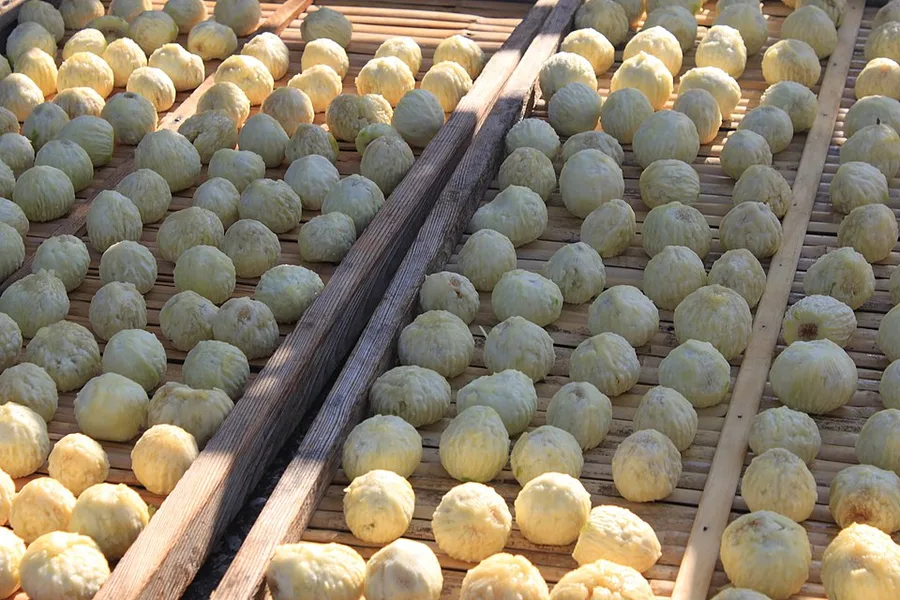
A Dottato fig sun-dried on cane racks in the hills inland from Salerno. It is eaten as it is, or opened and stuffed with a walnut or an almond, or covered in chocolate: three sweets from one fruit and no added sugar.
 Xaura · CC BY-SA 3.0
trentino alto adige · 1.2-2.2 €/kg
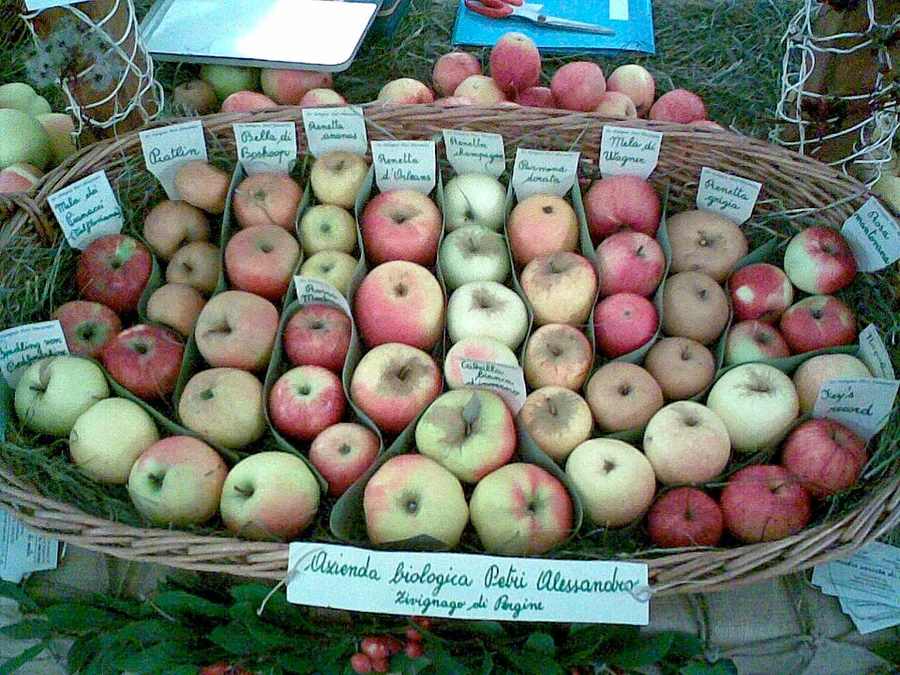
Three varieties, Golden Delicious, Renetta Canada and Red Delicious, grown between six hundred and a thousand metres in a Trentino valley that lives on little else. Altitude is what sets them apart: a wider temperature swing, more acidity, more crunch.
toscana · campania · 4-8 €/kg
For centuries the Apennines made bread from them rather than dessert: the chestnut was the tree that fed people. They were eaten roasted, boiled, dried or milled into flour, and the distinction that matters at the stall is between castagna and marrone, which is larger and peels better.
 Paolo Galli · CC BY-SA 3.0
sicilia · 25-40 €/kg
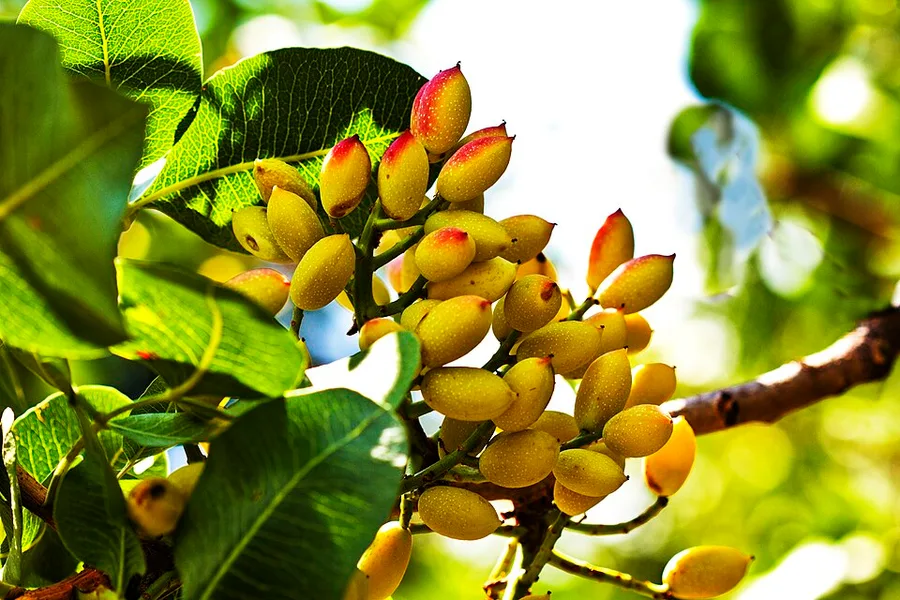
It grows on the lava of Etna, is picked by hand every other year, and has a long seed, emerald green right through, under a violet skin. It costs between twenty-five and forty euro a kilo in shell and between forty and seventy shelled, and the colour is the most honest indicator.
 WINELINKITALY - Barbara D'Agapiti · CC BY-SA 2.0
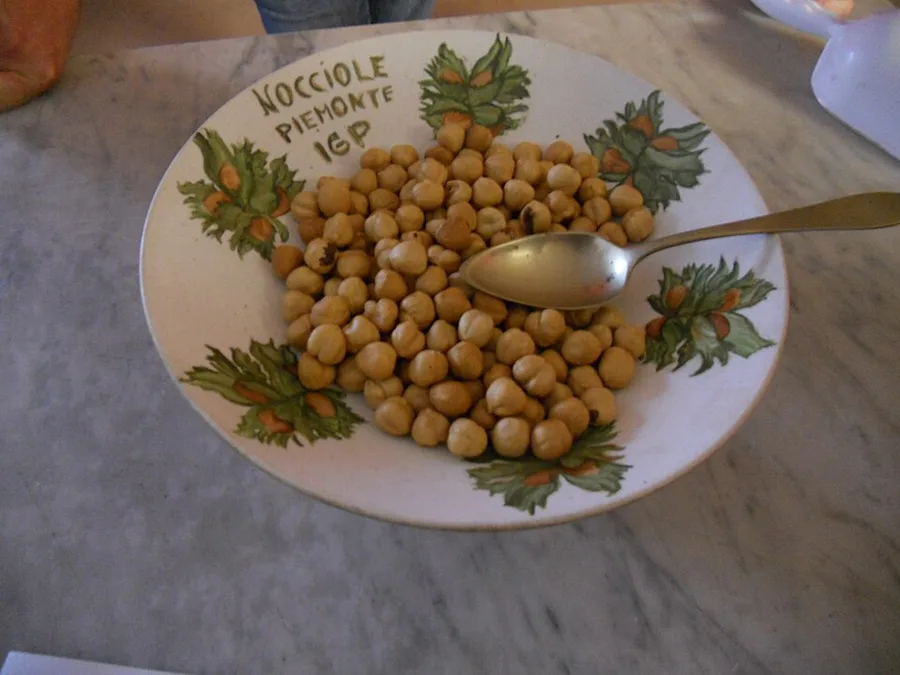
piemonte · 6-10 €/kg
A single cultivar, the Tonda Gentile Trilobata of the Langhe: round, with a forty-five per cent shelled yield and a skin that comes away by itself in roasting. It is the hazelnut Piedmontese pastry was built on.
sicilia
The sap of the ash tree, drawn out through cuts in the trunk in summer and left to dry in the air as white stalactites. It is still made only at Castelbuono and Pollina, in the Madonie, and the remaining mannaroli can be counted: the most fragile product on this list.
One last thing
Two practical warnings about citrus. First: if you are using the peel, untreated fruit is the only sensible choice, because the essential oils are in the first millimetres and that is where everything given to the tree concentrates. Second: limoncello is made from peel alone steeped in alcohol, never from the juice, and the peel is pared avoiding the albedo, which turns it bitter. For nuts another rule applies: pistachios and hazelnuts go rancid, and once shelled they belong in the fridge or the freezer, not the cupboard.
The questions this list answers
These are real questions put to an AI assistant, in the period when Bing cited this site among its sources to answer them. The number is how many times we were cited. We read them in Bing Webmaster Tools, under AI performance, and they decide what goes on this page rather than the other way round.
- arancia rossa135 citations
- sicilian orange75 citations
- bronte pistachio40 citations
- nocciola piemonte igp36 citations
- la castagna è un frutto29 citations
- arancia rossa di sicilia16 citations
- castagne cosa sono3 citations
Frequently asked questions
Why do blood oranges grow only in Sicily?
Because the red pigment, anthocyanin, forms only with cold nights and warm days, and that swing is especially marked on the slopes of Etna. The same varieties grown in more even climates give orange or barely streaked fruit.
Is a chestnut a fruit?
Yes, it is the fruit of the chestnut tree, a nut enclosed in a spiny husk. In the kitchen, though, it has always behaved like a starch: for centuries in the Apennines it was eaten boiled, dried or milled into flour in place of bread, and its role as a dessert is recent.
What is the difference between castagna and marrone?
Size and skin. A chestnut husk usually holds three smaller, flattened fruit with a skin that clings; the marrone is larger, oval, often one to a husk, and peels easily. It is why marron glacé are made with the marrone.
Why is the Bronte pistachio so expensive?
Because it is picked by hand on lava terraces, every other year: the tree is rested, so real production is half the theoretical figure. The nut is also smaller and greener than Middle Eastern ones, and the colour remains the most honest indicator when buying it shelled.