Eight Italian meats that do not come from pork
Beef bresaola, violin of goat, mocetta, pitina of mutton and game, and then the breeds: chianina, podolica, fattened Piedmontese ox, Sardinian lamb. Take the pig away and the Italy of cured meat becomes a mountain Italy.
Italian cured meat is overwhelmingly pork, for a practical reason: the pig lived in the yard, was killed in December and gave fat, and fat is what makes curing work. Where there was no pig, or where it could not be eaten, people salted what they had.
Almost everything in this list comes from the Alps and the Apennines. Bresaola from the Valtellina, the violin from the Valchiavenna, mocetta from the Aosta valley, pitina from the Friulian Dolomites: lean meat, dry air, little fat to manage and short curing, weeks rather than a year. The first four entries are cured meats proper.
The other four are breeds rather than cured products, and they are here because the question that arrives is the same: what meat is this. Chianina, podolica, the fattened Piedmontese ox and Sardinian lamb are animals with a precise use in the kitchen, and it is worth knowing which dish they belong to before buying a piece.
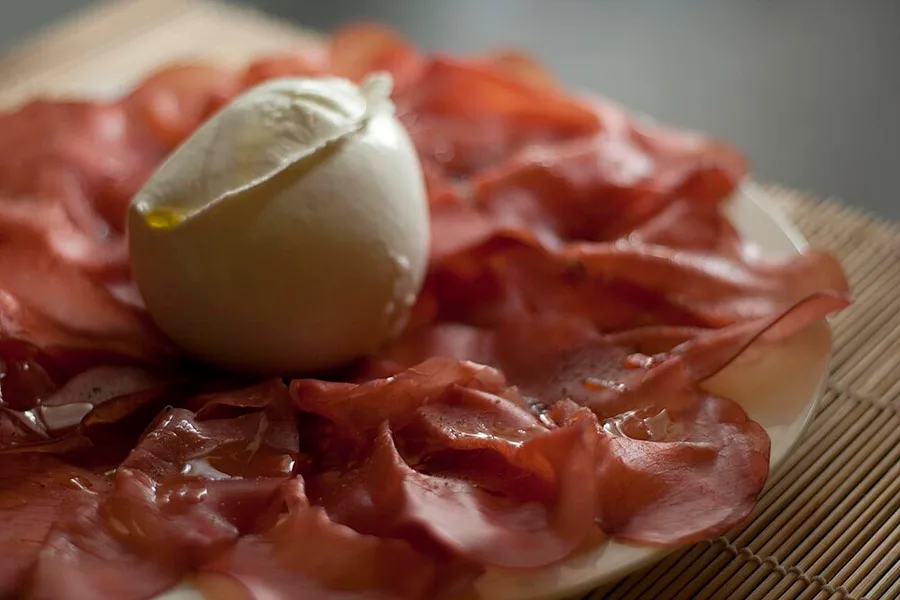 Luca Nebuloni from Milan, Italy · CC BY 2.0
lombardia · 32-42 €/kg
Beef dry-salted with pepper and spices, cured for four to eight weeks in the dry air of the Valtellina. IGP since 1996. It is sliced very thin and dressed at the last moment, because lemon cooks it: added early, the juice turns it grey and dry.
lombardia · 70-95 €/kg
A goat leg salted, spiced and cured in the crotti of the Valchiavenna. It is sliced held against the shoulder with the knife moving like a bow, hence the name and the ritual. A Slow Food presidium: few hands make it, and it is not in supermarkets.
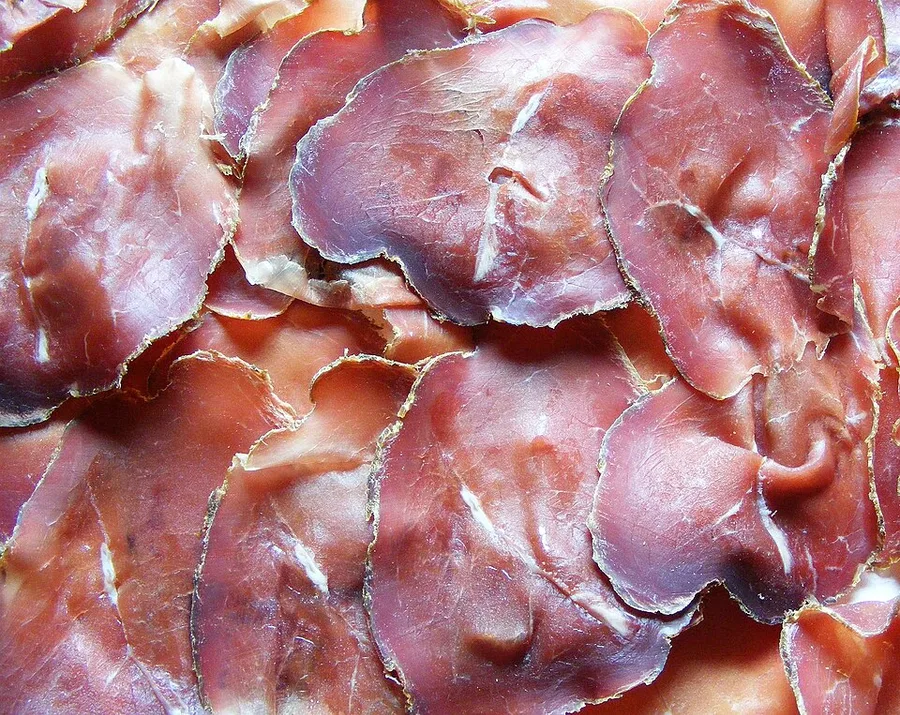 F Ceragioli · CC BY-SA 3.0
valle d aosta · 38-48 €/kg
A leg dressed with the mountain herbs of the Aosta valley. It began with ibex and chamois; today it is made with beef or goat. It is sliced very thin and eaten on dark bread with butter: the butter's fat is needed, because the meat itself has none.
 Holapaco77 · CC BY-SA 4.0
friuli venezia giulia
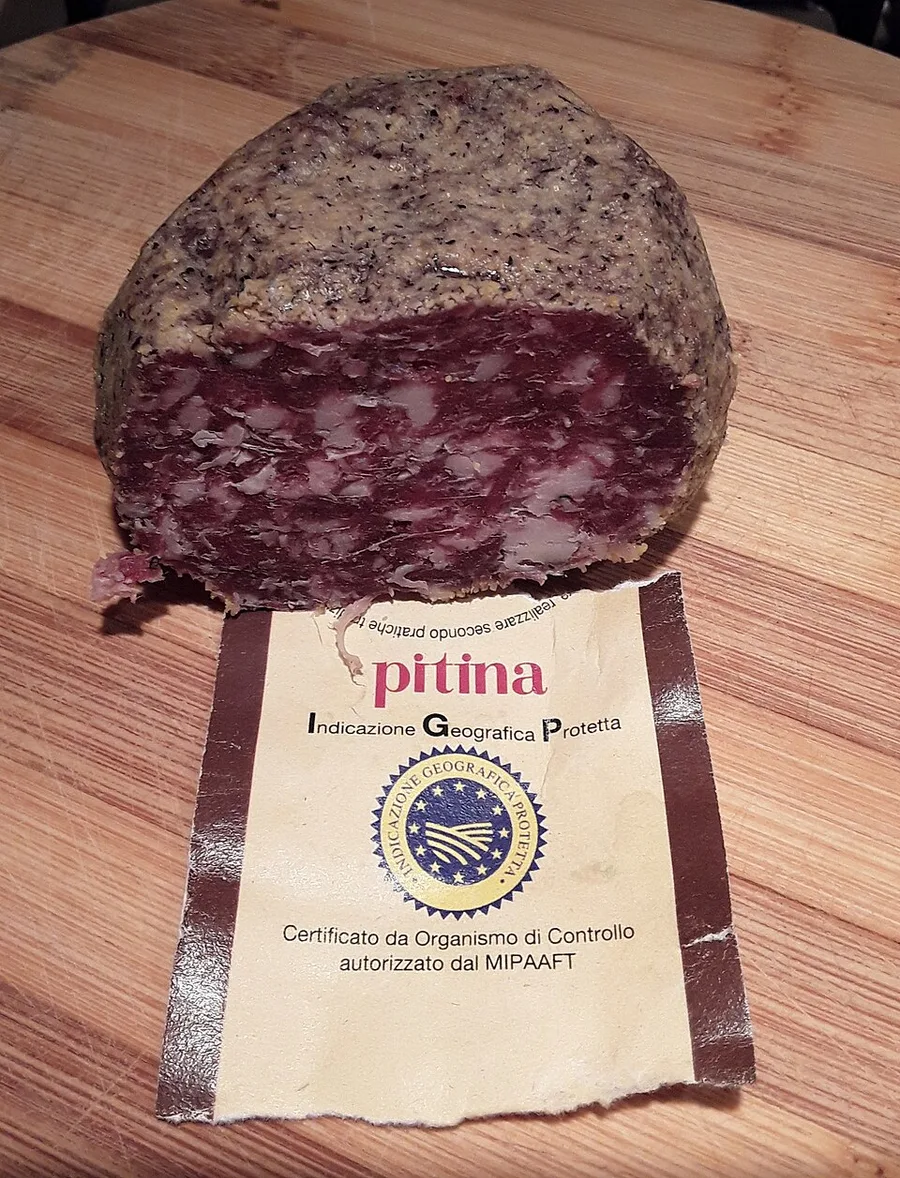
Game or mutton chopped with lardo and spices, rolled in maize flour and smoked above the hearth: the flour seals the surface where there is no casing. From the val Tramontina. Eaten raw in thin slices, or cooked in vinegar over polenta.
 Peter von Wesendonk at German Wikipedia · Public domain
toscana · 32-45 €/kg
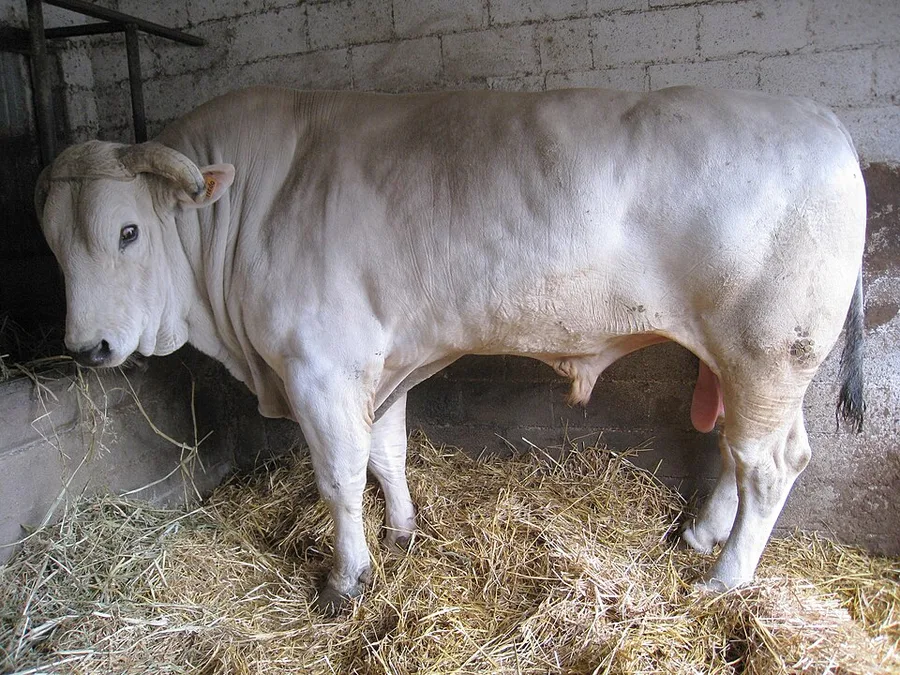
The largest cattle breed in the world, porcelain white, from the Val di Chiana between Arezzo and Siena. IGP. It is the beef of bistecca alla fiorentina and it is lean: the fat sits around the cut rather than inside it, so it wants high heat and little time.
basilicata · puglia · 12-22 €/kg
The grey, lyre-horned cattle that range free across the southern Apennines, from the Gargano to Basilicata, the Cilento and the Sila. They give very little milk and only in summer, which is why caciocavallo podolico costs what it costs.
piemonte · 18-30 €/kg
The castrated male of the Piedmontese breed, fattened slowly over three or four years past a thousand kilos. It is the beef of bollito misto and the exact opposite of the young fassona eaten raw: it wants a long broth, not a pan.
 Roger469 · CC BY-SA 4.0
sardegna · 14-22 €/kg
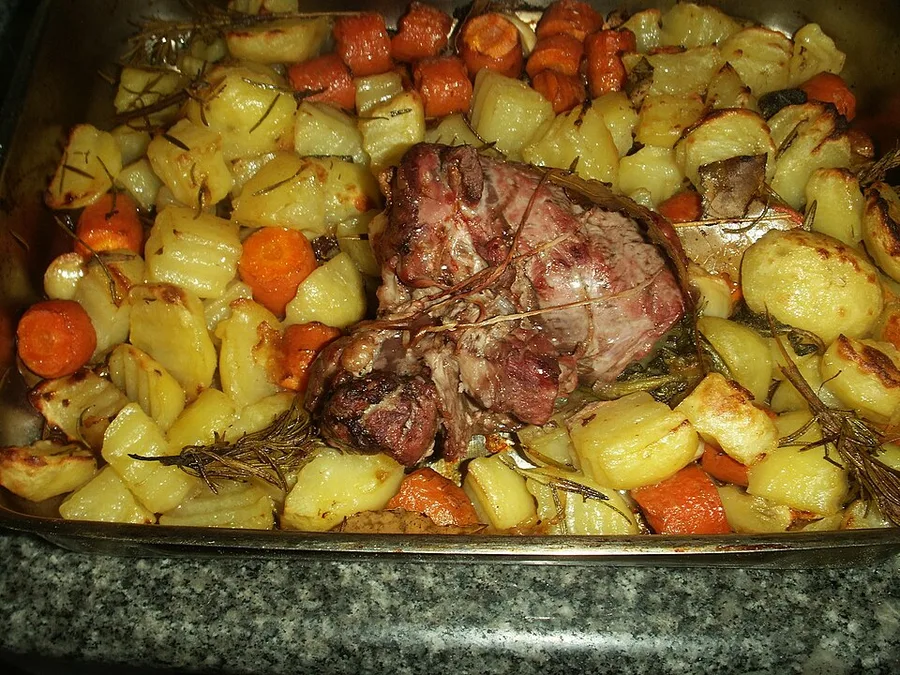
The Sardinian breed at pasture, slaughtered young, IGP, in three weight categories: milk-fed, light and cutting lamb. The meat is very pale and mild, the opposite of the grown northern European lamb, and it therefore takes simple seasoning.
One last thing
One thread holds the first four entries together, and it is not flavour: it is the missing fat. Beef, goat, mutton and game are lean, and fat is what protects, softens and carries flavour through curing. Without it the meat dries fast and stays dry in the mouth, so the fat is supplied from outside: lardo in the pitina mixture, butter on the bread with mocetta, oil and shavings of grana on bresaola. These are not garnishes, they are the fat the meat does not have.
The questions this list answers
These are real questions put to an AI assistant, in the period when Bing cited this site among its sources to answer them. The number is how many times we were cited. We read them in Bing Webmaster Tools, under AI performance, and they decide what goes on this page rather than the other way round.
- what is bresaola417 citations
- bresaola che carne è200 citations
- violino di capra160 citations
- bresaola137 citations
- bresaola meat126 citations
- mocetta76 citations
- carne Chianina17 citations
- chianina beef10 citations
- bresaola meat type9 citations
Frequently asked questions
What meat is bresaola made from?
Beef, usually topside, rump or eye of round, the lean cuts of the leg. Bresaola della Valtellina IGP allows beef only. Horse and venison bresaola exist, but they are other products and the label has to say so.
Are there Italian cured meats without pork?
Yes, and this list gathers four: beef bresaola, goat violin, Aosta valley mocetta, and pitina of mutton or game. The goose salame of Mortara began for the same reason, but the modern version mixes goose with pork, so the label matters.
Why is the violino di capra called a violin?
For the way it is sliced: the leg is rested on the shoulder like an instrument and the knife is drawn like a bow. It is a table ritual of the Valchiavenna, and it also helps hold an awkward piece still while cutting thin.
Is chianina the same as a fiorentina steak?
The fiorentina is the cut, the T-bone loin; chianina is the breed. Bistecca alla fiorentina is traditionally made with chianina, but butchers sell fiorentine from other breeds too. Asking about the breed, not just the cut, is what separates the two.