Ten things between Carnival and the lean days
Migliaccio, cassatella, zeppole and suckling pig on one side; salt cod, stockfish, bigoli in salsa, escarole pie and broad bean purée on the other. Two opposite calendars that touch in the same month.
Carnival and Lent are two faces of one calendar, and Italian cooking made them literally opposite. First you eat rich: fried things, meat, ricotta, lard. Then you eat lean: preserved fish, pulses, wild greens. It is not a matter of taste, it is the liturgical calendar turned into a larder.
On the rich side sit the fried things and the ricotta sweets. The Neapolitan migliaccio, semolina, ricotta and eggs, is born at Carnival and stays on the table until Easter. The Sicilian cassatella is a ricotta fritter. Zeppole, in two versions and on two dates, close the period with choux pastry. And roast suckling pig, in Sardinia, is the meat of late-winter feasts.
On the lean side is fish that is not fresh fish. Salt cod and stockfish reached places fresh fish never did, and the whole lean cooking of the interior rests on those two; Venetian bigoli in salsa has two ingredients, onion and salted sardines, and no cheese; the Apulian broad bean and chicory purée is pulses and wild greens, without even the fish.
campania · 1 h 30′
Semolina cooked in milk, ricotta and eggs, an hour and a half: the Neapolitan Carnival cake, with no pastry and no sheets. It stays on the table until Easter and is the easiest feast-day sweet to make at home.
 8w9d · CC0
sicilia · 16-24 €/kg
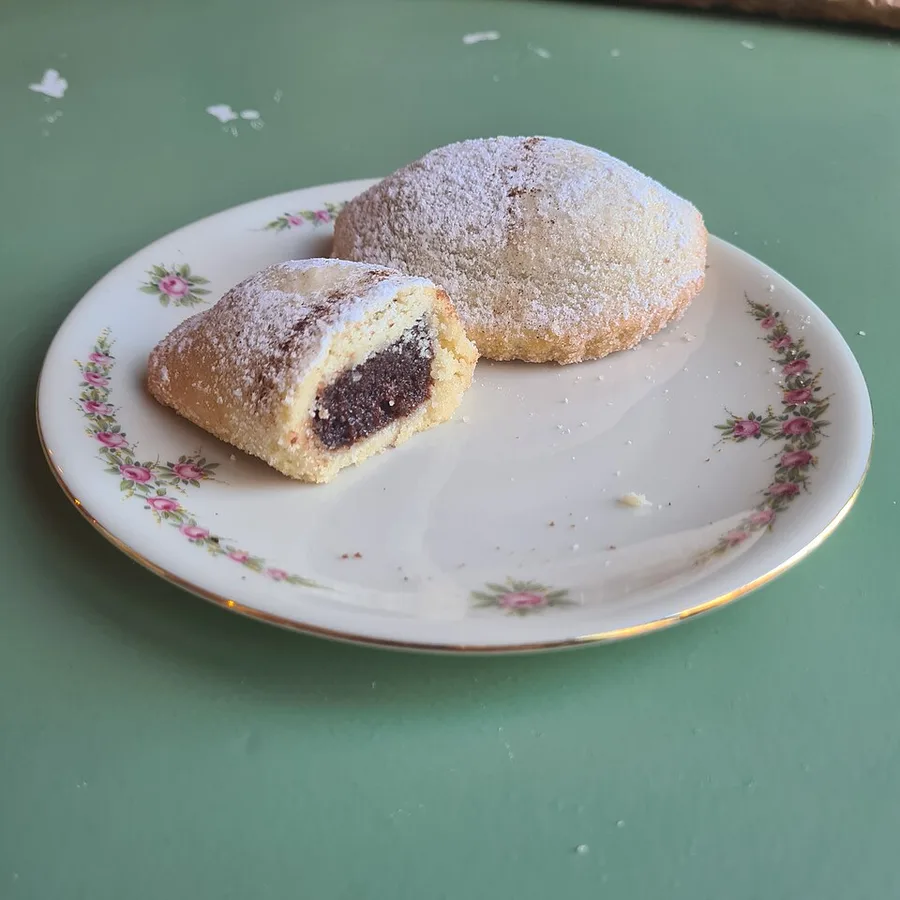
A Sicilian ricotta fritter: a half-moon of thin pastry filled with sweetened ricotta, fried and dusted. It is made at Carnival and other feasts, and the ricotta must be drained or the filling wets the pastry.
 Salvatore Capalbi · CC BY-SA 2.003
Zeppole
campania · 6-10 €/kg
The name covers two sweets: the zeppola di San Giuseppe, choux pastry with custard and a sour cherry, and the fried leavened zeppole sold in the street. Both want oil at a hundred and seventy degrees and no hurry.
sardegna · 12-18 €/kg
A four to six kilo suckling pig fed on mother's milk alone, spit-roasted over wood coals: the meat of Sardinian late-winter feasts, and a cooking that wants hours and no marinade.
 Benoît Prieur · CC0
puglia · 6-10 €/kg
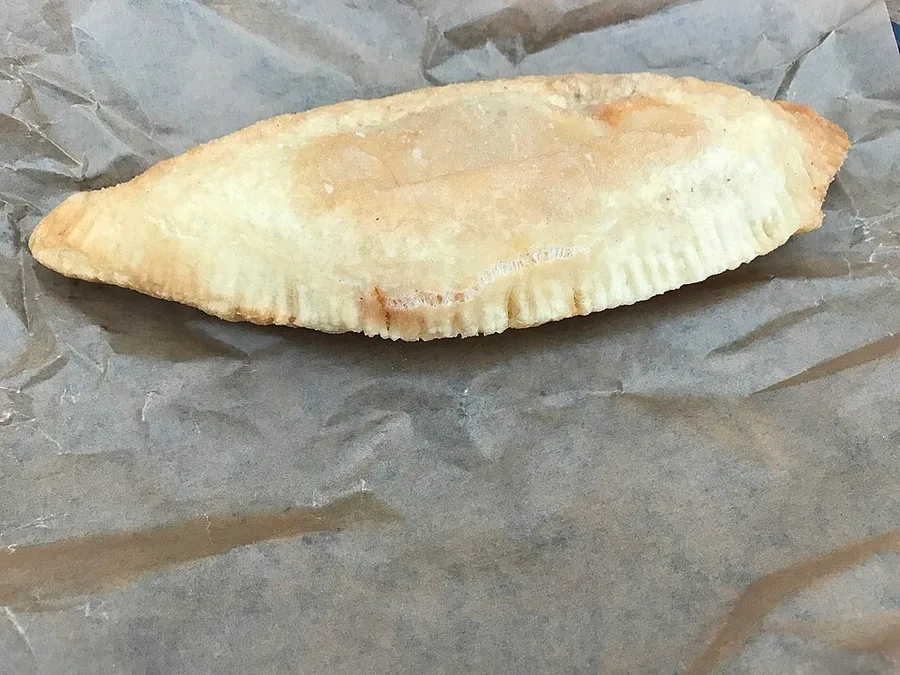
A half-moon of pizza dough filled with tomato and mozzarella, deep-fried: in Puglia it is Carnival and feast-day food, and the edge must be properly sealed or the mozzarella escapes and burns in the oil.
 MoDs92 · Public domain06
Baccalà
veneto · 14-22 €/kg
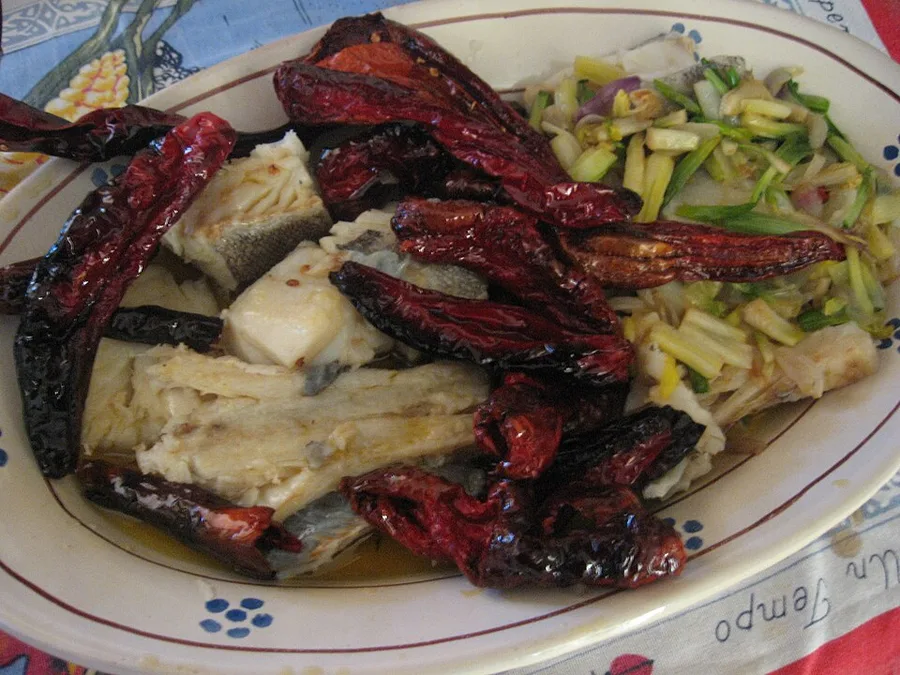
Salted cod, the fish of meatless days: it has to be desalted for two or three days in running or frequently changed water. Without it the Lenten cooking of inland Italy would not exist.
 Paolo Tonon from Italy · CC BY-SA 2.0
veneto · calabria · 40-70 €/kg
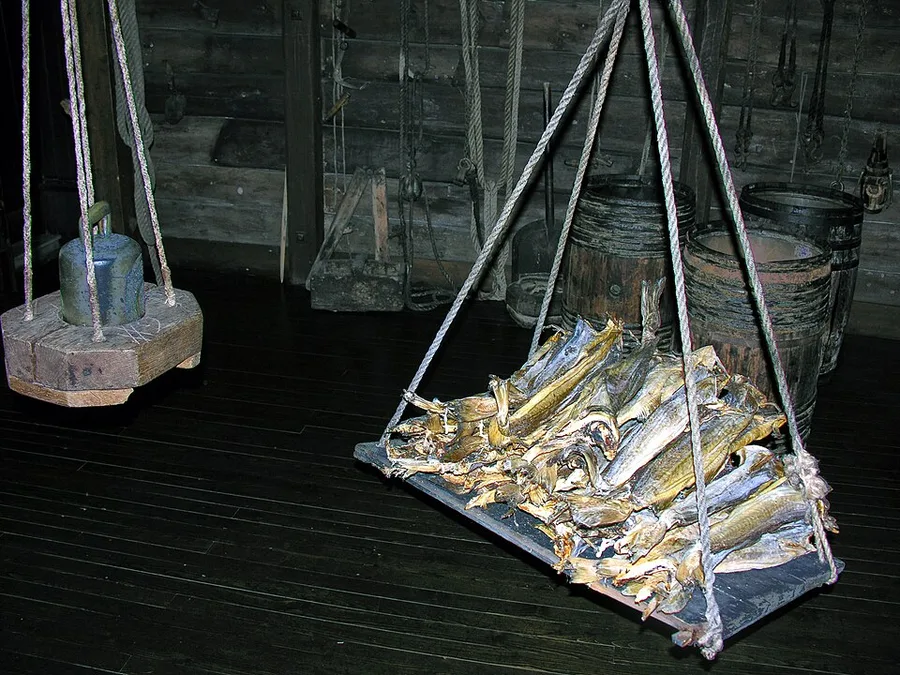
Cod air-dried without salt, bought from the Lofoten islands since the fifteenth century. Two or three days of soaking with the water changed every six to eight hours, and it more than doubles in weight.
veneto · 1 h 5′
Two ingredients and nothing else: onion stewed at length and salted sardines melted in oil. No tomato, no garlic, no cheese. It was the dish of meatless days, and an hour and five minutes of work.
 SreeramKalyan · CC0
campania · 2-3 €/kg
Bread dough, stewed escarole, Gaeta olives, capers, pine nuts, raisins, anchovies: the savoury pie of Christmas Eve, that is of a meatless day, where sweet and salt live in the same mouthful.
puglia · 1 h 50′
Dried split broad beans worked to a cream with a spoon and boiled wild chicory, with raw oil: two hours, no animal fat, and the oldest lean dish in Puglia.
One last thing
The lean days produced the most technical part of Italian fish cooking, and the reason is that preserved fish demands work before the recipe. Salt cod has to be desalted for two or three days in running or frequently changed water, and you taste a scrap before cooking it; stockfish is soaked with the water changed every six to eight hours and more than doubles in weight, so portions are reckoned on the dry weight. Skipping or shortening those days does not give a saltier dish: it gives the wrong texture, because the water has to get back into the fibres before heat closes them.
The questions this list answers
These are real questions put to an AI assistant, in the period when Bing cited this site among its sources to answer them. The number is how many times we were cited. We read them in Bing Webmaster Tools, under AI performance, and they decide what goes on this page rather than the other way round.
- zeppole600 citations
- what is zeppole28 citations
- cassatella20 citations
- baccalà alla vicentina ricetta originale88 citations
- baccala alla vicentina ricetta54 citations
- colatura di alici195 citations
- frittura di paranza179 citations
Frequently asked questions
What are the lean days?
The days on which the liturgical calendar forbade meat: Fridays, Lent, the eves of feasts. From that constraint comes much of Italian cooking with preserved fish and pulses, from baccalà alla vicentina to bigoli in salsa to broad bean and chicory purée.
What is the Neapolitan Carnival sweet?
The migliaccio: semolina cooked in milk, ricotta and eggs, with no pastry and no sheets. It is made at Carnival and stays on the table until Easter, because it keeps a few days in the fridge. Beside it are chiacchiere and sanguinacci, found across Italy under different names.
How long does salt cod take to desalt?
Two or three days in running water, or water changed four or five times a day, in the fridge. Thickness matters: tail pieces desalt sooner, back pieces later. Before cooking it is worth tasting a raw scrap to see whether the salt has come down.
Why is there no cheese in bigoli in salsa?
Because the dish was born as a lean one, built on two ingredients only: onion stewed at length and salted sardines melted in oil. Cheese would bury both, and in Venetian tradition its absence is a rule rather than an oversight.