Nine things from Liguria, and the mortar that cannot be replaced
Genoese pesto, trofie, focaccia, farinata, chickpea tart, anchovies, pandolce, minestrone with pesto. A region squeezed between mountain and sea, with a cuisine of herbs and pulses more than of fish.
Liguria has no plain. It is a strip of coast with mountains against it, and the cooking shows it: few animals, many herbs, pulse flours in place of wheat when wheat was dear. Farinata and the chickpea tart are exactly that, chickpea flour baked in a copper pan with no leavening.
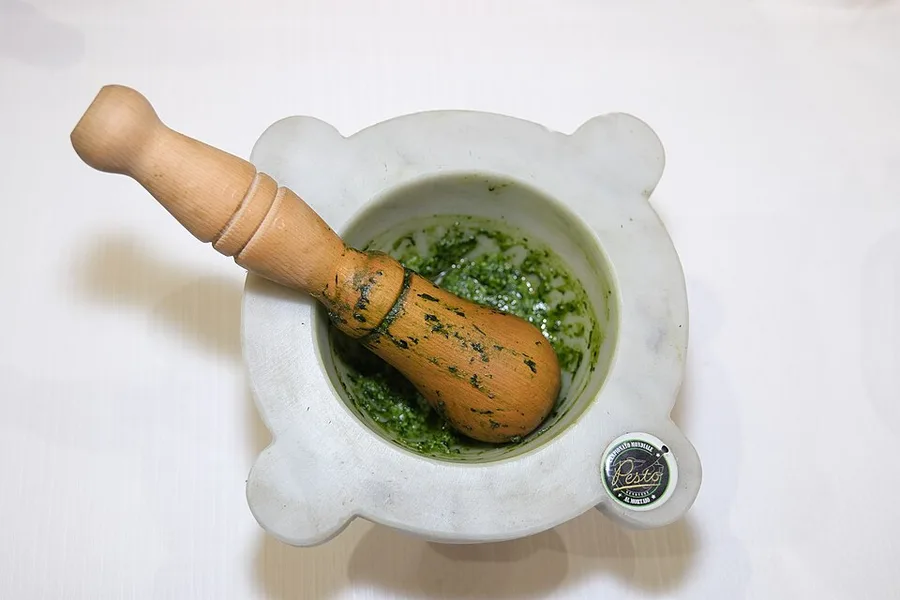
Pesto is the dish that sums up the region, and it has a rule that repeats across the Ligurian repertoire: no heat. It is a raw sauce of basil pounded in a marble mortar with garlic, pine nuts, two cheeses and oil, and warmth is its enemy because cooked basil oxidises and turns bitter. For the same reason, in Genoese minestrone the pesto goes in with the pot already off the stove.
The sea enters sideways. Salted anchovies are Liguria's seafood more than any fresh fish, and they are used as a seasoning: melted in oil, on a warm focaccia, in a pan of greens. The Cantabrian anchovy, which many take to be Spanish, has been processed on the western riviera for more than a century.
 AlfonsoLucifredi · CC BY-SA 4.0
liguria · 70-100 €/kg
Basil pounded in a marble mortar with a wooden pestle, garlic, pine nuts, Parmigiano and pecorino, Ligurian oil. Heat never enters, and nor does the blender if the rule is followed: blades warm the leaf and oxidise it.
 Popo le Chien · CC002
Trofie
liguria · 8-12 €/kg
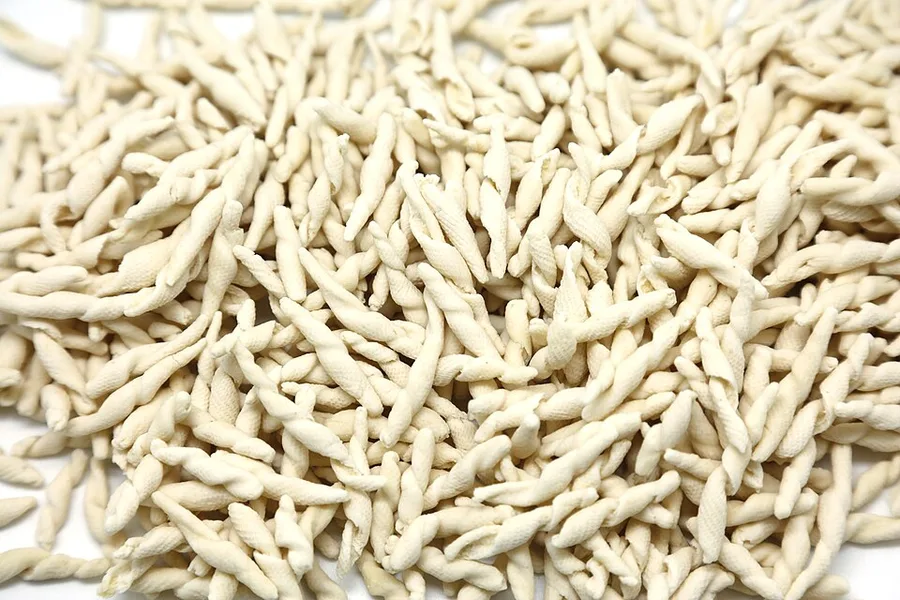
Little cylinders of semolina and water rolled on the board with the edge of the hand, three centimetres long. They are the pasta of pesto, served with green beans and potato in the same dish: not a side, the recipe.
- 03
Focaccia
liguria · 8-14 €/kg
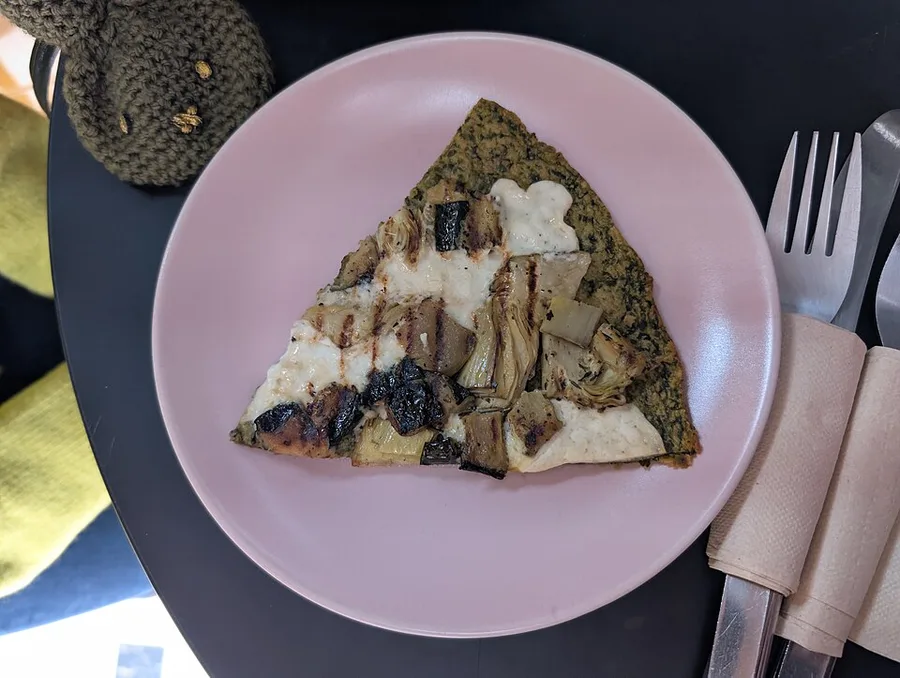
Two centimetres tall, the dimples made with the fingers, and a brine of water, salt and oil poured over before baking. It is not pizza bianca and it is not the cheese focaccia of Recco, which is another recipe.
 Andy Li · CC004
Farinata
liguria · 3-6 €/kg
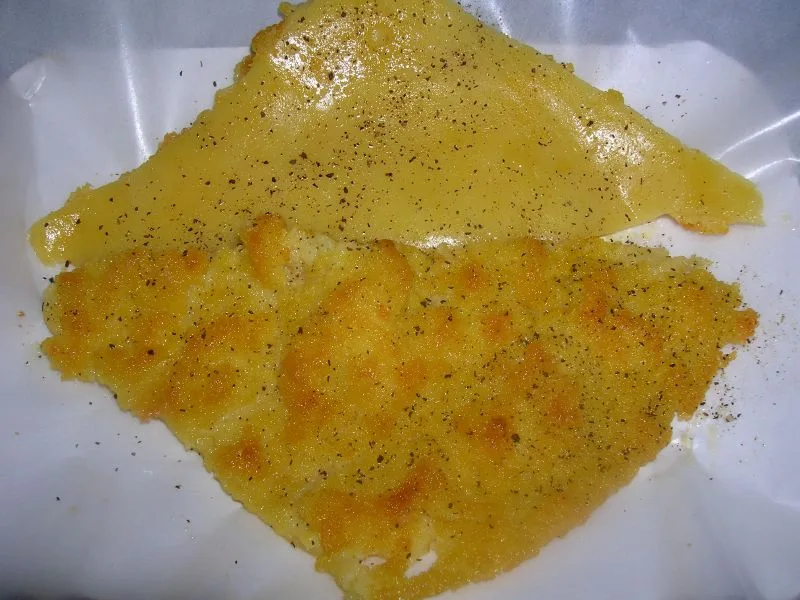
Chickpea flour, water and oil, baked in a copper pan in a wood oven: three ingredients, no leavening, fierce heat, a few minutes. It is the street food of Genoa, eaten with pepper on top, standing up.
 Emiliano Dominici (Loungerie) from Livorno, Italy · CC BY-SA 2.0
toscana · liguria · 10-16 €/kg
The same batter as farinata, with names and thicknesses that change from town to town: torta in Livorno, cecìna in Pisa, calda calda in Carrara. Inside bread with pepper it becomes the cinque e cinque.
liguria · campania · 90-160 €/kg
Caught in spring in the Bay of Biscay, salted in barrels and filleted by hand. The salting technique is Italian: in the late nineteenth century Ligurian and Sicilian salters took the method to the Cantabrian coast.
liguria · 18-28 €/kg
The Christmas cake of Genoa: raisins, pine nuts, candied citron and fennel seed. It exists in two versions that are two cakes, the tall one leavened with mother dough and the low, crumbly one made with baking powder.
liguria · 25′
Twenty-five minutes and no cooking. Basil is pounded, not cut: a blade severs the cells and oxidises the leaf, the pestle crushes it and releases the oils. Start with the garlic and finish with oil in a thread.
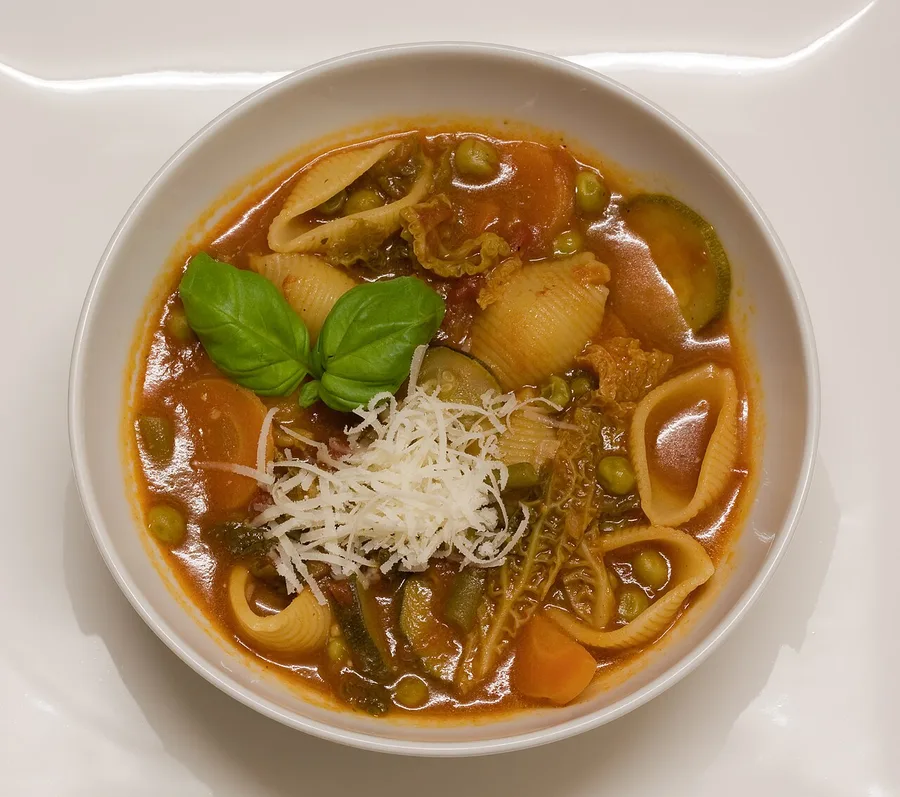 Julie Anne Workman · CC BY-SA 3.0
liguria · 2 h 5′
Two hours and five minutes: vegetables and beans cooked with no soffritto, starting from cold in water, and the pesto added off the heat. Cooked pesto oxidises and turns bitter, and that is the one way to get this dish wrong.
One last thing
Pesto in a blender can be done, and it is worth knowing what changes. The blades cut the leaf and warm it by friction: the cells break cleanly, released enzymes oxidise the chlorophyll, and the colour turns dark green and then brown. A mortar crushes rather than cuts, works cold and releases the essential oils without breaking them. If you use a blender, keep the blades cold, work in short pulses and add the oil only at the end: it will not become a mortar pesto, but it will stop being bitter.
The questions this list answers
These are real questions put to an AI assistant, in the period when Bing cited this site among its sources to answer them. The number is how many times we were cited. We read them in Bing Webmaster Tools, under AI performance, and they decide what goes on this page rather than the other way round.
- minestrone alla genovese294 citations
- minestrone genovese65 citations
- farinata ricetta19 citations
- ricetta farinata di ceci12 citations
- cantabrian anchovies19 citations
- come fare la farinata di ceci6 citations
Frequently asked questions
Why is pesto made in a mortar?
Because the pestle crushes the leaves instead of cutting them, and works cold. Blender blades sever the cells and heat them by friction: released enzymes oxidise the chlorophyll, the colour shifts and bitterness appears. With a blender, work in short pulses, keep the blades cold and add the oil last.
When is pesto added to minestrone?
Off the heat, with the pot already away from the stove, stirring at once. Cooked, the basil oxidises and the soup takes on a bitter, metallic taste. For the same reason Genoese minestrone is made without a soffritto: the vegetables start from cold in water.
What is farinata?
A thin sheet of chickpea flour, water, oil and salt, baked in a copper pan in a very hot oven until the surface blisters. It has no leavening and no gluten, because the flour is from pulses. In Genoa it is eaten standing up, with pepper ground over it.
Is Genoese focaccia the same as pizza bianca?
No. Genoese focaccia is about two centimetres tall, with dimples made by the fingers and a brine of water, salt and oil poured over before baking, which is what gives it the glossy surface and the salt on top. Roman pizza bianca is thinner, crisper and has no brine.