Seven Italian preserves between vinegar and sugar, and what they are for
Giardiniera, Lombard mostarda, Cremona mostarda, cotognata, and the two recipes that use sweet-and-sour as a technique: Sicilian caponata and Venetian sardines in saor.
Sweet and sour is not an imported exotic taste: in Italy it is a preserving technique that stayed in the kitchen even after refrigerators arrived. Vinegar lowers the pH and stops microorganisms, sugar binds water and does the same job from the other side, and together they cover ground neither covers alone.
Their role at the table, though, is not preserving: it is cutting. A giardiniera beside a mortadella works because acidity degreases; a fruit mostarda beside a blue cheese works because sugar dampens the saline edge of the mould. These are pairings that work by chemistry, which is why they recur all over Italy with different products.
The two recipes at the end of the list show sweet-and-sour at work, and they share one rule: rest. Caponata is eaten the next day, at room temperature, because the vinegar and sugar need hours to spread; sardines in saor want at least a day, with equal weights of fish and onion. Served hot and immediately, in both cases the vinegar stands in front and buries everything else.
 Antonio Cavallo · Public domain
lombardia · piemonte
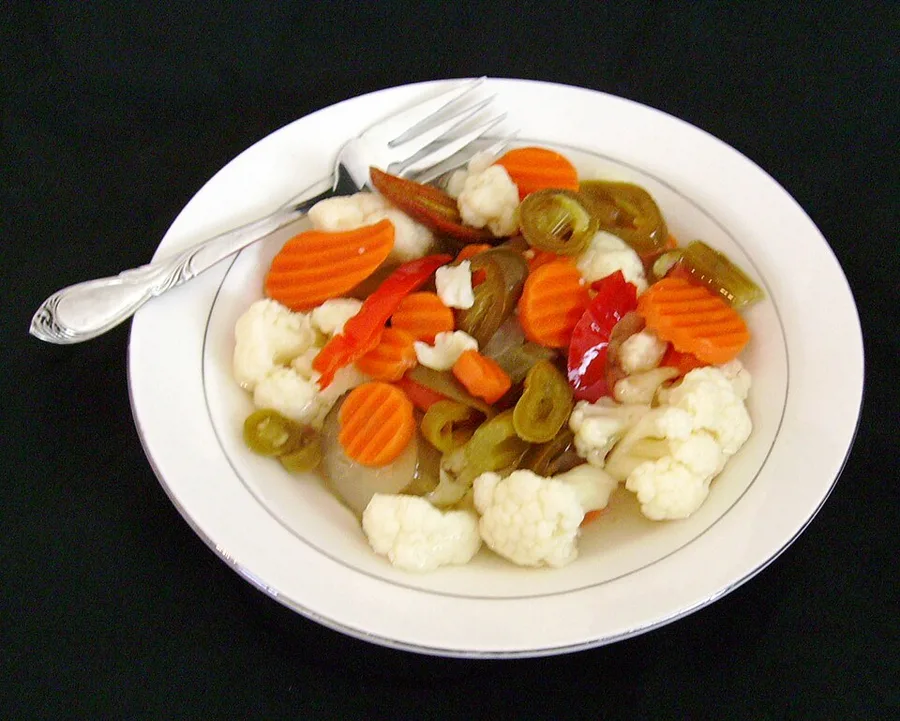
Cauliflower, carrot, celery, peppers and small onions blanched in vinegar and preserved: the acidity needed beside fatty cured meats. The home-made kind has a less aggressive vinegar and crisper vegetables.
 Silvio from Rome, Italy · CC BY 2.002
Mostarda
lombardia · 18-30 €/kg
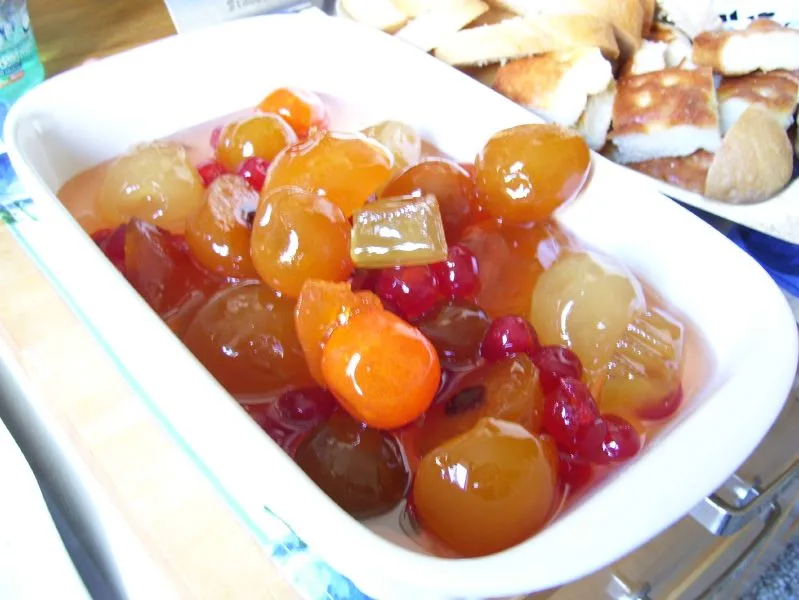
The broad family of northern mostarde: fruit and mustard in proportions that change from village to village. It goes with boiled meats and aged cheeses, not with fresh ones, where it buries everything.
 Silvio from Rome, Italy · CC BY 2.0
lombardia · 18-30 €/kg
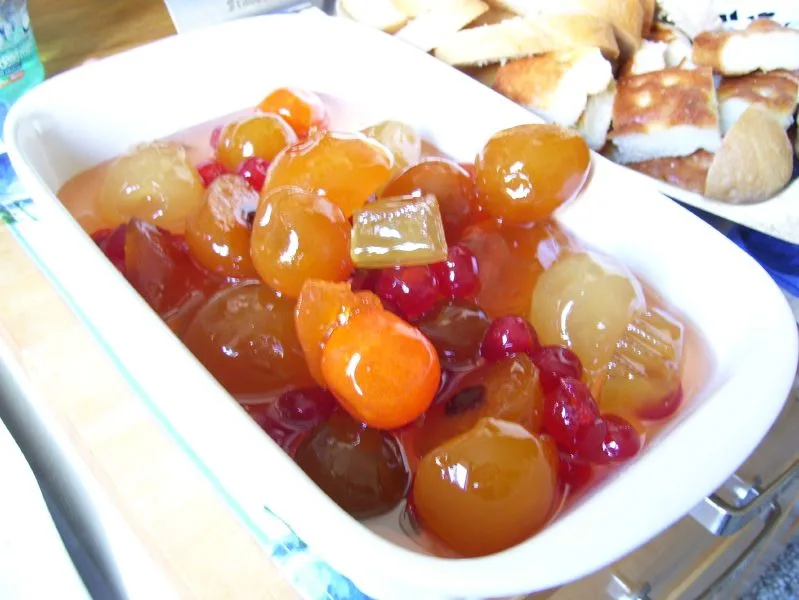
Whole fruit candied in mustard, sweet and pungent at once: created to preserve fruit, it is now the classic accompaniment to boiled meats and blue cheeses. A teaspoon a head is the right dose.
 OppidumNissenae · CC BY-SA 4.0
sicilia · puglia · 2-4 €/kg
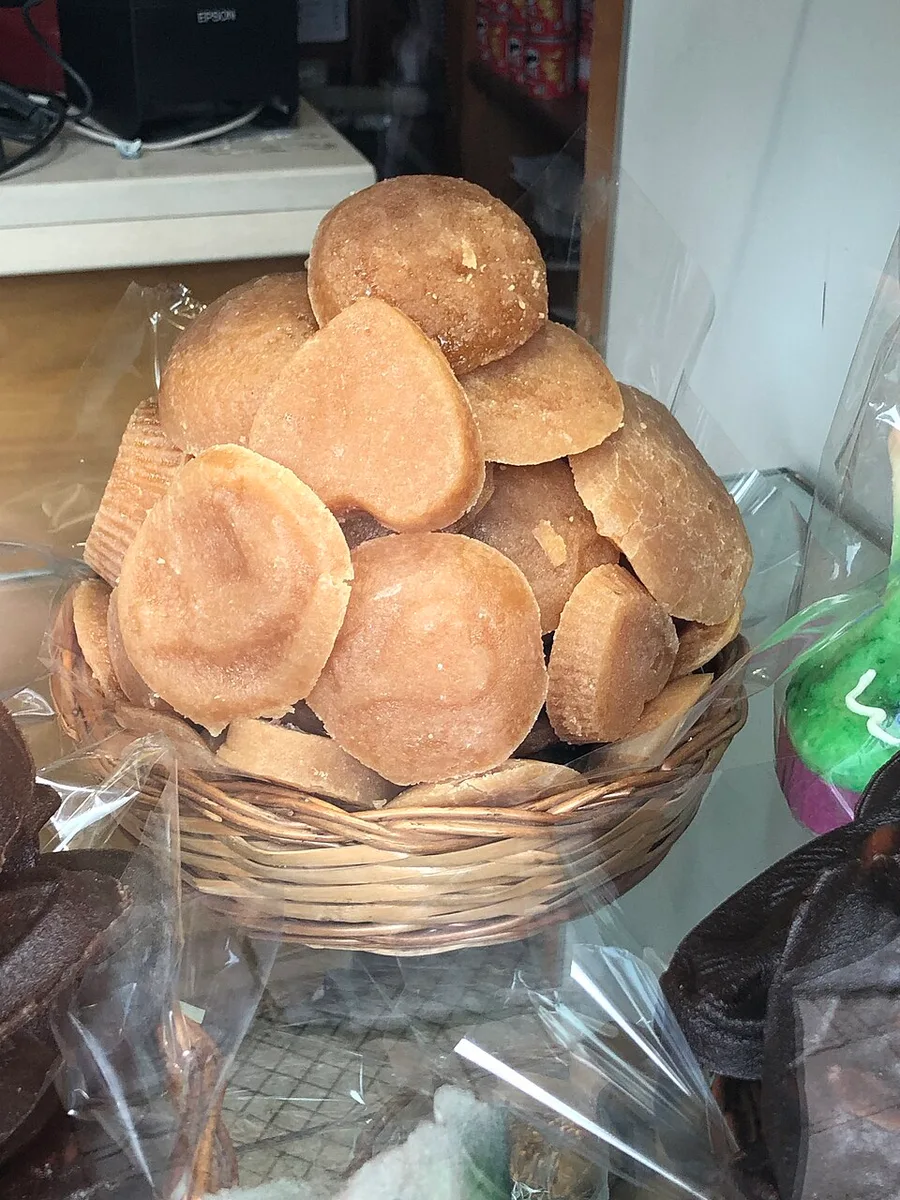
Quince pulp cooked with sugar until solid and dried in the sun in terracotta moulds. Here the sugar does all the preserving work, with no vinegar and no glass.
basilicata · 25-45 €/kg
Not a sweet-and-sour preserve, but it solves the same problem the opposite way: sun-dried and fried for two seconds, it keeps for months with neither vinegar nor sugar, and it crumbles where saline crunch is wanted.
- 06
Caponata
sicilia · 1 h 20′
An hour and twenty, aubergine fried separately and the sweet-sour of vinegar and sugar added at the end. It is eaten the next day, at room temperature: freshly made the vinegar dominates and the dish just tastes sharp.
veneto · 1 h 25′
Fried sardines layered with onions stewed in vinegar, at least a day's rest. The Venetian rule is equal weight of fish and onion: without that proportion the saor becomes a marinade.
One last thing
Sugar and vinegar work on two different clocks, and that explains why these preparations improve by standing still. Vinegar goes in fast and stands in front at first; sugar spreads slowly and after a few hours softens the acidity from within. A day's rest exists precisely to let the two clocks meet, and below that threshold there is no correcting the dish by adding sugar, because freshly added sugar has not yet done its work. This holds for caponata, for saor and for any home-made pickle.
The questions this list answers
These are real questions put to an AI assistant, in the period when Bing cited this site among its sources to answer them. The number is how many times we were cited. We read them in Bing Webmaster Tools, under AI performance, and they decide what goes on this page rather than the other way round.
- what is giardiniera382 citations
- mostarda di cremona215 citations
- cotognata590 citations
- mostarda di frutta21 citations
Frequently asked questions
What is giardiniera?
A mix of vegetables, cauliflower, carrot, celery, peppers and small onions, blanched in vinegar and preserved: the sour preserve of Lombard and Piedmontese tradition. It belongs beside fatty cured meats and boiled dinners, because acidity degreases.
What is the difference between mostarda and mustard?
Italian mostarda is fruit preserved with the addition of mustard, sweet and pungent at once; mustard is the sauce made from ground seeds. Cremona mostarda uses whole candied fruit; the Mantuan one is made from campanine apples and goes into pumpkin tortelli.
Why is caponata eaten the next day?
Because vinegar and sugar work on different clocks: the vinegar shows at once, the sugar spreads over some hours and softens its edge. After a day the two have balanced, and the caponata is served at room temperature, not hot.
How much onion goes into sardines in saor?
The Venetian rule is equal weights of fish and onion: a kilo of sardines, a kilo of onions stewed in vinegar. With less onion the dish becomes a sour marinade, because the sweet mass that has to balance the vinegar is missing.