Nine dried Italian products, and what happens when water leaves
Pane carasau baked twice, figs on cane racks, peppers dried in the sun, piennolo hung in the cellar, Lofoten stockfish, pressed bottarga, cotognata dried in moulds, dried chestnuts.
Taking the water out is the oldest and the most honest method of preserving: it adds nothing and concentrates what is there. A kilo of fresh fish becomes three hundred grams of stockfish, and the flavour is all in those three hundred grams; a dried fig is the same fig with eighty per cent less water, which is why it tastes sweetened without sugar.
The technical point is surface. Pane carasau is made less than a millimetre thick because only then can it dry completely, and that is why it keeps for months; the peperone crusco is dried whole in hanging strings, and the fig is opened on cane racks. More surface and less thickness mean the water leaves before anything spoils.
And then there is rehydration, the part most often got wrong. Stockfish wants two or three days of soaking with the water changed every six to eight hours and more than doubles in weight; pane carasau is wetted with a film of water and softens in ten seconds; dried chestnuts want a night. In every case, portions are reckoned on the dry weight.
 Luigi Chiesa · CC BY 3.0
sardegna · 6-12 €/kg
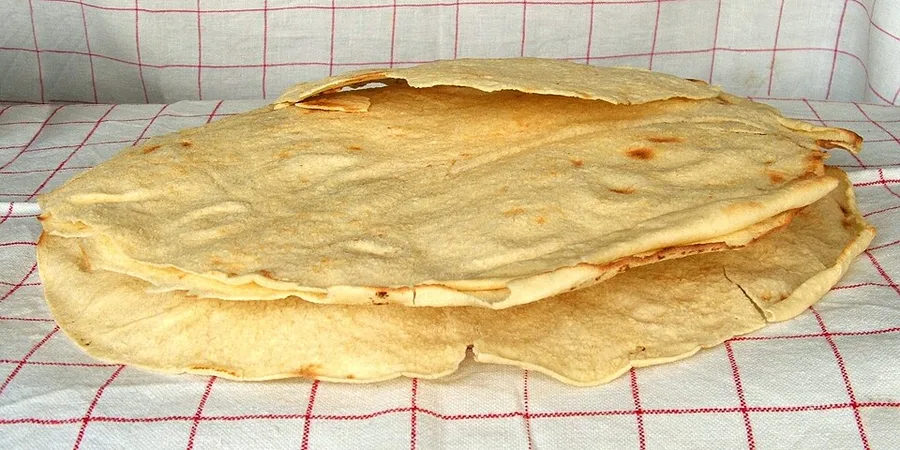
A disc of semolina less than a millimetre thick, baked twice because it had to last months in shepherds' saddlebags. It snaps like glass and softens with a film of water when a dish needs it.
 Bodulinek · CC BY-SA 2.0
campania · 18-28 €/kg
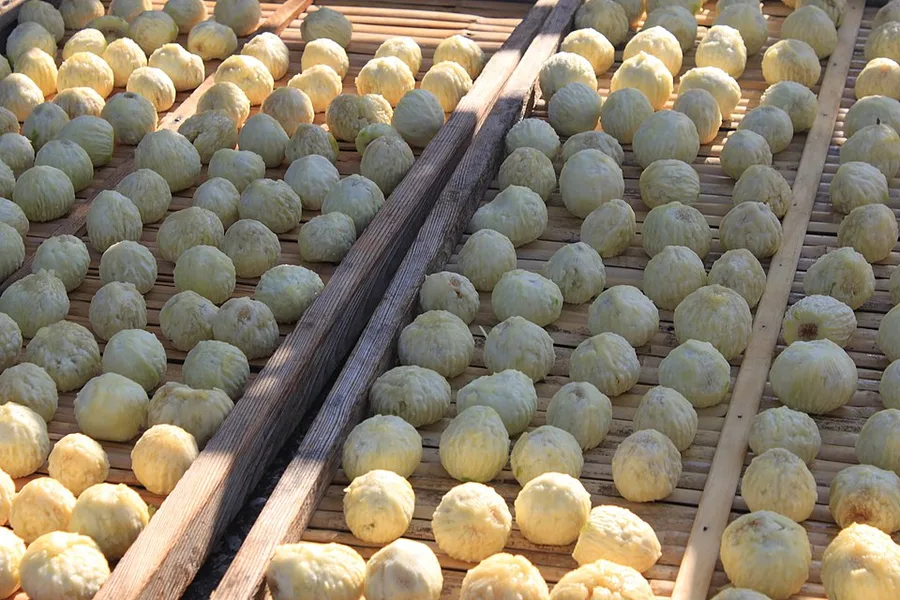
Dottato figs sun-dried on cane racks: they lose water and concentrate sugars, so they taste sweetened without anything having been added. Eaten as they are, stuffed, or in chocolate.
basilicata · 25-45 €/kg
A sweet pepper from Senise, sun-dried in hanging strings and then fried for two or three seconds, which turns it glassy. Two seconds too long and the pepper's sugar burns: that is the only difficulty.
campania · 6-12 €/kg
It is not really dried: it is hung. Picked in whole bunches in July, it stays in the cellar until winter because the thick skin and high acidity do the job a jar does elsewhere.
 Paolo Tonon from Italy · CC BY-SA 2.0
veneto · calabria · 40-70 €/kg
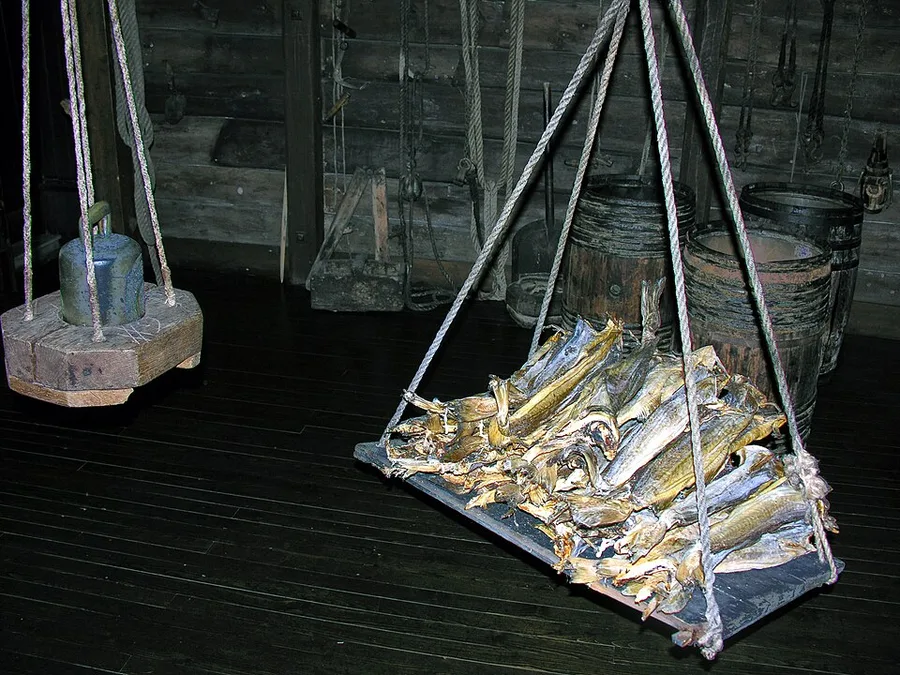
Cod air-dried without salt on the racks of the Lofoten islands: it loses around two thirds of its weight. Two or three days of soaking with the water changed every six to eight hours, and it more than doubles.
 Radobera · CC BY-SA 3.0
sardegna · sicilia · 200-320 €/kg
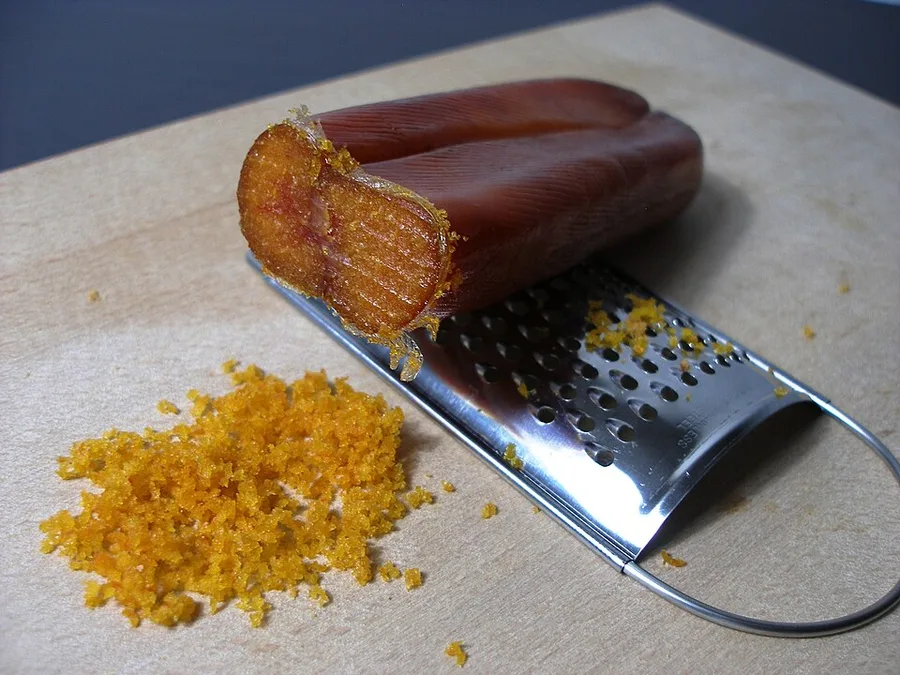
Mullet or tuna roe, salted, pressed and cured: the water leaves under weight and salt together. The mullet kind is grated off the heat, because above sixty degrees it turns bitter.
 OppidumNissenae · CC BY-SA 4.0
sicilia · puglia · 2-4 €/kg
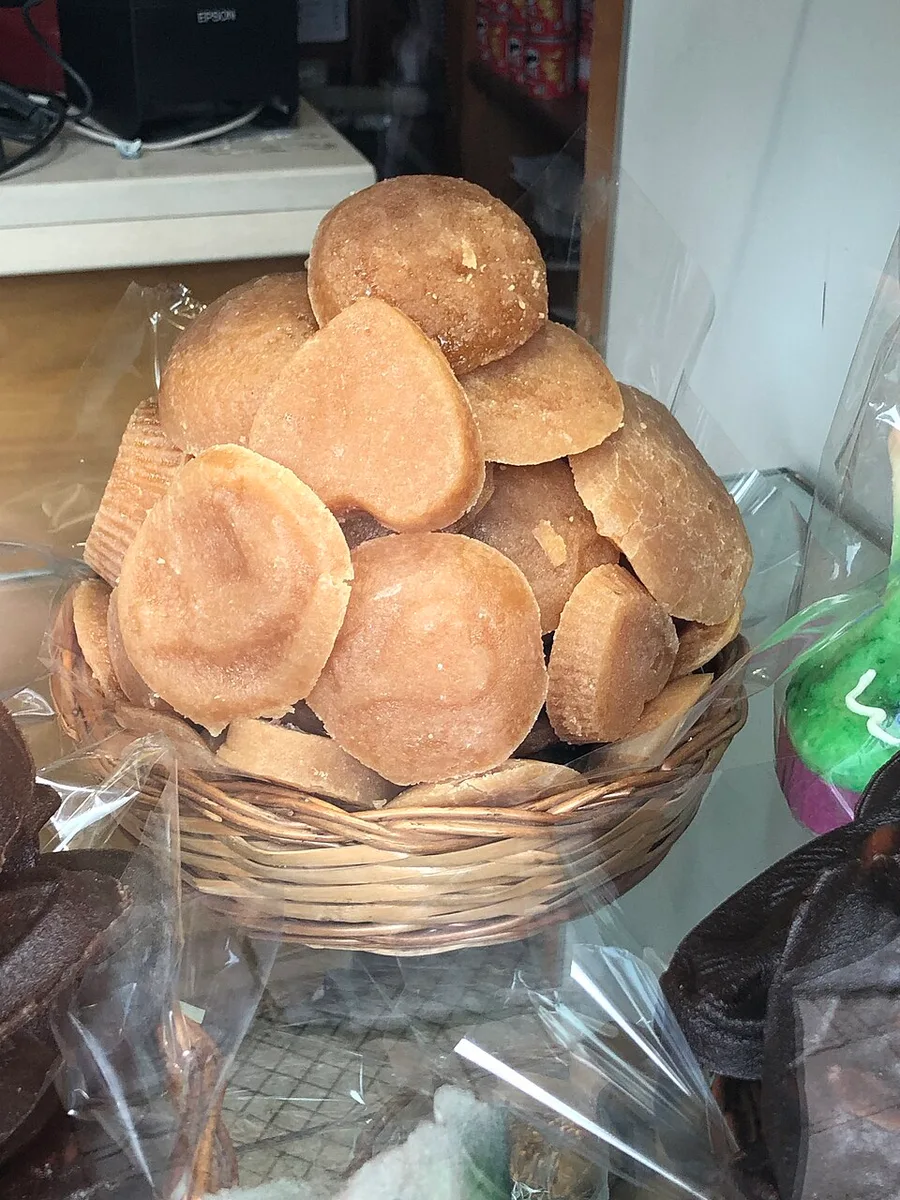
Quince pulp cooked with sugar until solid, pressed into terracotta moulds and dried in the sun. It is cut into squares and keeps for months: a preserve with no need of glass.
toscana · campania · 4-8 €/kg
Dried or milled into flour, because for centuries the Apennines made bread from them rather than dessert. Dried chestnuts want a night's soaking, and the flour keeps only a few months because it is fatty.
sicilia
Ash tree sap drawn out through cuts and air-dried into white stalactites: the product is what remains once the water evaporates, and it is made only at Castelbuono and Pollina.
One last thing
A dried product is bought by looking at the weight and cooked by looking at the yield. A kilo of dry stockfish becomes about two and a half kilos ready to cook, so the price per kilo at the counter is not the price per kilo on the plate; a hundred grams of dried chestnuts come back to a hundred and eighty after soaking. The same rule works in reverse: a hundred grams of tomatoes from a hanging piennolo are far more concentrated than a hundred grams of fresh ones, and in a sauce they should be dosed as a concentrate rather than as bulk.
The questions this list answers
These are real questions put to an AI assistant, in the period when Bing cited this site among its sources to answer them. The number is how many times we were cited. We read them in Bing Webmaster Tools, under AI performance, and they decide what goes on this page rather than the other way round.
- peperone crusco836 citations
- cotognata590 citations
- la castagna è un frutto29 citations
- castagne cosa sono3 citations
- Bottarga15 citations
- bottarga cos'è47 citations
- spaghetti bottarga51 citations
- bottarga cos'e6 citations
Frequently asked questions
Why is pane carasau baked twice?
Because the second baking dries the disc completely, and a product without water does not mould: this was bread that had to last months in shepherds' bags. The first baking makes it puff, then it is split into two sheets that go back into the oven.
How much does stockfish yield after soaking?
More than double: the dried fish has lost around two thirds of its weight and recovers much of it in two or three days of water. Portions are reckoned from the dry weight, and the water must be changed every six to eight hours throughout.
Do dried figs have added sugar?
In Fico Bianco del Cilento DOP, no: the sweetness is the fruit's own, concentrated by sun-drying, which removes most of the water. Chocolate-covered or stuffed versions add other ingredients, and the label states them.
How is chestnut flour used?
It keeps only a few months because it contains fats that go rancid, so buy it in small quantities and keep it cool. In the kitchen it has no gluten and does not rise: it is used in preparations that are not meant to grow, such as castagnaccio or sweet polentas.