Eight things from the Italian Alps, between the Aosta valley and Trentino
Fontina, mocetta, speck, Puzzone di Moena, Asiago, Val di Non apple, canederli. Two small regions, few products, and every one of them born from a problem of keeping.
The Aosta valley and Trentino-Alto Adige have few recognised products, and the reason is the same thing that makes them interesting: little arable land, long winters, and a historically small population. Neither produces enough for a national market to notice, and so their products have stayed what they were.
All of them come from the same problem, making summer last until spring. Fontina is whole raw milk from a single milking worked within two hours and aged eighty days in caves; speck is a salted leg, cold-smoked below twenty degrees and then air-dried for months; canederli are stale bread soaked in milk, which is the proof that in the mountains bread was never thrown away.
The difference between the two regions is the cultural border. In the Aosta valley the reference is francophone: mocetta is eaten on dark bread with butter, and the local fonduta is made with Fontina because it melts to a cream without stringing. In South Tyrol the reference is German, and the saying about speck, a little salt, a little smoke, plenty of air, describes a method rather than a taste.
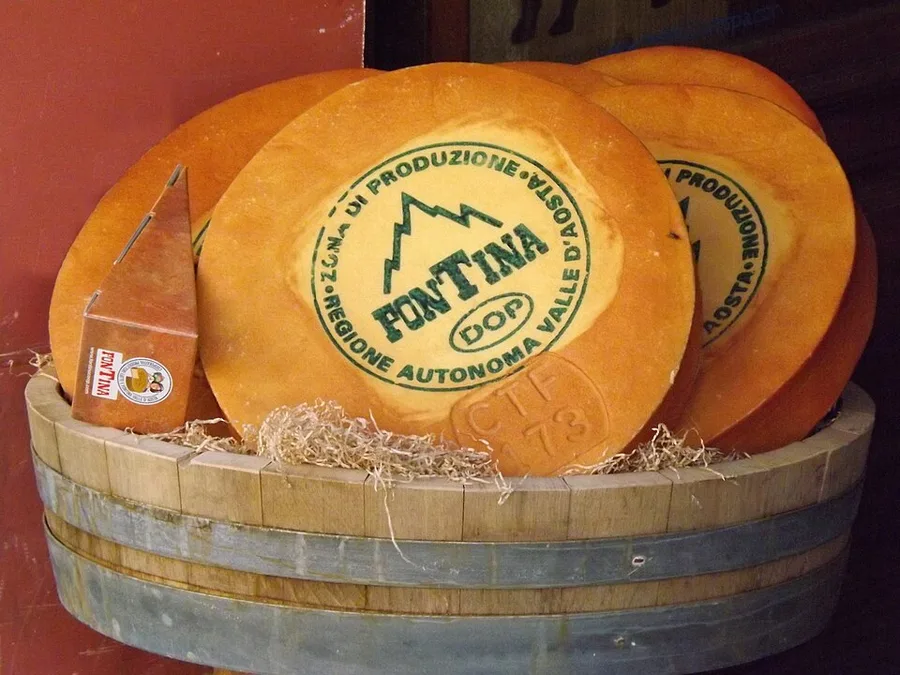 Luigi Chiesa · CC BY 3.0
valle d aosta · 14-20 €/kg
Whole raw milk from a single milking, worked within two hours, wheels of seven and a half to twelve kilos, eighty days minimum in the caves. It is the cheese that melts to a cream without stringing: that is why the Aosta fonduta exists.
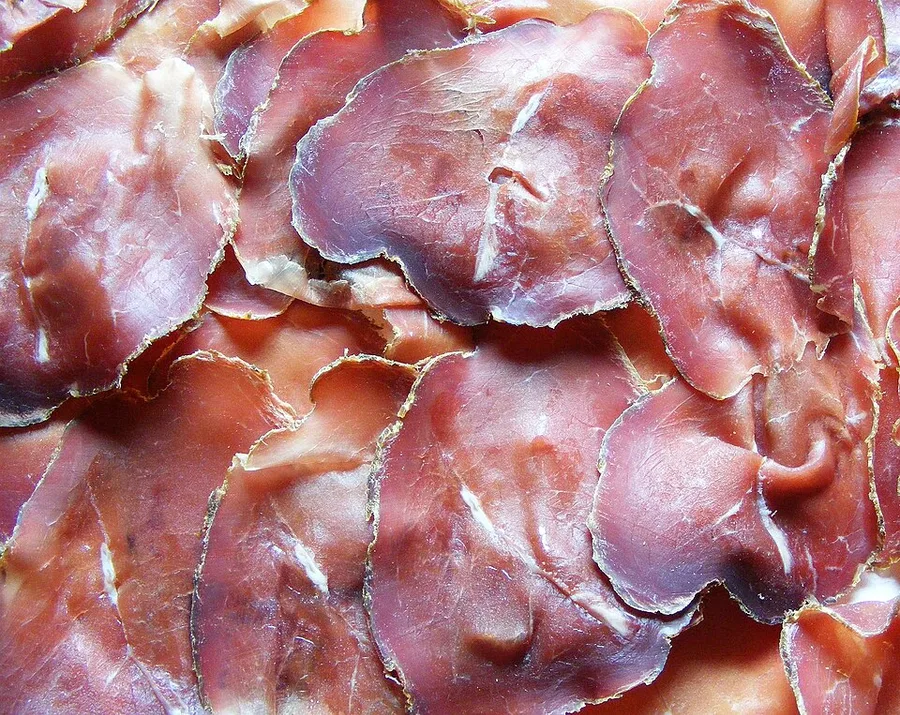 F Ceragioli · CC BY-SA 3.0
valle d aosta · 38-48 €/kg
A leg salted and dressed with the mountain herbs of the Aosta valley. It began with ibex and chamois; today it is made with beef or goat. Sliced very thin and eaten on dark bread with butter.
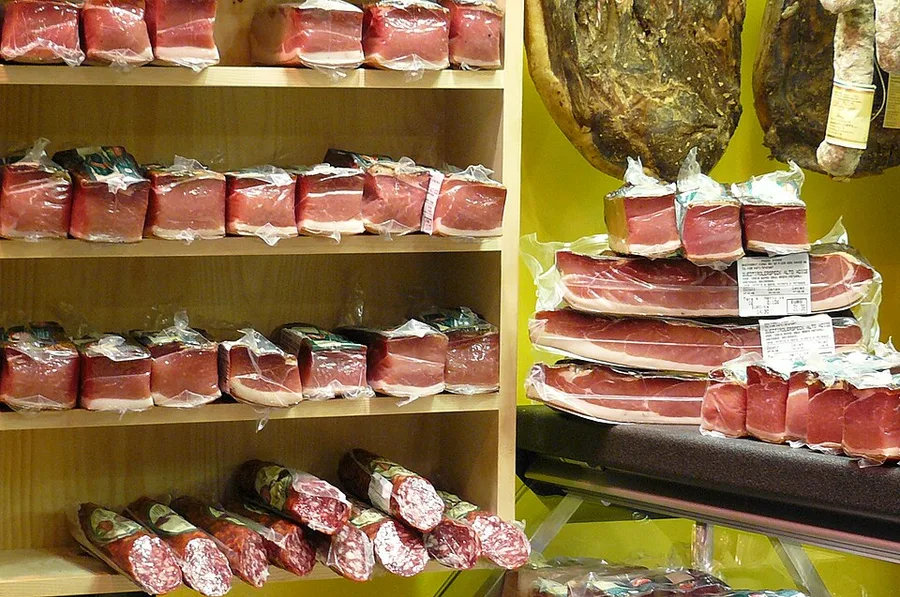 MOs810 · CC BY-SA 4.0
trentino alto adige · 18-26 €/kg
A little salt, a little smoke, plenty of air: the South Tyrolean saying describes a method. A boned leg, salted with spices, cold-smoked over beech below twenty degrees, then air-dried. IGP.
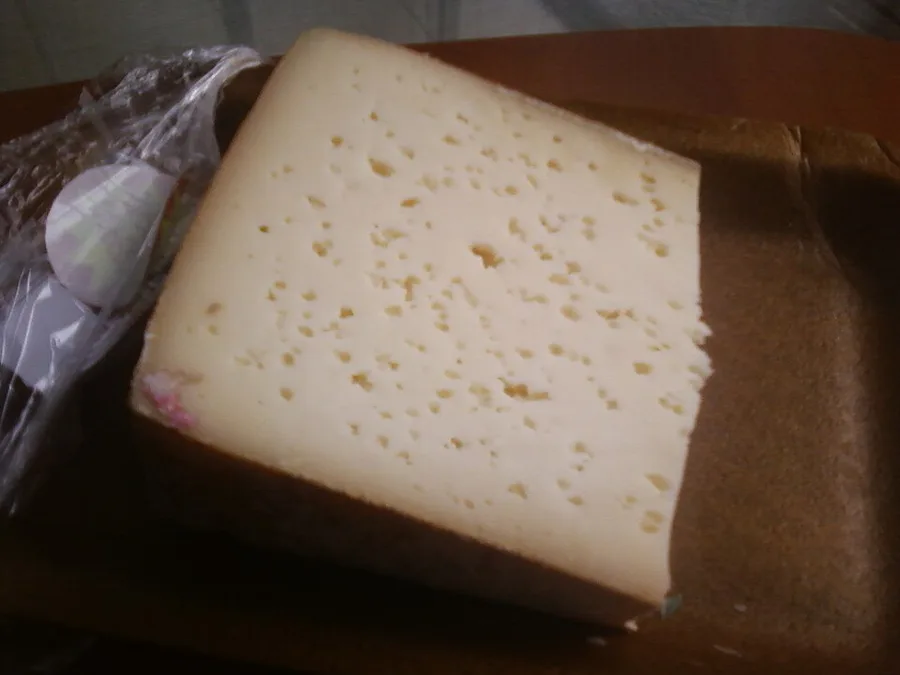 Florixc · CC0
trentino alto adige · 16-24 €/kg
It is called this because it stinks, and it stinks for a precise reason: a rind washed with warm salted water every two or three days throughout the ageing. Raw milk from two milkings, and a taste gentler than the smell.
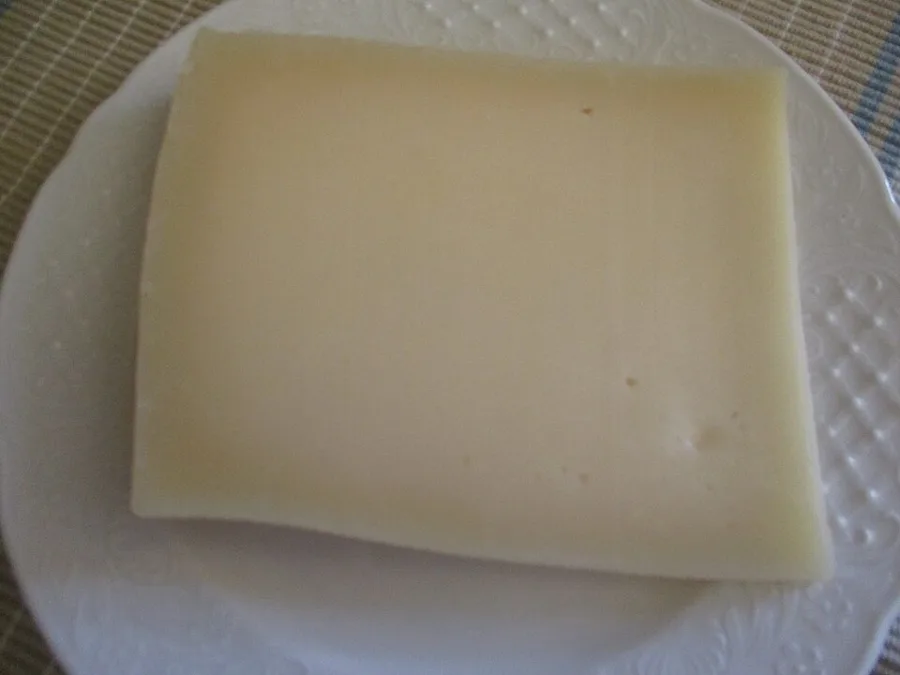 Thomon · CC BY-SA 4.0
veneto · trentino alto adige · 9-13 €/kg
Two cheeses under one name: Pressato, fresh and soft, twenty days, and Stagionato or d'Allevo, hard and grainy after months. The Veneto plateau and Trentino, the same DOP, two uses that do not overlap.
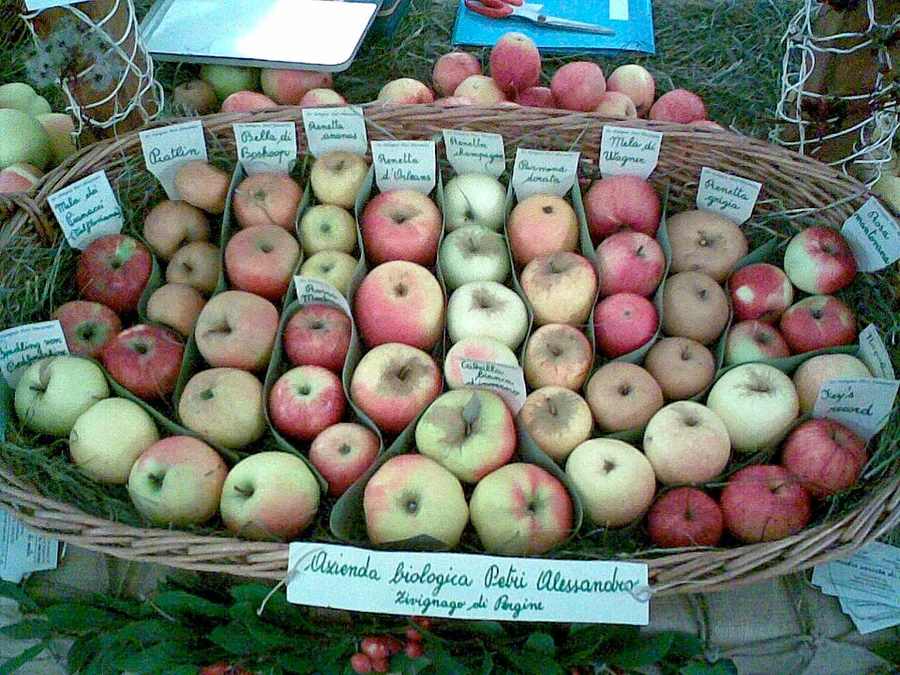 Xaura · CC BY-SA 3.0
trentino alto adige · 1.2-2.2 €/kg
Three varieties grown between six hundred and a thousand metres in a Trentino valley that lives on little else. Altitude is what sets them apart: a wider temperature swing, more acidity, more crunch.
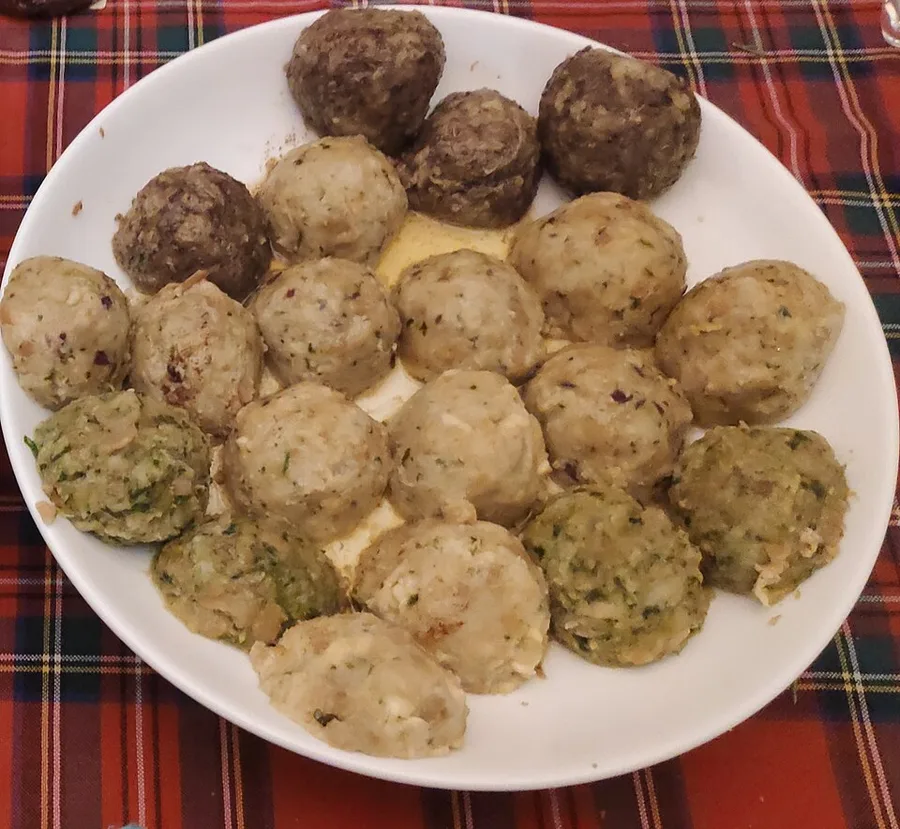 Nirhan · CC BY-SA 4.0
trentino alto adige · 12-18 €/kg
In the mountains bread was never thrown away, and these are the proof: stale bread soaked in milk, bound with egg, flavoured with speck or cheese. They are served in broth or dry, with butter.
trentino alto adige · 50′
Fifty minutes, and the critical point is the balance between soaking and flour: too much flour makes them rubbery, too much milk and they fall apart in the broth. Test one before shaping the rest.
One last thing
These two regions share something that does not appear on a label: the season of the milk. On the high pastures the cows go up in June and come down in September, and in those months the milk comes from fresh mixed meadow grass rather than hay. Cheeses made then are a deeper yellow and smell different, and where the DOP provides for it, as in several alpine productions, the mention appears on the label. Where it does not, the difference still exists, but you have to ask the cheesemaker.
The questions this list answers
These are real questions put to an AI assistant, in the period when Bing cited this site among its sources to answer them. The number is how many times we were cited. We read them in Bing Webmaster Tools, under AI performance, and they decide what goes on this page rather than the other way round.
- speck italian meat9 citations
- asiago formaggio72 citations
- mocetta76 citations
Frequently asked questions
What is speck?
A boned pork leg, salted with spices, cold-smoked over beech below twenty degrees and then air-dried for months. It is IGP as Speck Alto Adige. The smoke is light because the method wants it light: the local saying is a little salt, a little smoke, plenty of air.
Why is fonduta made with Fontina?
Because Fontina melts to a cream without stringing, and a fonduta that strings becomes a thread instead of a sauce. Its semi-cooked paste of whole raw milk, aged eighty days, has a ratio of fat to protein that takes heat and the addition of milk and yolks without splitting.
What are canederli?
Dumplings of stale bread softened in milk, bound with egg and flavoured with speck or cheese, served in meat broth or dry with butter. They are the Italian version of the German-speaking Knödel, and they come from saving bread rather than from a feast-day recipe.
Why does the Aosta valley have so few recognised products?
Scale. It is Italy's smallest region with the least arable land, and its historic production served the valley rather than a market. Its two emblematic products, Fontina DOP and mocetta, are enough to tell the local story, which is why in this list the Aosta valley sits alongside Trentino-Alto Adige.