Cinque Terre: where to eat and stay
Five villages, a little over three thousand residents between them, a few million visitors a year: the Cinque Terre are beautiful and overcrowded, and both things have to be said together. From November to March they become another place, and that is when it makes sense to come here to eat.
Geography first, because almost nobody gets it right. There are five villages but three municipalities: Monterosso al Mare; Vernazza, of which Corniglia is a hamlet; Riomaggiore, of which Manarola is a hamlet. They sit along twenty kilometres of coast west of La Spezia, wedged into ravines that drop straight down, and no coast road joins them: there is the railway, almost entirely in tunnel, and there are the paths. Since 1997 they have been a UNESCO site along with Portovenere and the islands; since 1999 there has been a national park.
What you see, the vertical houses, the terraces, the walls, is agricultural work rather than natural landscape. Nearly seven thousand kilometres of dry stone wall are reckoned to have been built to take soil from the rock. At the start of the twentieth century the vines covered more than a thousand hectares; fewer than a hundred remain, and the rest has gone back to scrub and woodland. A wall nobody rebuilds collapses, and when it collapses it takes the slope with it: the flood of 25 October 2011, which destroyed half of Vernazza and broke through Monterosso, made plain what people here already knew. Anyone still farming these terraces does it with public grants, monorails and a stubbornness with few equivalents.
And then there is the number that changes the trip: a few million visitors a year against three thousand residents, concentrated between May and September and, within the day, between eleven and five, when the trains unload and the cruise ships moored at La Spezia send up their coaches. At seven in the morning and nine at night the same villages are villages. From which follows the only genuinely useful advice: come out of season if you can; if you cannot, at least sleep inside them rather than arriving and leaving the same day.
How people eat here
The identity product is the Monterosso anchovy, a Slow Food Presidium. It is fished at night with a lamp between spring and early autumn, headed and gutted by hand in the hours straight after, layered with coarse sea salt in glass jars or barrels, weighted, and left at least two or three months. Then it is desalted, filleted and dressed with oil and lemon: that is all. The other preparations are the tegame alla monterossina, anchovies baked with sliced potatoes, tomato and oregano, and frying. Do not confuse the salted ones with lemon anchovies, which are raw marinated fillets and by law must start from blast-frozen fish. One uncomfortable thing should be said: genuinely Monterosso salted anchovies amount to a few hundred kilos a year, and the overwhelming majority of restaurants use Cantabrian or Sicilian anchovies. That is not a problem, they are excellent, but it is information, and a serious place gives it to you if you ask.
The pesto here is Genoese: basil, pine nuts, garlic, Parmigiano and an aged pecorino, Ligurian oil, all raw. It is eaten with trofie or with trenette boiled together with potatoes and green beans in the same water, which is not an oddity but the classic version. The difference between pesto made that morning and pesto out of a tub shows before you taste it: the industrial kind is bright and uniformly green, the fresh kind is duller and turns with time. Real pine nuts are expensive and are often replaced with cashews or sunflower seeds; here too, asking is fair. Around it turns the rest of Ligurian coast and inland cooking: focaccia, chickpea farinata, gattafin around Levanto, stuffed mussels towards La Spezia, mesciua of chickpeas, spelt and beans, rice cake, rabbit with olives as you climb into the Val di Vara, and the lemons of Monterosso.
The wine explains what kind of place this is better than anything else. Cinque Terre DOC white is made from bosco, albarola and vermentino: direct, saline, not complex, and exactly right beside an anchovy. Sciacchetrà is the same fruit left to dry on racks for weeks or months before pressing, with at least a year of ageing and three for the Riserva. It takes roughly four or five kilos of dried grapes to fill half a litre, the whole denomination makes a few thousand bottles a year, and the price runs from 40 to 80 euro for a 375 or 500 ml bottle. It is not expensive out of snobbery: it is expensive because there is almost none. What you see in souvenir windows at 12 euro is not Sciacchetrà DOC, and to notice you only have to read the label and look for a producer's name. It is drunk on its own or with dry biscuits, not with chocolate. On the rest it is worth being equally blunt: the paper cone of mixed fry sold everywhere is nearly always frozen fish and is perfectly fine if you know what it is; menus with photographs of the dishes and four flags on the sign live off people passing once; and the sea-view surcharge exists, is written nowhere, and is real.
Working farms that take guests
Real places in this territory, checked one by one on their own site. What you read is what they state: the editorial visit has not happened yet, and when it does we will say so.
Agriturismo Barrani
Corniglia (Vernazza) (SP)A farm with vines and olives on the terraces of Corniglia: Cinque Terre DOC white and Sciacchetrà DOC, plus vegetables, fruit and farmyard animals. Rooms with kitchenettes and meals served.
barrani.itAgriturismo Buranco
Monterosso al Mare (SP)Vineyards and olive groves in the Buranco valley above the village: Cinque Terre DOC and Sciacchetrà DOC, oil, honey, lemon liqueur, grappa and jams. Studios and apartments, with a restaurant on the estate.
burancocinqueterre.itAgriturismo Costa di Campo
Vernazza (SP)A place at Campo, surrounded by its own olive groves and vineyards, with wine from the estate. Four rooms.
agriturismocostadicampo.comIl Nettare
Riomaggiore (SP)A farm with rooms on the coast road above Riomaggiore: Mediterranean wildflower honey, extra virgin oil from taggiasca olives, lemon liqueur. Three rooms and two studios.
ilnettarecinqueterre.comThe foods of this territory
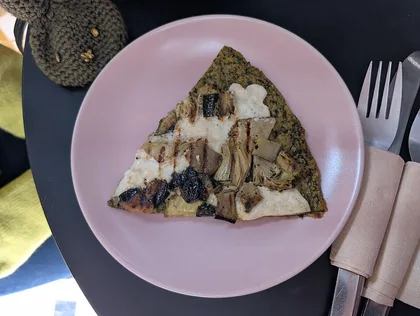 FoodFarinataFarinata is a paper-thin chickpea flour pancake baked in a copper pan in a blistering wood…
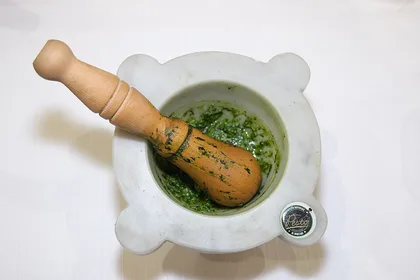 FoodPesto GenoveseHeat never touches this sauce, and by the rule neither does a blender: basil pounded in a…
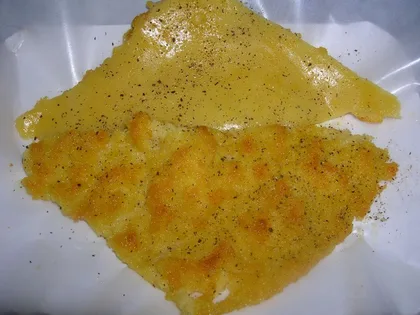 FoodTorta di Ceci (Cecina)Chickpea flour, water, olive oil and salt, baked in a wide copper pan in a fierce wood oven.
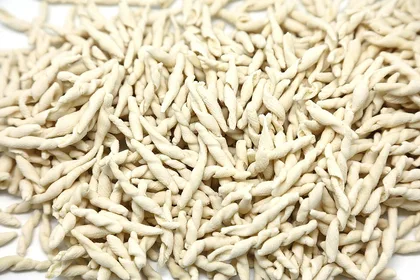 FoodTrofieTrofie are the pasta that pesto was made for: short, tapered twists of flour and water…
What to do here
Walking is the reason to come. The Sentiero Verde Azzurro, path 592, runs at mid-height and links the villages: inside the park the stretches are ticketed with the Cinque Terre Trekking Card. The Via dell'Amore between Riomaggiore and Manarola reopened in 2024 after twelve years shut, with capped access and a ticket. Other coastal sections have been closed for years after landslides, and reopenings change from season to season: check the park's own site before you travel, because the information on booking portals and accommodation sites is often years out of date. Above runs the Alta Via, path 591, from Portovenere to Levanto along the ridge: free, hard, with serious climbing, and practically empty even in August.
From the sea the terraces make more sense than they do from land. The boats leave La Spezia, Portovenere and Levanto and call at every village except Corniglia, which sits on a cliff with no landing and is reached from its station up the Lardarina, thirty-three flights of steps. Half-day trips in a small boat with a fisherman cost 50 to 80 euro a head.
A few growers take very small groups onto the terraces and the monorail, mostly in May and June and in September: you book by email weeks ahead and it is not a large-scale activity. For swimming, the only real beach is at Monterosso, largely under concession; Vernazza has a tiny one and the other villages have rocks. One last thing said plainly: do not try to do all five villages in a day. Two a day is the honest rhythm; the third is the one you will remember badly.
The year, month by month
From November to March the Cinque Terre are another thing. Rooms cost a third, the paths are yours, the winter light on the sea is the best of the year and the restaurants open in rotation: some close entirely in January and February, so check before booking. In November the olives are pressed. It is the season we recommend to anyone coming mainly to eat and walk.
April brings the green back to the terraces and Easter fills everything for a week. In May Monterosso holds its lemon festival and the first heavy weekends begin. June to August is the peak, with August the worst month: paradoxically the anchovy is at its best exactly when the village is at its worst.
September is the best compromise between weather and crowd: the terraces are harvested, the sea is still warm and after the fifteenth the pressure drops sharply; in the second half of the month Monterosso devotes a festival to salted anchovies and oil. October is warm, quiet and wet in patches: the 2011 flood was on 25 October, and when it rains hard the paths are closed. That is not bureaucracy, it is the slope coming down.
Getting there and getting around
The train is the way to travel, not a fallback. The two gateways are La Spezia Centrale and Levanto: the regional trains stop in all five villages, five minutes apart, almost always in tunnel. The Cinque Terre Treno MS Card covers unlimited trains between Levanto and La Spezia plus access to the ticketed paths, and for anyone moving two or three times a day it pays. In peak months the eleven o'clock and five o'clock trains are standing room only.
A car is a mistake almost always. Riomaggiore, Manarola, Corniglia and Vernazza have restricted access and very few spaces, often a kilometre uphill from the centre; Monterosso has paid car parks that fill by nine. If you arrive by car, the sensible choice is to leave it at Levanto, at La Spezia or at a place inland with its own parking, and take the train.
Airports: Pisa an hour and a quarter from La Spezia, Genoa an hour, Florence two, Milan two and a half. From the fast trains you change at La Spezia Centrale. The boats are seasonal, roughly late March to early November, and they skip rough days. One banal and very useful warning: these villages are made of staircases, and nobody carries your luggage. A large hard suitcase here is a real problem; a rucksack is not.
Frequently asked questions
When should you visit the Cinque Terre to avoid the crowds?
From November to March, accepting that some restaurants and some places to stay will be closed and that the sea is for looking at rather than swimming in. If you need the weather, the second half of September and October are the best compromise, and late March to April before Easter works well. Within the day, in any case, the good window is before ten and after six: sleeping in the villages rather than arriving for the day changes the trip more than any other choice. August is the month to avoid.
Why does Sciacchetrà cost so much?
Because there are very few bottles. It is made from the same grapes as the Cinque Terre white (bosco, albarola, vermentino) picked by hand on the terraces, dried on racks for weeks or months and then pressed: it takes roughly four or five kilos of dried grapes for half a litre, and the whole denomination makes a few thousand bottles a year. The real price is 40 to 80 euro for a 375 to 500 ml bottle. What you find in souvenir shops at 12 euro is something else: look on the label for the words Cinque Terre Sciacchetrà DOC and the name of an estate.
Are the anchovies I eat in Monterosso really from Monterosso?
Often not, and it is nobody's fault. The Presidium's salted anchovies amount to a few hundred kilos a year, made by a very small number of families, and they do not even cover the village's own restaurants: most places use Cantabrian or Sicilian anchovies, which are excellent. If the difference matters to you, ask explicitly and weigh the answer: anyone working well will tell you without fuss, and anyone swearing they were all caught just below is telling you a story.
How many days do you need, and do you need a car?
Three nights is the minimum to see the villages at a human pace (two a day) and walk at least one stretch of path; with four or five you can add Portovenere, Levanto and the inland Val di Vara. A car is unnecessary and complicates things: the railway links the five villages five minutes apart and parking in the villages is scarce and expensive. If you arrive by car, leave it at Levanto, at La Spezia or at a place inland with its own space.