Twelve Italian things that need a tool, and why
The Abruzzese chitarra, the ferretto, the marble mortar, the tigelliera, the cast iron testo, the canala, the fojòt, the tarello, the stoning knife. Ten objects that do what hands cannot.
In a poor kitchen tools were few and each solved a precise problem. They are not accessories: in twelve cases on this list, without that object the product changes its name. The Abruzzese chitarra is a frame of steel wires onto which the sheet is pressed to cut it square in section, and pasta with sharp edges holds a ragù better than a smooth ribbon.
Some tools are surfaces that hold heat. The Umbrian testo is a disc of cast iron or stone that must reach 220 to 230 degrees and stay there: a thin plate that cools gives a dry disc instead of a puffed bread. The Abruzzese canala is a long narrow grill that concentrates the coals under the skewers and keeps their handles out of the fire.
Others exist in order not to heat. The marble mortar with its wooden pestle crushes basil cold instead of cutting it, while a blender's blades warm and oxidise it; the Piedmontese fojòt, a terracotta pot over a candle, keeps bagna cauda below boiling throughout the meal. In both cases the tool exists to control a temperature.
abruzzo · 2 h
The chitarra: a frame of taut steel wires onto which the sheet is pressed with a rolling pin. The thickness of the sheet has to match the spacing of the wires, or the section does not come out square.
 Nnaluci · CC BY-SA 3.002
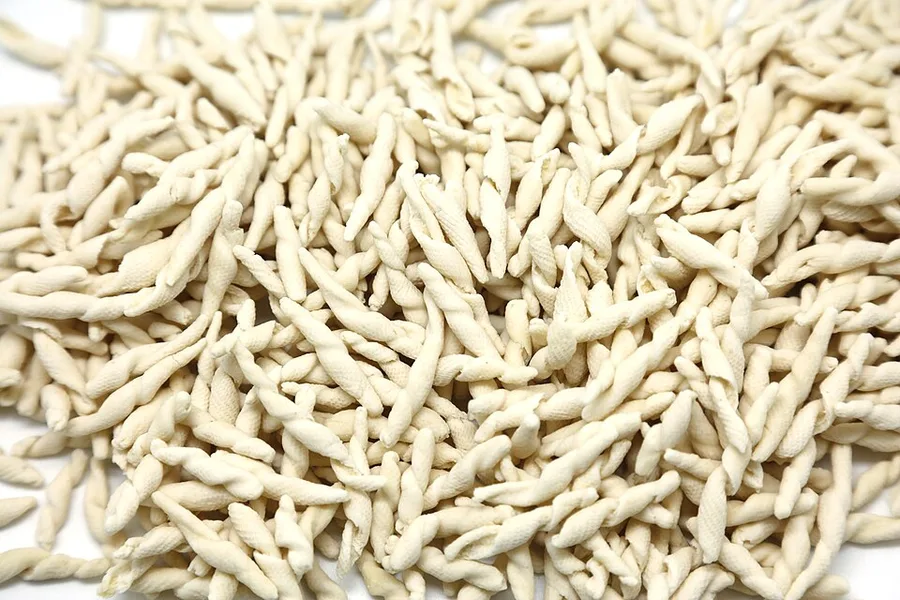
Fusilli
campania · molise · 1.1-2.2 €/kg
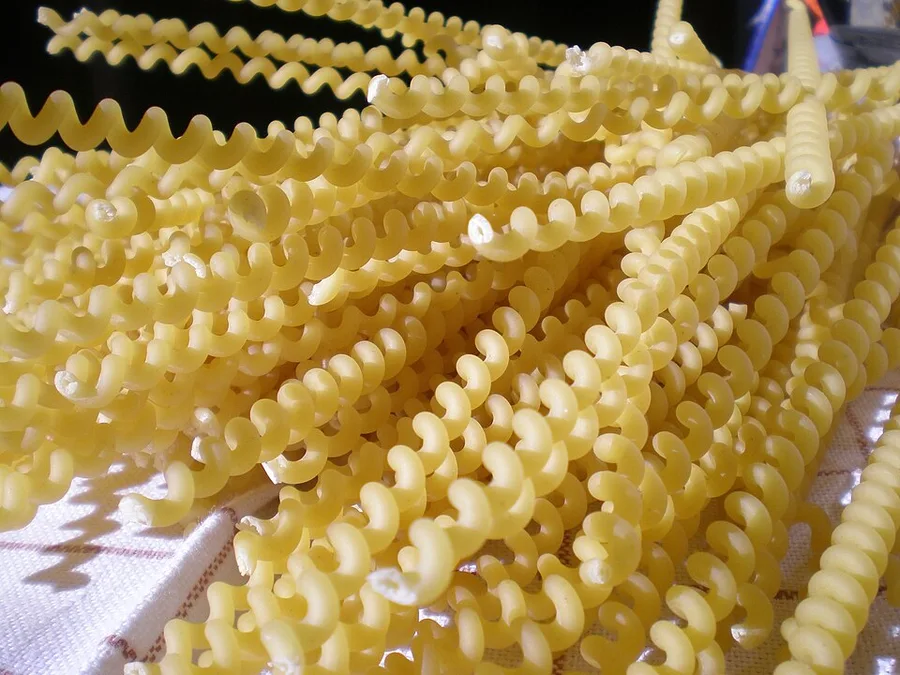
The ferretto: a square iron rod around which a cord of dough is twisted, leaving it hollow. The industrial fusillo is a solid helix, and it holds sauce outside rather than inside.
liguria · 25′
The marble mortar with its wooden pestle: it crushes the leaves cold instead of cutting them. A blender's blades sever the cells and heat them, and the basil oxidises and turns bitter.
piemonte · 1 h 20′
The fojòt: a terracotta pot over a candle, which keeps the sauce warm and below boiling throughout the meal. If it boils, the garlic and anchovies turn bitter.
umbria · 1 h 5′
The testo: a disc of cast iron or stone that must reach 220 to 230 degrees and stay there. A thin plate that cools gives a dry disc instead of a puffed bread to split.
 Nerodiseppia · CC BY-SA 3.006
Tigelle
emilia romagna · 6-10 €/kg
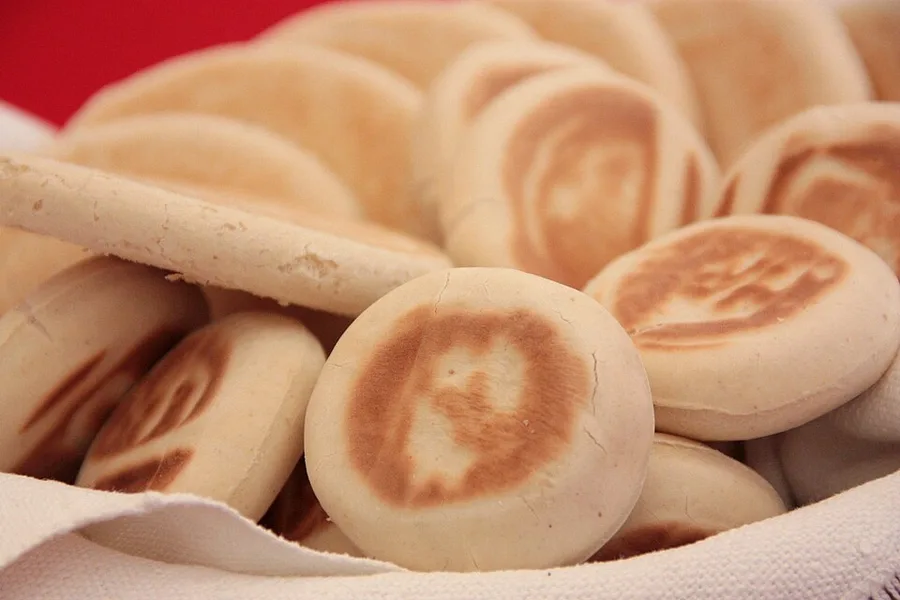
The tigelliera: two cast iron plates between which the disc cooks on both sides at once. The name comes from the cooking disc, and at home a heavy iron pan does a similar job.
abruzzo · 52′
The canala: a long narrow grill that concentrates the coals under the meat and keeps the skewer handles out of the fire, so the wood does not burn while the meat cooks.
lombardia · 3.5-7 €/kg
The tarello, the wooden stick used to stir in the copper pot for forty minutes: the dish takes its name from it. The copper pot spreads the heat and nothing catches on the bottom.
 Manuela Zangara · CC BY-SA 2.0
marche · 3 h
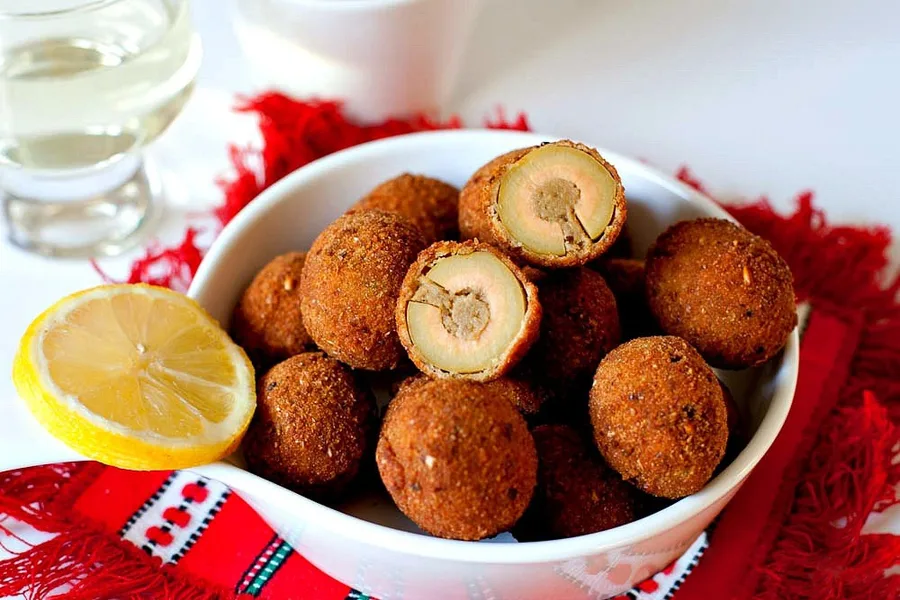
A short-bladed knife to stone them in a spiral, olive by olive, turning around the stone without detaching the flesh. Three hours' work for an antipasto, and no machine does it.
 Original uploader was Signorealex at it.wikipedia · Public domain
puglia · 5-9 €/kg
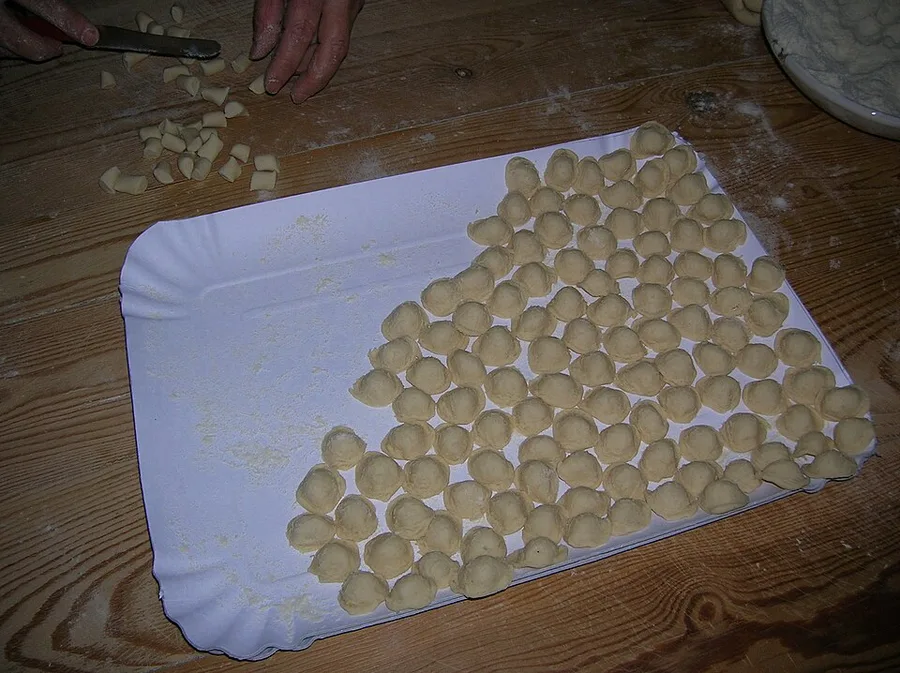
A smooth-bladed knife and a thumb: you drag a cube of dough across the board and flip it over the thumb. The tool is the hands, but the gesture takes a few hundred pieces to learn.
 Popo le Chien · CC011
Trofie
liguria · 8-12 €/kg
The edge of the hand on the board: a little cylinder of semolina and water is rolled into a tapered spiral. It is a gesture rather than a tool, and no die reproduces it.
sardegna · 1 h 55′
The wheat-ear fold, made with thumb and forefinger: it is the real mark of recognition of culurgiones, and a machine closure is visible at a glance along the seam.
One last thing
Of these tools, three can be substituted and nine cannot. The tigelliera can be replaced by a heavy iron pan, the testo by a cast iron plate, the copper pot by a thick-based pan. The mortar can be replaced by a blender only by accepting a different result: cold blades, short pulses, oil at the end. The chitarra, the ferretto, the canala, the fojòt and the stoning knife have no equivalents, and the reason is always the same: they do not make the work more convenient, they make work that otherwise does not happen, and without them the product changes its name.
The questions this list answers
These are real questions put to an AI assistant, in the period when Bing cited this site among its sources to answer them. The number is how many times we were cited. We read them in Bing Webmaster Tools, under AI performance, and they decide what goes on this page rather than the other way round.
- maccheroni alla chitarra50 citations
- fusilli pasta type3 citations
- tigella234 citations
- what is grissini91 citations
- ricetta tradizionale orecchiette cime di rapa5 citations
- come fare la farinata di ceci6 citations
Frequently asked questions
What is a pasta chitarra?
A wooden frame with parallel taut steel wires, onto which the egg sheet is pressed with a rolling pin: the wires cut it into strips square in section. It is an Abruzzese tool, and the pasta it makes has sharp edges that hold a ragù.
Can pesto be made without a mortar?
It can, with a blender, accepting a different result. To limit oxidation, keep the blades cold, work in very short pulses and add the oil only at the end. A mortar crushes cold and does not cut, and that is the difference.
What is a fojòt for?
Keeping bagna cauda warm and below boiling for the length of the meal: it is a terracotta pot set over a small candle. If the sauce boils, the garlic and anchovies turn bitter, and the tool exists precisely to prevent that.
Do you need a copper pot for polenta?
It helps, because copper spreads heat evenly and reduces the risk of the polenta catching. A thick-based pan works, provided you stir often for the forty minutes that starch gelatinisation requires.