Six Italian breads cooked without an oven
Piadina, tigelle, crescia sfogliata, torta al testo, pane carasau and farinata: where the communal oven was far away or expensive, bread went flat and onto the stone.
For centuries the wood oven was a collective and expensive asset: it was lit once a week, it belonged to the commune or the landowner, and using it cost time or money. Where that was difficult, bread was made at home on a plate, and the consequence is a bread that is low, thin and without a real rise.
Different techniques come from that constraint. The Romagna piadina is cooked on a griddle and folded while hot; Modena tigelle are cooked between two cast iron plates and split in half; the Umbrian torta al testo goes on a red-hot cast iron disc at 220 to 230 degrees and is turned several times. The crescia sfogliata of Urbino adds a step: lard spread between the layers, then rolled up and rolled out again, which makes it flake.
Sardinian pane carasau is the extreme case: not a griddle bread but a bread baked twice and reduced to less than a millimetre, because it had to last months in shepherds' bags. And Ligurian farinata is not even bread: it is chickpea flour, water and oil in a copper pan, with no leavening, where fierce heat does everything.
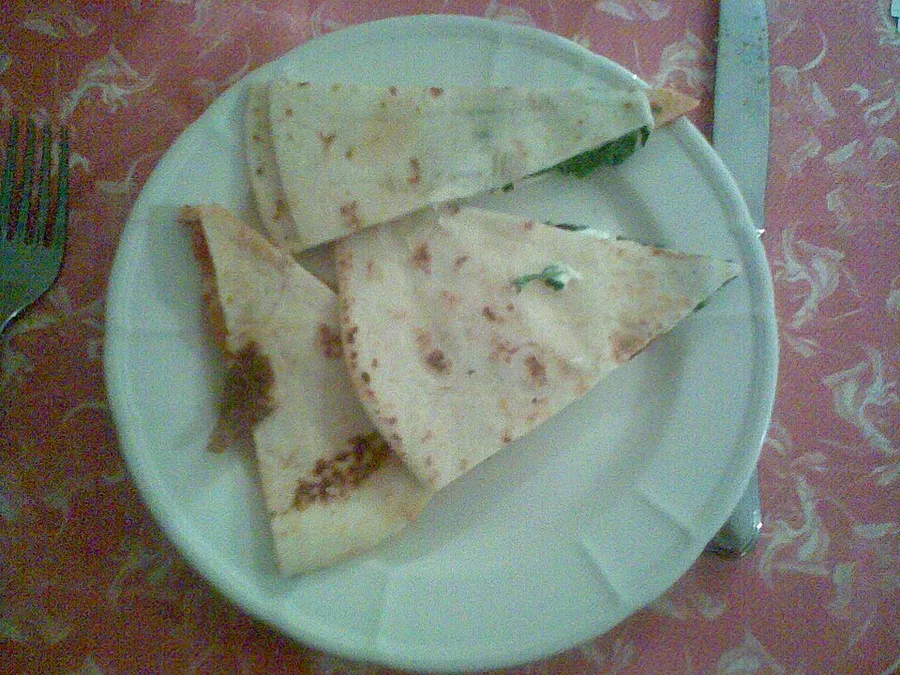 Xaura · CC BY-SA 3.0
emilia romagna
A flatbread cooked on a griddle, IGP, with lard in the dough in the classic Romagna version. It is folded while hot and eaten at once: cold it hardens, and reheating does not bring it back.
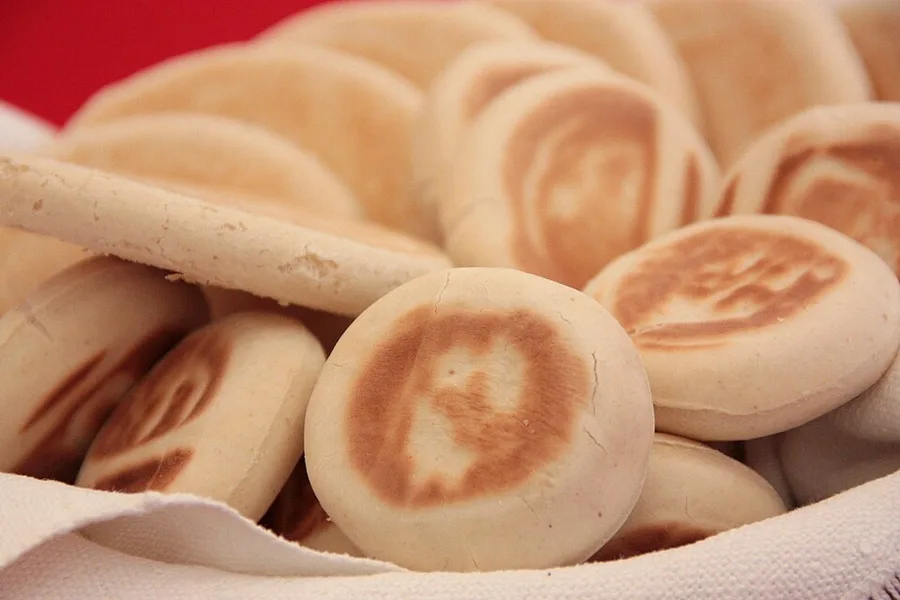 Nerodiseppia · CC BY-SA 3.002
Tigelle
emilia romagna · 6-10 €/kg
Discs cooked between two cast iron plates in a tigelliera, from the Modena Apennines. Split while hot and filled with pesto modenese, lardo pounded with garlic and rosemary: basil has nothing to do with it.
marche · 8-12 €/kg
A thin Urbino flatbread with eggs and pepper in the dough and lard spread between the layers, rolled up and rolled out again so that it flakes. It is not a piadina under another name: the layers are the point.
umbria · 1 h 5′
An hour and five minutes: a flatbread cooked without fat on a red-hot cast iron disc, turned several times and split while hot to be filled. The testo must reach 220 to 230 degrees and stay there, or the bread stays raw inside.
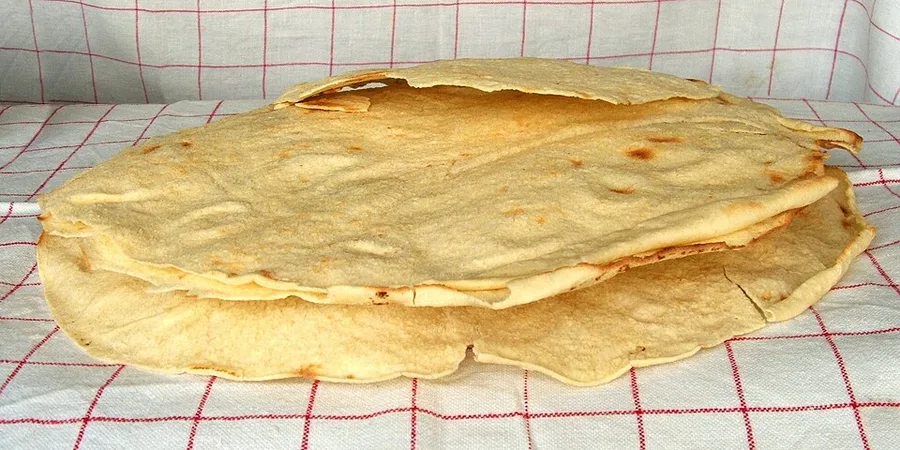 Luigi Chiesa · CC BY 3.0
sardegna · 6-12 €/kg
Baked twice and reduced to less than a millimetre: it snaps like glass and keeps for months. It was the bread of shepherds away from home, and it softens with a film of water when a dish needs it.
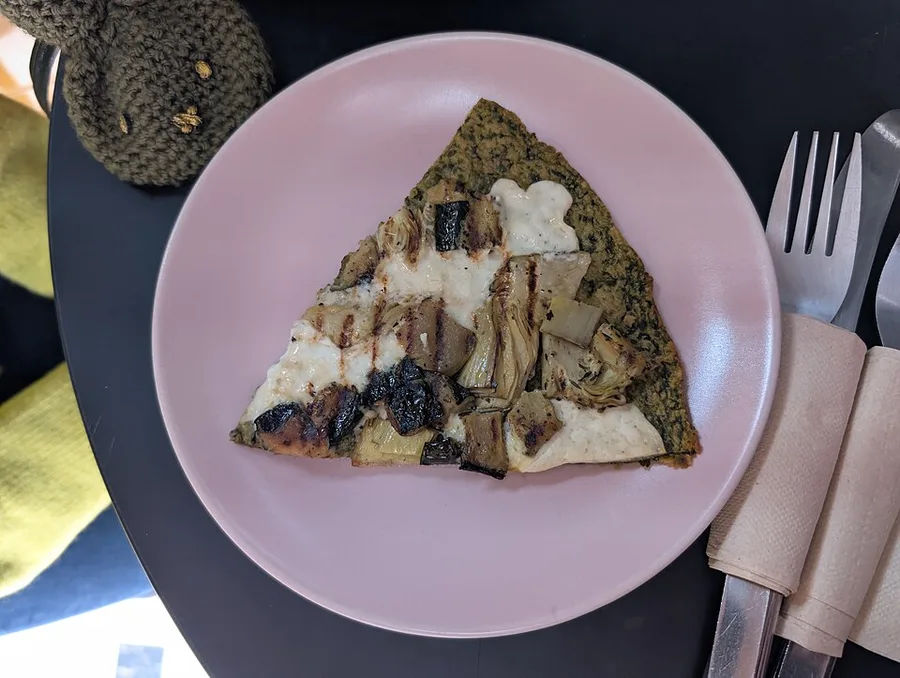 Andy Li · CC006
Farinata
liguria · 3-6 €/kg
Not bread: chickpea flour, water and oil in a copper pan, no leavening, a fierce oven and a few minutes. At home you compensate with a shallow pan and the grill on for the last minutes.
One last thing
All these breads share something that makes them hard to buy ready-made: they have to be eaten hot. A cold piadina hardens; tigelle only split properly straight off the plate; the torta al testo is filled hot because the steam inside helps it separate. That is why the places that make them have kiosks and tigellerie, that is places that cook them to order: not folklore but the only window in which they work. At home a cast iron plate or a heavy iron pan is enough, as long as it is at temperature before the dough arrives.
The questions this list answers
These are real questions put to an AI assistant, in the period when Bing cited this site among its sources to answer them. The number is how many times we were cited. We read them in Bing Webmaster Tools, under AI performance, and they decide what goes on this page rather than the other way round.
- tigella234 citations
- farinata ricetta19 citations
- ricetta farinata di ceci12 citations
- tuscan schiacciata bread95 citations
- come fare la farinata di ceci6 citations
Frequently asked questions
What is the difference between a piadina and a tigella?
The cooking and the thickness. A piadina is a large thin disc cooked on a griddle or a testo and then folded; a tigella is a small, thicker disc cooked between two plates, split in half and filled. They come from two different areas, Romagna and the Modena Apennines.
What is pesto modenese?
Lardo pounded with garlic and rosemary, used to fill hot tigelle: it has nothing to do with Genoese basil pesto. The name is local and refers to the pounding, which is the same action, not to the ingredients.
Do you need a special tool for torta al testo?
You need a surface that holds heat: traditionally the testo, a disc of stone or cast iron, which must reach 220 to 230 degrees and stay there. A heavy iron pan or a cast iron plate works, as long as it is at temperature before the dough touches it.
Why does farinata have no leavening?
Because chickpea flour has no gluten and cannot hold the gases of a rise: the batter is a liquid baked in a pan, and the result is a thin sheet that is creamy inside. The few hours of rest serve only to skim the foam, not to make it grow.