Eight Italian fried sweets, and why they all fall in the same weeks
Zeppole, struffoli, cartellate, cassatella, pizzelle, seadas and two feast-day fritters. The calendar is no accident: you fry when there is fat, that is between Christmas and Carnival.
Italian fried sweets cluster in two periods, Christmas and Carnival, for the same reason that explains half of feast cooking: the pig was killed in December, and that is when there was lard. Frying required a quantity of fat that could not be tied up in a pan for the rest of the year.
The technique is the same for all eight, and temperature is the only number that counts: a hundred and seventy degrees for large or filled pieces, a hundred and eighty for thin ones. Below a hundred and fifty the dough absorbs oil instead of repelling it, and the sweet comes out greasy; above a hundred and ninety the surface colours before the inside cooks.
What differs is what holds them together. Zeppole di San Giuseppe are choux pastry, and they puff on the steam from the egg; struffoli and cartellate are lean doughs, fried and then bound with honey or vincotto; seadas are melted cheese inside a semolina sheet, with warm honey over the top at the last moment. Three families, one oil.
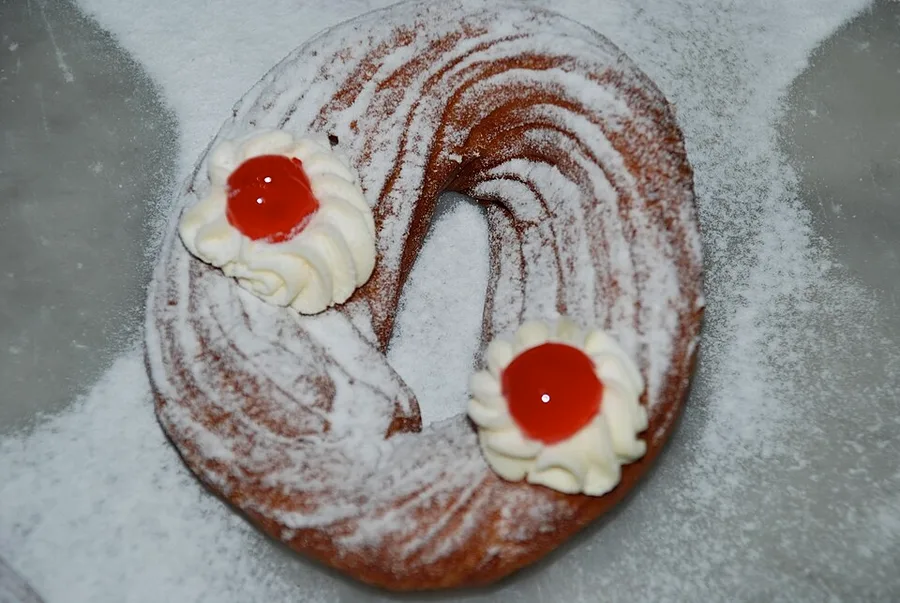
campania · 1 h 20′
Choux pastry, confectioner's custard and a sour cherry, on the nineteenth of March: an hour and twenty. Fried or baked they give two different sweets, one richer and one drier, and the custard goes on cold.
 Salvatore Capalbi · CC BY-SA 2.002
Zeppole
campania · 6-10 €/kg
The name covers two sweets: the zeppola di San Giuseppe and the fried leavened zeppole sold in the street. Both want oil at a hundred and seventy degrees and no hurry.
 Steve-081 · Public domain
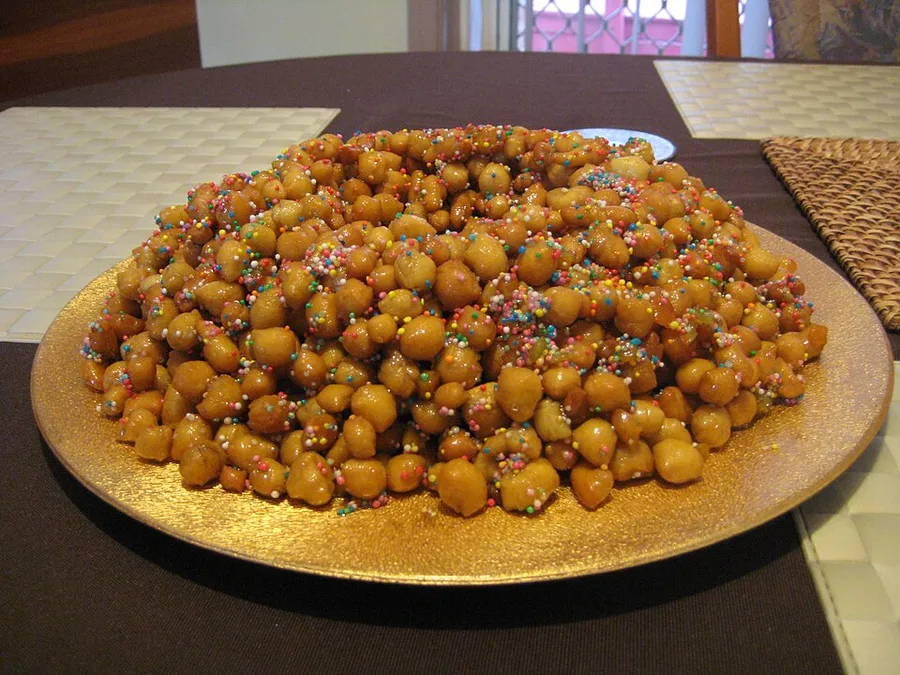
campania · 18-28 €/kg
Little balls of fried dough turned in warm honey, piled into a ring with candied peel and sugar strands. The honey preserves, which is why struffoli stay on the table through the days of visits.
 Florixc · CC0
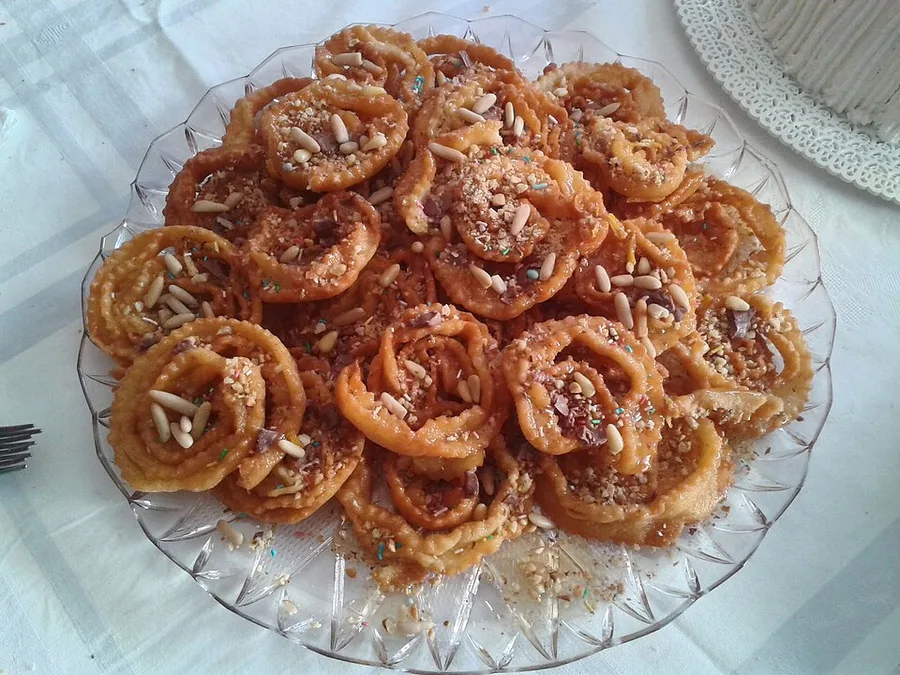
puglia · 20-32 €/kg
Strips of very thin dough pinched and coiled into roses, fried and dipped in vincotto or honey. They are started from the Immaculate Conception and keep for weeks in a tin.
 8w9d · CC0
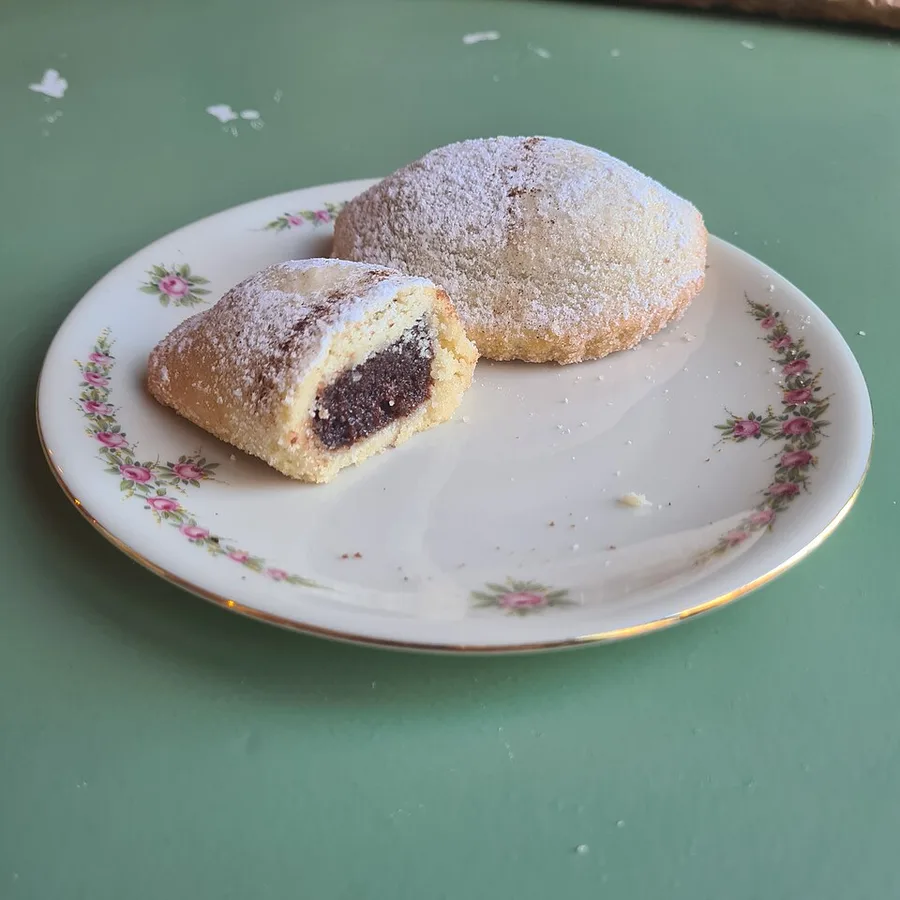
sicilia · 16-24 €/kg
A fried half-moon of wine pastry filled with sweetened sheep's ricotta and chocolate chips. It is made in the Trapani area, and the ricotta must be drained or the filling wets the pastry while frying.
 Controllore Fiscale · Public domain06
Pizzelle
abruzzo · 18-28 €/kg
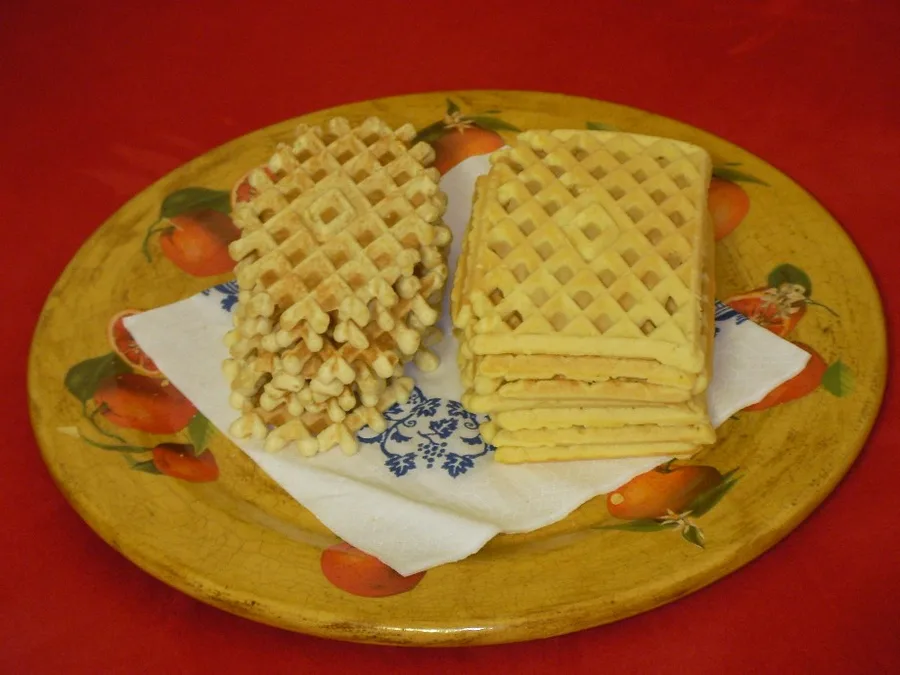
Aniseed wafers cooked between two engraved iron plates, in Abruzzo also called ferratelle: they are not fried but cooked on the iron, the oldest version of the same principle.
- 07
Seadas
sardegna · 1 h 20′
An hour and twenty: very thin semolina pastry, fresh tangy pecorino with lemon zest, frying in lard and warm honey over the top. The cheese must string without escaping the pastry.
campania · 1 h
One hour, and it is not a sweet but uses the same technique: a disc of dough folded over ricotta, cracklings and pepper, deep-fried. The edge is sealed with wet fingers.
One last thing
Lard and oil do not give the same result, and in sweets the difference shows more than in savoury cooking. Lard has an adequate smoke point and a flavour that is part of the traditional recipe: seadas fried in lard and seadas fried in seed oil are two sweets, and in cartellate the fat stays in the pastry even under the vincotto. Seed oil is more neutral and lighter in the mouth, and where the sweet is covered in honey the difference narrows. In both cases the same rule holds: a few pieces at a time, because everything that goes in lowers the temperature.
The questions this list answers
These are real questions put to an AI assistant, in the period when Bing cited this site among its sources to answer them. The number is how many times we were cited. We read them in Bing Webmaster Tools, under AI performance, and they decide what goes on this page rather than the other way round.
- zeppole600 citations
- what is zeppole28 citations
- cassatella20 citations
- cotognata590 citations
Frequently asked questions
Why are fried sweets made at Christmas and Carnival?
Because the pig was killed in December and lard was available in those weeks: frying required a quantity of fat that could not be committed for the rest of the year. Hence the calendar of Italian fried sweets, between the Immaculate Conception and Shrove Tuesday.
At what temperature are sweets fried?
A hundred and seventy degrees for large or filled pieces such as zeppole and cassatelle, a hundred and eighty for thin doughs such as cartellate. Below a hundred and fifty the sweet absorbs oil; above a hundred and ninety it colours outside and stays raw inside.
Can zeppole be baked?
Yes, and they give a different sweet: the choux pastry still rises on steam, but it stays drier and less rich. Fried, they have an irregular surface and a fatty note the baked version lacks. They are two choices, not a right and a wrong one.
Why are seadas fried in lard?
Because lard is part of the traditional recipe and leaves a flavour seed oil does not. It also needs a quick fry at the right temperature, because the pecorino inside has to melt without the pastry tearing and the cheese escaping.