Twelve Italian fried things, and the oil they want
Arancini, supplì, stuffed Ascoli olives, panzerotti, panelle, gnocco fritto, zeppole, Jewish-style artichokes, paranza fry, fried pizza. Italian frying is street food and feast food, and it has one rule: hold the temperature.
Frying is not a poor technique that hides the raw material: it is the opposite. In oil at the right temperature the surface water evaporates at once and forms a barrier that keeps the fat out, so the inside cooks in steam. When fried food is greasy, it is because the oil was cold and that barrier never formed.
All the differences in this list follow from that. A rice ball the size of an orange wants oil at a hundred and seventy degrees and six minutes, because the heat has to reach the centre; a thin panella wants hotter oil and thirty seconds. A carciofo alla giudia is fried twice, first low to cook it and then very hot to open it like a flower.
The list mixes products and recipes, because Italian frying lives in both forms: you buy it in the street, in the friggitorie of Palermo and Rome, and you make it at home for feast days. The two are not in competition: the timings are the same, only the person watching the oil changes.
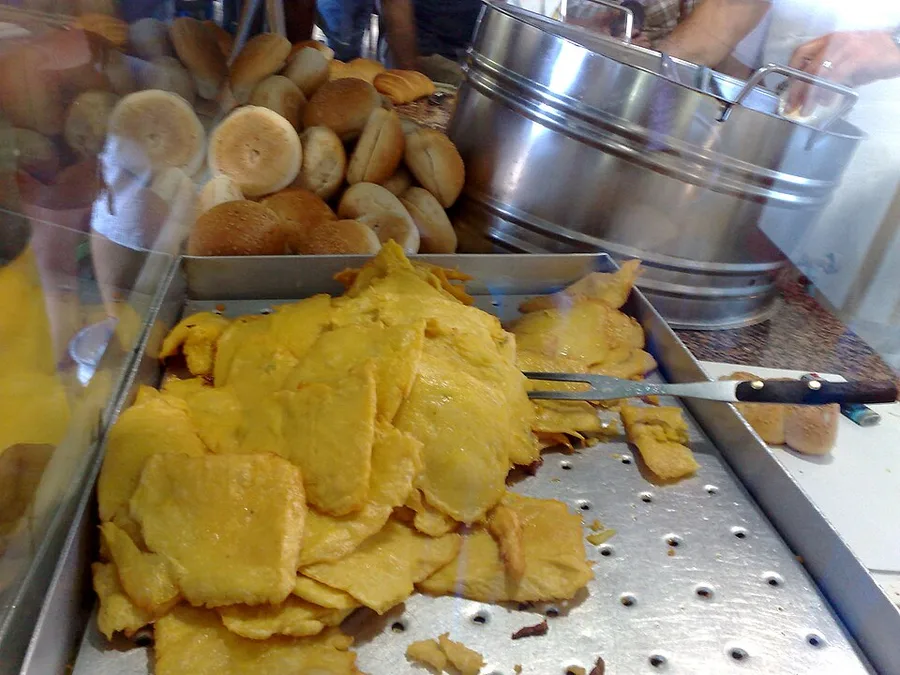 Dedda71 · CC BY 3.0
sicilia · 4-7 €/kg
Chickpea flour and water cooked like polenta, spread very thin, cooled, cut and fried. Thirty seconds a side in very hot oil, then inside soft bread with lemon. In Palermo they cost about as much as a coffee and are eaten standing up.
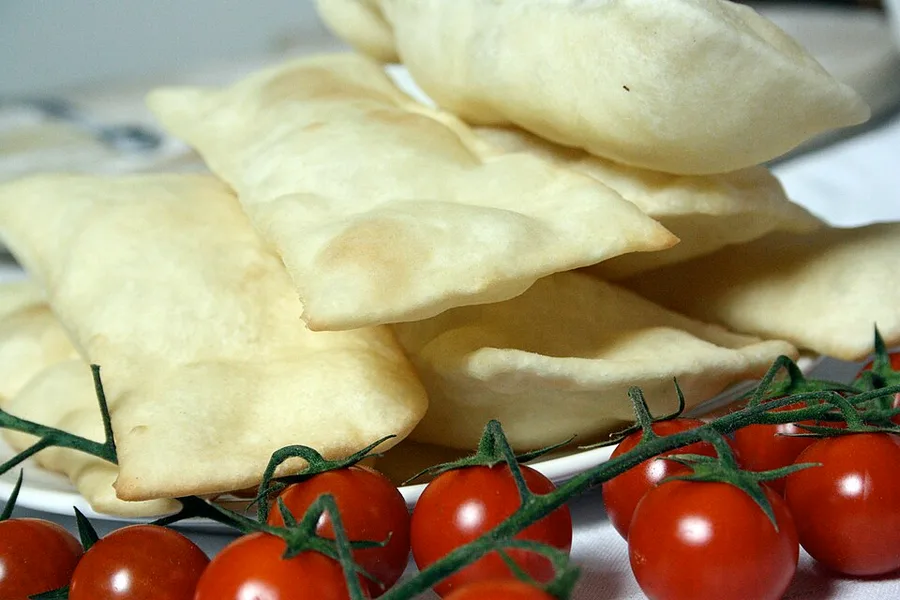 Nerodiseppia · CC BY-SA 3.0
emilia romagna · 5-8 €/kg
A diamond of bread dough in boiling lard, puffing up like a cushion. Within a minute of the pan or not at all: once it collapses it is over. Lard is not interchangeable with seed oil, because both the scent and the way it puffs change.
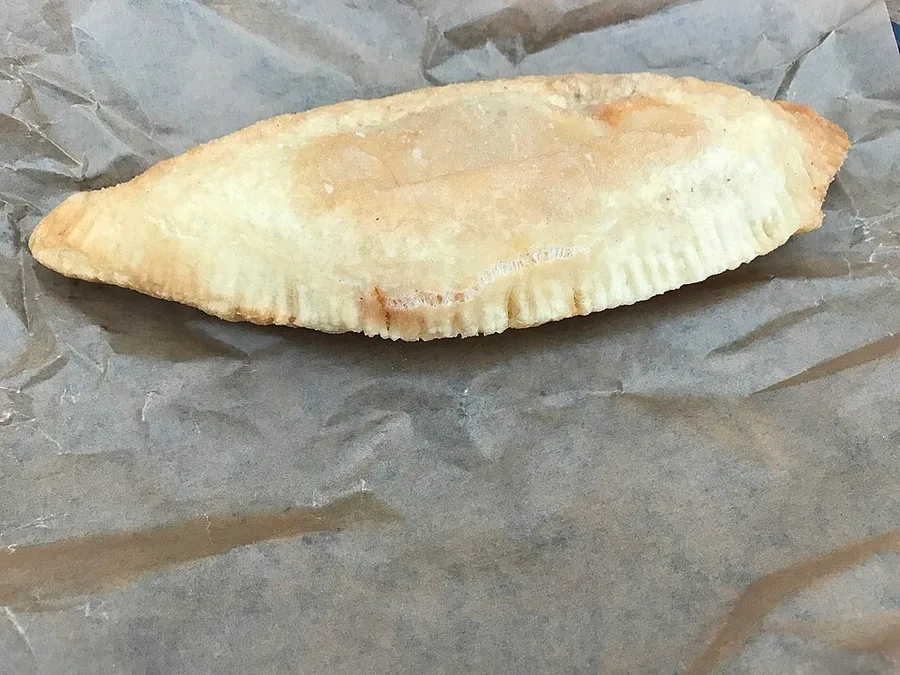 Benoît Prieur · CC0
puglia · 6-10 €/kg
A half-moon of pizza dough filled with tomato and mozzarella, deep-fried. Seal the edge properly, because mozzarella that escapes burns in the oil and spoils everything fried after it. It is not a calzone: that one is baked.
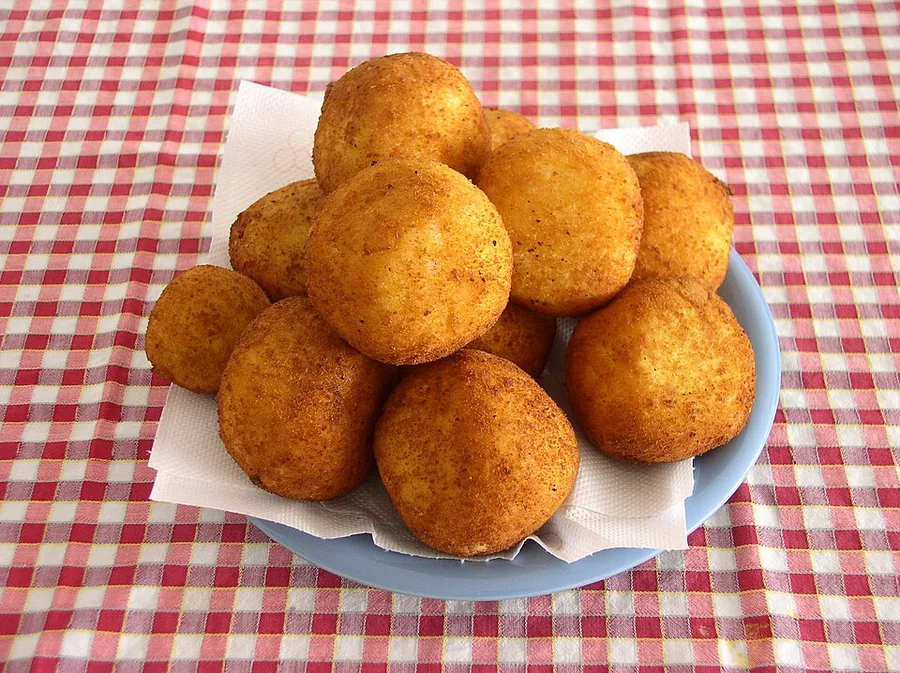 Gmelfi · Public domain
sicilia · 6-9 €/kg
Balls of saffron rice, stuffed, crumbed and fried: ragù and peas in the classic version, béchamel and ham in the butter one. In Palermo they are arancine and round, in Catania arancini and pointed, and the argument over the name will not end.
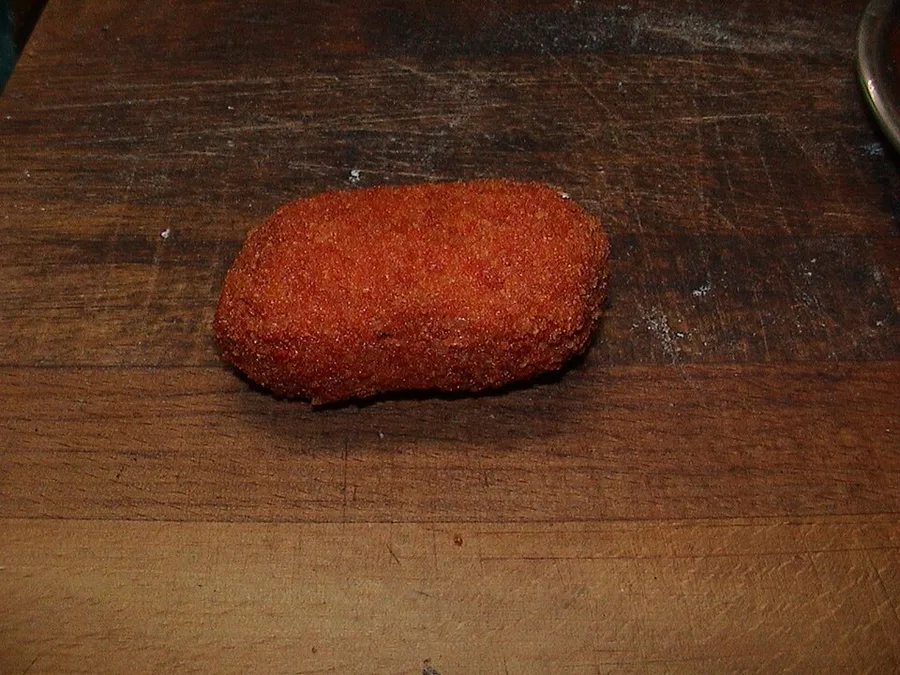 FrederikBianko · CC BY-SA 3.005
Supplì
lazio
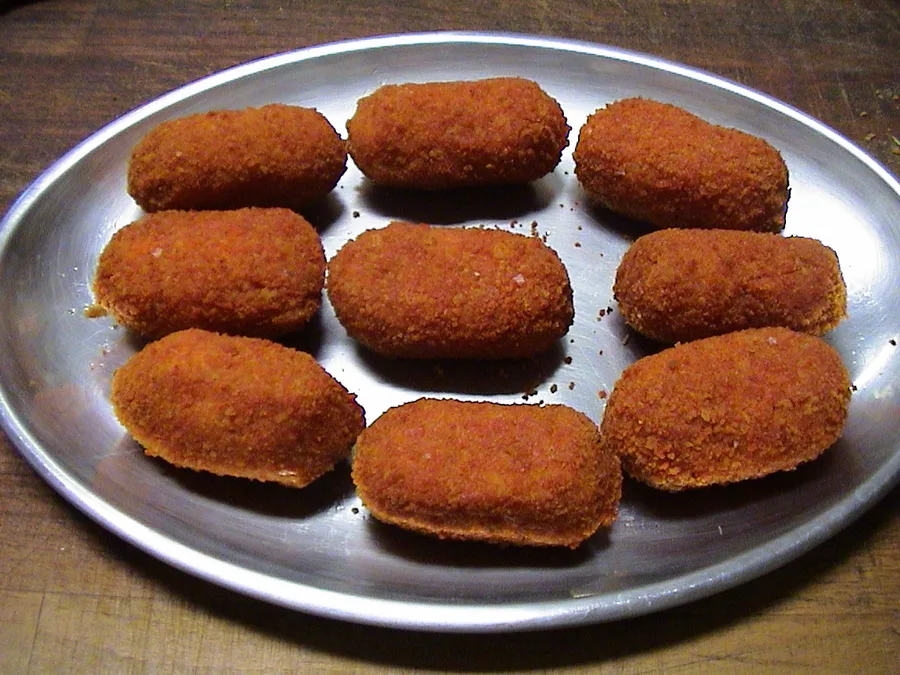
The Roman rice croquette: rice cooked in tomato sauce, a heart of mozzarella, crumbs, frying. It is called al telefono because breaking it draws a thread of cheese. What separates it from an arancino is the rice, cooked in the sauce rather than dressed with it.
 Manuela Zangara · CC BY-SA 2.0
marche · 3 h
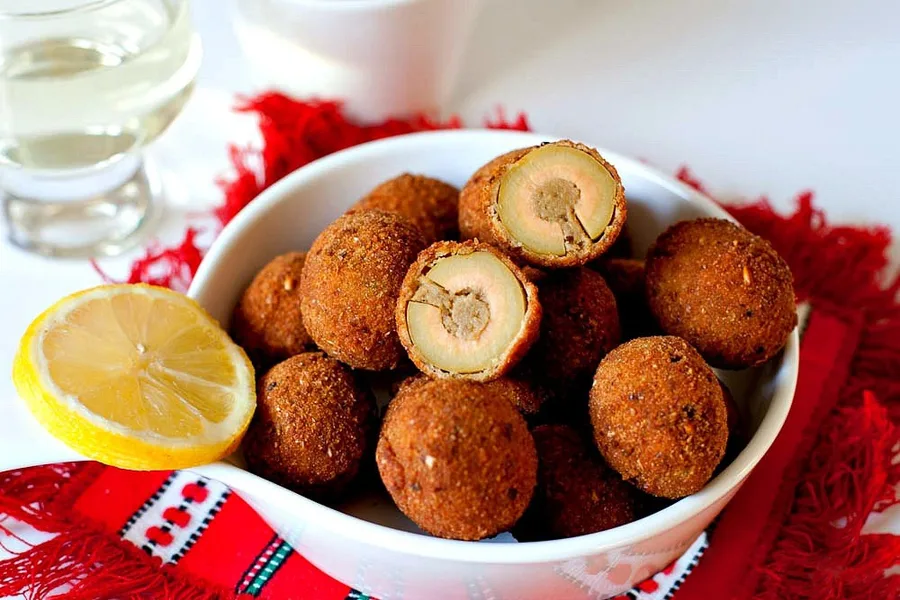
Tender green Ascoli olives, stoned in a spiral, filled with three cooked minced meats, crumbed and fried. Three hours' work for an antipasto: which is why they are made in quantity and frozen already crumbed, before frying.
sicilia · 1 h 40′
A hundred minutes between rice, ragù, shaping and frying, and the step that decides everything is the cooling: warm rice will not hold its shape and the ball opens in the oil. Oil at a hundred and seventy degrees, six minutes, a few at a time.
 FrederikBianko · CC BY-SA 3.0
lazio · 2 h 30′
Two and a half hours, mostly waiting: rice cooked in the sauce has to cool completely before being shaped around the cube of mozzarella. Crumb twice where the crust has to survive a long fry.
lazio · 55′
Fried twice: first at low temperature to cook the heart, then very hot to open the leaves into a flower and make them glassy. Between the two the artichoke is pressed down on the board. It is the dish of the Roman ghetto and it wants the romanesco mammola.
campania · 35′
Small whole fish, floured and dropped into boiling oil, thirty-five minutes in all: red mullet, small hake, baby squid, anchovies. Fry a few at a time, because the oil temperature must not drop, and salt them straight out of the pan.
campania · 1 h
A disc of pizza dough folded over ricotta, pork cracklings and pepper and deep-fried: it appeared in postwar Naples, when the ovens were destroyed and the dough was not. One hour, and the edge is sealed with wet fingers.
 Salvatore Capalbi · CC BY-SA 2.012
Zeppole
campania · 6-10 €/kg
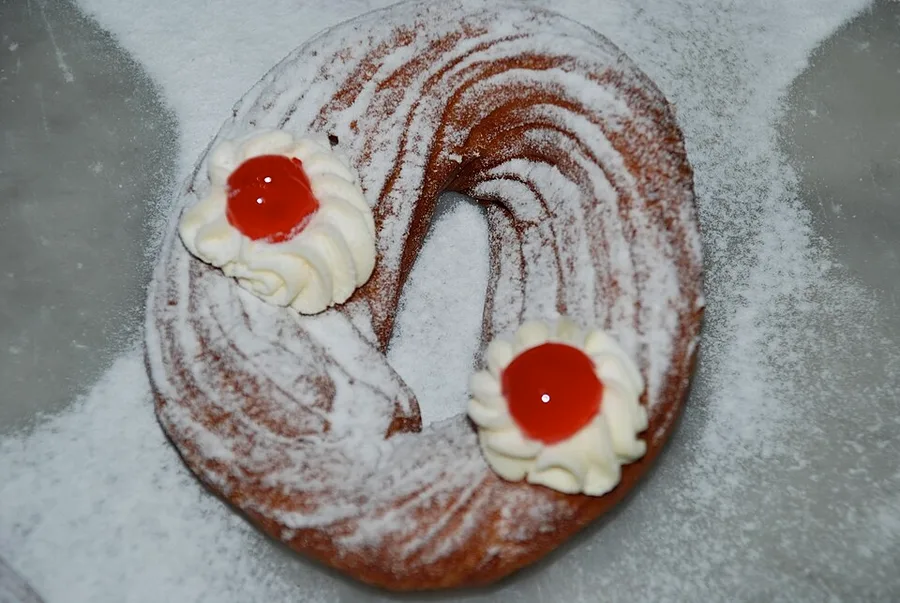
The name covers two different sweets: the zeppola di San Giuseppe, choux pastry with custard and sour cherry, and the fried leavened zeppole sold on the street. Both want oil at a hundred and seventy and no hurry: hotter gives colour outside and raw inside.
One last thing
Three numbers solve nearly every frying problem. A hundred and seventy degrees for large or stuffed pieces, a hundred and eighty for thin things, and a thermometer instead of a wooden spoon. A few pieces at a time, because everything that goes in lowers the oil temperature, and below a hundred and fifty the food starts absorbing. And salt goes on straight out of the oil, while the surface is still damp: later it will not stick and ends up at the bottom of the plate.
The questions this list answers
These are real questions put to an AI assistant, in the period when Bing cited this site among its sources to answer them. The number is how many times we were cited. We read them in Bing Webmaster Tools, under AI performance, and they decide what goes on this page rather than the other way round.
- zeppole600 citations
- panzerotto373 citations
- frittura di paranza179 citations
- what is zeppole28 citations
- paranza pesce20 citations
- arancini siciliani ricetta originale7 citations
- supplì5 citations
Frequently asked questions
What is the right frying temperature?
A hundred and seventy degrees for large or stuffed pieces such as arancini, supplì and panzerotti, because the heat has to reach the centre without burning the surface. A hundred and eighty for thin things such as panelle and small fish, where cooking is a matter of seconds. Below a hundred and fifty, food absorbs oil instead of repelling it.
Why does fried food come out greasy?
Because the oil was too cold. At the right temperature the surface water evaporates at once and forms a barrier of steam that keeps the fat out; if the oil is cold, that barrier never forms and the oil goes in. The other cause is crowding the pan, which collapses the temperature.
What is the difference between arancino and supplì?
The rice. In the Roman supplì the rice cooks inside the tomato sauce; in the Sicilian arancino it is saffron rice, dressed, with the ragù in the filling. The shape differs too, cylindrical for supplì, round or pointed for arancini, and so does the crumbing.
What is frittura di paranza?
The mixed fry of small whole fish, the catch the paranza, the inshore trawler, brought to land: red mullet, small hake, baby squid, anchovies. It is floured and fried whole, without much cleaning, and eaten with the hands straight out of the oil.