Twelve Italian dishes made with yesterday's bread
Panzanella, pappa al pomodoro, ribollita, acquacotta, canederli: bread as the body of the dish. And then the toasted crumbs that replace cheese across half of Italy.
Stale bread is not a leftover to be recycled: in a dozen Italian dishes it is the main ingredient, the one that gives body. The reason is starch. Dry bread absorbs liquid and releases starch, and starch binds: in a kitchen with no cream and little butter it was the only thickener available.
The dishes fall into two families. In the first the bread breaks down and becomes the mass: pappa al pomodoro, ribollita, acquacotta, panzanella. Here the type of bread matters: unsalted Tuscan bread, made only of flour, water and leaven, dissolves into cream, whereas an oil-enriched or sliced loaf turns rubbery and stays in pieces.
In the second family the bread is grated and toasted, and does the work of cheese. In Sicilian pasta con le sarde and in orecchiette with turnip greens, toasted crumbs replace pecorino, and not out of poverty: with fish and with bitter greens cheese would bury the dish, while crumbs add crunch and no fat. It is a technical choice, documented across the south.
toscana · 30′
Two or three day old unsalted Tuscan bread, soaked and squeezed, with tomato, onion, basil and oil. Half an hour and no cooking: the bread must be squeezed properly, or the water dilutes the dressing.
toscana · 1 h 5′
Here the bread has to break down completely: it is the dish that shows whether the bread was the right one, because an oil-enriched or industrial loaf turns rubbery instead of creamy.
toscana · 4 h 10′
Unsalted bread, cannellini and black kale, cooked once and boiled again the next day. The second cooking is the recipe: it is what melts the bread into the broth.
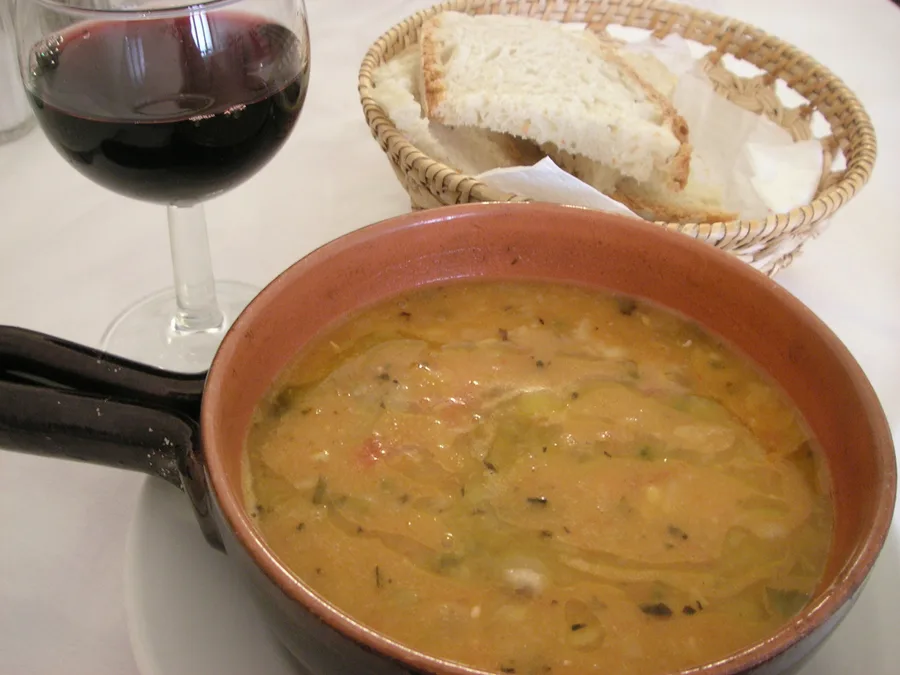 Fooding Around · CC BY 2.0
toscana · 1 h 50′
Onions stewed for half an hour, celery and tomato poured over stale bread, with a poached egg and pecorino in each bowl. The bread sits at the bottom and the broth arrives over it boiling.
trentino alto adige · 50′
Stale bread soaked in milk, bound with egg, flavoured with speck. The balance between soaking and flour is everything: too much flour makes them rubbery, too much milk and they fall apart in the broth.
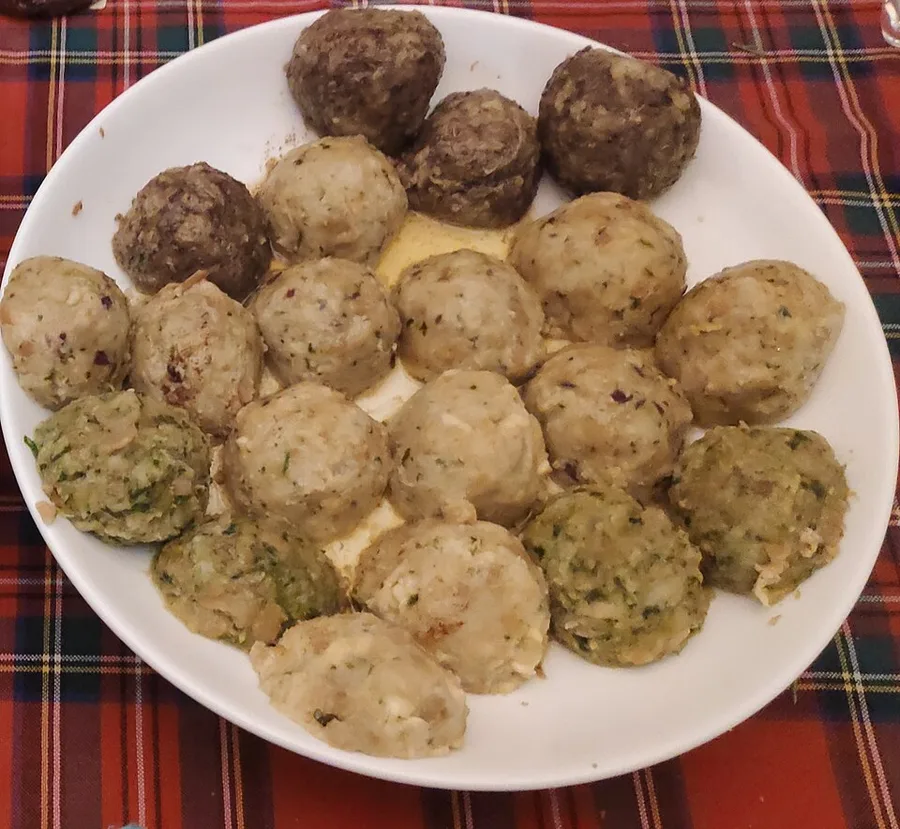 Nirhan · CC BY-SA 4.0
trentino alto adige · 12-18 €/kg
In the mountains bread was never thrown away: these are the proof, served in broth or dry with melted butter. The Tyrolean version uses white bread a few days old, never fresh.
campania · 1 h
The mussels sit over slices of twice-baked bread that soak up the base: without that bread the sauce stays in the plate and the dish does not hold. The bread is structure rather than accompaniment.
sicilia · 1 h 10′
Toasted breadcrumbs instead of cheese: with fish, pecorino would bury everything. The crumbs add crunch without fat, and it is a technical choice common across the south.
puglia · 1 h 15′
Anchovies melted in oil, garlic, chilli and toasted crumbs over the top: turnip greens are bitter and cheese would mute them, crumbs do not. Pasta and greens cook in the same pot.
 Manuela Zangara · CC BY-SA 2.0
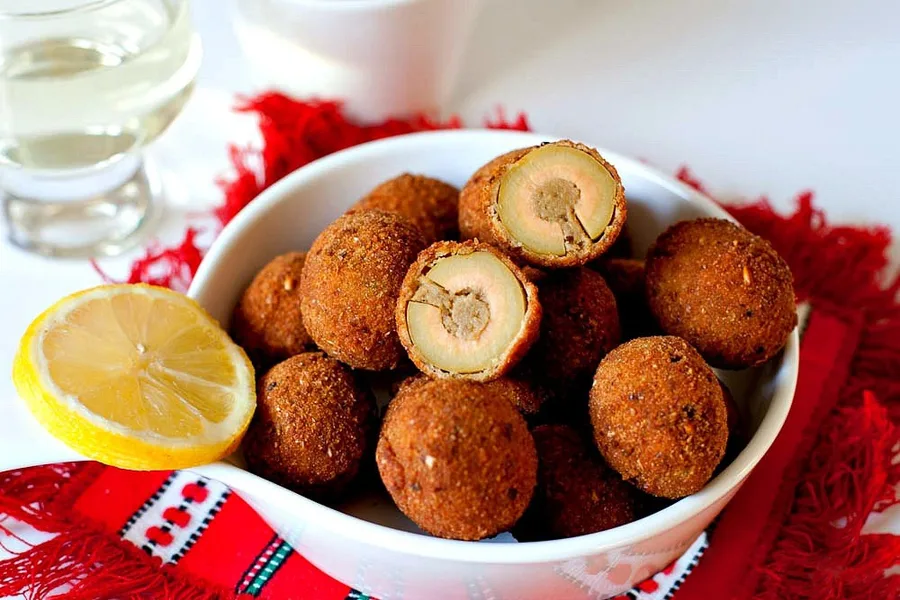
marche · 3 h
Here the breadcrumbs are the shell: they protect the filling during frying and give the crust. Where the crust has to survive a long fry you crumb twice, and the crumbs must be fine and dry.
lombardia · 40′
Fine crumbs from stale white bread, not industrial coating: the difference shows in the crust, which stays thin and attached instead of flaking off in the butter.
 FrederikBianko · CC BY-SA 3.0
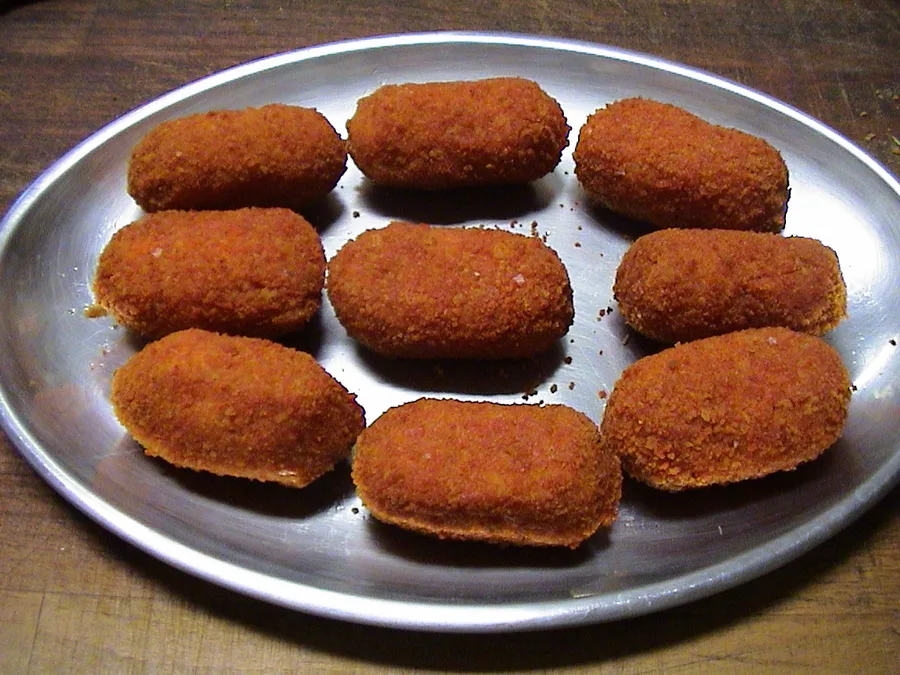
lazio · 2 h 30′
Crumbs over rice cooked in tomato sauce, with a heart of mozzarella. The rice must cool completely before shaping, or the supplì opens in the oil and the crumbs count for nothing.
One last thing
The right bread changes the result more than the recipe does, and the rule is simple: you want a bread made only of flour, water, leaven and, where present, salt. Unsalted Tuscan bread is the limit case because it does not even have the salt, which is why it breaks down without turning rubbery. Breads with oil, milk, butter or sugar in the dough do not dissolve: the fats coat the starch and prevent absorption, and the result is wet bread that stays in lumps inside the soup. An industrial sliced loaf, with its emulsifiers, is the worst candidate, and not out of snobbery: it is a question of structure.
The questions this list answers
These are real questions put to an AI assistant, in the period when Bing cited this site among its sources to answer them. The number is how many times we were cited. We read them in Bing Webmaster Tools, under AI performance, and they decide what goes on this page rather than the other way round.
- tuscan schiacciata bread95 citations
- ricetta tradizionale orecchiette cime di rapa5 citations
- pane di matera95 citations
- altamura bread135 citations
- tigella234 citations
- matera bread24 citations
- pane di altamura dop27 citations
Frequently asked questions
Which bread is used for panzanella and pappa al pomodoro?
Unsalted Tuscan bread, two or three days old. It is made only of flour, water and leaven, so it breaks down in liquid and turns creamy. Breads with oil, milk or butter do not dissolve and stay as rubbery lumps.
Why does pasta con le sarde use crumbs instead of cheese?
Because with fish, cheese buries the dish, whereas toasted crumbs add crunch without bringing fat. It is a technical choice common across the south, and it holds for bitter greens such as turnip tops too.
How do you use up stale bread?
It depends how dry it is. If it is hard but not dry, it goes into soups and meatballs; if it is completely dry, grate it and toast it in a pan with a little oil, and it becomes the crumb used to finish fish and vegetable pastas.
What is the difference between breadcrumbs and toasted crumb?
Breadcrumbs are dry bread ground fine, used for coating; toasted crumb is bread broken more coarsely and fried in oil, used as a crisp finish over pasta. In the second you feel the bite, in the first you do not.