Twelve Italian soups, in order of thickness
Genoese minestrone, Triestine jota, ribollita, acquacotta, pasta e fagioli, farro soup, risi e bisi, panissa, broad bean purée. From the loosest to the thickest: in Italy soup is a whole meal, eaten with a spoon.
Italian soup is not a liquid starter: it is the one-dish meal of farming kitchens, and its thickness says how poor the house was. Where there was stale bread, the soup was poured over it and became solid: ribollita, acquacotta, pappa. Where there were pulses, part of the beans was puréed to bind without adding fat.
That is the order of this list, by thickness. At the top are broths with something in them, canederli and tortellini, where the liquid is the dish. At the bottom are pulse creams you could cut with a spoon, the Apulian broad bean purée and the panissa of Vercelli, which is not a risotto and gets no mantecatura.
Nearly all of them share one technical detail: the salt goes in at the end. With beans and farro, salt added early toughens the skins and lengthens the cooking, sometimes by half an hour. The other detail is fat: there is no butter and no cream in these recipes, and what binds them is the starch of the pulses, the bread, or a pounded paste of lardo and garlic.
trentino alto adige · 50′
Dumplings of stale bread softened in milk, bound with egg and flavoured with speck, served in meat broth. The critical point is the balance between soaking and flour: too much flour makes them rubbery, too much milk and they fall apart in the broth.
emilia romagna · 5 h
Pastry rolled very thin, a filling of pork loin, ham, mortadella and Parmigiano, and a broth of capon and beef. The reference recipe is the one lodged in Bologna, and the broth is not a vehicle: it is half the dish and it is made the day before.
veneto · 1 h 10′
A Venetian soup of rice and new peas: thicker than a soup, looser than a risotto, eaten with a spoon. The broth is made from the pods, which elsewhere are thrown away, and that is what separates it from a pea risotto.
campania · 1 h
The dish of Maundy Thursday in Naples: mussels in a tomato sauce made genuinely hot with chilli, served over slices of twice-baked bread that soak up the base. The bread is not an accompaniment, it is how the dish holds together.
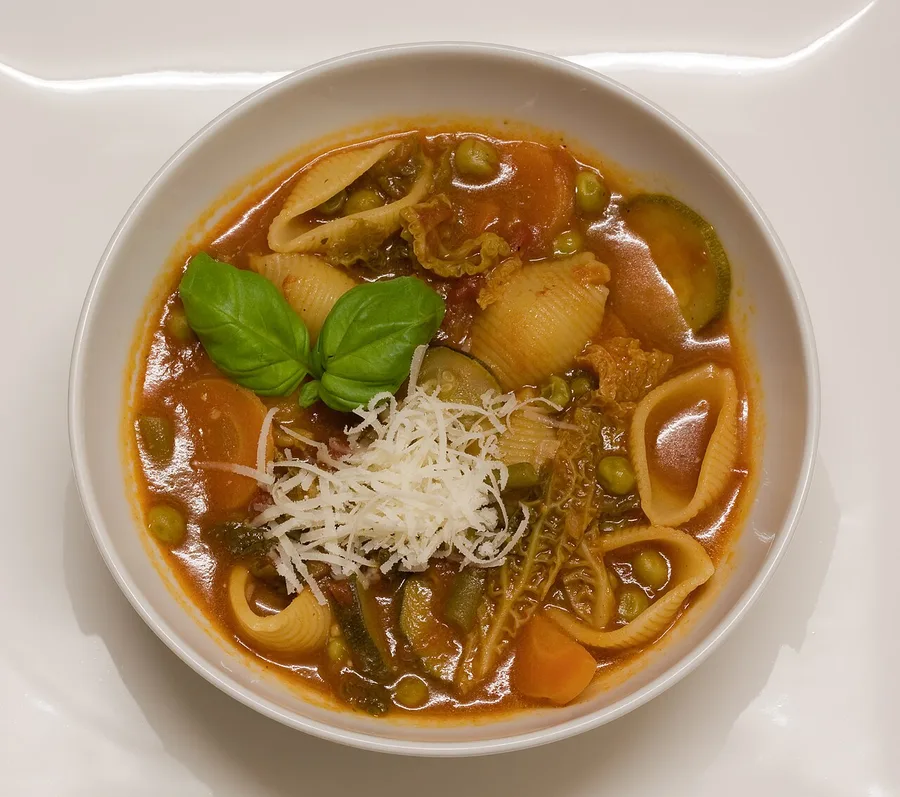 Julie Anne Workman · CC BY-SA 3.0
liguria · 2 h 5′
Vegetables from the Ligurian garden and beans, cooked with no soffritto, and pesto added off the heat. Temperature is the critical point: cooked pesto oxidises and turns bitter, so it goes into the pot once it is already off the stove.
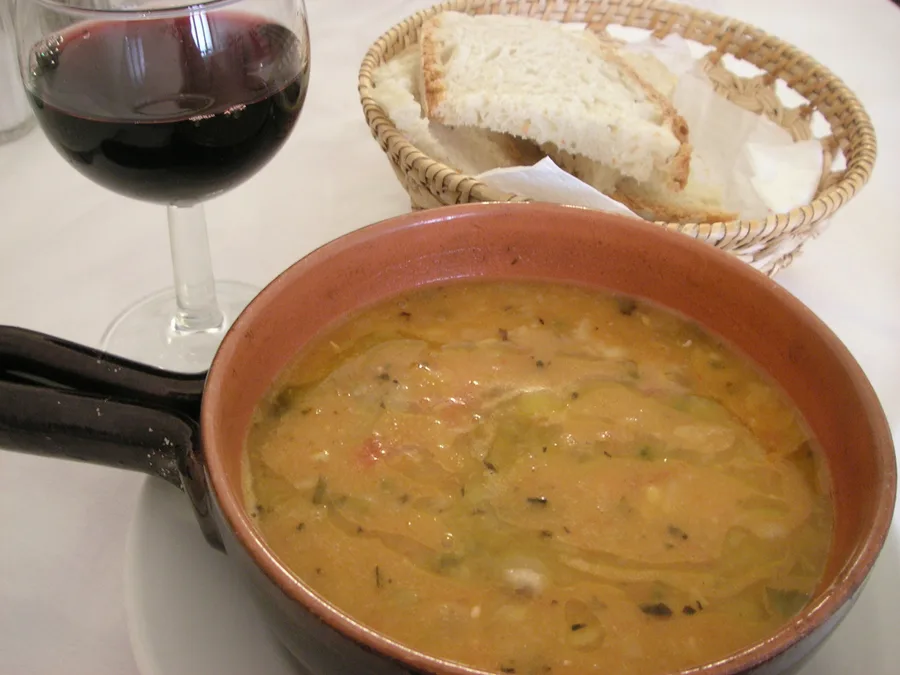 Fooding Around · CC BY 2.0
toscana · 1 h 50′
Stewed onions, celery and tomato poured over stale bread, with a poached egg and pecorino in each bowl. The critical point is the onions, stewed for half an hour over low heat: that is where the flavour of a four-ingredient dish comes from.
toscana · 2 h 25′
Farro della Garfagnana IGP and beans, a base of pounded lardo, and part of the pulses puréed to bind. Soaking is the critical point: whole hulled farro wants hours in water, and without them it stays hard while the beans collapse.
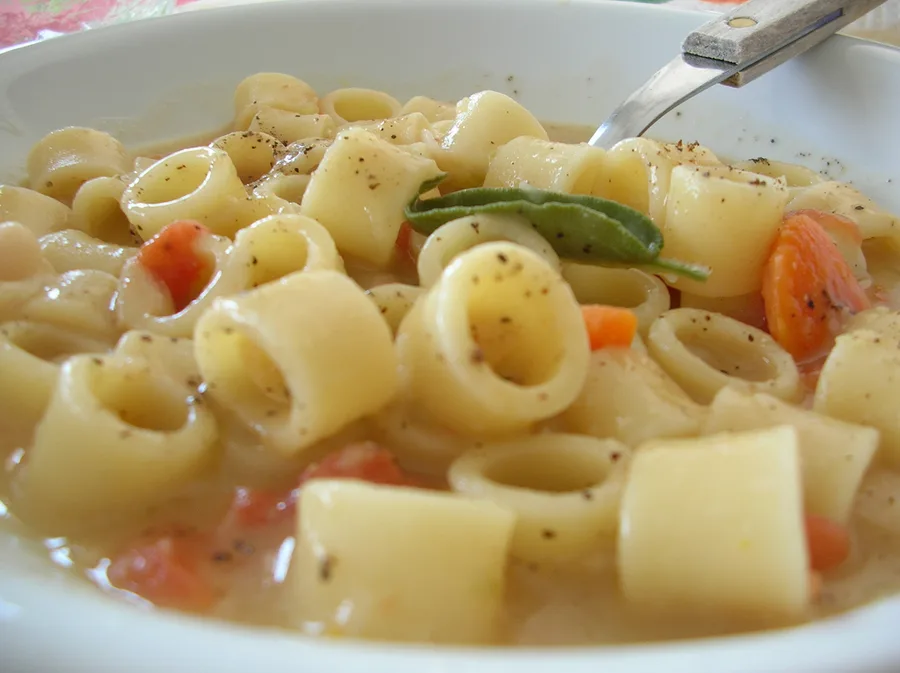 walimai73 · CC BY-SA 2.0
veneto · 2 h 50′
Lamon borlotti, part puréed and part left whole, with the pasta cooked in the pot. Salt goes in only at the end, because added early it toughens the beans' skins: that is why sometimes they never soften at all.
- 09
Jota
friuli venezia giulia · 2 h 55′
A thick soup of sour sauerkraut, beans and potato, with smoked pork and a pounded paste of lardo, garlic and flour to bind it. The balance between the sourness of the kraut and the sweetness of the potato is what makes it Triestine rather than Austrian.
toscana · 4 h 10′
Unsalted Tuscan bread, cannellini and black kale, cooked once as a soup and boiled again the next day. The second cooking is not a way of using leftovers: it is the recipe, and without it the bread has not yet merged with the broth.
piemonte · 2 h 5′
Baraggia rice cooked with Saluggia beans, salam d'la duja and pork rind, deglazed with red wine and brought up with the bean broth. It is not a risotto: there is no mantecatura, and the body comes from the pulses' starch instead of butter.
puglia · 1 h 50′
Dried split broad beans cooked until they collapse and worked to a cream with a spoon, served with boiled wild chicory and raw oil. Salt at the end and no blender: the cream is made by moving the spoon against the bottom of the pot.
One last thing
Three of these soups are better the next day, and not as a concession to leftovers. In ribollita the second boiling is in the name and exists to melt the bread into the broth; pasta e fagioli thickens because starch keeps coming out even cold; jota balances itself, as the sourness of the kraut spreads through. The other nine do not follow that rule: minestrone with pesto loses its scent within hours, canederli fall apart, and risi e bisi has to be eaten straight away because the rice keeps absorbing.
The questions this list answers
These are real questions put to an AI assistant, in the period when Bing cited this site among its sources to answer them. The number is how many times we were cited. We read them in Bing Webmaster Tools, under AI performance, and they decide what goes on this page rather than the other way round.
- minestrone alla genovese294 citations
- minestrone genovese65 citations
- minestrone triestino49 citations
- fagioli zolfini48 citations
- what are castelluccio lentils1,017 citations
- tortellini in brodo ricetta60 citations
- tortellini ricetta originale93 citations
Frequently asked questions
Why is pesto added off the heat in Genoese minestrone?
Because cooked basil oxidises: the colour turns brown and the taste becomes bitter and metallic. The pesto goes in once the pot is already off the stove, and is stirred through at once. For the same reason Ligurian minestrone has no soffritto: the vegetables start from cold in water.
When do you salt a pulse soup?
At the end. Salt added at the start toughens the skins of beans and farro and lengthens the cooking, sometimes considerably. This holds for pasta e fagioli, farro soup and broad bean purée: taste and salt once the pulses are already soft.
What is the difference between panissa and risotto?
The mantecatura and the fat. The panissa of Vercelli is not finished with butter and cheese: its body comes from the starch of the beans and from pork rind, and the rice cooks in the pulse broth. A risotto, by contrast, is bound off the heat with cold butter and grana.
Is ribollita eaten the next day?
Yes, and that is the point of the name: it is cooked once as a soup of bread, beans and black kale, left to rest and boiled again the following day. The second cooking is what melts the bread into the broth, and without it the dish is another soup.