Fourteen Italian recipes and the step where they are won or lost
Temperature in carbonara, the flame in a braise, the order in a scottiglia, the rind in porchetta, the cooling in a supplì, iced water in puntarelle. One error each, and these are they.
Every recipe on this site states its critical point, the step where the dish is decided. Lined up, those points say something cookbooks rarely do: the difficulty of a dish is not in the length of its ingredient list, it is in one gesture, and nearly always that gesture is a temperature or an order.
Temperatures are half the cases. Above sixty-five degrees the egg in a carbonara sets and the cream splits; above seventy the aromatic molecules of black truffle evaporate and only the colour remains; below three hundred the rim of a pizza does not puff. In all three the window is seconds or a few degrees wide, and no quantity of ingredients widens it.
The other half are orders and sequences. In a scottiglia throwing the meats in together means raw beef by the time the chicken has fallen apart; in orecchiette with turnip greens the greens go in first and the pasta after, in the same water; in the tiella of Bari the order of the layers cannot be corrected halfway, because tasting would mean destroying the dish.
lazio · 25′
The critical point is not the recipe but the temperature: above sixty-five degrees the egg sets and the cream splits. The pan comes off the heat and is left to cool for a minute.
piemonte · 3 h 40′
The flame: if the liquid boils instead of simmering, the collagen does not melt and the meat stays dry and stringy even after three hours. In an oven at a hundred and forty degrees the problem disappears.
umbria · 1 h 2′
Heat: the black truffle goes in off the flame, because above seventy degrees the aromatic molecules evaporate and only the colour is left. The anchovy melts at a very low temperature.
campania · 1 h 10′
Heat: below three hundred degrees the rim does not puff and the mozzarella dries before the base is cooked. At home you take the oven to maximum and use an already hot tray.
lazio · 7 h
The rind: it must stay dry from start to finish, because any liquid makes it rubbery instead of crisp. Six or eight hours, with the last part uncovered.
 FrederikBianko · CC BY-SA 3.0
lazio · 2 h 30′
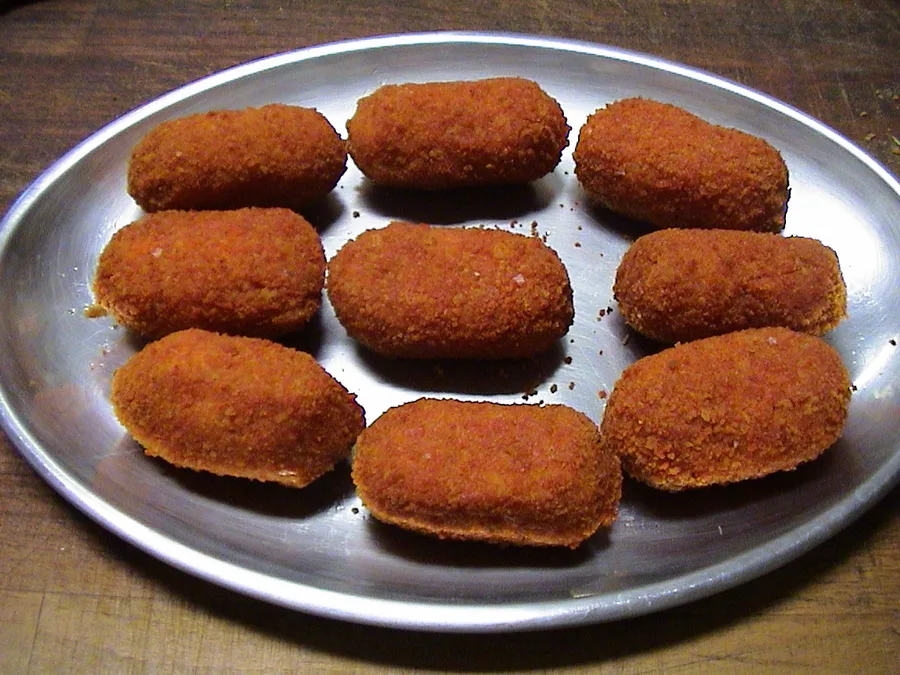
The rice: it has to be cooked dry in the sauce and cooled for hours, or in the fryer the croquette opens and the filling escapes into the oil. It is not a step that can be shortened.
 Michel Chauvet · CC BY-SA 3.0
lazio · 40′
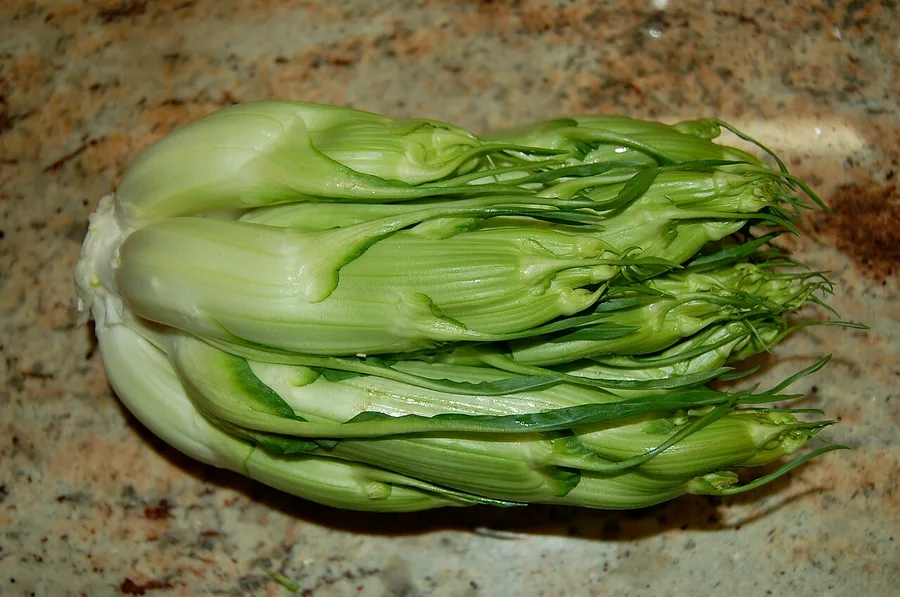
The water: it must be icy, and the puntarelle have to be dried thoroughly before dressing. Icy water makes them curl; water left on them dilutes the anchovy sauce.
toscana · 2 h 45′
The order in which the meats go in: throwing them in together means raw beef by the time the chicken has fallen apart. Five meats, five timings, one pot.
marche · 1 h 50′
From the moment the fish go into the pan there is no more stirring: you shake the pan by the handle, or the pieces break up. Thirteen kinds of fish, no spoon.
 Fooding Around · CC BY 2.0
toscana · 1 h 50′
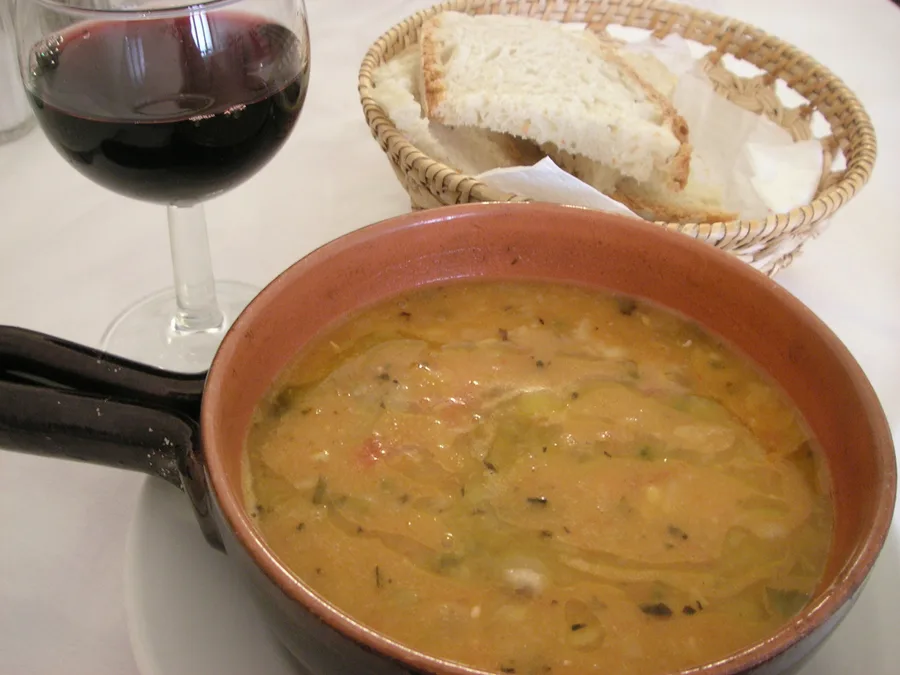
The onions: stewed for half an hour over the lowest heat without colouring. If they fry, the whole dish tastes of soffritto, and a four-ingredient dish has nowhere to hide the error.
veneto · 1 h 20′
Water: every gram the potato absorbs while boiling has to be offset with flour, and too much flour turns the gnocco rubbery. Potatoes boiled in their skins and mashed hot.
 Julie Anne Workman · CC BY-SA 3.0
liguria · 2 h 5′
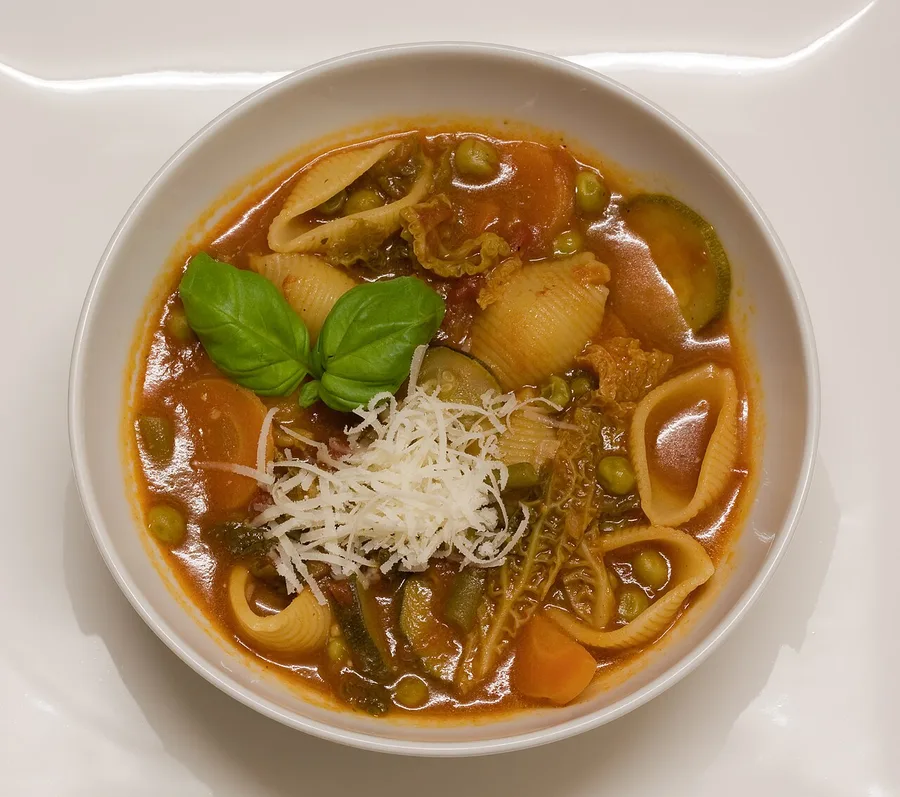
Temperature: cooked pesto oxidises, the basil turns bitter and in two minutes the dish loses the reason it exists. The pesto goes in with the pot already off the stove.
- 13
Tiramisù
veneto · 45′
The dip: one second a side, because the savoiardo keeps absorbing for twenty minutes after you put it down. The coffee must be cold, or the biscuit collapses at once.
lombardia · 2 h 40′
The pumpkin is roasted, not boiled: boiled it stays wet and the filling has to be corrected with breadcrumbs, which dry it and thin the flavour. It is a decision made an hour before mixing.
One last thing
Taken together, these fourteen critical points reduce to three rules. First: heat is an ingredient, and in dishes worked with egg, cheese, truffle or basil you work off the flame. Second: whatever has to melt, collagen or rind, wants time at a low temperature, and boiling is the enemy. Third: where there is a sequence, the sequence is the recipe, and it cannot be corrected by tasting halfway. None of the three is learned from an ingredient list, which is why every recipe page on this site states its critical point at the top.
The questions this list answers
These are real questions put to an AI assistant, in the period when Bing cited this site among its sources to answer them. The number is how many times we were cited. We read them in Bing Webmaster Tools, under AI performance, and they decide what goes on this page rather than the other way round.
- baccalà alla vicentina ricetta originale88 citations
- brasato al barolo1,208 citations
- brasato al barolo ricetta originale369 citations
- what is porchetta637 citations
- strangozzi al tartufo nero20 citations
- cosa sono le puntarelle60 citations
- minestrone alla genovese294 citations
- supplì5 citations
- tortelli di zucca mantovani, la ricetta originale217 citations
Frequently asked questions
What is the commonest mistake in carbonara?
Heat. Above sixty-five degrees the white sets and the sauce turns grainy: the pan comes off the heat and is left to cool for a minute before the egg goes in, and the cooking water is added hot but not boiling.
Why is black truffle added off the heat?
Because above seventy degrees the aromatic molecules evaporate and only the colour is left. With black truffle a moderate warmth is allowed, such as the tepid oil in which the anchovy melts; white truffle, by contrast, is never warmed at all.
Why do supplì open while frying?
Because the rice was not cooled enough. It has to be cooked dry in the sauce and left to cool for hours, better a night: warm or tepid it will not hold its shape, and in the oil the croquette opens and the filling escapes.
What is the critical point of a fish soup?
Not stirring. From the moment the fish go into the pan you shake it by the handle instead of turning with a spoon, or the pieces break up. The other point is the order of entry, from the broth fish to the shellfish.