Eleven Italian things eaten with the hands, by recipe
Arrosticini, abbacchio a scottadito, panelle in bread, panzerotti, gnocco fritto, Roman tray pizza, taralli, Jewish-style artichokes, paranza fry, agnolotti del plin, piadina.
In some Italian dishes the hands are not a licence but the recipe. Abbacchio a scottadito takes its name from the fact that it scalds: it is eaten straight off the fire, with the fingers, and waiting for it to cool is exactly the opposite of what the recipe asks. Arrosticini are pulled off the skewer with the teeth, in bunches.
The second group is street food, where the container is edible. Panelle are eaten inside soft bread, Roman tray pizza is bought by weight and folded, a panzerotto is held in a napkin because it is still frying, gnocco fritto is eaten within a minute of the pan with cured meat on top. In all three cases a plate and a fork would make the food worse, not more polite.
The third group is the most surprising: there are filled pastas made to be eaten with the hands. Agnolotti del plin, in the small version closed with a pinch, were served in Piedmont in a napkin, undressed, and taken with the fingers. It is not a restaurant legend: it is the reason they are so small.
abruzzo · 52′
Pulled off the skewer with the teeth, in bunches, straight off the canala: salt goes on at the end and the meat is not marinated. Fifty-two minutes, and no plate.
lazio · 28′
The name is the instruction: they scald, and they are eaten with the hands straight off the fire. Twenty-eight minutes, small cutlets, and the resting given to other meats is skipped here.
 Dedda71 · CC BY 3.0
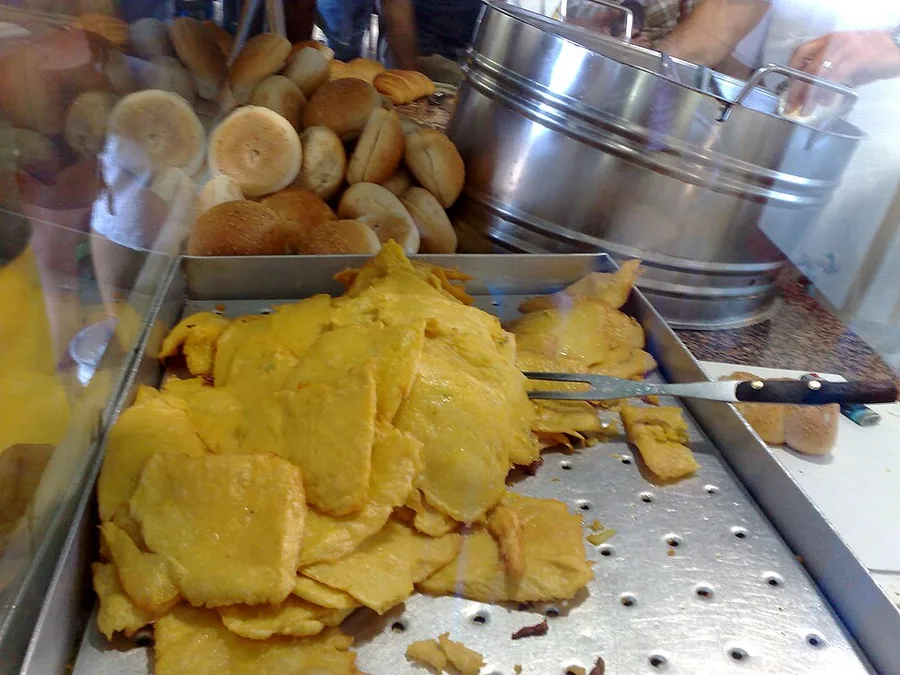
sicilia · 4-7 €/kg
Chickpea fritters inside soft bread with lemon squeezed over: in Palermo they cost about as much as a coffee and are eaten standing. The bread is the plate and the napkin at once.
 Benoît Prieur · CC0
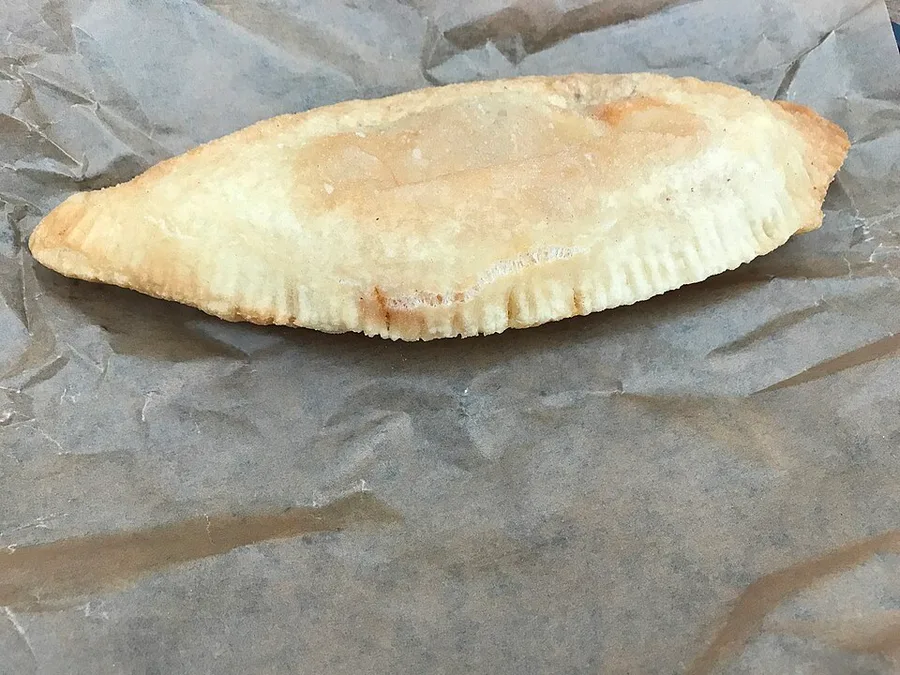
puglia · 6-10 €/kg
A fried half-moon held in a napkin because it goes on frying inside: eaten at once and with care, because boiling tomato on the first bite is an Apulian classic.
 Nerodiseppia · CC BY-SA 3.0
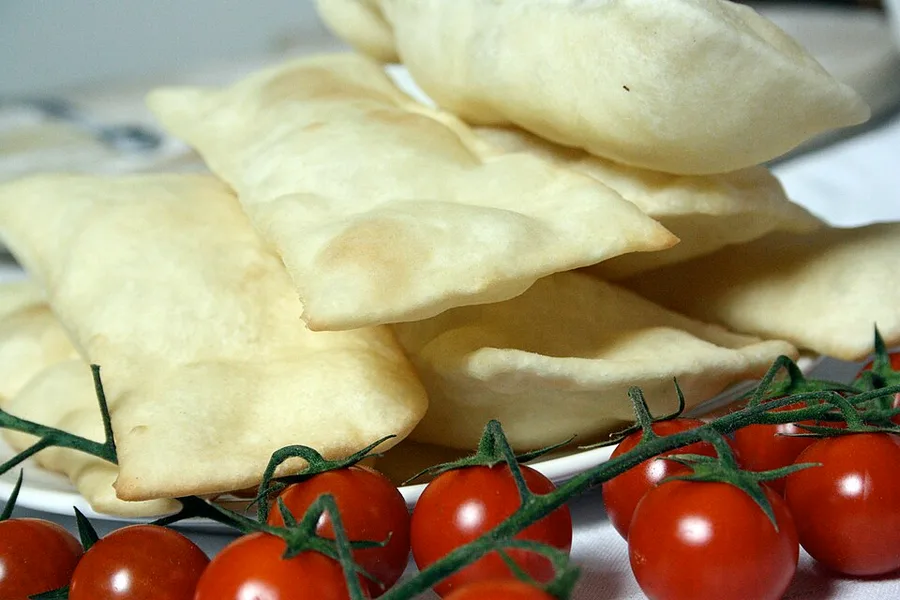
emilia romagna · 5-8 €/kg
Within a minute of the pan, with cured meat laid on top and folded inside: once it collapses it is over. No plate survives that minute, and in Emilia it is eaten standing by the fryer.
 JIP · CC BY-SA 4.0
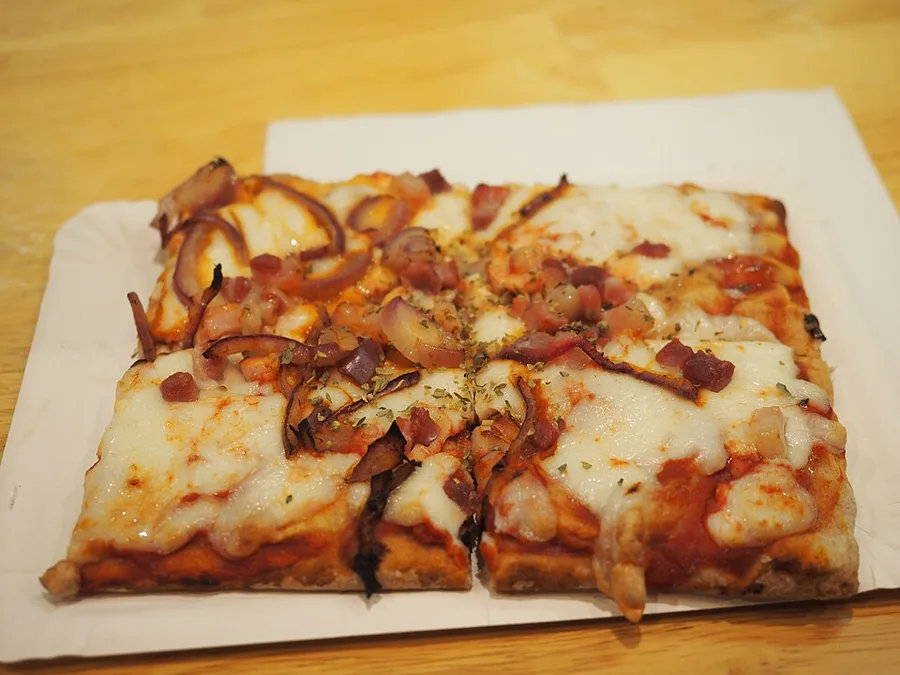
lazio · 12-22 €/kg
Bought by weight, you point at the piece, it is cut with scissors and folded in two inside its paper: it is the Roman format, and the crisp base exists precisely to take that fold.
 Haragayato · Public domain07
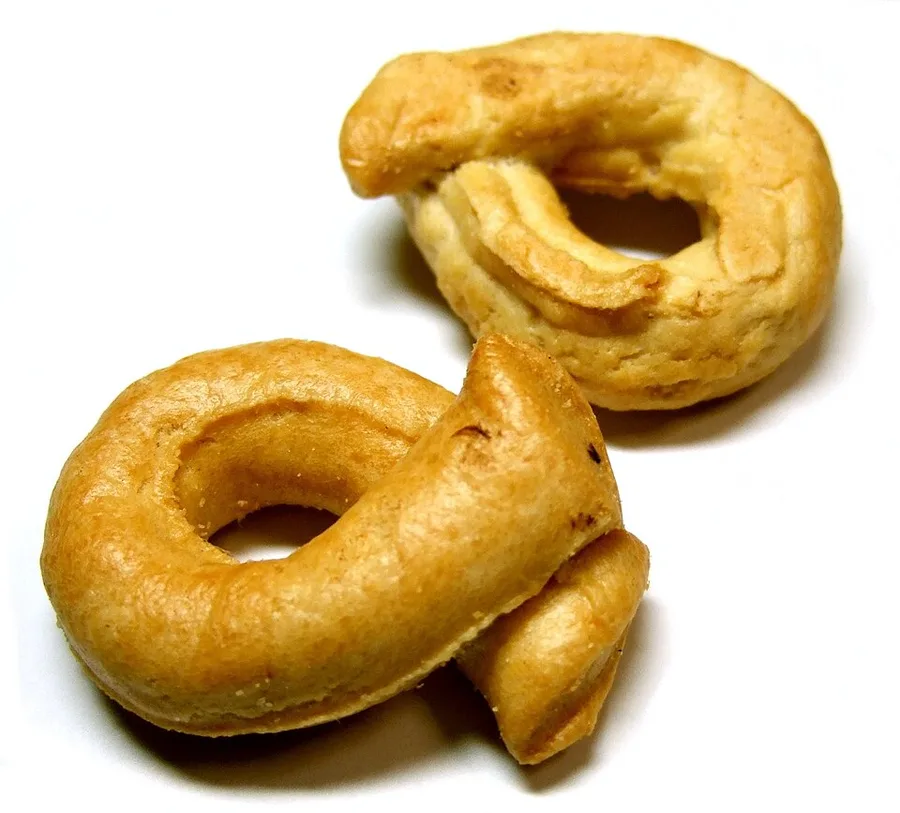
Taralli
puglia · 8-14 €/kg
Rings of dry dough with four ingredients, taken by the handful: they keep for weeks and leave the fingers clean. They are the simplest thing to put on a table before dinner.
lazio · 55′
Held by the stalk and eaten leaf by leaf, like a flower: the double frying exists to make the leaves brittle enough to snap between the fingers.
campania · 35′
Small whole fish, floured and fried, eaten with the hands straight out of the oil and salted at that moment: the bones are eaten too, which is why the fish are small.
piemonte · 2 h 45′
In the small version closed with a pinch they were served in a napkin, undressed, and taken with the fingers: that is why they are so small, not a restaurant affectation.
 Xaura · CC BY-SA 3.0
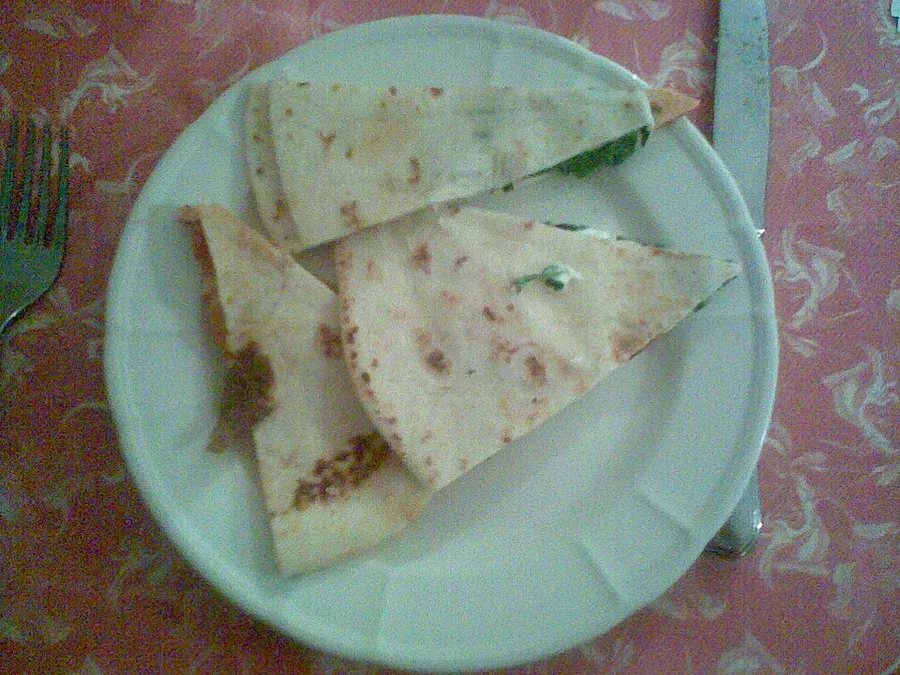
emilia romagna
Folded while hot, filled and eaten at once in the hand: cold it hardens and cracks at the fold. In Romagna it is bought at a kiosk and eaten walking.
One last thing
One technical reason holds nearly the whole list together, and it is not conviviality: it is temperature. Arrosticini, abbacchio, gnocco fritto, panzerotti, paranza fry, Jewish-style artichokes and piadina have a window of one or two minutes in which they are as they should be, and in that window there is no time to plate anything. Hands are the fastest way to take food from the pan to the mouth, and in these dishes speed is an ingredient. Where temperature does not matter, as with taralli, hands are merely the most convenient option.
The questions this list answers
These are real questions put to an AI assistant, in the period when Bing cited this site among its sources to answer them. The number is how many times we were cited. We read them in Bing Webmaster Tools, under AI performance, and they decide what goes on this page rather than the other way round.
- taralli738 citations
- panzerotto373 citations
- frittura di paranza179 citations
- what is agnolotti pasta127 citations
- tigella234 citations
- paranza pesce20 citations
- come fare la farinata di ceci6 citations
Frequently asked questions
Why is abbacchio called a scottadito?
Because it is eaten with the hands straight off the fire, when it scalds: the name describes the gesture and the moment. The resting given to red meat is skipped here, because the cutlets are small and cool quickly.
Are agnolotti del plin eaten with the hands?
In Piedmontese tradition the small version was served in a napkin, undressed, and taken with the fingers. That is also the reason for the tiny format: a two-centimetre raviolo is held between thumb and forefinger.
How do you eat a carciofo alla giudia?
Holding it by the stalk and pulling off the outer leaves one by one, like petals: the double frying makes them glassy and brittle. The heart stays creamy and is eaten last, with the stalk.
Why is paranza fry eaten bones and all?
Because the fish are small and frying makes the bones brittle and edible: red mullet, small hake, anchovies and baby squid are eaten whole, without cleaning. It is also why they are fried at high heat for a short time.