Sixteen Italian dishes in under an hour, properly
Cacio e pepe in seventeen minutes, gricia in twenty, carbonara in twenty-five. These are fast by construction rather than shortened versions of something else: here in order of time, with the step you cannot skip.
Half of Italian cooking is fast, for the same reason the other half is extremely slow: these were the dishes of people who worked. Shepherds, fishermen, factory hands and home cooks had twenty minutes and four ingredients, and out of that constraint came cacio e pepe, gricia, aglio e olio, spaghetti with clams.
The point is that speed does not remove technique, it concentrates it. In a five-hour dish a ten-minute error goes unnoticed; in a carbonara ten seconds above sixty-five degrees splits the sauce. So nearly every recipe below has a single step where it is won or lost, and each line names it.
The chart adds preparation and cooking. It does not count resting, of which there is little here, and it does not count the shopping: dried pasta, pecorino, anchovies and oil are pantry things, which is why these dishes get made on a Wednesday evening.
campania · 15′
Fifteen minutes and no pan: the colatura is emulsified cold with oil, garlic and parsley in a bowl, and the only cooking it gets is the heat of the just-drained pasta. The water is not salted at all, because three spoonfuls of colatura bring all the salt the dish needs.
lazio · 17′
Three ingredients and one trap, heat: above sixty-five degrees the pecorino tightens and releases its fat. The cream is built in a pan that has been off the flame for a minute, with very starchy cooking water, which is why the pasta is cooked in little water.
- 03
Gricia
lazio · 20′
Carbonara without egg and amatriciana without tomato: guanciale, pecorino, pepper. The guanciale is rendered over medium-low heat until the fat turns clear, and that fat is the sauce: pour it away and use oil and you are making a different dish.
sardegna · 22′
Twenty-two minutes, twenty of them the pasta. The bottarga is never cooked: it dissolves into warm oil off the heat, because above sixty degrees it turns bitter and dusty. Half grated into the cream, half shaved over the plate.
lazio · 25′
One yolk a head plus one whole egg, pecorino, guanciale, pepper, and no cream. The sauce is made off the heat in a pan that has dropped below sixty-five degrees: it is the only number that matters, and anyone who goes past it gets grated omelette.
liguria · 25′
Twenty-five minutes of wrist and no stove: garlic and salt, then pine nuts, then the basil a handful at a time with a turning motion, then the cheeses and finally the oil in a thread. The mortar is not folklore: blades cut and oxidise basil, marble crushes it and keeps it green.
lazio · 28′
Two or three minutes a side over embers and eaten with the hands, scalding: the name describes the method. The marinade carries no salt, which in two hours would draw out water and boil the chop instead of searing it; you salt at the end.
liguria · 29′
Ten minutes of work and four hours of waiting that do not count as work: the batter of chickpea flour and water rests, is skimmed and then goes into a scorching pan at two hundred and fifty degrees. Without the rest it tastes of raw flour, and no amount of baking fixes that.
toscana · 30′
No fire at all: stale Tuscan bread wetted for thirty seconds and wrung out, tomatoes salted in advance so their juice ends up in the dish, red onion softened in water and vinegar. Two hours in the fridge to knit, and no more: beyond that the bread gives way.
lombardia · 30′
Thirty minutes during which you do not leave the pan: a dry toasting, broth always hot, and saffron steeped and stirred in halfway. The finishing is done off the heat with cold butter, because the emulsion only holds if the fat goes in cold.
lazio · 30′
Under four minutes in the pan: two on the floured meat side, less than one on the prosciutto side. No salt, because between the ham and the reduced pan juices it is all there already, and they are cooked once the guests are sitting down.
lazio · 35′
Guanciale, tomato, pecorino: thirty-five minutes and three ingredients people have argued about forever. The guanciale comes out of the pan before the tomato goes in and returns at the end, or it softens and loses the crispness that is half the dish.
campania · 35′
The clams purge for two hours in three per cent salted water, and that is the only waiting. Then they open in a covered pan over a lively flame, their liquor is strained and becomes the sauce, and the pasta finishes cooking in it.
toscana · 35′
Thirty-five minutes counting the rest, which here is compulsory: five minutes a side over fierce embers, five standing on the bone, ten resting. Salt at the end and never before, and nobody asks for it well done: fifty degrees at the heart or it is not a fiorentina.
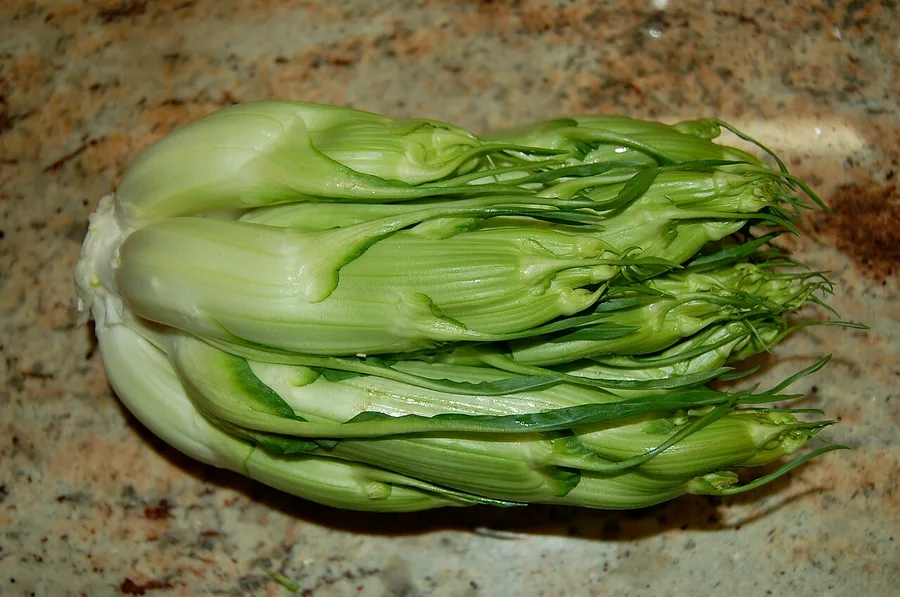 Michel Chauvet · CC BY-SA 3.0
lazio · 40′
Forty minutes, nearly all of it waiting: the strips curl in iced water for an hour while you pound the anchovy, garlic and vinegar sauce in a mortar. If the puntarelle stay straight, the water was not cold enough.
sicilia · 50′
Fifty minutes, forty of them the aubergines: they are deep-fried rather than roasted, because it is the oil that makes them creamy. The ricotta salata is grated over the plate at the table, never in the kitchen and never in advance.
One last thing
One thing, which comes back in ten of these sixteen dishes: pasta water is not water, it is an ingredient. It is thick with starch, especially if the pasta cooked in a small amount of it, and it is what binds pecorino, egg, bottarga, colatura and pesto without cream or butter. Always keep a ladle back before draining, and add it a spoonful at a time: it is the difference between a sauce that veils the pasta and one that sits in the bottom of the plate.
The questions this list answers
These are real questions put to an AI assistant, in the period when Bing cited this site among its sources to answer them. The number is how many times we were cited. We read them in Bing Webmaster Tools, under AI performance, and they decide what goes on this page rather than the other way round.
- farinata di ceci ricetta242 citations
- colatura di alici195 citations
- cosa sono le puntarelle60 citations
- spaghetti bottarga51 citations
- bottarga cos'è47 citations
- farinata di ceci ricetta originale44 citations
- ricetta farinata36 citations
- colatura di alici di cetara28 citations
- what is colatura27 citations
Frequently asked questions
What is the fastest Italian pasta dish?
Spaghetti alla colatura di alici: fifteen minutes, no pan and no cooking of the dressing, which is emulsified cold. Next come cacio e pepe at seventeen minutes and gricia at twenty, both with three ingredients.
Why does carbonara split?
Heat. Above sixty-five degrees the egg white coagulates and the sauce turns grainy. The pan comes off the flame and is left to drop for a minute before the egg goes in, and the pasta water is added hot but not boiling.
Can pasta alla Norma be made with roasted aubergine?
It can, and it is a different dish. Deep-frying makes the aubergine creamy and sweet; the oven dries it and leaves it fibrous. It is the difference you notice most between a Sicilian Norma and a lightened version.
How much pasta water should I keep?
At least a ladle for every two people, and in cacio e pepe or carbonara two. The less water the pasta cooked in, the starchier that water is and the better it binds: which is why those dishes use half the usual amount.