Sixteen Italian dishes that take hours, and why
Brasato al Barolo, Neapolitan ragu, oxtail alla vaccinara, baccalà alla vicentina. These are the dishes in which time is an ingredient: here in order of length, with the hours they really need and what happens inside the pot.
None of these dishes can be shortened, and the reason is chemistry rather than cookery. In the cheap cuts the connective tissue is collagen, and collagen melts into gelatine only by sitting a long time between eighty and ninety degrees: below that it never starts, above it the fibres contract and expel their water. Hence the rule that comes back in all these recipes, from brasato to ragu: the surface should shiver, not boil.
The same logic holds beyond meat. Stockfish needs days of soaking and then four hours of cooking before the fibre truly rehydrates; dried pulses need hours for the pectin in their cell walls to give way, and salt added early stops it; the stale bread in a ribollita has to stay in the pot long enough to collapse and bind.
One more thing unites almost the whole list: they are better the next day. As they cool the gelatine settles, the fat rises and can be lifted off, and the flavours stop being separate ingredients. The chart below adds preparation and cooking for each dish and does not count resting, which in half of these cases is another night.
 Julie Anne Workman · CC BY-SA 3.0
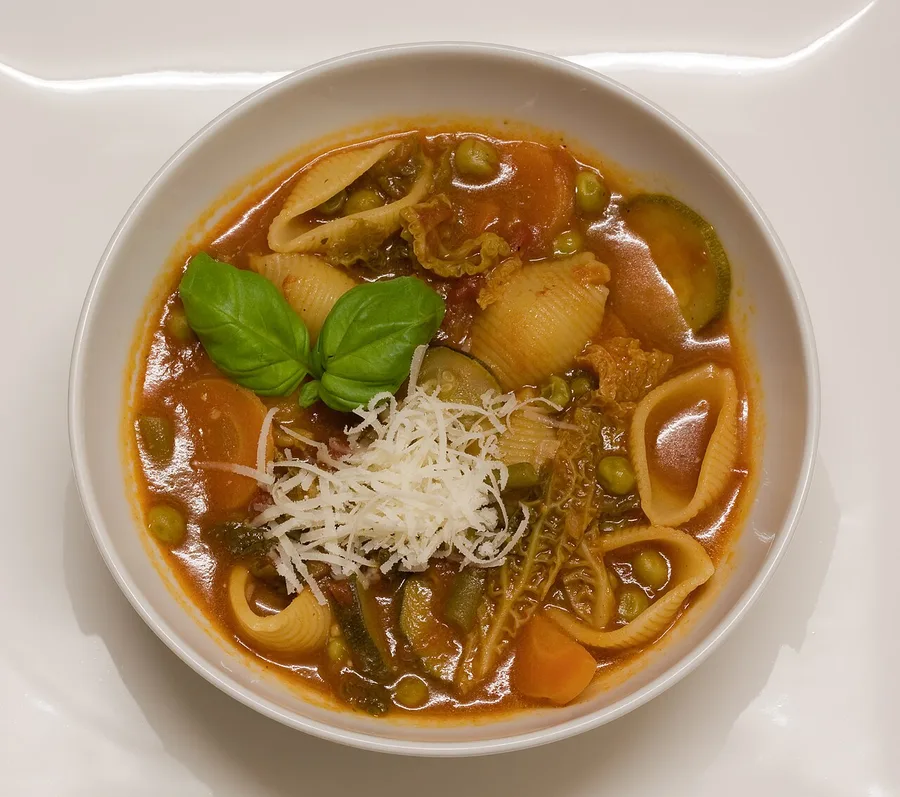
liguria · 2 h 5′
Two and a half hours with no fried base: the vegetables go into cold water raw with the oil, and the sweetness comes from slowness instead of browning. The pesto goes in off the heat, because on the flame the basil blackens. In Liguria it is eaten warm or cold, never piping hot.
 walimai73 · CC BY-SA 2.0
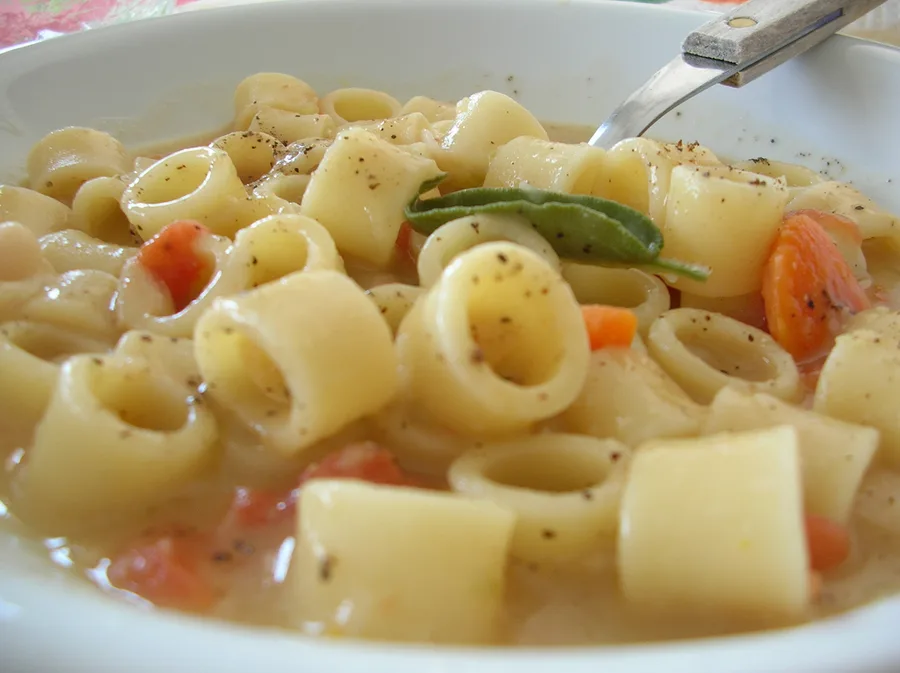
veneto · 2 h 50′
An hour and a half for the beans, then the pasta into the same pot. Salt only at the end, because sodium stiffens the skins and the beans never reach creaminess. Two thirds passed and one third left whole: that double texture is what makes this soup Venetian.
toscana · 2 h 25′
Twelve hours of soaking for the hulled farro and as long for the beans, then a good two hours on the stove. The grain goes into the pulse cream and cooks there, releasing starch: which is why the soup tightens enormously as it cools and must be turned off looser than you want it.
toscana · 2 h 45′
Five different meats in one pot, each going in at its own moment: beef, lamb and pork first, rabbit after forty minutes, chicken only in the last half hour. Putting them in together means getting all but one of them wrong. Two and a quarter hours in all, at a simmer.
- 05
Jota
friuli venezia giulia · 2 h 55′
The sauerkraut is cooked separately and its water thrown away, otherwise the acid stops the beans softening and the soup never finishes. Then three hours of pulses, potatoes and smoked pork, bound with the pestada of lardo, garlic and flour.
 Calabrotto · CC BY-SA 4.0
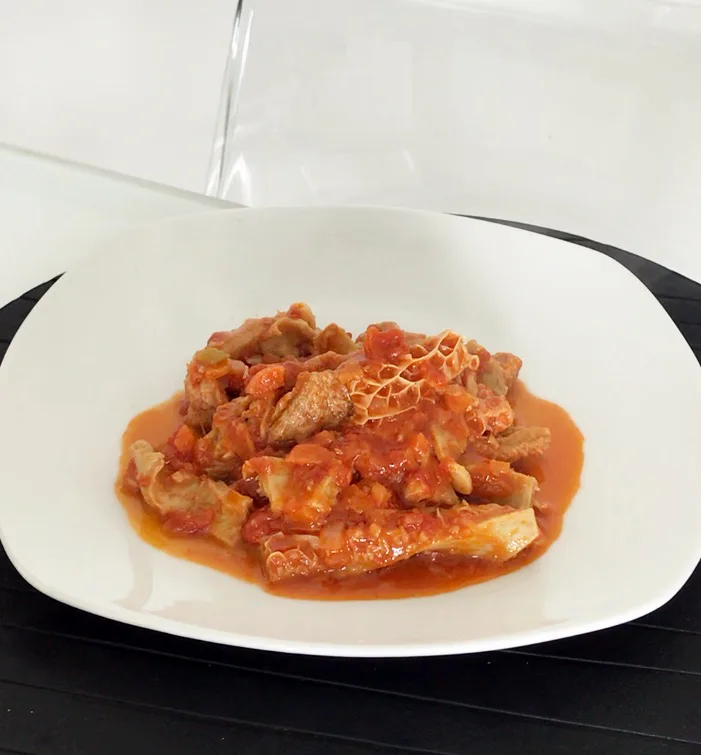
lazio · 2 h 55′
An hour and a half of boiling before you even start, then an hour and a half in tomato. The mentuccia goes in for the last five minutes and the pecorino off the heat: the two aromatics that make it Roman, and the only two quick steps in the whole recipe.
emilia romagna · 3 h 25′
Two hours minimum, three better, at a barely perceptible simmer. The milk goes in for the last half hour and rounds off the acidity of the tomato and the wine. The ratio is two parts meat to one of passata: more tomato than that and it becomes another sauce, the one that travels abroad under the same name.
lombardia · 3 h 50′
Two and a half hours in which the meat cooks in its own liquid, with no wine and no broth: the wine arrives all at once in the last twenty minutes, over a high flame. It is the opposite of almost every other stew, and the reason the base stays sweet instead of turning sour.
piemonte · 3 h 40′
Twelve hours marinating in wine and then three hours in the pot at ninety degrees, never more: above ninety-five the fibres wring themselves out and the meat comes out shredded and dry at once. It needs a forequarter cut full of collagen, chuck or shoulder, and it needs a nebbiolo rather than any red.
lazio · 4 h 40′
Three hours minimum, four if the tail is large, and the test is not the clock: the meat is ready when it comes away from the bone under the pressure of a spoon. The celery goes in only in the last hour, in lengths, because added earlier it disappears. Cocoa, pine nuts and raisins close the historic Testaccio version.
veneto · 5 h 10′
Two or three days soaking the stockfish, then four and a half hours cooking in milk and oil without ever stirring: you rock the pan by the handles, because a spoon would reduce the pieces to grey cream. Counting the days, it is the slowest dish on this list.
 MEP Production · CC BY-SA 2.0
marche · 5 h 10′
Three hours of ragu with chicken giblets, then the sheet rolled to a millimetre, seven layers, and three hours of rest in the fridge before baking. That rest is not a courtesy: it is when the pasta takes up the moisture and the dish cuts into clean portions instead of sliding apart.
campania · 4 h
A ragu made the day before, fried meatballs, peas, mushrooms, hard-boiled eggs, and rice cooked in broth and spread out to cool for hours. It is layered into a crumbed mould and baked for another hour. Four hours of real work, spread over two days if you are organised.
campania · 5 h 40′
Five hours of pippiata, which means one bubble every two or three seconds and never a boil. The meat stays in whole pieces and is served afterwards as a main; the sauce dresses hand-broken ziti. Under four hours it is still red and sharp: the brown colour is the proof that it is done.
campania · 5 h 45′
Two kilos of onions to a kilo of meat and five hours on the stove. For the first three the pan is effectively braising and the base stays pale; everything happens in the last hour, when the water has gone and the sugars caramelise. Raise the flame to hurry it and the onions burn and the dish turns bitter.
lazio · 7 h
The longest dish on the list: twelve or twenty-four hours drying the rind in the fridge, then five hours at a hundred and fifty degrees and a final half hour at two hundred and thirty to turn the crust to glass. The one thing that must never touch it is water.
One last thing
Two practical rules good for all sixteen. First: a simmer is a temperature, not an impression, and it sits between eighty-five and ninety-five degrees, which is one bubble every two seconds. If your burner will not go that low, a heat diffuser or an oven at a hundred and thirty degrees does the same job better. Second: nearly all of these should be made the day before. Cooled, they are skimmed with a spoon by lifting off the set fat, and reheated gently the next day they are a different thing from what they were in the evening.
The questions this list answers
These are real questions put to an AI assistant, in the period when Bing cited this site among its sources to answer them. The number is how many times we were cited. We read them in Bing Webmaster Tools, under AI performance, and they decide what goes on this page rather than the other way round.
- brasato al barolo1,208 citations
- what is porchetta637 citations
- brasato al barolo ricetta originale369 citations
- minestrone alla genovese294 citations
- baccalà alla vicentina ricetta originale88 citations
- trippa ricetta classica65 citations
- coda alla vaccinara ricetta originale romana60 citations
- baccala alla vicentina ricetta54 citations
- coda alla vaccinara ricetta originale50 citations
- ragù alla genovese40 citations
Frequently asked questions
Why must braises not boil?
Because above ninety-five degrees the muscle fibres contract and expel their water before the collagen has had time to melt into gelatine. The result is meat that shreds and is dry in the mouth at the same time. The right window is between eighty-five and ninety-five degrees, which is one bubble every two seconds.
How long does Neapolitan ragu really need?
Four to six hours over the lowest heat. The test is not the clock but the colour: the ragu is ready when it is dark brown and the fat shows on the surface. Under four hours it stays red and sharp, and the meat will not shred under a fork.
Are these dishes really better the next day?
Nearly all of them, for two measurable reasons. As they cool, the gelatine released by the collagen sets and gives the base body; and the excess fat solidifies on the surface and lifts off with a spoon, which is impossible while hot. The exceptions are fried dishes and anything with delicate fish.
Can they be cooked in the oven instead of on the hob?
Yes, and often it is better. A covered casserole in an oven at a hundred and thirty degrees holds the liquid around ninety without anyone watching the flame, and the heat comes from every side instead of the base. That works for brasato, oxtail, ragu and stews; not for soups, which want stirring.