Eight Italian polenta dishes, and the maize that was not there
Polenta taragna with buckwheat, bruscitt, Vicenza salt cod, Venetian liver, frico, pizzoccheri, sbrisolona: the American grain that in two centuries became the most alpine thing in Italy.
Maize is American and reached Europe in the sixteenth century: polenta, which now seems the most alpine thing imaginable, is made with a grain the Alps did not have. Earlier polentas were made from millet, barley and buckwheat, and the buckwheat has stayed, because in the taragna it still sits beside the maize.
Polenta is not a dish but a support. It exists to accompany something tasty and scarce: Venetian liver, beef bruscitt stewed for three hours, salt cod cooked four hours in milk and oil. In every case the proportion is the reverse of a modern plate: plenty of polenta, little dressing, and the dressing is intense because it has to go far.
Texture decides the use. Soft and freshly made it goes under stews, where it absorbs the base; left to cool it sets, is cut into slices and grilled or fried, and in that form it accompanies cheeses or replaces bread. In Friulian frico and in pizzoccheri the principle is the same but the grain changes: cheese and potato over a base of carbohydrate, in the mountains, where warmth was wanted rather than lightness.
lombardia · 3.5-7 €/kg
Maize and buckwheat flour together: buckwheat is the grain that came before maize, and in the taragna it has stayed. The name comes from the tarello, the stick it is stirred with for forty minutes.
lombardia · 3 h 50′
Three hours fifty: crumbs of beef cut with a knife and stewed with lardo, garlic and fennel seed, over a bed of polenta. Minced, the meat becomes a ragù and no longer bruscitt.
veneto · 1 h
One hour: thin liver tossed for four minutes over onions stewed for thirty-five, served with polenta. The polenta soaks up the onion base, which is the tastiest part of the dish.
veneto · 5 h 10′
Five hours, four of them cooking in milk and oil without stirring: you shake the pan. It is served over soft polenta, which takes up the milky base and completes the dish.
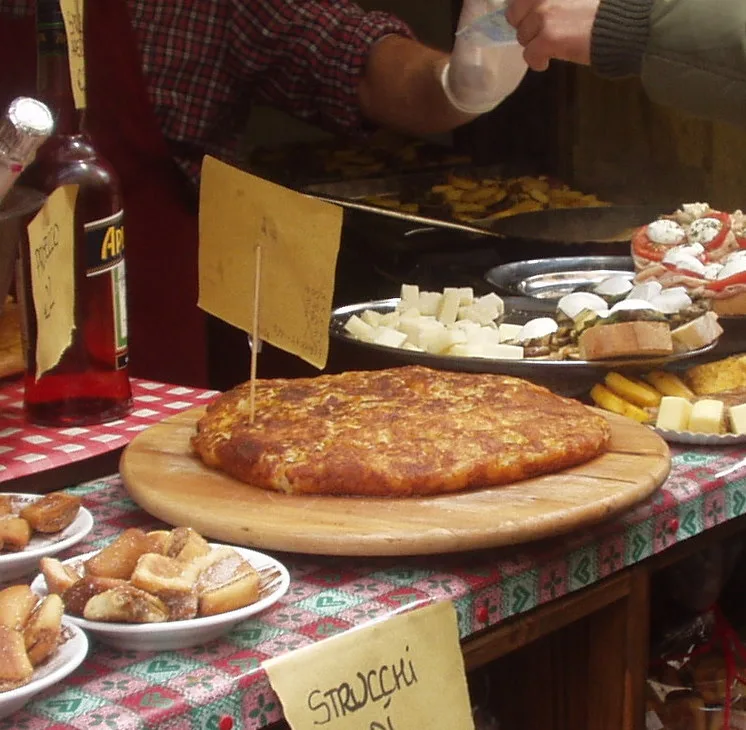 Io · CC BY-SA 3.005
Frico
friuli venezia giulia · 1 h
One hour: Montasio cooked in a pan until the fat separates and the paste comes back together. It exists crisp, of cheese alone, and soft with potato and onion: the temperature decides which.
lombardia · 1 h 5′
An hour and five minutes: buckwheat pasta with potato, cabbage and Valtellina Casera, butter and garlic over the top. The cheese goes in layers between the hot pasta rather than stirred in, so it strings without splitting.
piemonte · 3 h 40′
Three hours forty over the lowest heat, and polenta is the historical accompaniment: it takes up the base of wine and vegetables, which is concentrated and deliberately scarce.
lombardia · 1 h 10′
An hour and ten: maize flour, white flour, almonds and butter, to be broken with the hands rather than cut. The maize flour is what gives it the grain and the name, because it crumbles.
One last thing
Polenta wants two things and neither is the recipe: proportion and time. The proportion is about four parts water to one of flour for a soft accompanying polenta, three and a half for a firmer one to slice. The time is forty minutes for a medium grind, and it cannot be shortened: starch gelatinisation needs those minutes, and a polenta cooked for twenty tastes raw even if it is thick. Stir often but not constantly, with a wooden spoon, and salt the water at the start, the opposite of pulses.
The questions this list answers
These are real questions put to an AI assistant, in the period when Bing cited this site among its sources to answer them. The number is how many times we were cited. We read them in Bing Webmaster Tools, under AI performance, and they decide what goes on this page rather than the other way round.
- polenta e osei13 citations
- baccalà alla vicentina ricetta originale88 citations
- formaggio montasio118 citations
- baccala alla vicentina ricetta54 citations
- torta sbrisolona ricetta originale40 citations
- fegato alla veneziana ricetta tradizionale241 citations
Frequently asked questions
Is polenta an ancient alpine dish?
Maize polenta is not: maize is American and reached Europe in the sixteenth century, spreading through the alpine valleys and the Po plain over the following two centuries. Earlier polentas were made from millet, barley and buckwheat, and the buckwheat survives in the taragna.
How long should polenta cook?
About forty minutes for a medium grind, stirring often. The time is needed for starch gelatinisation: a polenta cooked for twenty minutes may be thick and still taste raw. Instant flours are pre-cooked and follow other instructions.
What is polenta taragna?
A polenta of maize and buckwheat flour, typical of the Valtellina and the Bergamo valleys, often enriched with butter and local cheese. The name comes from the tarello, the wooden stick used to stir it in the copper pot.
What goes with polenta?
Long-cooked stews with a concentrated base: bruscitt, braised beef, Vicenza salt cod, Venetian liver, game. The historical proportion is plenty of polenta and little dressing, because the dressing was the expensive part.