Fourteen Italian dishes with eight ingredients or fewer
Cacio e pepe five, bistecca five, gricia six, farinata six, carbonara eight, pesto eight. Counted from the recipes' own ingredient lists: where there is little to add, technique is everything.
The numbers in this list are counted from the ingredient lists of this site's recipes, water and salt included. They are there to show something precise: in a poor kitchen ingredients were few out of necessity, and out of that necessity came technique. Where there is nothing to add, the only variable is how you do it.
Cacio e pepe has five entries and one point of difficulty, the cream made off the heat with the cooking water: over a flame the pecorino tightens into lumps. Bistecca alla fiorentina has five and one possible error, salt added early, which draws out water and prevents the crust. Gricia has six, chickpea farinata six.
The practical result is that these fourteen dishes are the hardest to spoil through lack of shopping and the easiest to spoil through haste. A carbonara has eight ingredients and a ten-second window above sixty-five degrees; a pesto has eight and is ruined by the heat of a blender's blades. Neither is saved by adding something.
lazio · 17′
Five ingredients: pasta, pecorino, pepper, water, salt. The cream is made off the heat with the cooking water, and the pasta cooks in half the usual water so that water is starchier.
toscana · 35′
Five ingredients and one possible error: the salt, which goes on only at the end. Added early it draws out water and prevents the crust. Fierce heat, three or four fingers thick, five minutes' rest.
- 03
Gricia
lazio · 20′
Six ingredients: pasta, guanciale, pecorino, pepper, water, salt. It is carbonara without egg and amatriciana without tomato, that is the base of both, and it takes twenty minutes.
lombardia · 40′
Six ingredients, and clarified butter is one of them: it takes higher temperatures than whole butter and gives the colour. The crumbs must be fine, from stale white bread rather than industrial.
lazio · 55′
Six ingredients and two fryings: the first low to cook the heart, the second very hot to open the leaves into a flower. A single frying never gives both a creamy heart and brittle leaves.
liguria · 29′
Six ingredients: chickpea flour, water, oil, salt, pepper and the oven. No leavening and no gluten, and the few hours of rest serve only to skim the foam off the surface.
abruzzo · 52′
Seven ingredients, and fat is alternated with lean on the skewer and never removed. The canala, the narrow grill, concentrates the heat: salt goes on at the end, never before.
campania · 15′
Eight ingredients and fifteen minutes: no pan and no cooking of the dressing, which is emulsified cold. The pasta water is not salted at all.
lazio · 25′
Eight ingredients and a ten-second window: above sixty-five degrees the egg sets and the cream splits. The pan comes off the heat and is left to cool for a minute.
liguria · 25′
Eight ingredients and no cooking: basil is pounded rather than cut, because a blade severs the cells and oxidises the leaf. Start with the garlic and finish with oil in a thread.
sardegna · 22′
Eight ingredients, twenty-two minutes: bottarga is never cooked, because above sixty degrees it turns bitter. Part is kept raw for the plate, where it gives the scent.
campania · 35′
Eight ingredients and two critical points: purging, because one sandy clam ruins the dish, and straining the liquor, because the sand settles in the bottom of the pan.
 Michel Chauvet · CC BY-SA 3.0
lazio · 40′
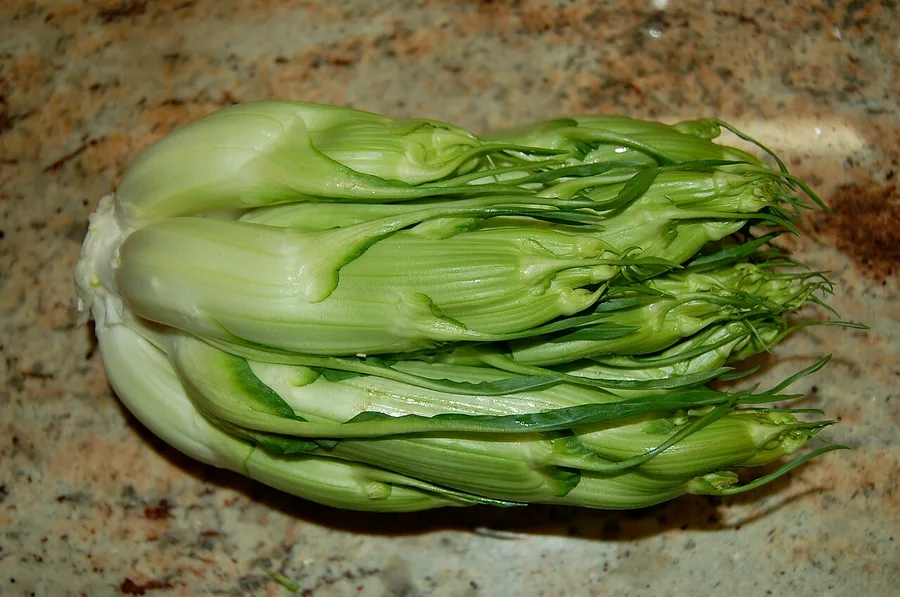
Eight ingredients: puntarelle, anchovies, garlic, vinegar, oil, salt, pepper and iced water. The water must be icy and the puntarelle dried thoroughly before dressing.
veneto · 1 h 5′
Eight ingredients and two that count: onion stewed at length and salted sardines melted in oil. No tomato, no garlic, no cheese, and an hour and five minutes of work.
One last thing
There is one ingredient that appears in no list and is decisive in half these dishes: the pasta cooking water. It is thick with starch, especially if the pasta cooked in a small amount of it, and it is what binds pecorino, egg, bottarga, colatura and pesto without cream or butter. Always keep a ladle back before draining and add it a spoonful at a time: in a cacio e pepe or a carbonara it is the difference between a sauce that veils the pasta and one that sits in the bottom of the plate.
The questions this list answers
These are real questions put to an AI assistant, in the period when Bing cited this site among its sources to answer them. The number is how many times we were cited. We read them in Bing Webmaster Tools, under AI performance, and they decide what goes on this page rather than the other way round.
- farinata ricetta19 citations
- ricetta farinata di ceci12 citations
- colatura di alici195 citations
- spaghetti bottarga51 citations
- cosa sono le puntarelle60 citations
- come fare la farinata di ceci6 citations
- la specialità milanese simile alla wiener schnitzel5 citations
Frequently asked questions
Which Italian dish has the fewest ingredients?
Among the recipes on this site, cacio e pepe and bistecca alla fiorentina, with five entries each counting water and salt. Next come gricia, cotoletta alla milanese, carciofi alla giudia and chickpea farinata, with six.
Why does pecorino clump in cacio e pepe?
Because it was added at too high a temperature: above a certain threshold the proteins tighten and the fat separates. Pecorino is melted off the heat with hot but not boiling cooking water, stirred without hurry.
When do you salt a steak?
At the end, after cooking. Salt added early draws water out of the surface and prevents the crust, which is the whole point of high-temperature cooking. After cooking the meat rests five minutes standing on the bone.
Do you need a mortar for pesto?
It helps, because the pestle crushes the leaves cold instead of cutting them. With a blender, work in short pulses, keep the blades cold and add the oil at the end: it will not become a mortar pesto, but it will stop being bitter.